1 free read left. Create a free account for unlimited reading + AI research.
Create free accountArticle Breda University of Applied Sciences
1 free read left. Create a free account for unlimited reading + AI research.
Create free accountArticleBreda University of Applied Sciences
One axis separates narratively prescribed roles from unprescribed ones. The other separates embodied characters, who have a body, from abstract ones, who do not.
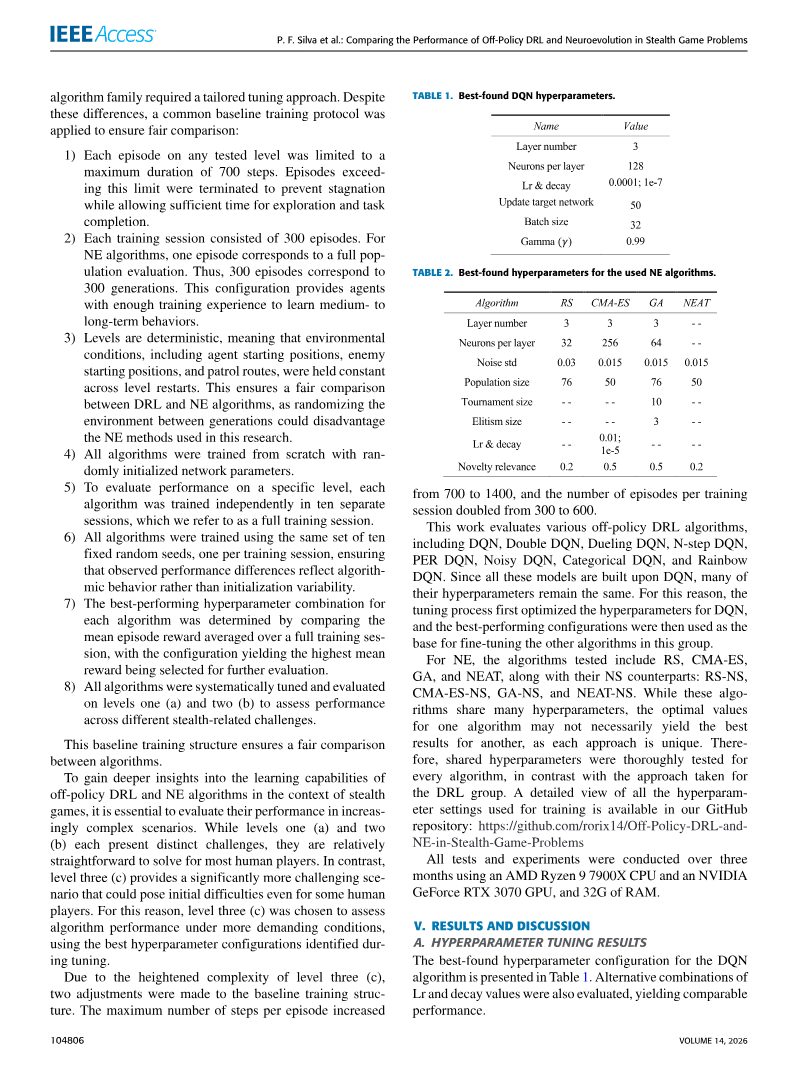
This article proposes a two-axis framework for classifying the relationship between players and their characters in games. One axis distinguishes narratively prescribed roles from unprescribed ones, while the other distinguishes embodied characters, who have a body to inhabit, from abstract ones, who do not. Crossing these axes yields four buckets, and the authors argue that the boundaries between them should overlap rather than be treated as rigid walls. Their central thesis is that this apparent inconsistency is a productive design space rather than a flaw, since games that blur categories can achieve effects that clean categorization cannot.
The argument is developed through close analysis of individual titles. Railway Empire 2, whose playable characters have modifiers and bodies hidden in a sub-menu despite the player functioning as a disembodied overseer, serves as a running example. Crusader Kings III is presented as a case where horizontal inconsistency, with the player as an all-seeing ruler who must also inhabit mortal successive bodies, produces incentive alignment that mirrors the concerns of medieval monarchs. XCOM 2, which moves the player between categories over the course of its tutorial and campaign, and Undertale and Doki Doki Literature Club!, which deliberately reveal the player beneath a prescribed character, illustrate how vertical overlaps can serve narrative and psychological effects.
The authors complete the framework into a Venn-style map containing all fifteen possible combinations of overlapping buckets, having found that their earlier diagram omitted two-way diagonal overlaps. The map is offered as a tool for designers and is populated with examples drawn from a broad range of titles, including God of War, Minecraft, RimWorld, Factorio, Spore, and Magic: The Gathering Commander. Four cells remain without examples, which the authors invite readers to help fill. The piece is a conceptual design essay rather than an empirical study, so its claims rest on informed reasoning and illustrative cases instead of survey data or quantitative sampling.
 Crusader Kings IIIGame · Paradox Development Studio · 2020 · 30 documents
 XCOM 2Game · Firaxis Games · 2016 · 12 documents
 UndertaleGame · tobyfox · 2015 · 29 documents
 RimWorldGame · Ludeon Studios · 2018 · 17 documents
 FactorioGame · Wube Software · 2020 · 9 documents
 Darkest DungeonGame · Red Hook Studios · 2016 · 18 documents
 Crusader KingsGame · Paradox Development Studio · 2004 · 39 documents
Each row is a game or company this document names, each column a document, oldest first. A mark means that document names it. Select a row to see those documents.
Breda University of Applied Sciences · 2026
Breda University of Applied Sciences · 2026



Breda University of Applied Sciences · 2026