1 free read left. Create a free account for unlimited reading + AI research.
Create free accountWhitepaper Bina Nusantara University
1 free read left. Create a free account for unlimited reading + AI research.
Create free accountWhitepaperBina Nusantara University
This bridge aligns physical traits, abilities, and social roles with the player’s unconscious experience.
Character design in video games extends beyond aesthetic appeal, functioning as a critical psychological bridge that facilitates player immersion and ideological communication. The primary thesis posits that effective character design requires a subliminal paradigmatic approach, where designers intentionally align character attributes—such as physical traits, abilities, and social roles—with the player’s psychological experience. By doing so, developers can foster a deep, unconscious bond between the player and the game world, transforming the character into a vessel for the player’s own agency and emotional exploration.
The analysis identifies four distinct layers of psychological experience that define this player-character relationship: visceral feedback, cognitive immersion, social affordances, and fantasy affordances. These stages guide the player from physical interaction with the game mechanics to a deeper, often unconscious, identification with the character’s role and motivations. The research emphasizes that non-player characters (NPCs) are equally vital to this process, as they provide the social context necessary to build a cohesive, believable game reality. When these elements are integrated successfully, the game transcends simple entertainment, allowing players to explore real-life hopes, fears, and decision-making processes within an artificial environment.
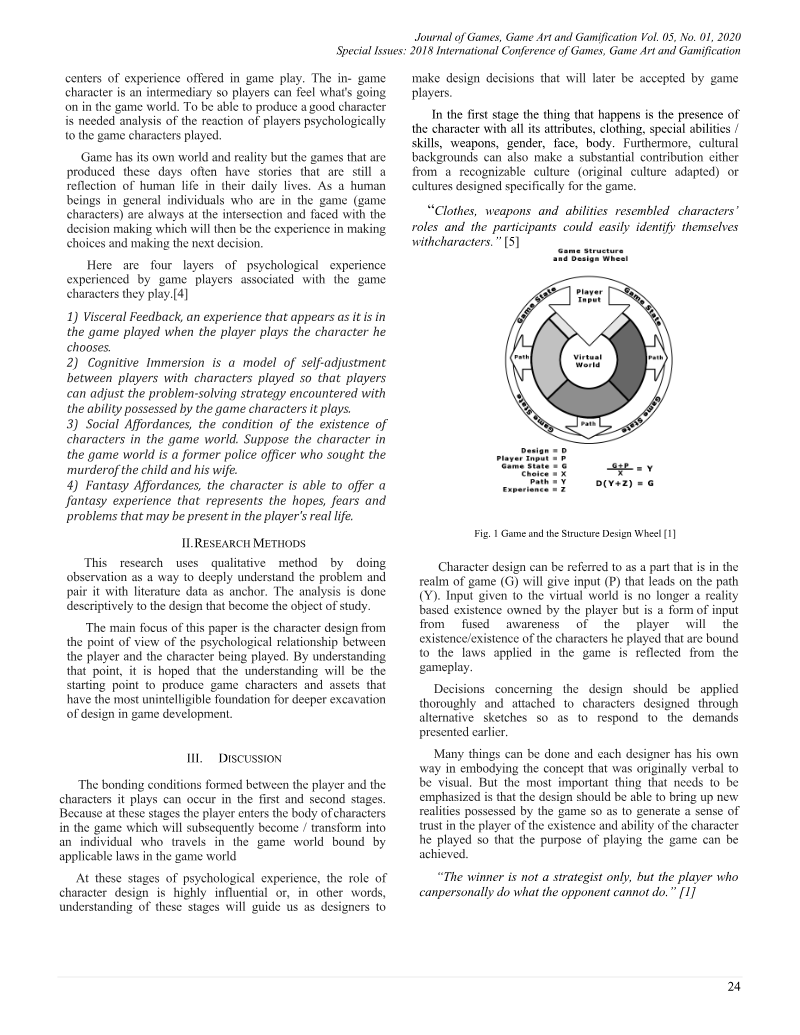
Methodologically, the study employs a qualitative approach, utilizing descriptive analysis and literature synthesis to examine the intersection of semiotics, psychology, and game design. By mapping these concepts onto a structural design framework, the findings suggest that designers must move beyond purely mechanical or visual considerations. Instead, they should treat character design as an ideological representation that must be rigorously aligned with the intended player experience. Ultimately, the research concludes that a failure to account for these psychological stages results in a disconnect between the player and the game, whereas a well-integrated design ensures that the player remains fully engaged in the game’s narrative and mechanical universe.

Bina Nusantara University · 2026

Bina Nusantara University · 2025
Bina Nusantara University · 2024

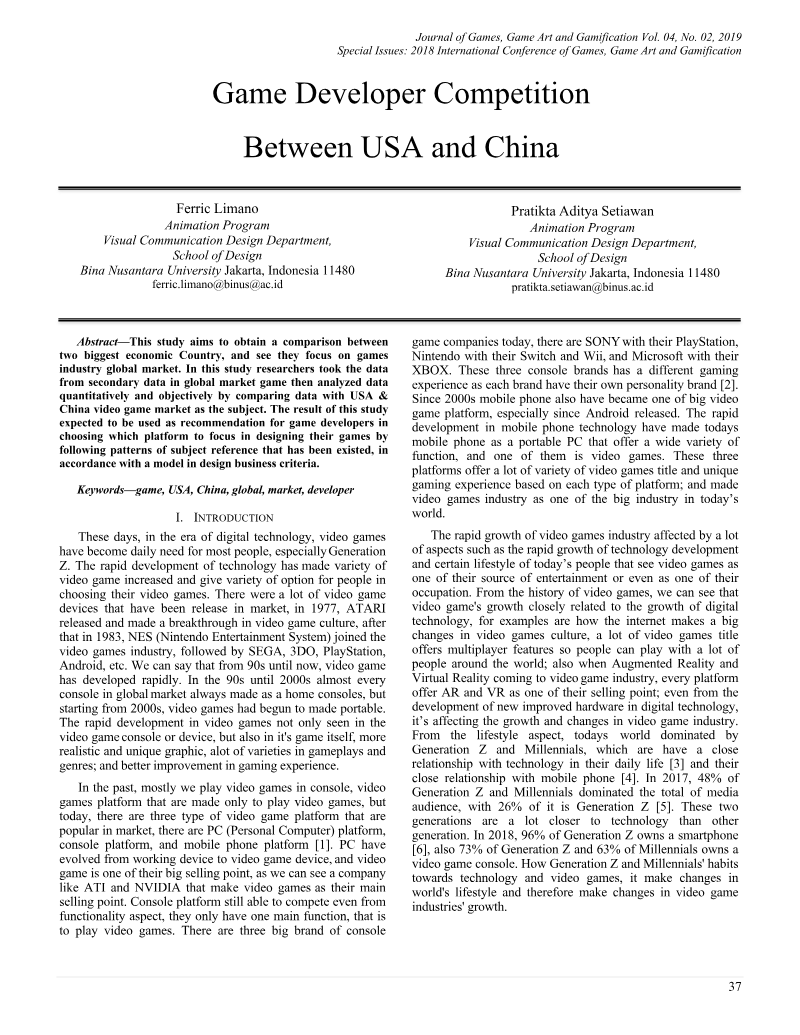
Bina Nusantara University · 2023
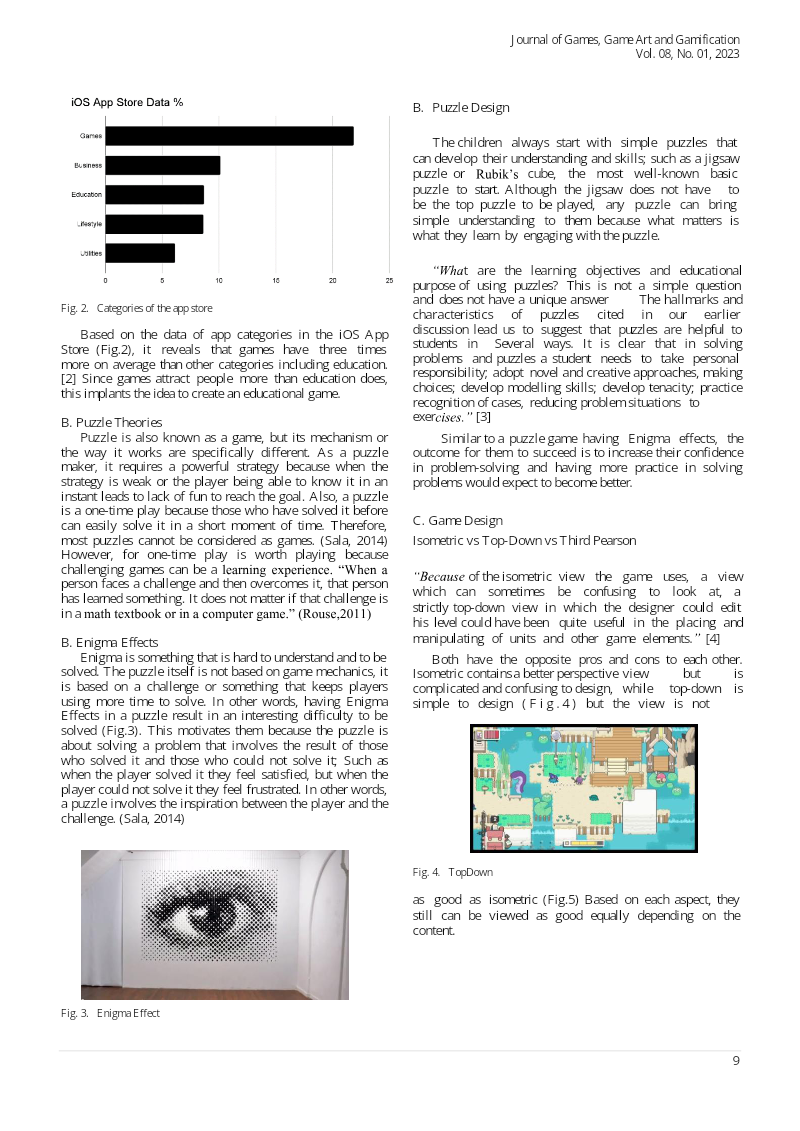
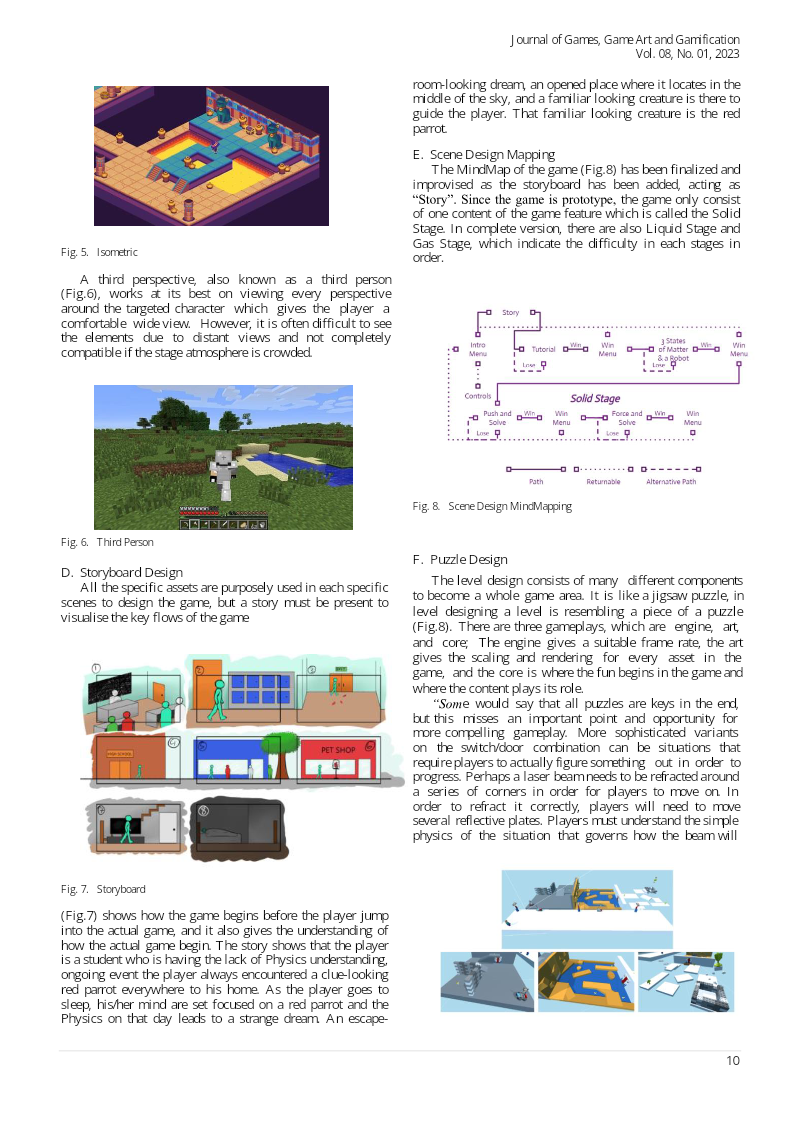
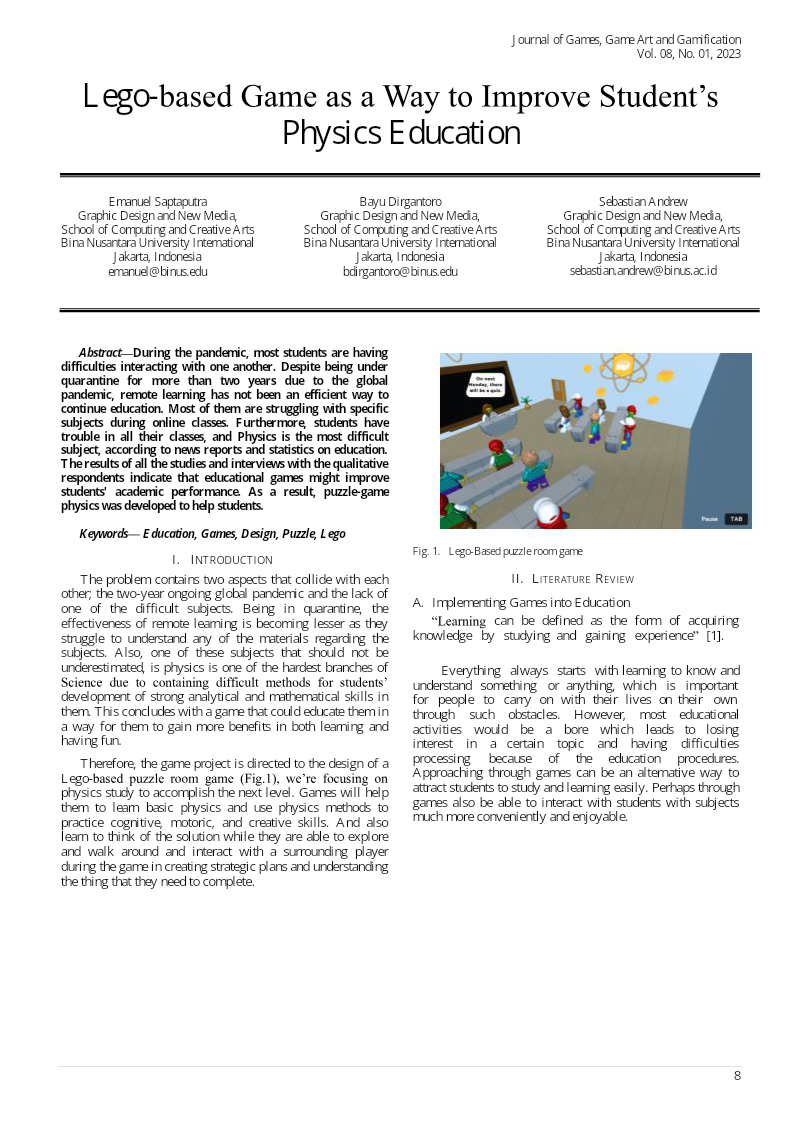
Bina Nusantara University · 2023

Bina Nusantara University · 2021


Bina Nusantara University · 2021

Bina Nusantara University · 2021


Bina Nusantara University · 2021
Bina Nusantara University · 2021
Journal of Games, Game Art, and Gamification · 2021
Bina Nusantara University · 2021
Politeknik Siber dan Sandi Negara · 2025