1 free read left. Create a free account for unlimited reading + AI research.
Create free accountWhitepaper Bina Nusantara University
1 free read left. Create a free account for unlimited reading + AI research.
Create free accountWhitepaperBina Nusantara University
This study addresses the decline in student engagement and academic performance in physics, particularly during the remote learning challenges imposed by the global pandemic. The research posits that integrating educational puzzle games into the curriculum can serve as an effective pedagogical tool to improve cognitive, motor, and analytical skills. By leveraging the popularity of Lego-based building blocks and puzzle mechanics, the project aims to transform complex physics concepts into an interactive, enjoyable experience that encourages strategic thinking and problem-solving.
The development process utilized a combination of BrickLink Studio for asset creation and the Unity game engine for functional implementation. The methodology focused on iterative prototyping, specifically addressing technical hurdles such as high memory usage and excessive loading times caused by complex object colliders. By optimizing asset settings and refining the game’s scene mapping, the researchers successfully reduced initial loading times from 10–15 minutes to 5–7 minutes. The resulting prototype features a narrative-driven environment where players navigate physics-based challenges, such as refracting laser beams, to progress through different stages of matter.
The findings indicate that while technical constraints related to hardware specifications and software optimization remain, the integration of game design principles into educational content is a viable strategy for increasing student interest. The study concludes that puzzle-based learning provides a necessary bridge between theoretical physics and practical application, fostering tenacity and creative problem-solving. Future development efforts are expected to focus on further optimizing game engine performance and expanding the content to include more comprehensive physics modules, ensuring that the educational benefits are delivered with greater efficiency and accessibility.
Each row is a game or company this document names, each column a document, oldest first. A mark means that document names it. Select a row to see those documents.
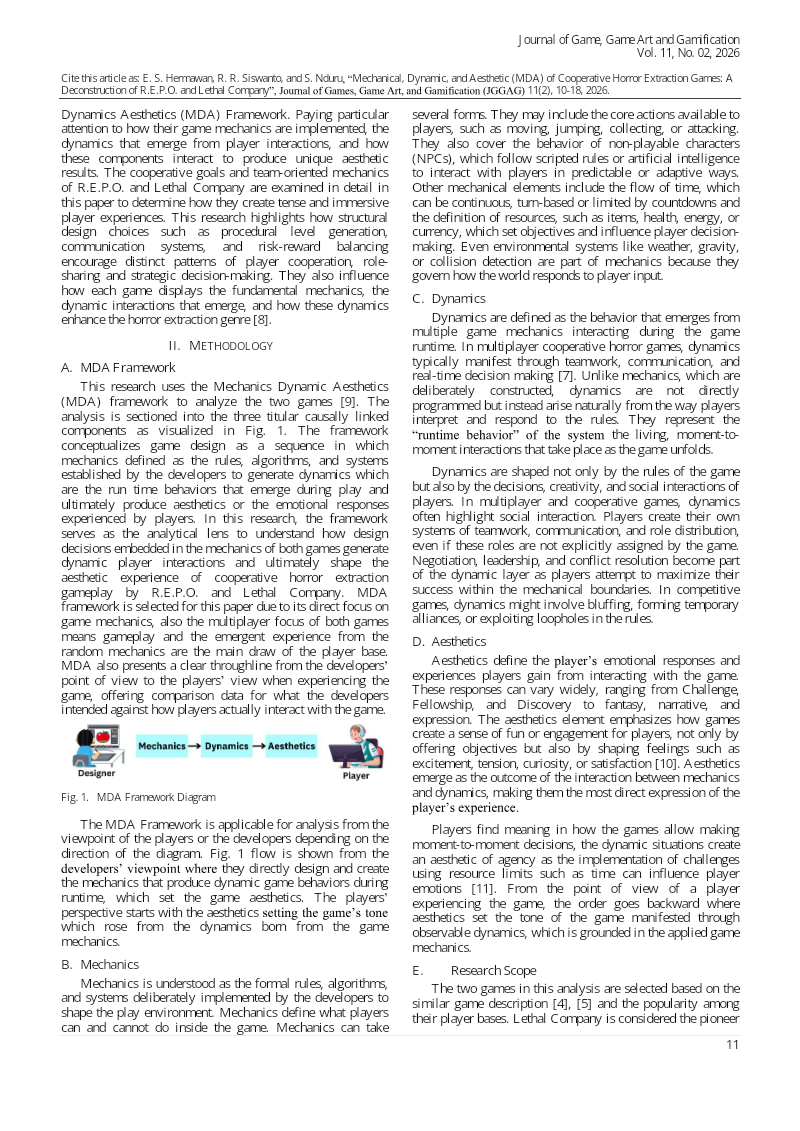
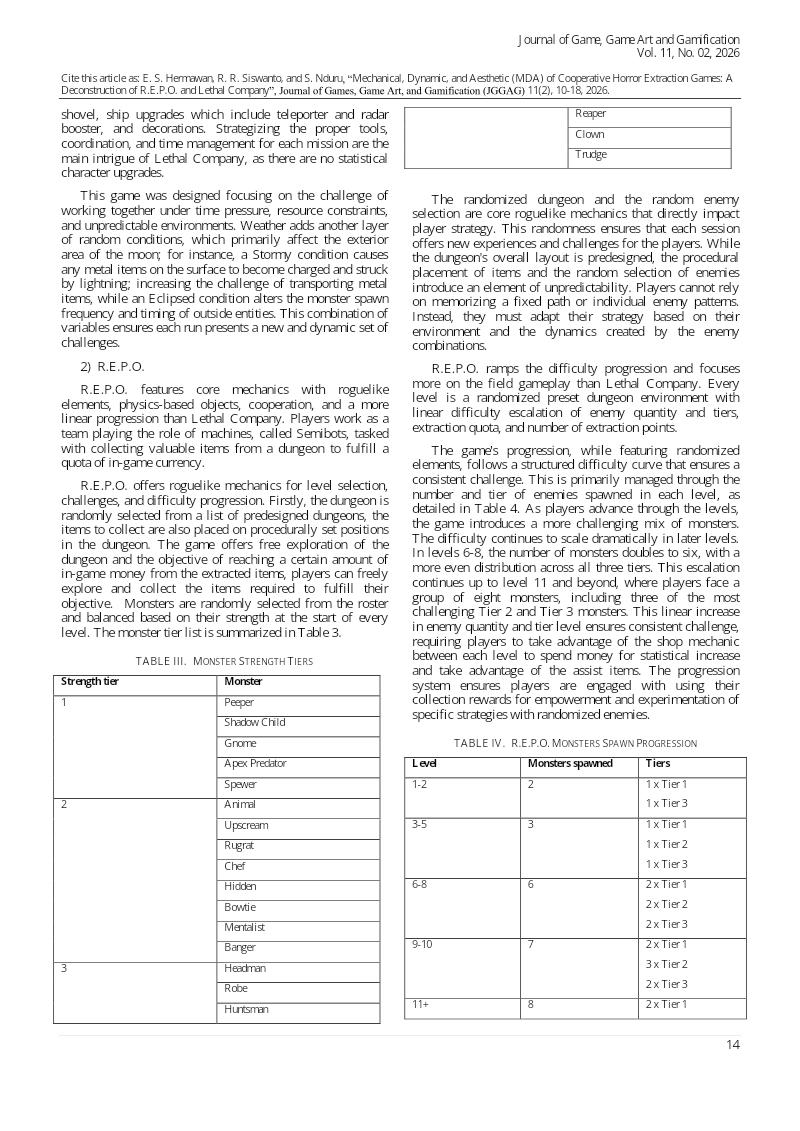
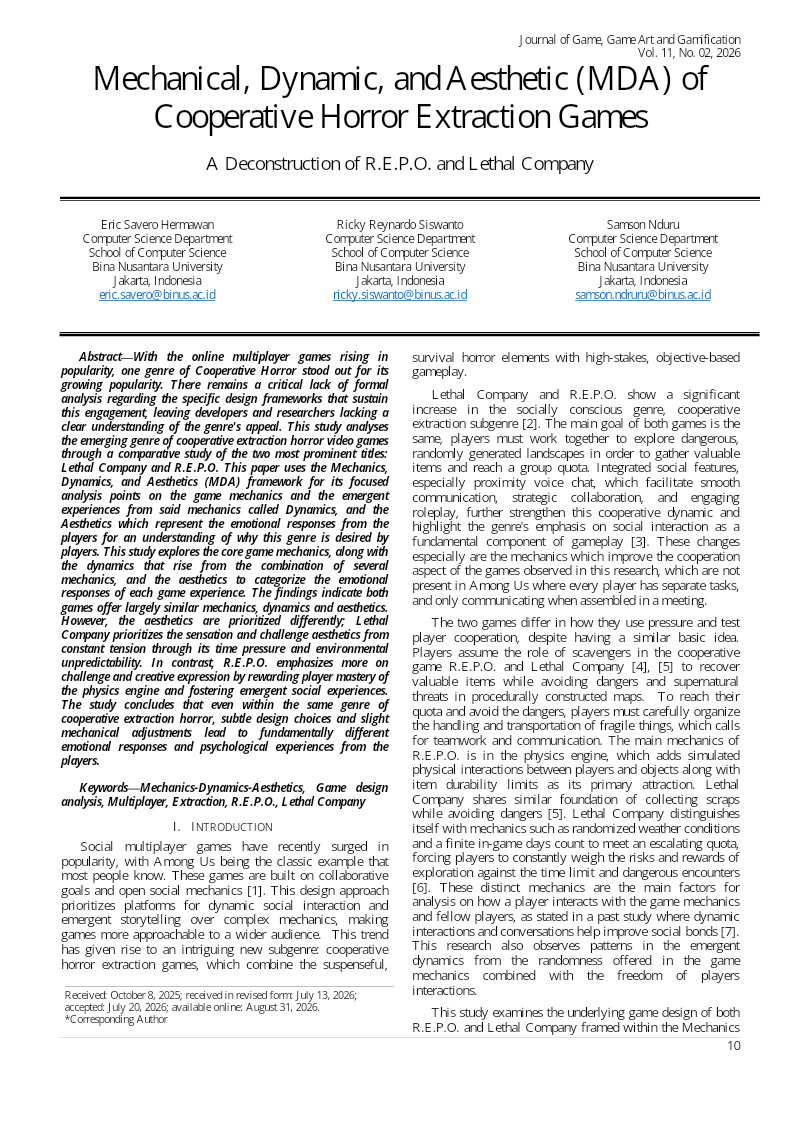
Bina Nusantara University · 2026
Bina Nusantara University · 2025
Bina Nusantara University · 2024
Bina Nusantara University · 2023
Bina Nusantara University · 2021
Bina Nusantara University · 2021
Bina Nusantara University · 2021
Bina Nusantara University · 2021
Bina Nusantara University · 2021
Bina Nusantara University · 2021
Journal of Games, Game Art, and Gamification · 2021
Bina Nusantara University · 2021
International Journal of Serious Games · 2025