1 free read left. Create a free account for unlimited reading + AI research.
Create free accountWhitepaper Journal of Games, Game Art, and Gamification
1 free read left. Create a free account for unlimited reading + AI research.
Create free accountWhitepaperJournal of Games, Game Art, and Gamification
This research proposes a specialized design framework for mobile games intended to improve accessibility for children with motor disabilities. The primary thesis posits that integrating machine learning-based hand posture recognition into game user interfaces can effectively bridge the gap between standard game mechanics and the physical limitations of children with motor impairments. By utilizing adaptive input systems, the framework aims to transform simple, achievable physical movements into functional in-game commands, thereby fostering greater inclusivity and therapeutic engagement within the gaming industry.
The study employs a methodology centered on a literature review of existing accessibility frameworks and the development of a prototype hand posture recognizer. The recognizer utilizes the eXtreme Gradient Boosting (Xgboost) decision tree algorithm, trained on a secondary dataset of 74,975 samples representing five distinct hand postures collected from 12 participants. The model demonstrated high performance, achieving 98.48% training accuracy and 96.76% testing accuracy. The analysis further identified that vertical hand movements provided more significant data features for classification than horizontal movements, offering insights for future interface optimization.
The proposed framework advocates for a modular architecture consisting of three core components: input devices for capturing body-part motions, an adaptive selection layer utilizing machine learning for classification, and game applications that map these inputs to specific dynamics. This approach addresses the critical need for game designs that accommodate specific physical constraints rather than relying on generic, one-size-fits-all accessibility solutions. The findings conclude that integrating natural user interfaces through machine learning is a viable, scalable strategy for making digital entertainment more accessible and therapeutic for children with motor disabilities, ultimately expanding the potential market reach for game developers.
Journal of Games, Game Art, and Gamification · 2026
Bina Nusantara University · 2026
Journal of Games, Game Art, and Gamification · 2026
Bina Nusantara University · 2025
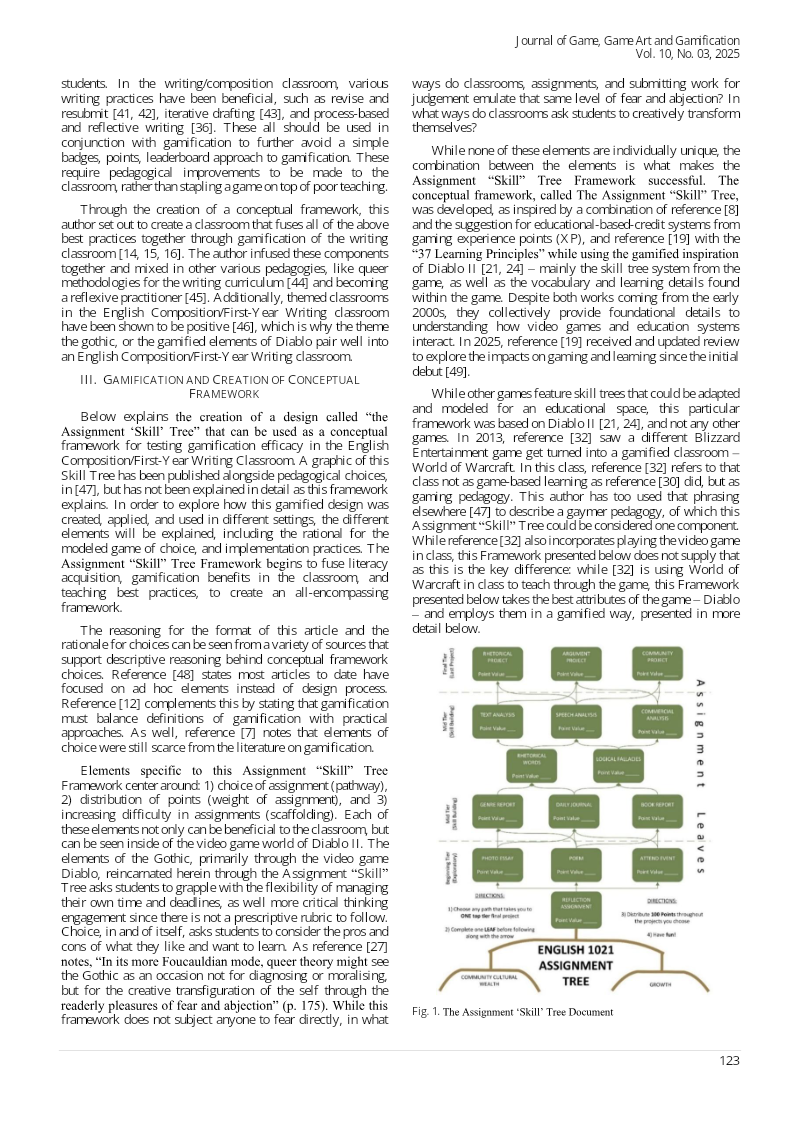
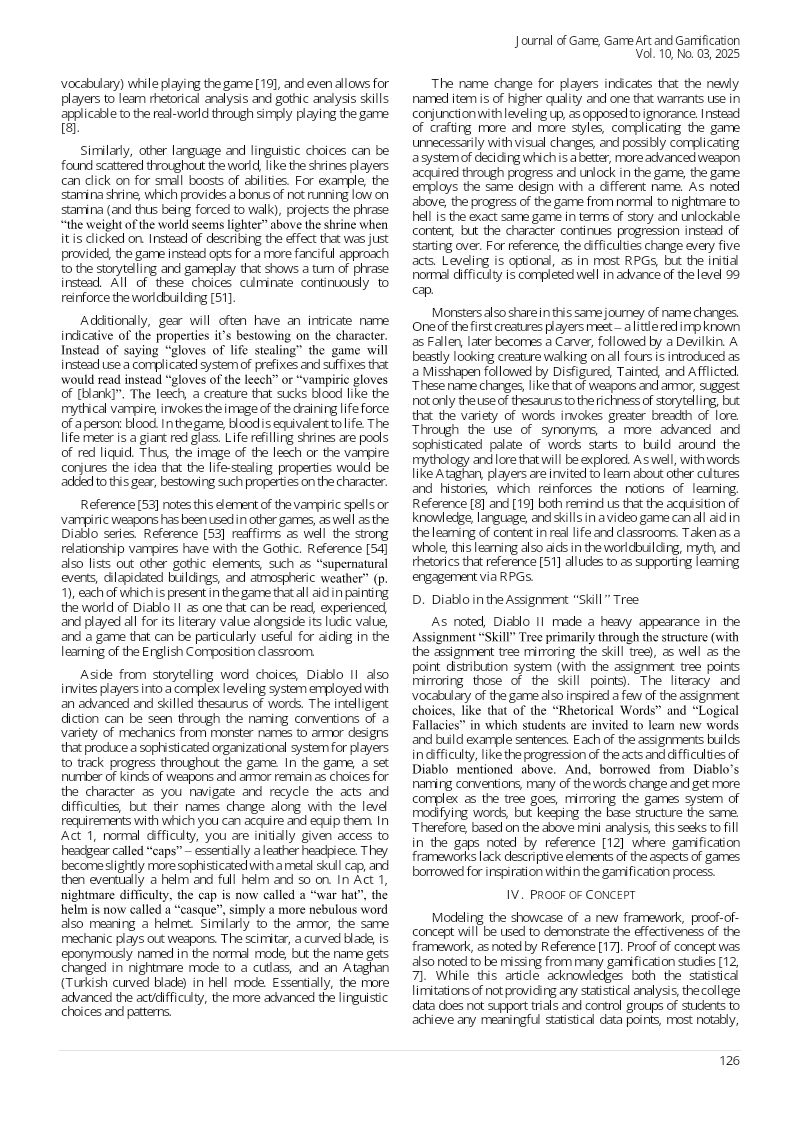
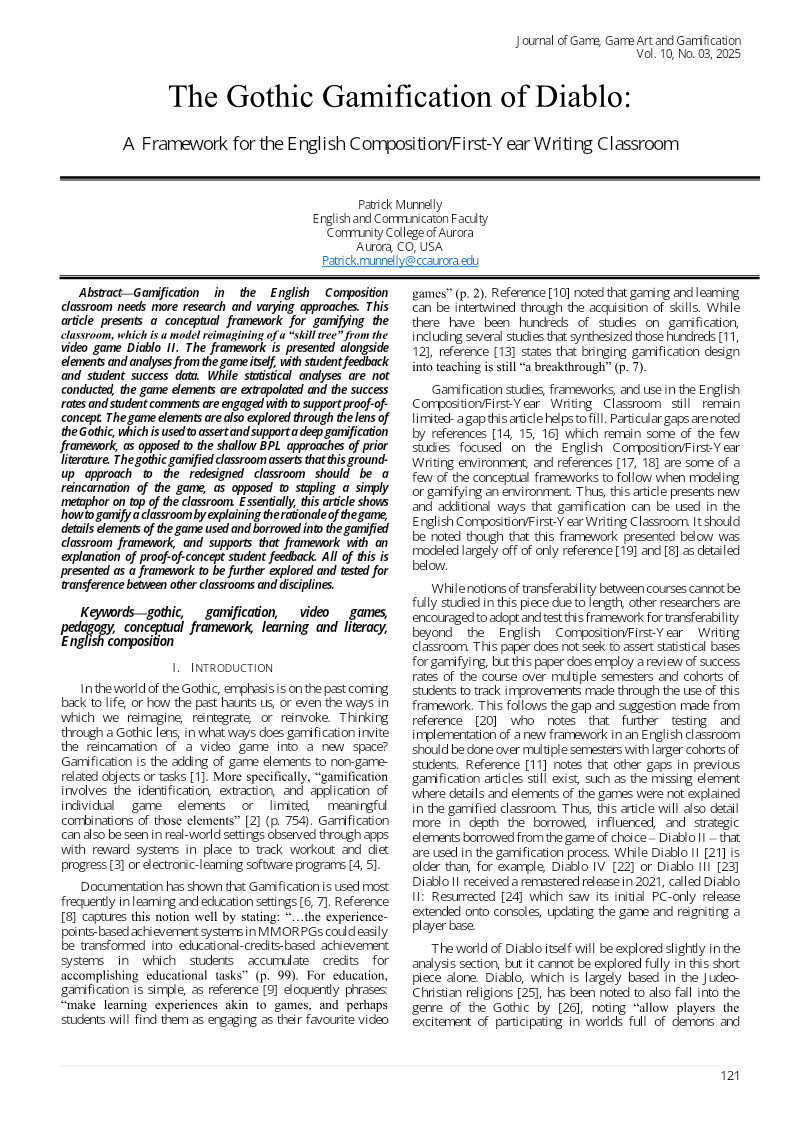
Journal of Games, Game Art, and Gamification · 2025
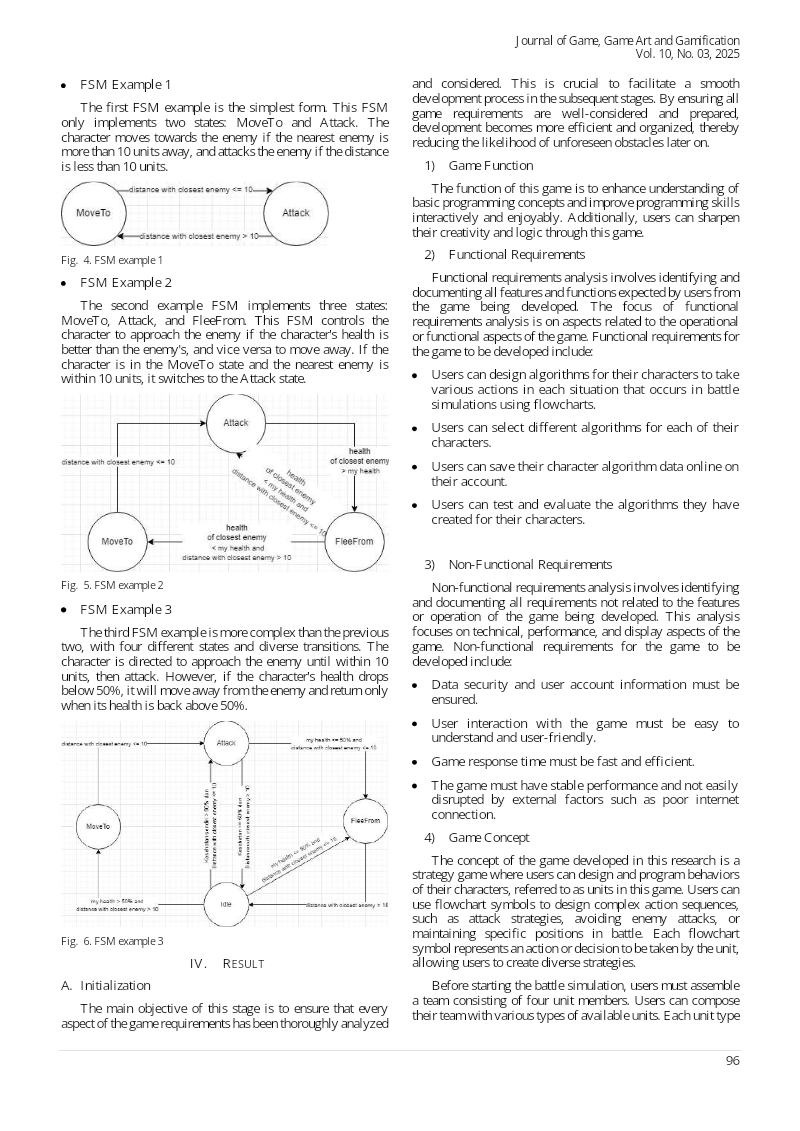
Journal of Games, Game Art, and Gamification · 2025
Journal of Games, Game Art, and Gamification · 2025
Journal of Games, Game Art, and Gamification · 2025
Journal of Games, Game Art, and Gamification · 2025
Journal of Games, Game Art, and Gamification · 2025
Journal of Games, Game Art, and Gamification · 2025
Journal of Games, Game Art, and Gamification · 2025
Institut Seni Indonesia Yogyakarta · 2026