1 free read left. Create a free account for unlimited reading + AI research.
Create free accountWhitepaper Bina Nusantara University
1 free read left. Create a free account for unlimited reading + AI research.
Create free accountWhitepaperBina Nusantara University
The market value is expected to increase from $522 million in 2013 to $2.83 billion in 2016. This expansion is supported by the widespread adoption of smartphones.
This analysis examines the role of gamification in mobile running applications, focusing on how game-design elements—such as points, levels, rankings, and social rewards—influence user motivation, engagement, and brand loyalty. The primary thesis posits that integrating these mechanics into non-game contexts, specifically health and fitness, creates a powerful tool for fostering sustainable user behavior and strengthening the relationship between consumers and brands.
The research highlights that the gamification market experienced significant growth between 2013 and 2016, with projections indicating a rise from $522 million to $2.83 billion. This expansion is supported by the widespread adoption of smartphones, which serve as the primary platform for health and fitness tracking. Key drivers for user engagement are categorized into content-oriented, relationship-oriented, and self-oriented motivations. Users interact with these applications for functional feedback, social validation through sharing achievements, and the psychological satisfaction derived from competition and status.
Methodologically, the study synthesizes existing literature on self-determination theory, the uses and gratifications model, and personality psychology to explain why users adopt and maintain fitness applications. It distinguishes between autonomous motivation, driven by intrinsic pleasure, and controlled motivation, influenced by external rewards or social pressure. The findings conclude that running applications function as effective marketing channels by building brand communities. By leveraging social networks and immediate feedback loops, companies can foster deeper customer identification and long-term commitment. The analysis suggests that as gamification trends continue to evolve, diversifying business models beyond simple reward systems will be essential for maximizing user engagement and public health outcomes.
Bina Nusantara University · 2026
Bina Nusantara University · 2025
Bina Nusantara University · 2024
Bina Nusantara University · 2023
Bina Nusantara University · 2023
Bina Nusantara University · 2021
Bina Nusantara University · 2021
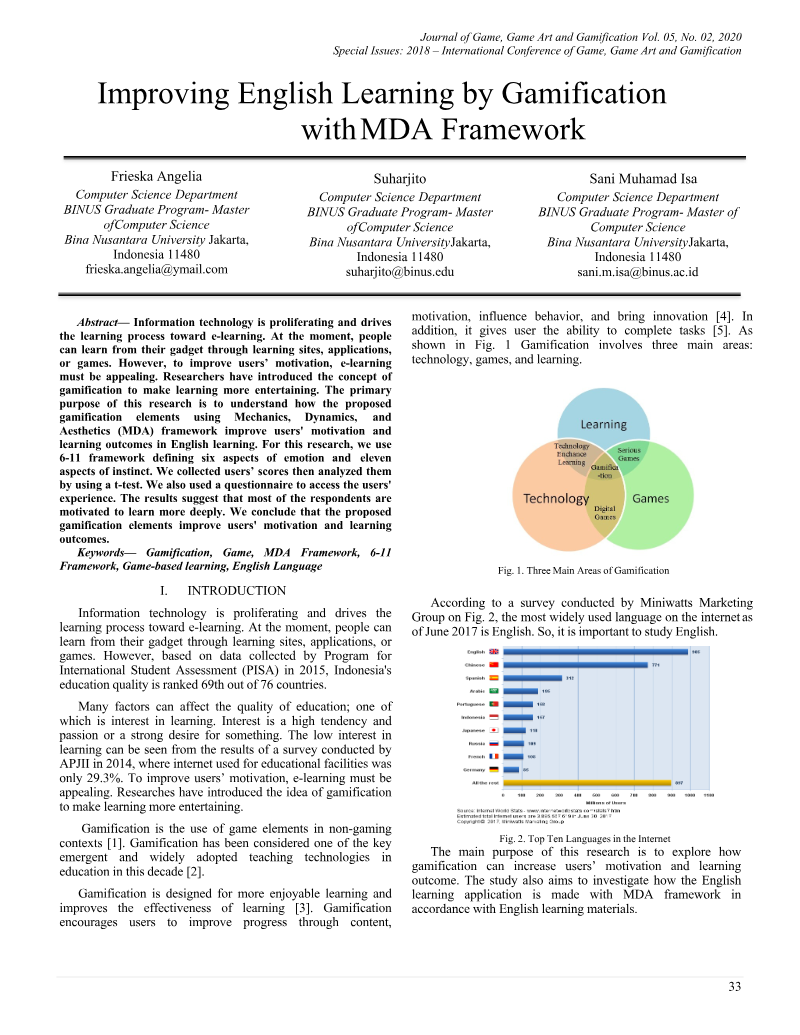
Bina Nusantara University · 2021
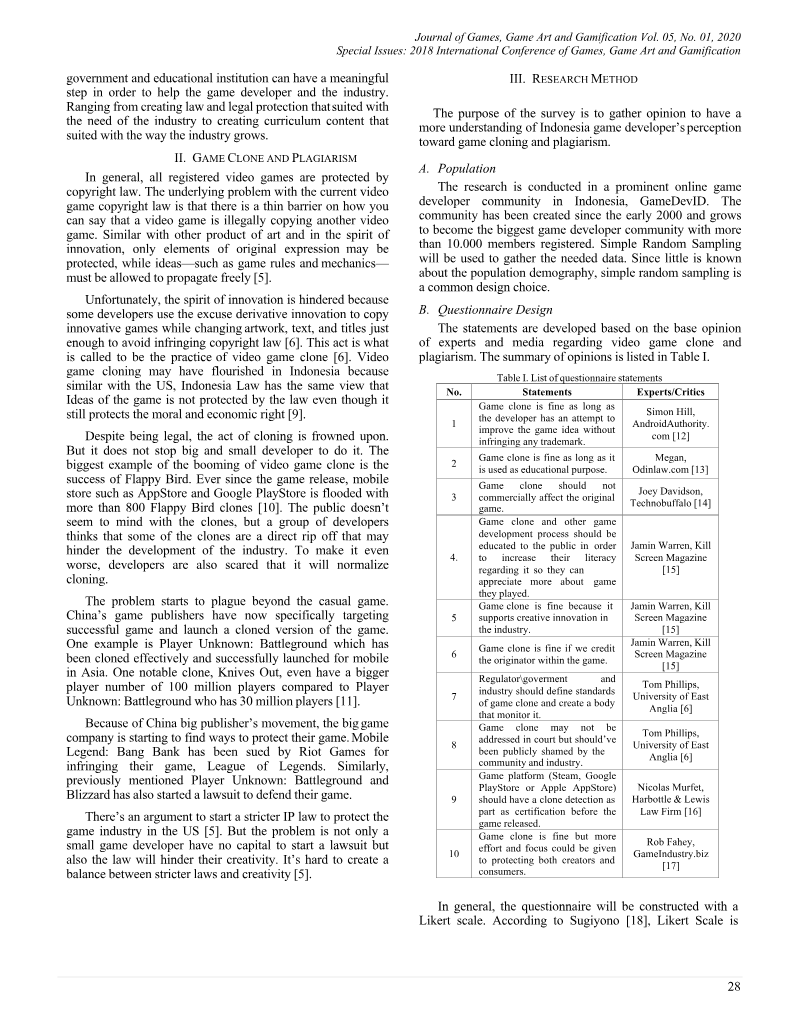
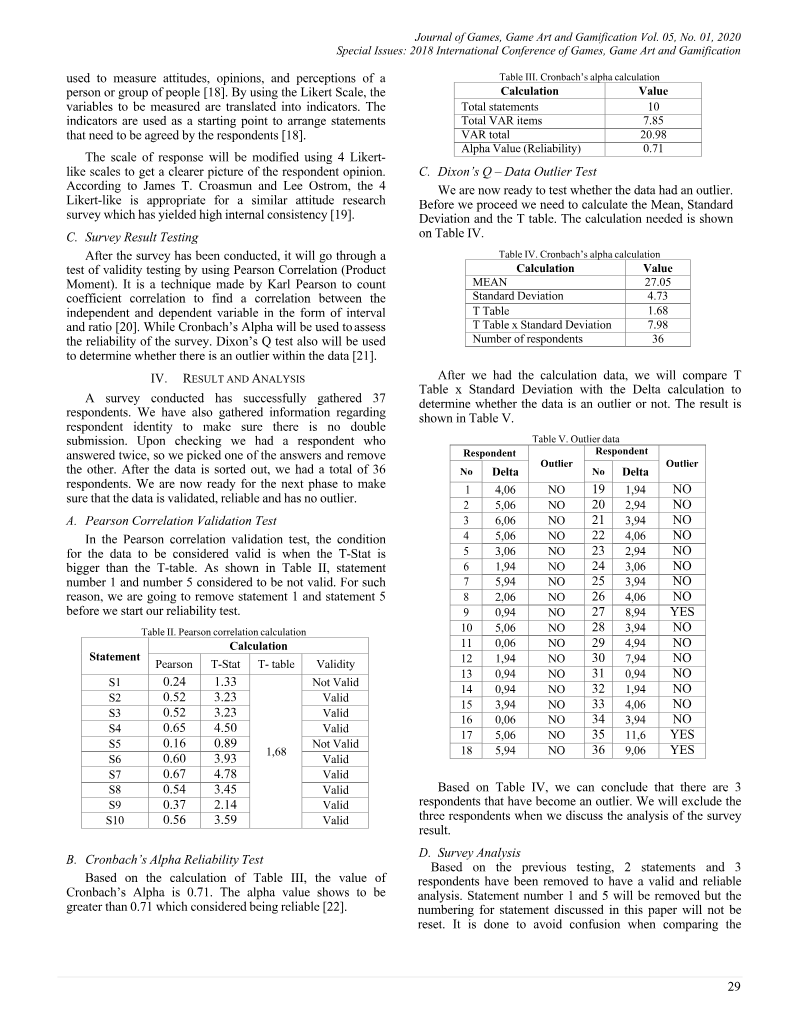
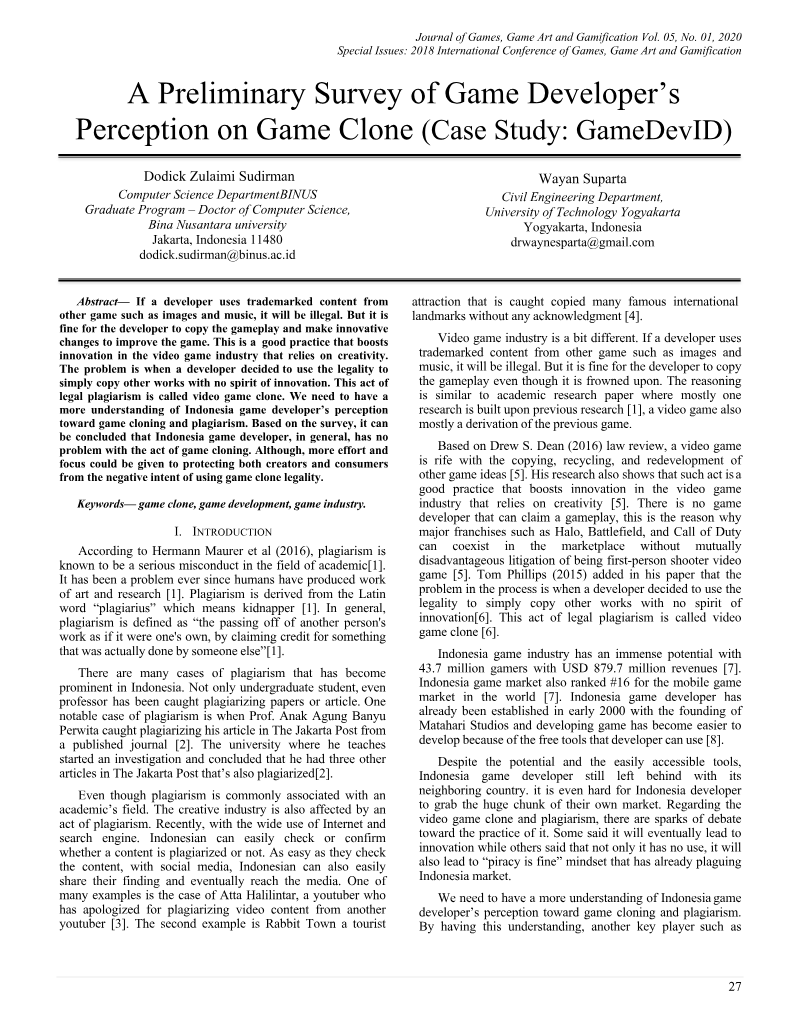
Bina Nusantara University · 2021
Bina Nusantara University · 2021
Bina Nusantara University · 2021
Journal of Games, Game Art, and Gamification · 2021
Journal of Games, Game Art, and Gamification · 2023
Bina Nusantara University · 2021
Bina Nusantara University · 2021