1 free read left. Create a free account for unlimited reading + AI research.
Create free accountWhitepaper Bina Nusantara University
1 free read left. Create a free account for unlimited reading + AI research.
Create free accountWhitepaperBina Nusantara University
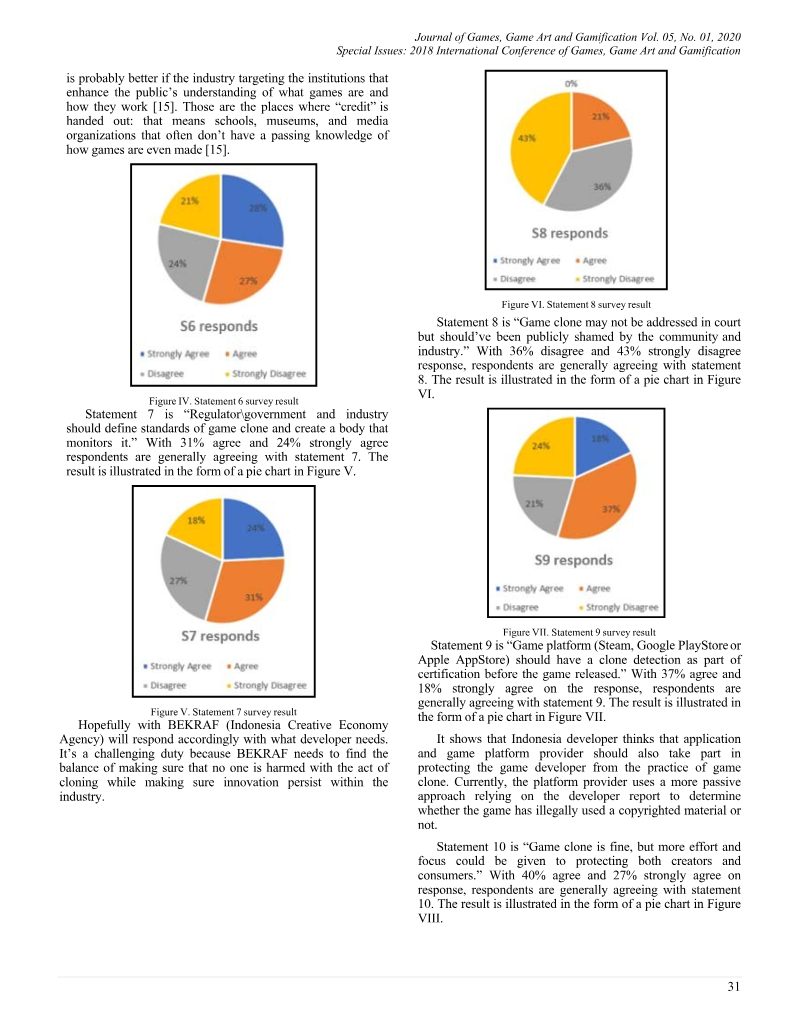
The survey was conducted within the GameDevID community, which has over 10,000 registered members.
Sample size. The study surveyed 36 validated respondents from the GameDevID community.
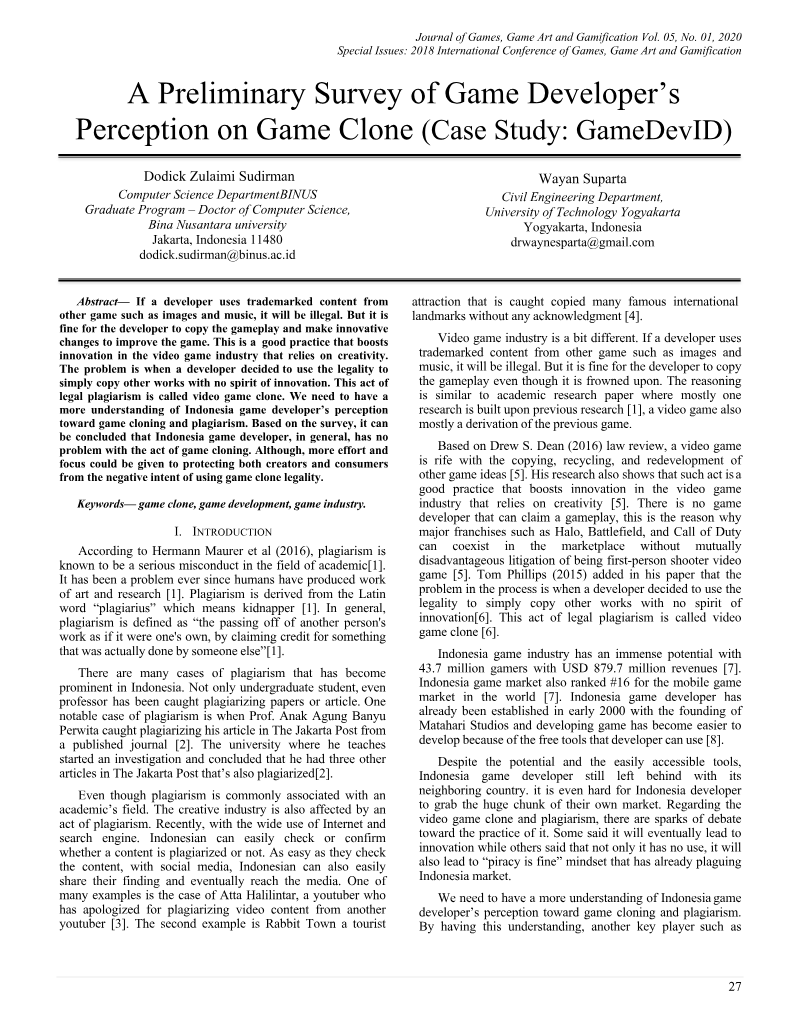
This study examines the perceptions of Indonesian game developers regarding the practice of game cloning—the act of replicating game mechanics or ideas without necessarily infringing on trademarked assets. The primary objective is to understand how local developers view this practice, which is often debated as either a driver of innovation or a form of unethical plagiarism. The research aims to provide insights that could assist government bodies and educational institutions in developing appropriate legal frameworks and industry standards.
The methodology involved a survey conducted within GameDevID, a prominent Indonesian game developer community with over 10,000 registered members. Using simple random sampling, the researchers collected data from 36 valid respondents. The survey utilized a Likert-like scale to measure attitudes toward ten statements regarding cloning, educational use, commercial impact, and the role of regulators and platform providers. Data validation was performed using Pearson correlation and Cronbach’s alpha, while Dixon’s Q test was employed to identify and remove outliers.
The findings indicate that Indonesian developers generally do not object to game cloning, provided the practice does not negatively impact the commercial viability of the original title or is intended for non-profit and educational purposes. However, there is a clear consensus that more effort is required to protect both creators and consumers from the negative consequences of cloning. Respondents expressed a preference for platform providers—such as app stores—to implement more robust detection and certification processes. Ultimately, the study concludes that while developers are comfortable with the concept of derivative innovation, they support the establishment of clearer industry standards and regulatory oversight to mitigate the harmful effects of direct, unoriginal copying.
Bina Nusantara University · 2026
Bina Nusantara University · 2025
Bina Nusantara University · 2024
Bina Nusantara University · 2023
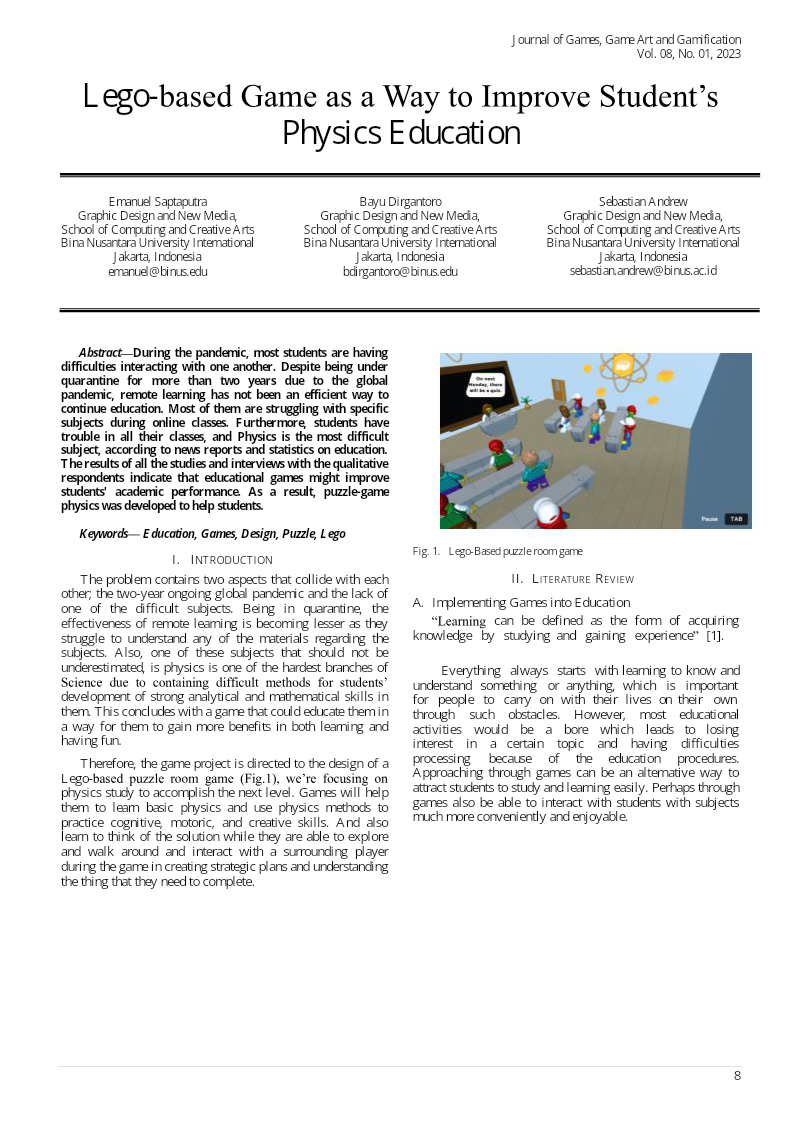
Bina Nusantara University · 2023
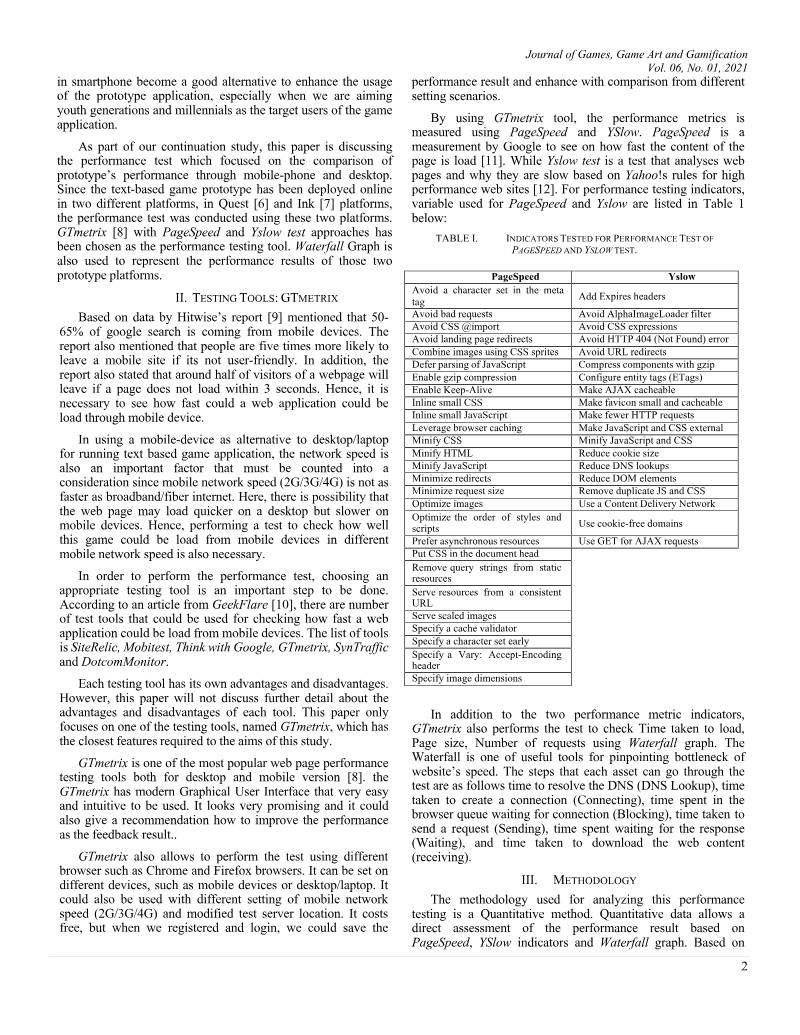
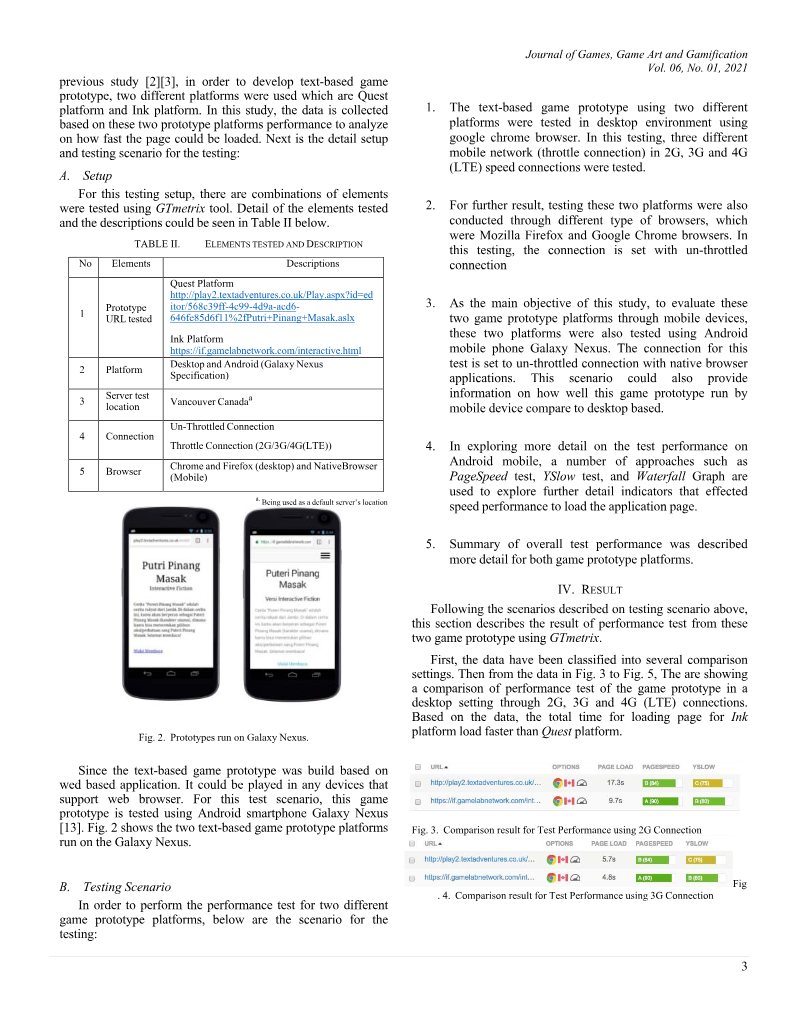
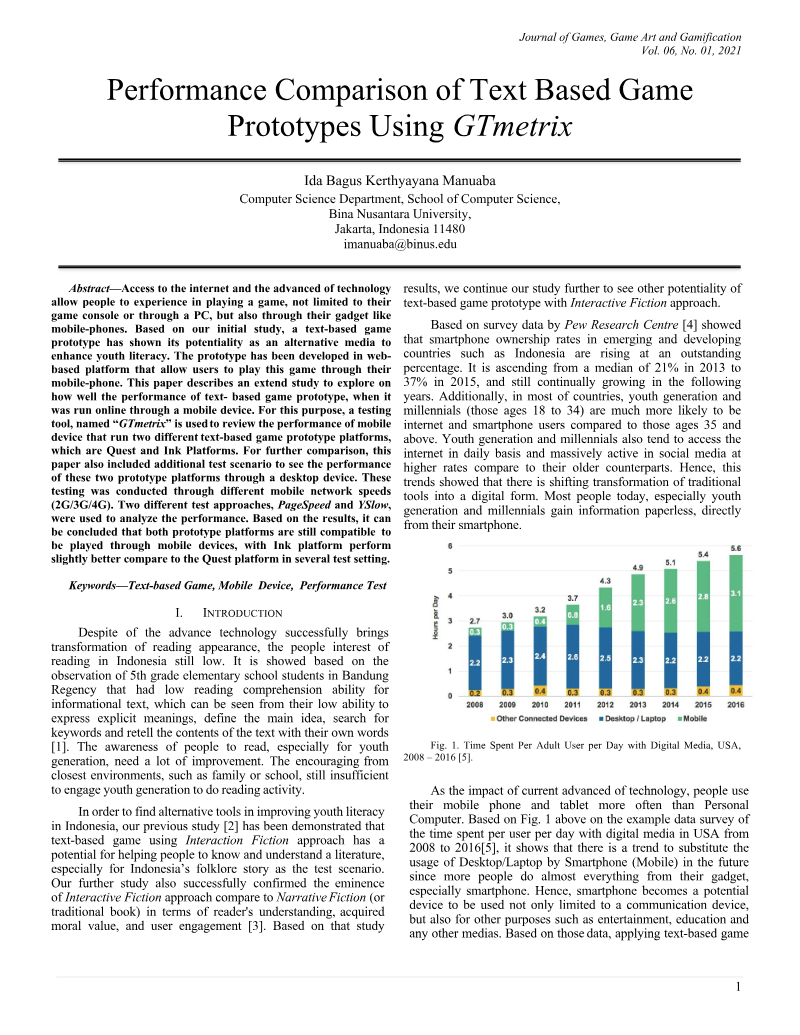
Bina Nusantara University · 2021
Bina Nusantara University · 2021
Bina Nusantara University · 2021
Bina Nusantara University · 2021
Bina Nusantara University · 2021
Journal of Games, Game Art, and Gamification · 2021
Bina Nusantara University · 2021
DiGRA · 2026