
Bina Nusantara University
Bina Nusantara University is an Indonesian university. It publishes reports on topics such as game development, educational technology, and the social impact of games.
Documents
Gamification Analysis for Motivation and Engagement Using Running Apps: 2018
This analysis examines the role of gamification in mobile running applications, focusing on how game-design elements—such as points, levels, rankings, and social rewards—influence user motivation, engagement, and brand loyalty.
- The gamification market saw significant growth between 2013 and 2016, with projections indicating an increase in value from $522 million to $2.83 billion.
- Running applications function as effective marketing channels by utilizing social networks and immediate feedback loops to build brand communities and long-term customer commitment.
- User engagement in fitness apps is driven by three primary categories: content-oriented functional feedback, relationship-oriented social validation, and self-oriented competition and status.
Reintroducing Indonesian Traditional Games through an Interactive Multiplayer Table Game: Gobak Sodor
This project addresses the decline of traditional Indonesian games among Generation Z, specifically children aged 9–12, who are increasingly reliant on digital technology and sedentary entertainment.
- The project successfully revitalized the traditional Indonesian game Gobak Sodor for children aged 9–12 by integrating physical movement with digital multiplayer arcade hardware.
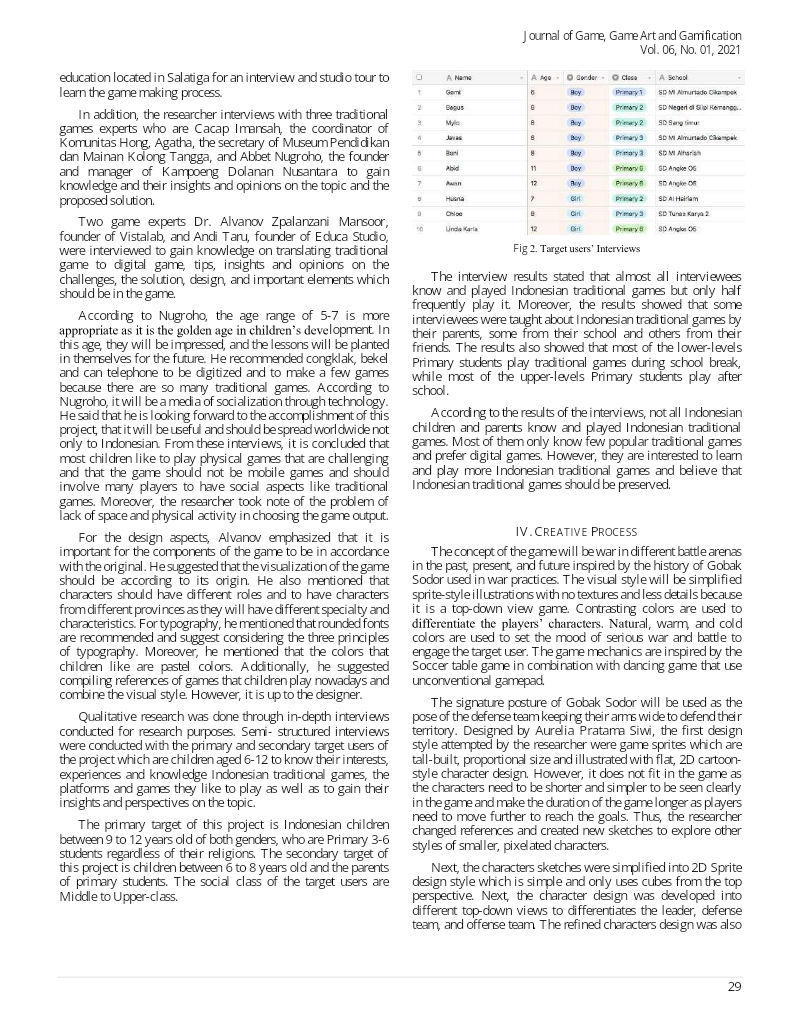
- User research identified that the decline in traditional game participation among Gen Z is primarily driven by a lack of accessible space and insufficient early exposure rather than a lack of awareness.
- Expert consultation established that traditional games remain relevant to digital natives only when they preserve original social and physical dynamics while adopting modern, simplified controls and high-contrast visual aesthetics.
Learning History Through Augmented Reality: Indonesia
This project addresses the declining engagement of Indonesian elementary students with history education, a subject traditionally taught through monotonous, text-heavy curricula.
- The project utilizes an augmented reality (AR) learning kit to modernize Indonesian fourth-grade history education, specifically focusing on the historical figure Gajah Mada within the K13 curriculum.
- The educational system integrates a physical textbook, interactive cards, and an AR application to transform static, text-heavy curricula into dynamic, quest-based learning experiences.
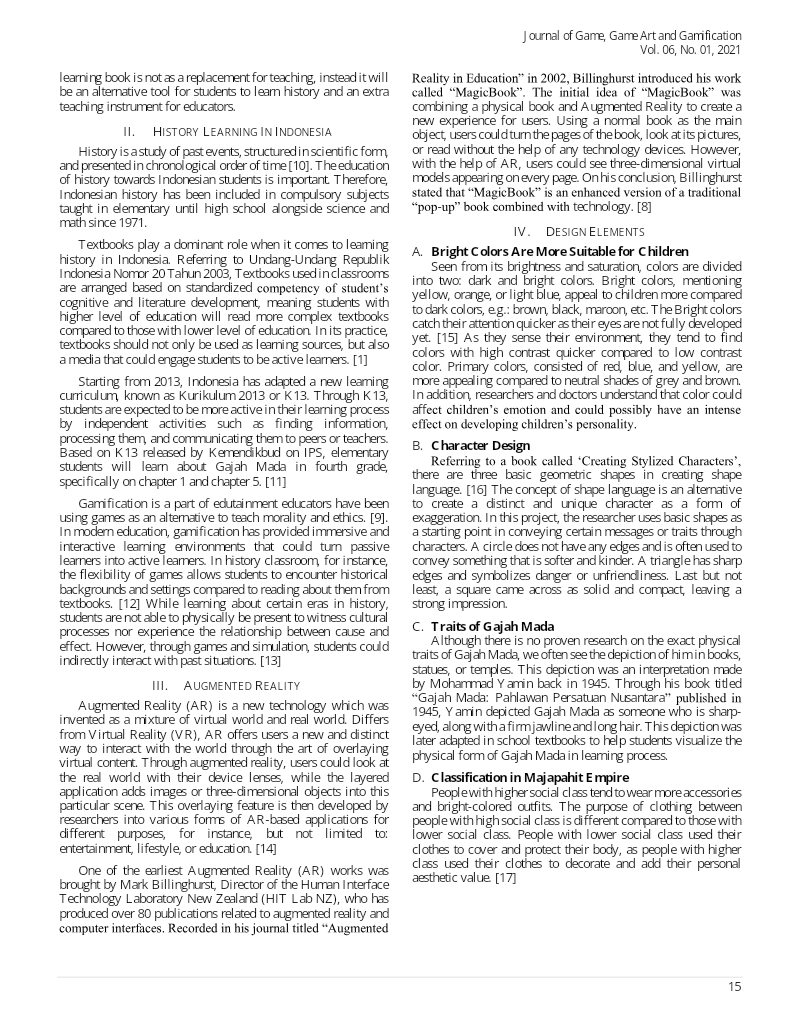
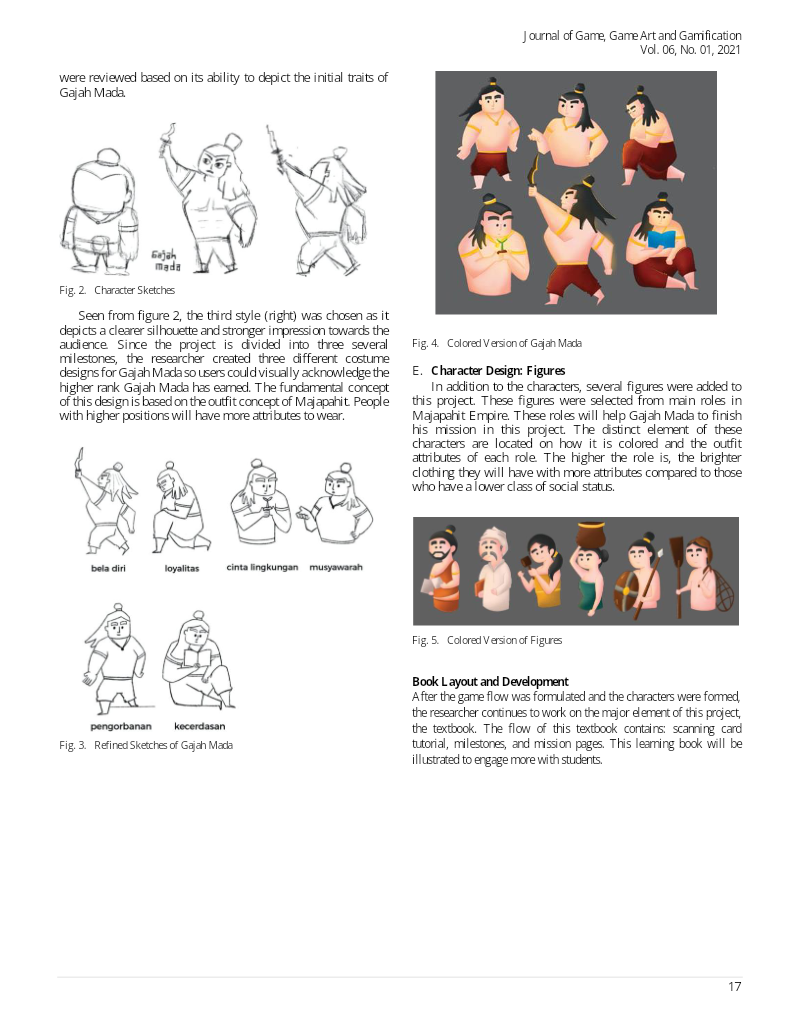
- Design choices for the AR interface are rooted in child psychology, utilizing high-contrast colors and specific geometric shapes to visually communicate character traits and social status within the Majapahit Empire.
The Business of Creating Games: How to Make Positive and Effective Business Impacts
Serious games and gamification serve as transformative tools for modern corporate environments, offering a strategic framework to enhance employee training, decision-making, and customer engagement.
- Serious games and gamification must align specific interactive mechanics directly with measurable business goals to ensure organizational effectiveness.
- Successful initiatives require a balance between high-fidelity entertainment and rigorous educational objectives, rather than prioritizing one over the other.
- The efficacy of game-based tools depends on sustained stakeholder collaboration and clear executive support throughout the development process.
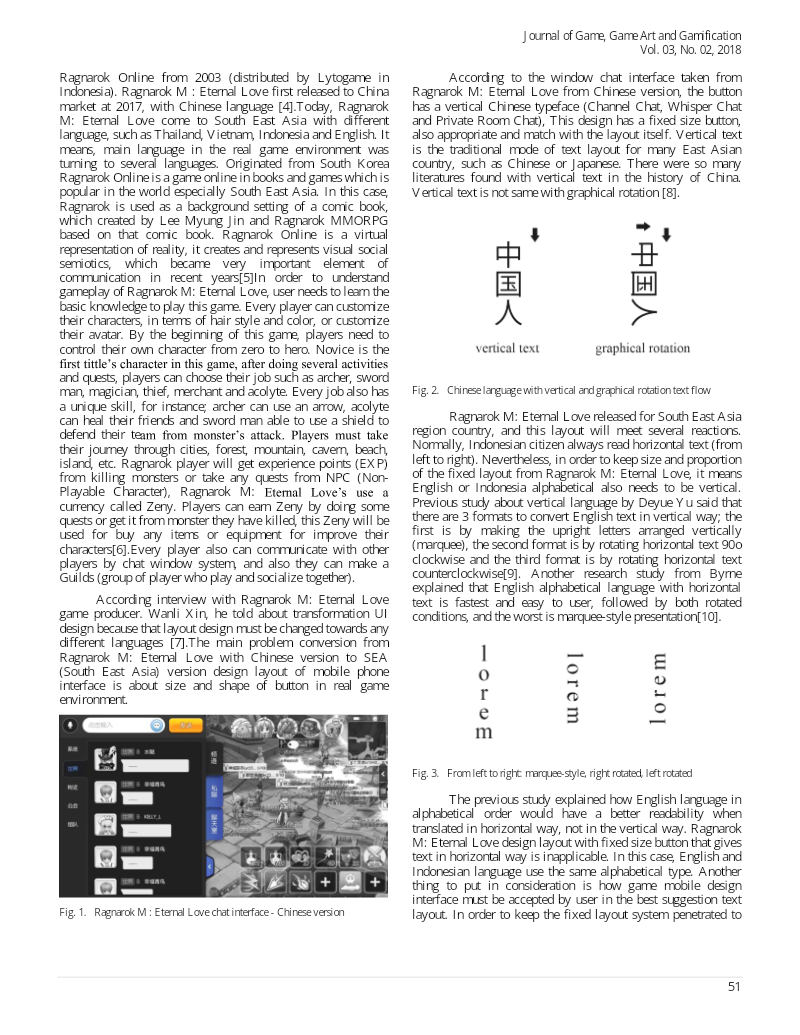
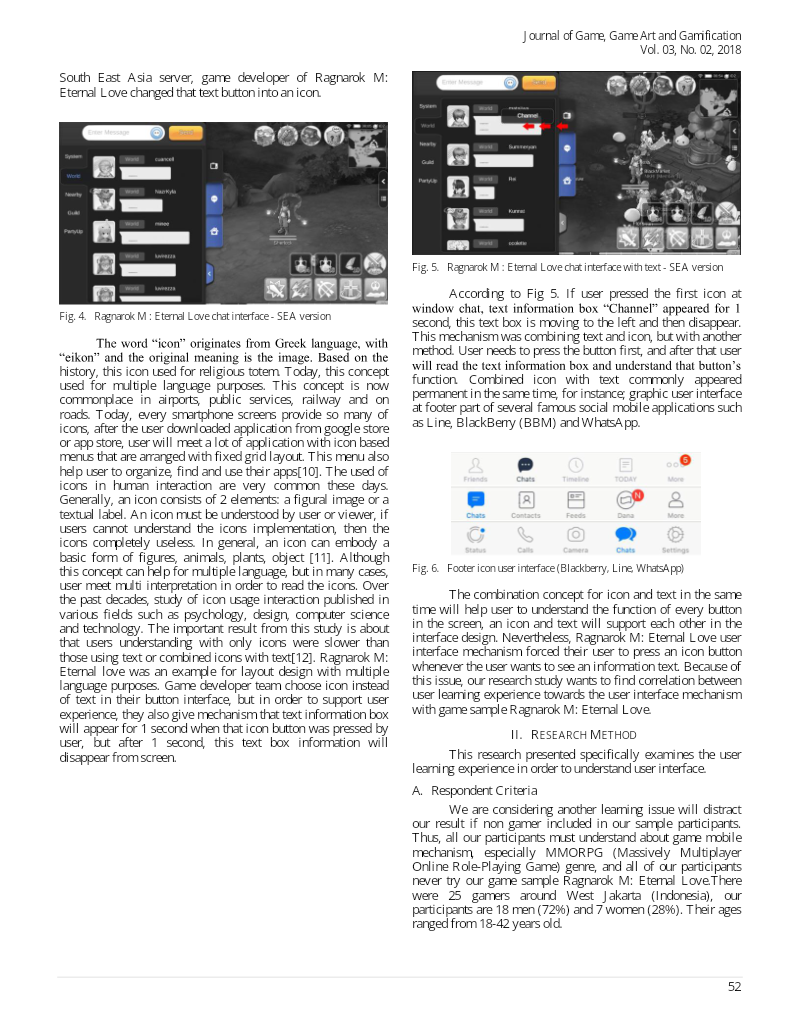
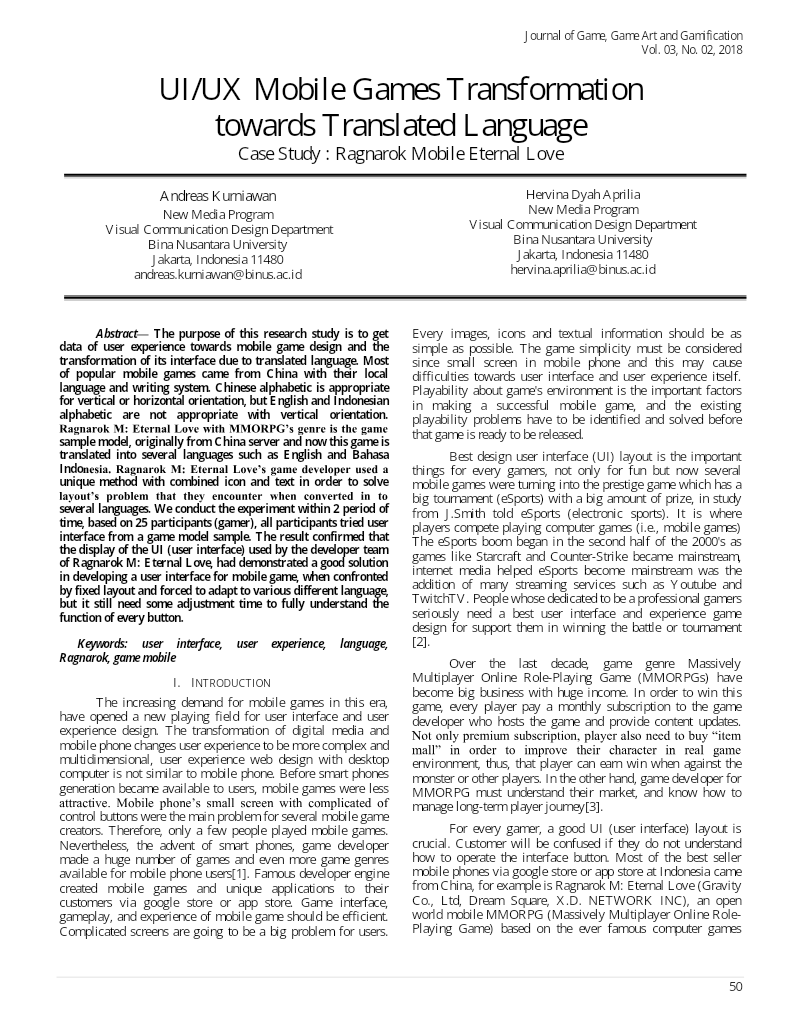
UI/UX Mobile Games Transformation towards Translated Language: Case Study Ragnarok Mobile Eternal Love
This research examines the challenges of adapting mobile game user interface (UI) and user experience (UX) designs when translating games from Chinese to languages using Latin-based alphabets, such as English and Indonesian.
- Transitioning fixed-layout UIs from Chinese to Latin-based languages creates a significant initial learning curve for players, requiring an average of 1.35 minutes per navigation task during the first session.
- User efficiency improves dramatically over time, with task completion times dropping from 5.4 minutes to 27.84 seconds after one week of consistent gameplay.
- Icon-based navigation is a viable strategy for maintaining fixed UI layouts when translating between languages with different text orientations, such as vertical Chinese and horizontal Latin scripts.
Game Mechanics: Sniper Simulator Game
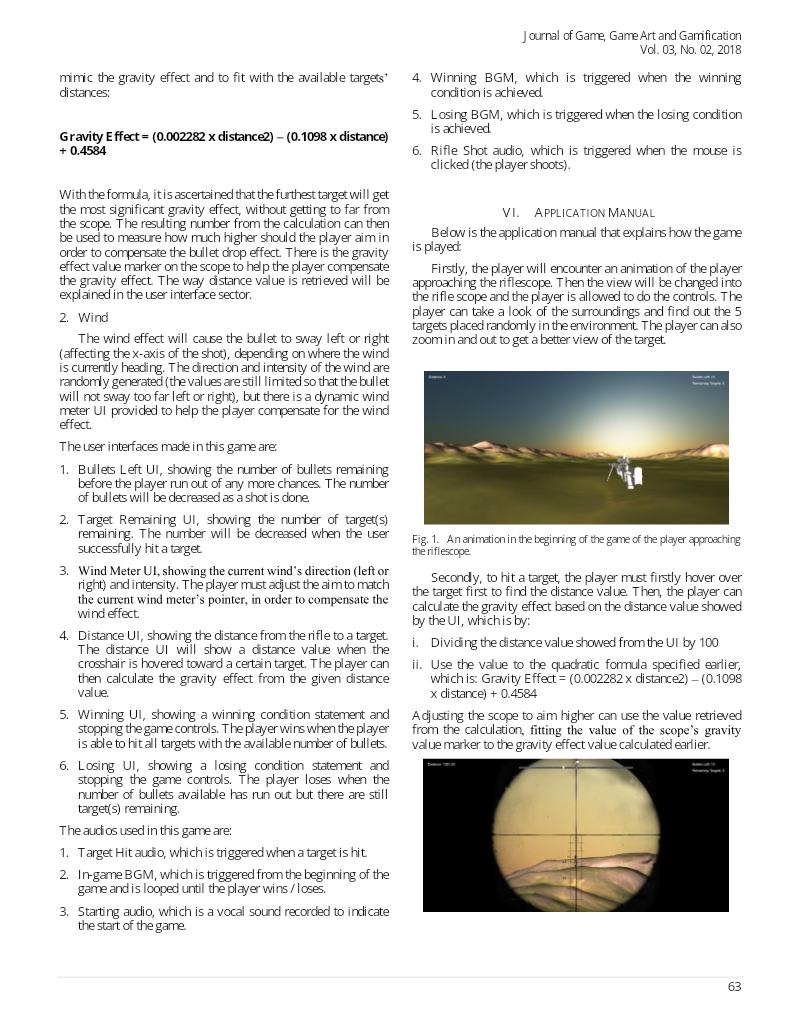
This development study explores the design and implementation of game mechanics within a digital sniper simulation prototype.
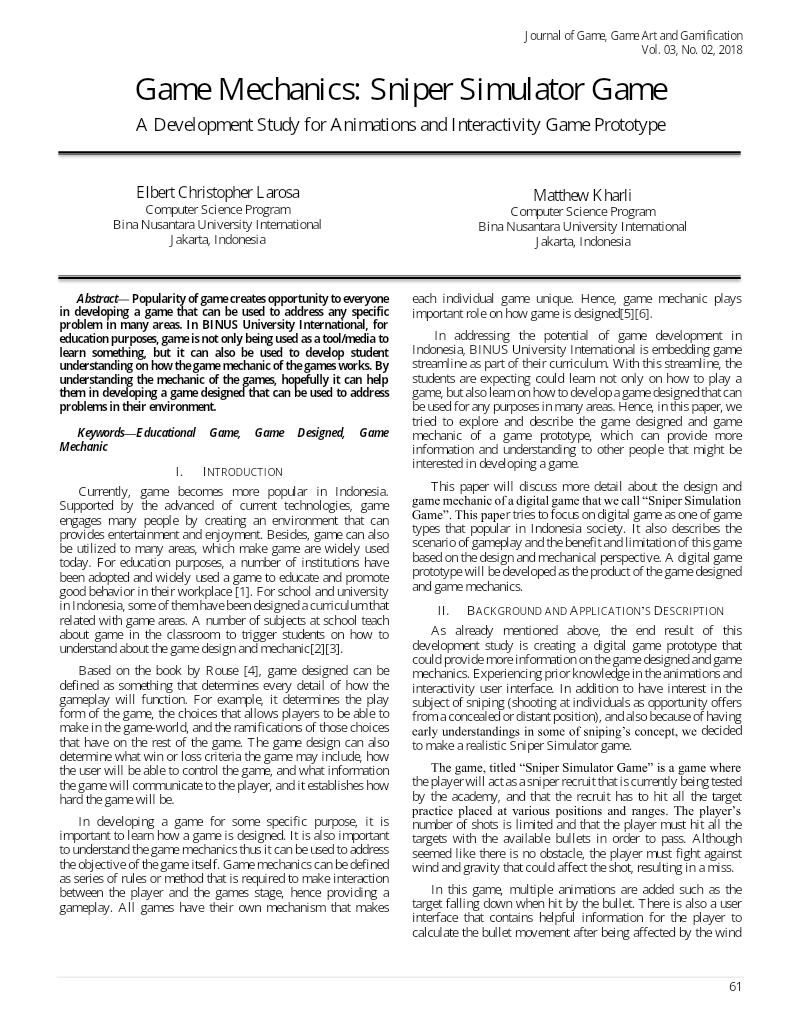
- The sniper simulator prototype integrates realistic physics by using a custom quadratic formula to calculate gravity-induced bullet drop based on target distance.
- Gameplay mechanics incorporate dynamic environmental variables, specifically a wind meter that introduces lateral sway to increase the difficulty of bullet trajectory calculations.
- The project was developed using a 3D WebGL environment powered by the Three.js framework, with terrain and equipment assets modeled in Blender.
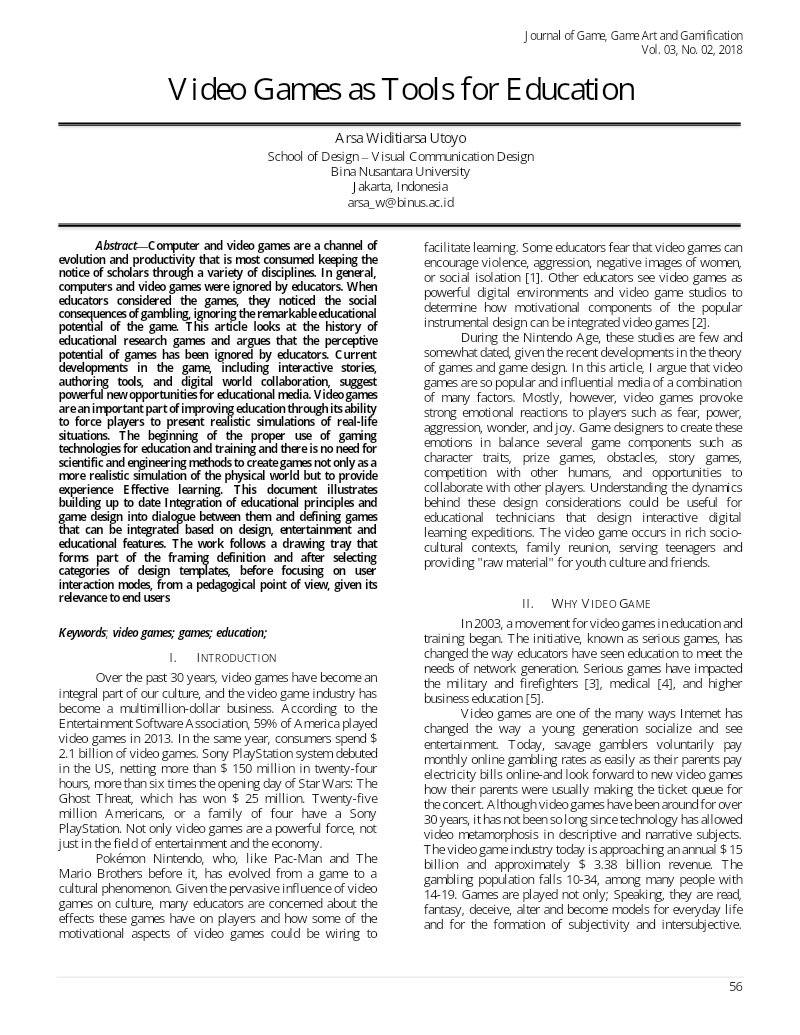
Video Games as Tools for Education: Indonesia
Video games represent a significant, underutilized opportunity for educational advancement, offering powerful digital environments that facilitate learning through realistic simulations and interactive engagement.
- Video games offer untapped educational potential by using interactive simulations to teach critical thinking, problem-solving, and complex system modeling.
- The current lack of a unified research framework hinders progress, as existing studies focus on comparing games to traditional methods rather than analyzing effective design patterns.
- Successful educational game development requires the adoption of pedagogically informed design patterns that create a shared vocabulary between educators and game designers.
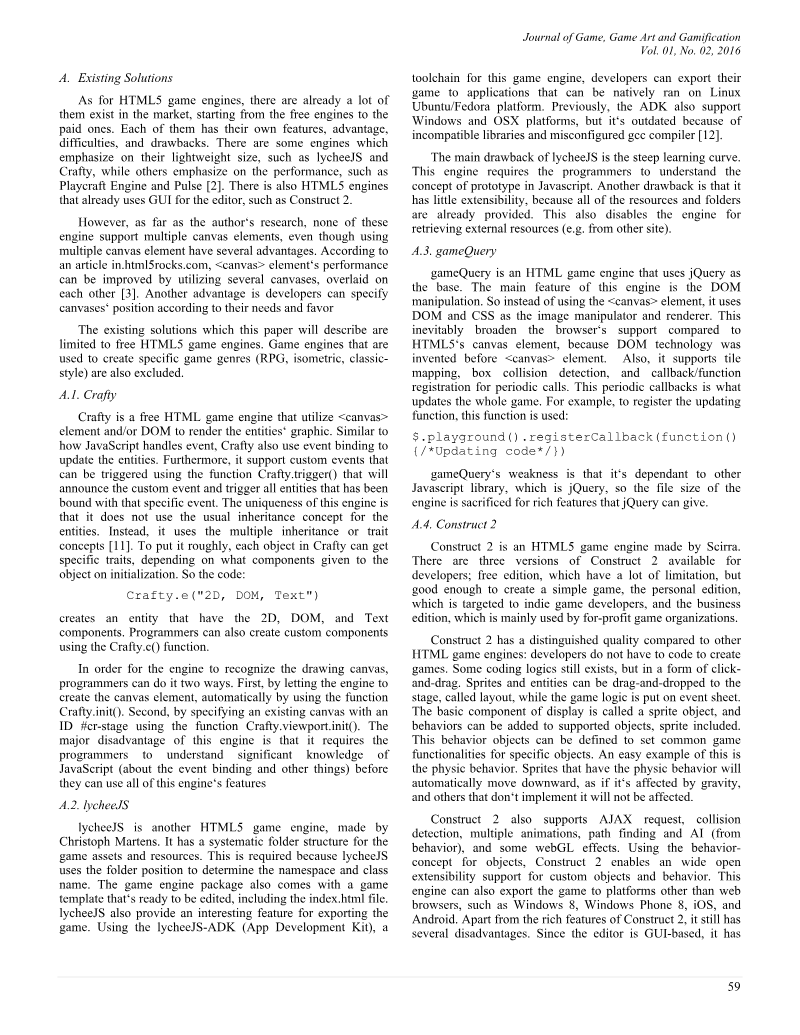
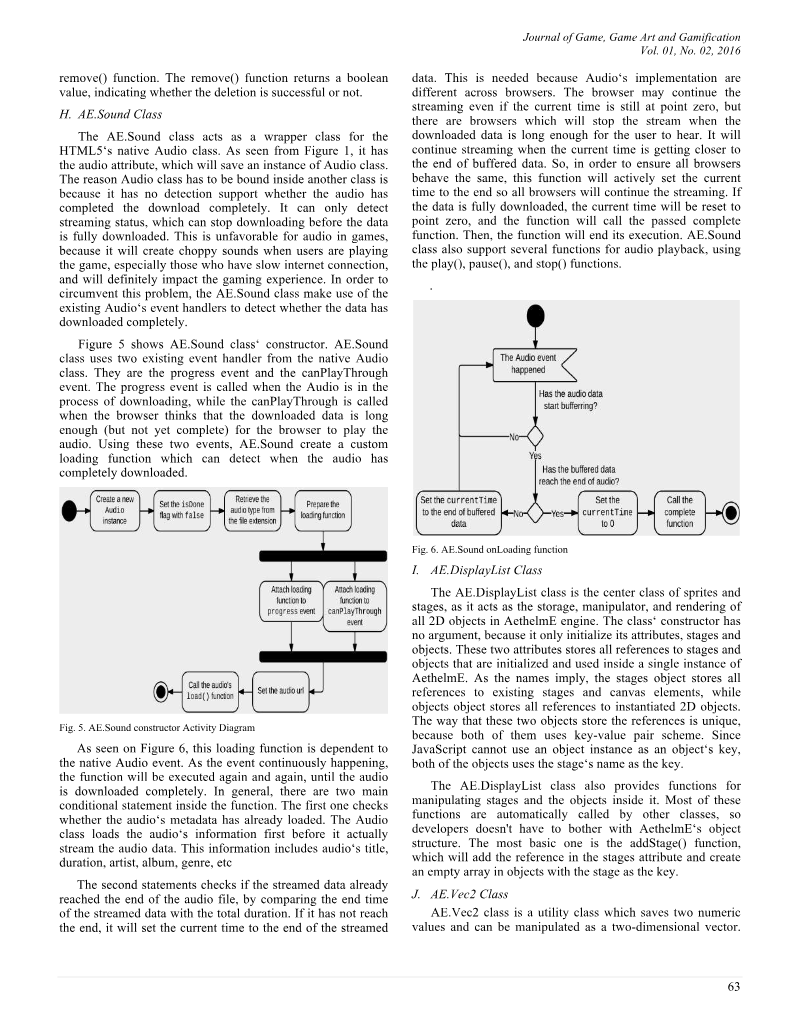
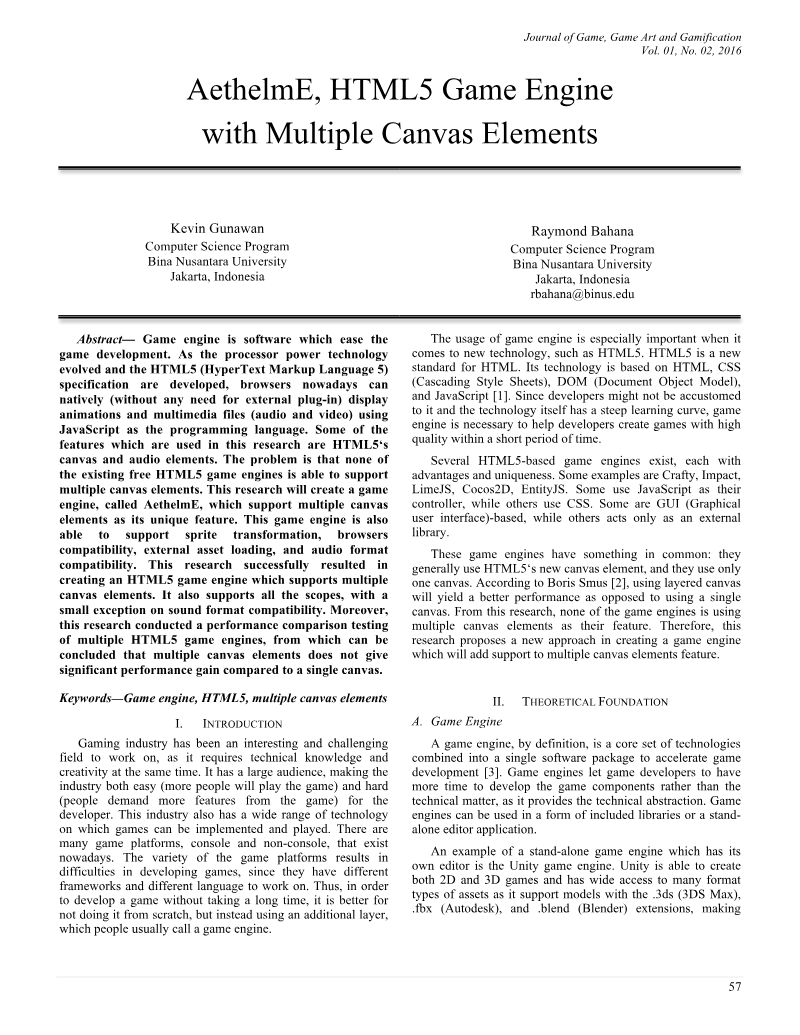
AethelmE: HTML5 Game Engine with Multiple Canvas Elements
AethelmE functions as a specialized HTML5 game engine prototype engineered to explore the architectural potential of utilizing multiple canvas elements for 2D rendering.
- The AethelmE engine prototype confirms that utilizing multiple canvas elements for 2D rendering does not provide a performance advantage over traditional single-canvas architectures.
- Architectural layering via multiple viewports adds unnecessary complexity without alleviating the performance bottlenecks typically found in HTML5 game engines.
- Performance benchmarks indicate that developers should prioritize optimizing draw calls and resource management rather than increasing the number of canvas elements.
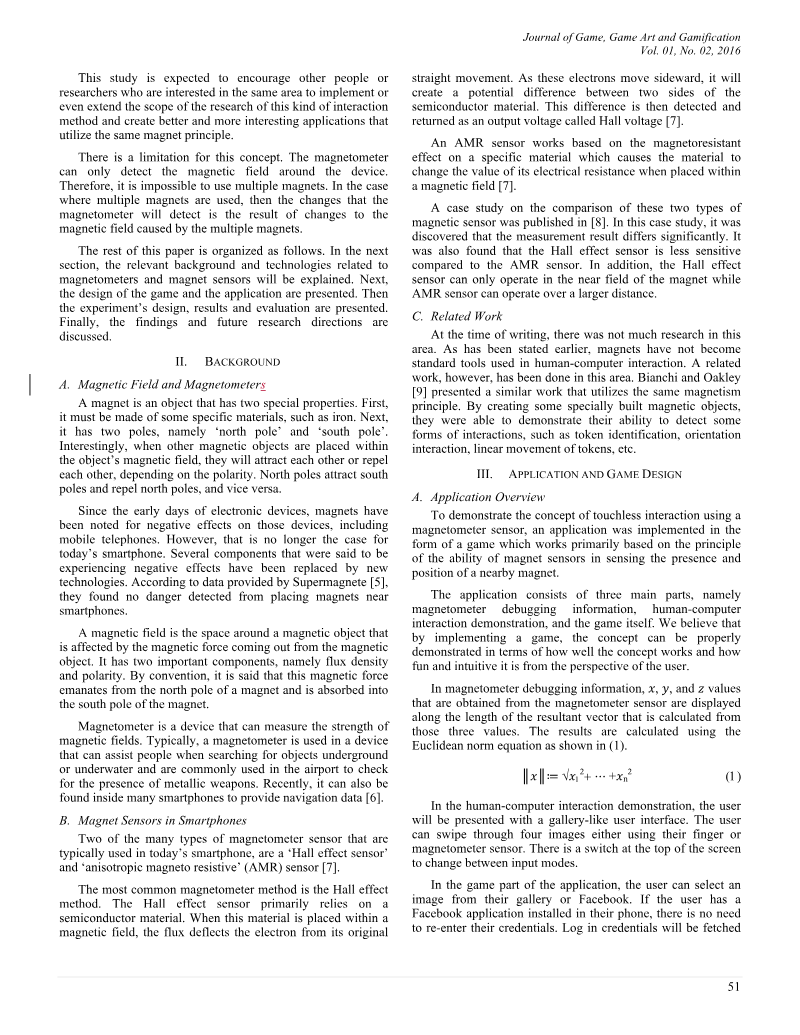
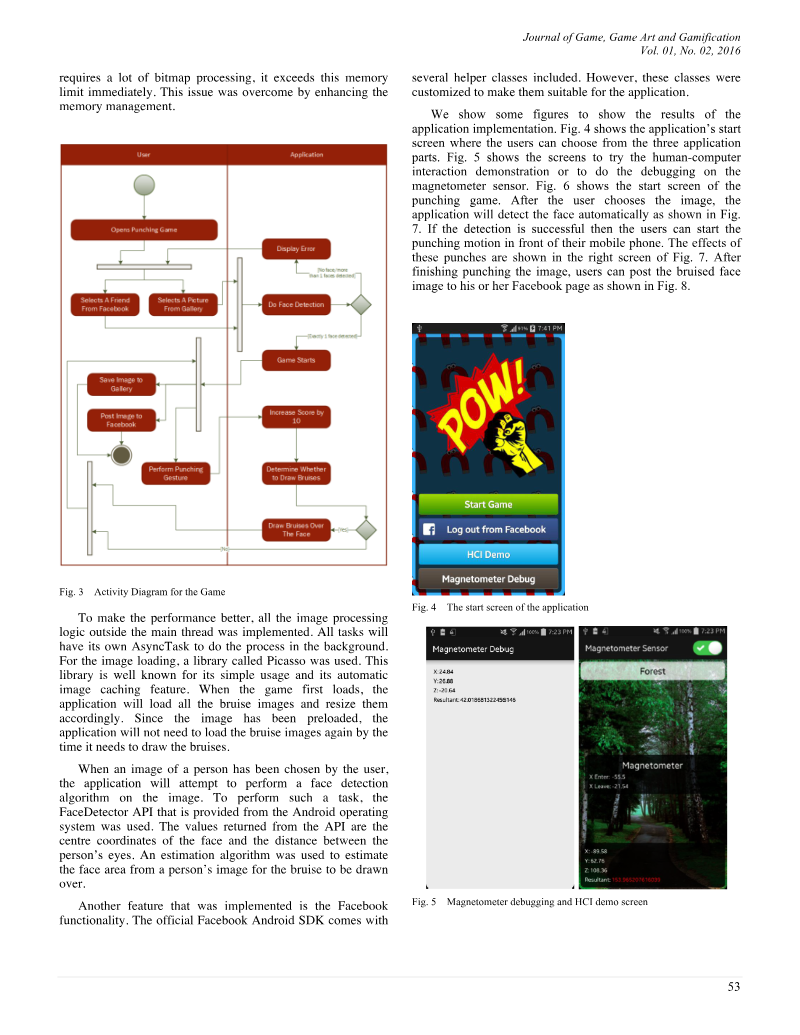
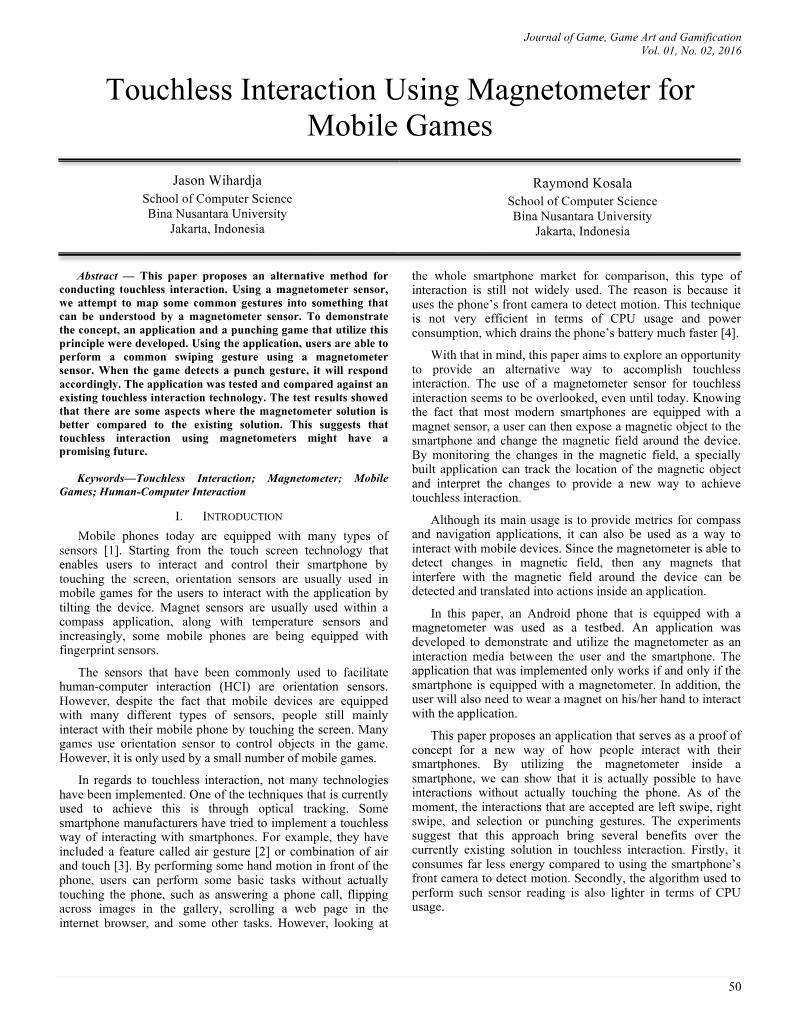
Touchless Interaction Using Magnetometer for Mobile Games
This research explores the viability of using a smartphone’s built-in magnetometer as a medium for touchless human-computer interaction in mobile gaming.
- Magnetometer-based gesture tracking consumes significantly less power than camera-based alternatives, resulting in a 3% battery drain over five minutes compared to 9% for optical tracking.
- The magnetometer approach currently faces performance limitations, achieving 90% accuracy and 70% responsiveness, trailing the 100% accuracy and 95% responsiveness of camera-based systems.
- Smartphone magnetometers are currently optimized for navigation and compass tasks rather than high-frequency gesture tracking, leading to issues with polling rates and sensitivity.
Game Prototype for Daily English Practice: An Approach Design by using a Puzzle, Riddle and Adventure Scenario
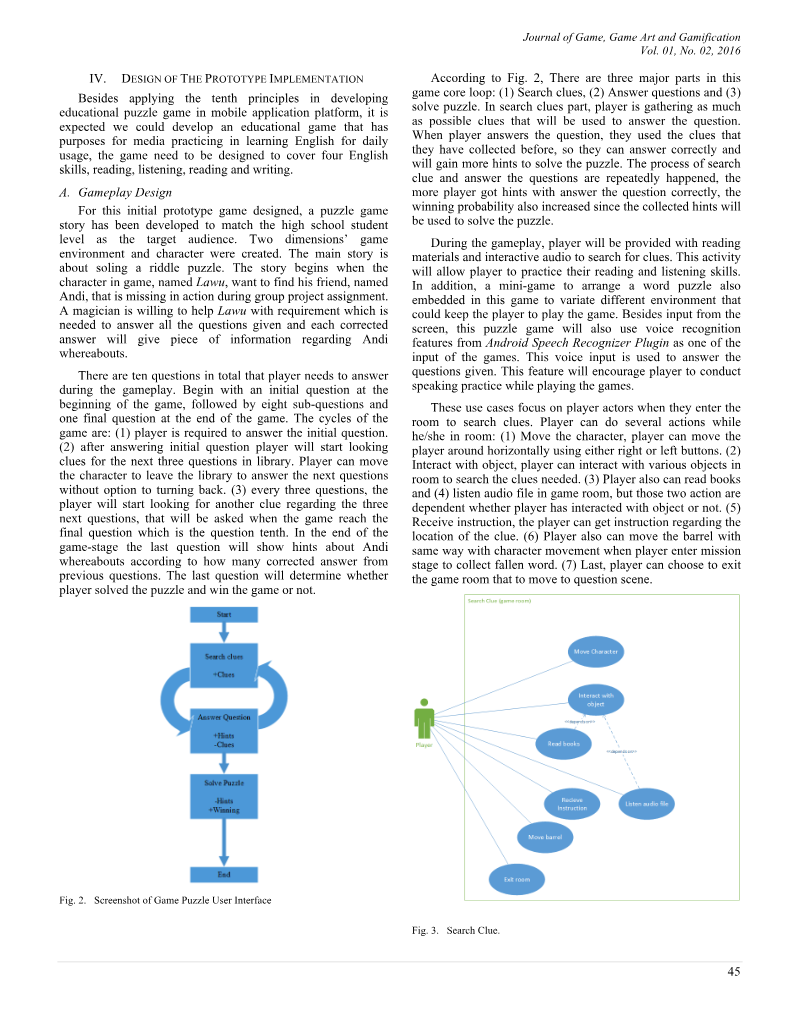
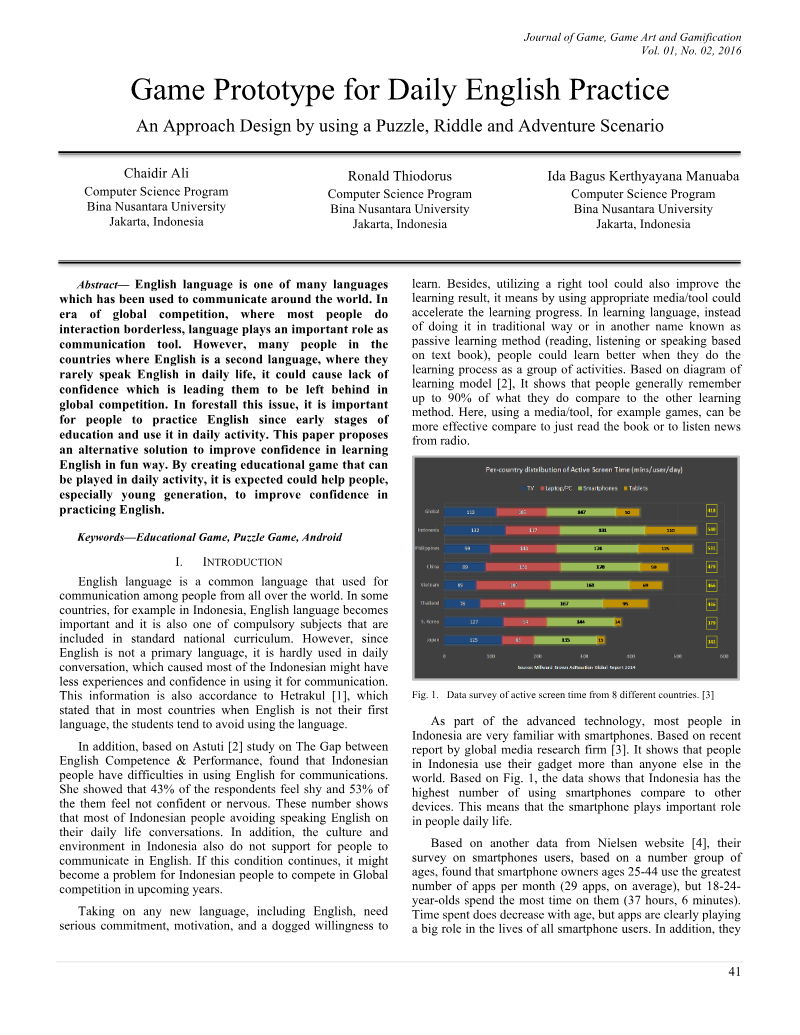
The integration of interactive mobile gaming into language education offers a viable solution for Indonesian students struggling with low self-confidence in English proficiency.
- An Android-based adventure game prototype improves English language proficiency for Indonesian students aged 18–24 by replacing traditional text-heavy methods with interactive puzzle and riddle-solving scenarios.
- The platform utilizes integrated voice recognition technology to facilitate speaking practice alongside reading and listening exercises, creating a low-pressure environment for daily engagement.
- A SQLite database architecture supports the system, enabling scalable content delivery and long-term tracking of student progress through dynamic, evolving lessons.
Mata: An Android Eye-Tracking Based User Interface Control Application
The Mata application is a prototype system designed to provide an eye-tracking-based user interface for Android smartphones, specifically aimed at enhancing accessibility for individuals with motor impairments.
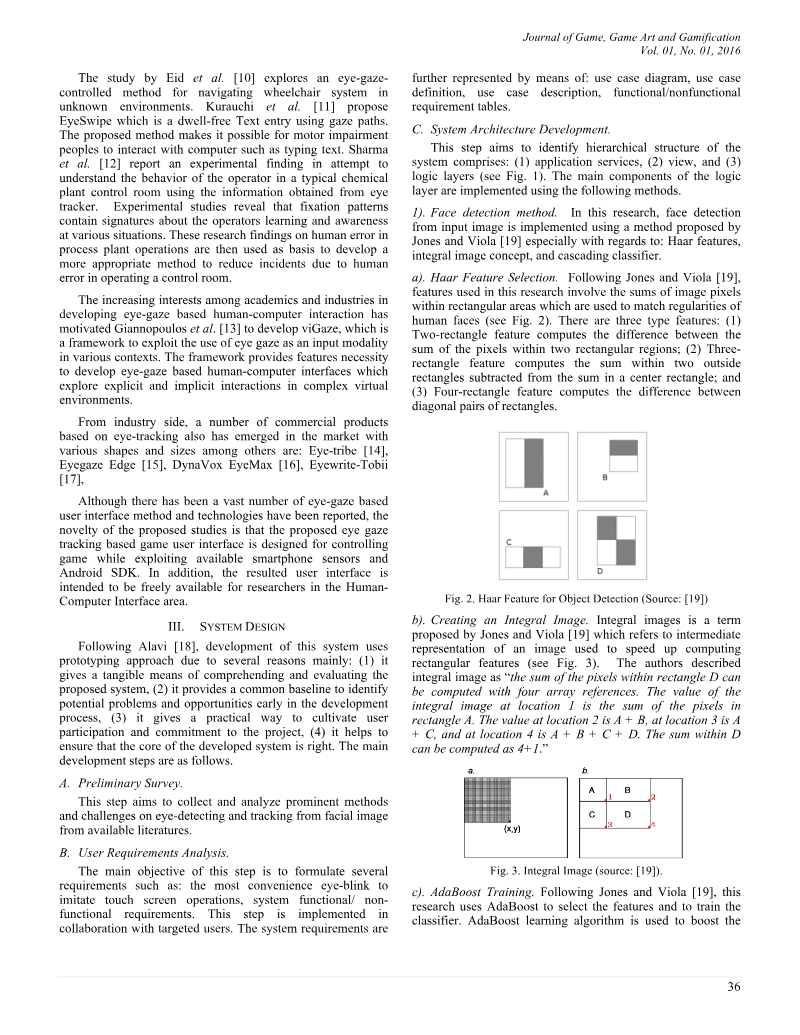
- The Mata prototype enables Android mobile gaming control through eye-gaze tracking and blink detection, serving as a touch-screen alternative for users with motor impairments.
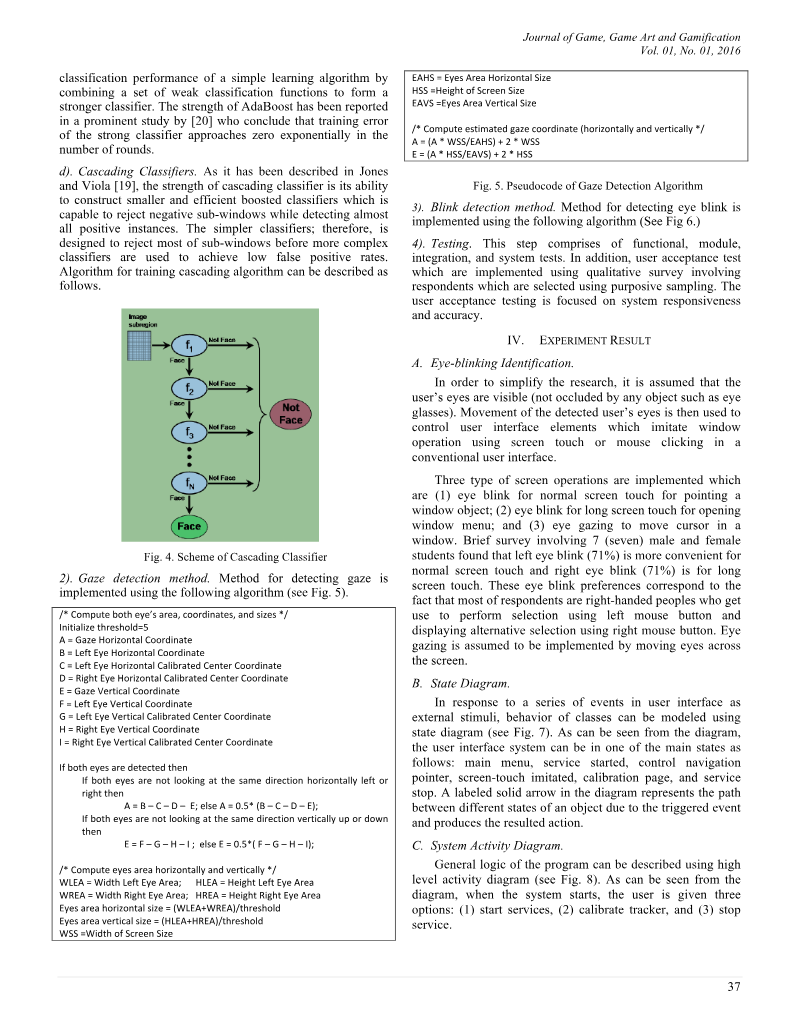
- System architecture relies on the Viola-Jones method for face detection, with gaze coordinates mapped to screen position and blink patterns used to trigger clicks or long-press actions.
- Initial qualitative testing with seven college students yielded a responsiveness score of 8.0 and an accuracy score of 7.4 on a 10-point Likert scale.
Evolution of the Video Game Market: Analysis of the Videogame Target Market
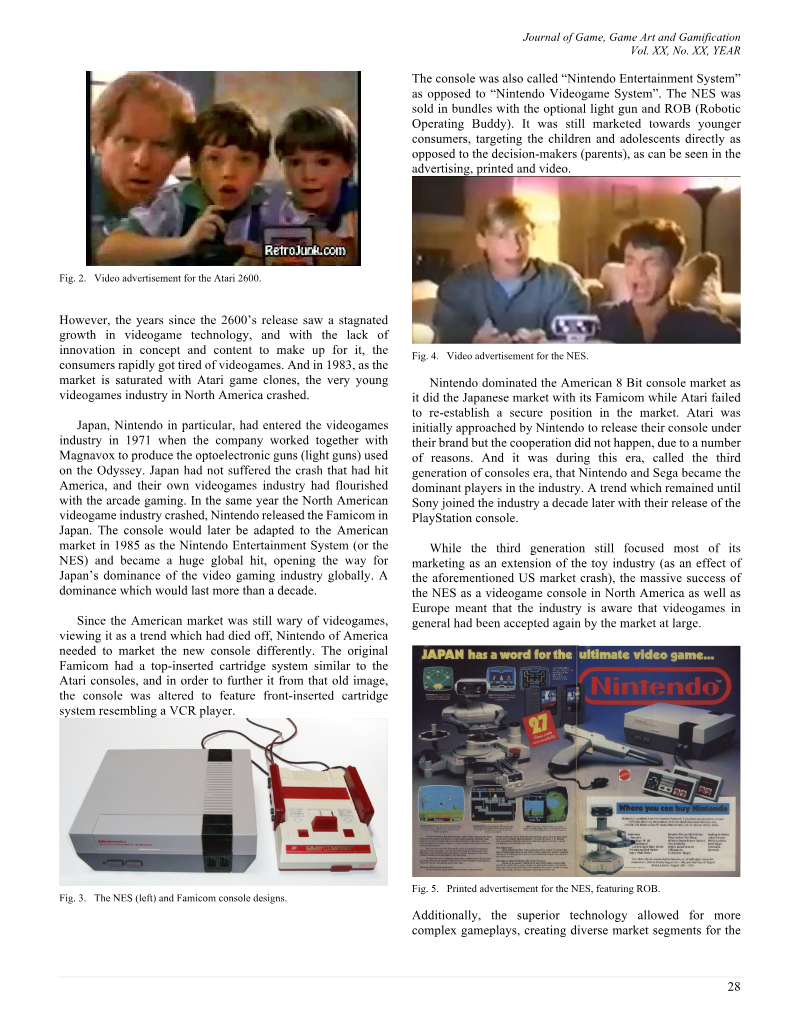
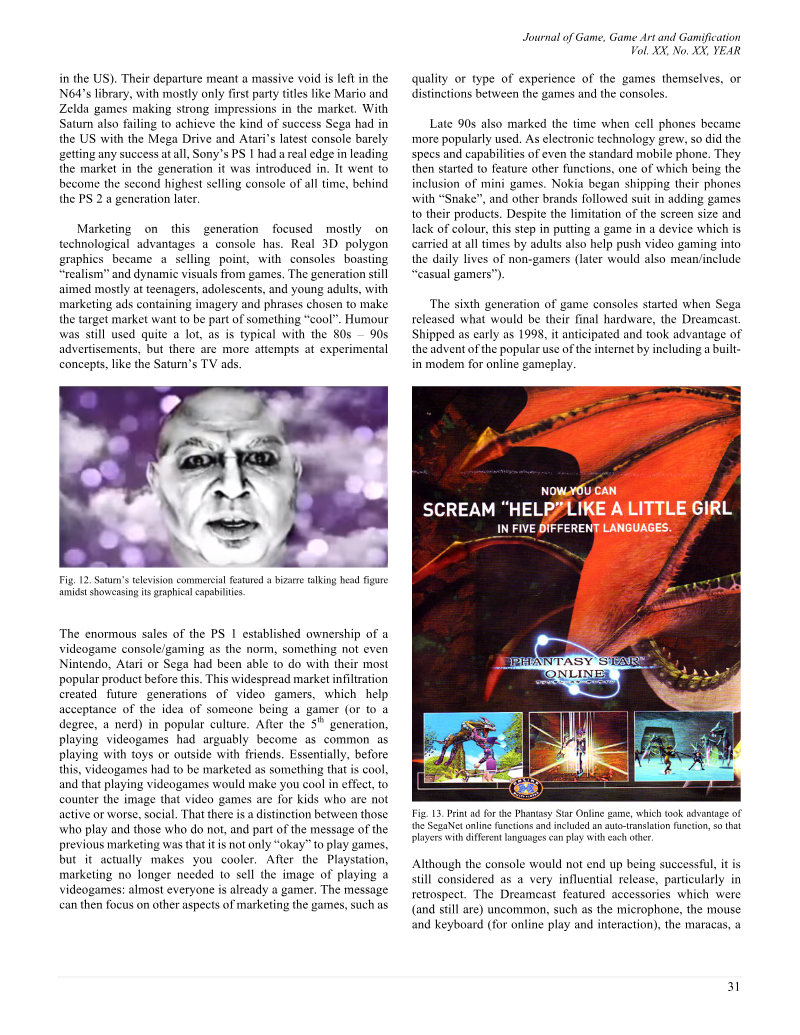
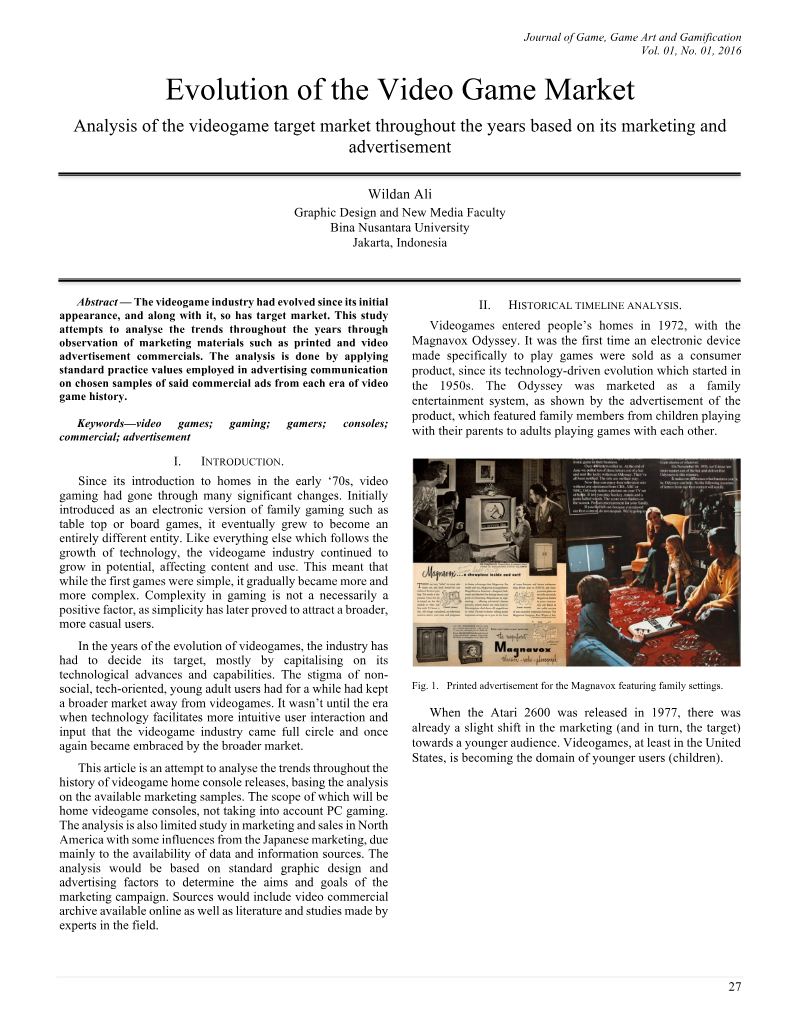
This analysis examines the evolution of the video game industry by tracing shifts in target market demographics through the lens of historical marketing and advertising materials.
- The gaming market has shifted from a niche novelty to a mass-market phenomenon, with 49% of American adults now playing games while only 10% identify as traditional 'hardcore' gamers.
- The industry has successfully normalized gaming across all age groups as the first generation of gamers has reached financial independence.
- Modern gaming has evolved into a multifaceted platform where games themselves serve as hubs for social interaction and marketing, often rendering traditional advertising unnecessary.