User Acquisition reports and market data
Documents

FTUE: Monster Sweeperz
The analysis of the mobile title Monster Sweeperz, developed by 4:33 Creative Labs, highlights significant friction points in the first-time user experience (FTUE) that hinder player retention.
- The 5-minute initial download time for Monster Sweeperz creates a prohibitive barrier to entry that significantly undermines player retention and return on high customer acquisition costs.
- Mobile games should prioritize a seamless onboarding experience with a target launch time of under 30 seconds to successfully convert new installs into engaged users.
- Technical instability, such as the tutorial crash observed in this title, negates the value of innovative mechanics and high-quality art by preventing users from experiencing the core gameplay.

FTUE: Stormfall w/ added Megan Fox
The mobile strategy game Stormfall: Rise of Balur utilizes a highly structured First Time User Experience (FTUE) to onboard players, heavily relying on celebrity integration and repetitive, task-oriented mechanics.
- Stormfall: Rise of Balur utilizes celebrity integration, specifically featuring Megan Fox as an in-game tutor, to increase engagement and provide a recognizable guide during the initial tutorial phase.
- The First Time User Experience (FTUE) is designed as a highly structured, task-oriented loop that relies on 'skinner box' mechanics, such as frequent rewards of speed-ups, currency, and experience points, to reinforce player behavior.
- The onboarding process transitions from high-frequency, low-agency interactions—where directional arrows dictate every move—to an open-ended state, which serves as a critical friction point that often leads to player churn.

FTUE: Olympus Rising
Olympus Rising, a mobile title developed and published by the German studio Flaregames, represents a strategic evolution of the build-and-battle genre.
- Olympus Rising is a mobile build-and-battle title from German studio Flaregames, designed as a spiritual successor to their previous game, Royal Revolt 2.
- The game differentiates itself from its predecessor by shifting from a cartoonish aesthetic to a mature, photorealistic visual style based on ancient Greek mythology.
- Core gameplay centers on direct hero-led combat where players control a single character to lead waves of support units against enemy fortifications and towers.

FTUE: Hungry Shark World
Hungry Shark World, developed by FGOL and Ubisoft, serves as a prominent example of the evolution of the long-running Hungry Shark franchise.
- Hungry Shark World, developed by FGOL and Ubisoft, utilizes a core loop of endless survival gameplay where players must consume prey to maintain health and energy while navigating environmental hazards.
- The game features a progression system centered on seventeen distinct shark species categorized by size tiers, allowing players to unlock increasingly powerful predators like the Great White.
- Long-term retention is driven by a robust metagame that includes stat upgrades for speed, bite, and boost, alongside customizable pets and skins.

FTUE: Disney Magical Dice
Disney Magical Dice, a mobile title developed by Netmarble, serves as a western-focused adaptation of the popular Korean board game Everyone’s Marble.
- Disney Magical Dice, developed by Netmarble, adapts the Korean board game Everyone’s Marble for Western audiences by blending Monopoly-style mechanics with collectible card game (CCG) progression.
- The game’s onboarding process suffers from significant friction, specifically due to mandatory push notification prompts and background data downloads that delay access to the core gameplay loop.
- While the tutorial effectively teaches basic movement and property acquisition, its restrictive nature fails to adequately prepare players for the game's more complex attribute management and card-fusion systems.
FTUE: Dino Bash
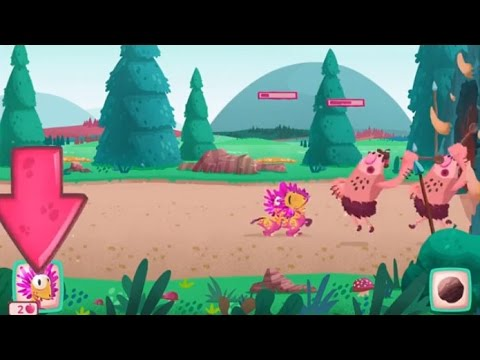
Dino Bash, a 2D side-scrolling base battler developed by Pokoko Studio and published by Tilting Point, represents a contemporary attempt to revitalize the castle defense genre.
- Dino Bash, a 2D side-scrolling base battler by Pokoko Studio and Tilting Point, attempts to modernize the castle defense genre by blending tactical combat with a layered metagame.
- The game’s first-time user experience integrates progression systems—including experience points, currency, and unit upgrades—within the first ten minutes of gameplay.
- Core mechanics center on resource management, specifically apple production for unit summoning, complemented by active defensive measures like volcano bombs and stone throwing.

FTUE: Battle Ages
Battle Ages, a mobile build-and-battler title, serves as a case study for the evolution of first-time user experiences within the strategy genre.
- Poorly designed tutorials and onboarding processes lead to immediate user uninstalls, directly negating the high financial investments made in mobile user acquisition.
- Battle Ages, released in 2016, serves as a case study for the failure of relying on legacy design patterns from 2014-era strategy games like Clash of Clans and DomiNations.
- Forcing players to spend hard currency to complete basic onboarding steps creates a negative first-time user experience that hinders long-term retention.

FTUE: War and Order
War and Order, developed by Camel Games, serves as a prominent example of the mobile strategy genre, heavily influenced by the mechanics popularized by titles like Game of War.
- War and Order by Camel Games utilizes a prescriptive, high-speed onboarding tutorial to rapidly immerse players in base-building and resource management mechanics.
- The game prioritizes aggressive early-game alliance integration as a primary strategy for long-term player retention and monetization.
- The development strategy focuses on bridging Chinese technical expertise with Western market preferences, utilizing a portrait-mode interface for global accessibility.
Why you should be using Google Play Games services
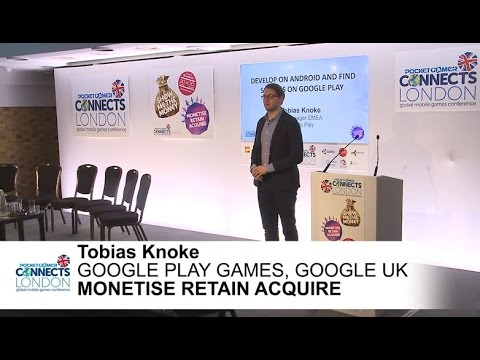
Google Play Games services provides a comprehensive suite of tools designed to assist developers throughout the entire game lifecycle, from prototyping and soft launching to full release and post-launch optimization.
- Google Play Games services provides access to a global audience of over one billion active Android devices, with significant growth currently projected in emerging markets.
- Machine learning-based predictive analysis allows developers to identify specific user behavior patterns, such as churn risk or spending propensity, to trigger targeted retention interventions.
- Integrated player analytics tools provide data on in-game economies, enabling developers to balance currency flow and optimize average revenue per daily active user (ARPDAU).

Who were the secret App Store winners of 2015?
The analysis of 2015 App Store performance identifies the market’s "hidden winners" by comparing top-grossing rankings against download rankings.
- Publicly traded companies dominate the mobile gaming market, owning 59% of the top 100 grossing titles in the U.S. iPhone market.
- The most profitable games, termed 'hidden winners,' prioritize high monetization efficiency and player retention over the high download volumes seen in mainstream hits like Clash of Clans.
- Slots and Asian-style RPGs are the primary genres that achieve high grossing rankings despite lower install rates, driven by superior average revenue per daily active user.

What does it cost to become an App Store millionaire?
Achieving commercial success in the mobile gaming market now requires a sophisticated, capital-intensive approach to user acquisition.
- Reaching the top 25 rankings on major app stores typically requires a capital investment of approximately $200,000 for user acquisition.
- Developers should allocate $5,000 to $10,000 during the soft launch phase to gather statistically significant data on monetization and conversion metrics.
- Data-driven testing on platforms like Facebook is essential for refining demographics and acquisition strategies before committing to high-cost channels like influencer partnerships.

Is your game's on-ramp better than Facebook's?
The fundamental core of free-to-play game success lies in the management of player sessions, specifically the balance between the ease of entering a game and the comfort of leaving it.
- The primary objective for free-to-play success is designing an 'on-ramp' efficient enough to compete with non-gaming distractions like social media.
- Developers should aim to pass the 'Starbucks test,' ensuring players can have a satisfying, meaningful interaction within the time it takes to order a coffee.
- Retention is best driven by 'return hooks' such as appointment mechanics, social obligations to teammates, and daily rewards rather than reliance on push notifications.