Tabletop reports and market data
Documents
Using Print-on-Demand for Prototyping and Fast-to-Market Paths in Game Design Research
Print-on-demand services offer a viable, sustainable alternative to traditional manufacturing for tabletop game designers, particularly those focused on niche educational or historical subjects.
- Print-on-demand (POD) services like The Game Crafter offer a viable path for game designers to bypass traditional manufacturing hurdles, such as international shipping logistics, managing return merchandise authorizations, and securing retail shelf space.
- Designers must conduct rigorous quality assurance (QA) rounds; in the case of the 'Lost and Found' series, the team performed 19 rounds of QA on the final print-ready files before moving to production.
- Regulatory compliance regarding child safety is critical, as POD providers may have different age-rating standards (e.g., 12+ vs. 14+) than legal requirements for ink safety and small-part hazards, necessitating independent product liability insurance.
Legacy Games: From Risk to Pandemic to SeaFall & Beyond
The legacy board game genre represents a fundamental shift in tabletop design by challenging the industry’s traditional covenant that games must offer infinite, reset-based replayability.
- Legacy board games challenge the traditional industry assumption that infinite replayability is the primary value driver for consumers, proving that players are willing to engage with consumable, one-time experiences.
- The 'legacy' mechanic functions by breaking the covenant of board game permanence, allowing players to physically alter components—such as placing stickers or destroying cards—which creates a sense of freedom and narrative weight similar to coloring books or legacy-style digital games.
- Designing for 'legacy' play involves creating a sense of mystery and progression through sealed components, which incentivizes cooperative play as groups work together to unlock content rather than competing solely for victory.
Developing Artifacts of Play For Your Tabletop Games
Artifacts of play are defined as items created during a game session that outlive the experience itself, serving as tangible or intangible mementos of the players' specific choices and interactions.
- Artifacts of play are items created during a session that serve as tangible or intangible mementos, effectively extending the game's emotional resonance and marketability beyond the initial experience.
- Designers should integrate artifact creation directly into the game's rules, ensuring that the act of playing inherently produces a unique, personalized object.
- Successful implementation requires designers to relinquish some control, allowing players to act as co-authors who shape the game's narrative or physical state.
Board Game Design Day: Why Indirect or Zero Player Interaction Can Be Great
Board game design functions most effectively when designers view player interaction as a flexible spectrum rather than a mandatory requirement for conflict.
- Player interaction should be treated as a flexible spectrum rather than a mandatory requirement for conflict, allowing designers to prioritize strategic planning and personal agency.
- Games with indirect or zero-player interaction offer superior scalability and facilitate simultaneous play compared to traditional direct-conflict mechanics.
- Designers should categorize mechanics into three scales—personal (individual impact), global (shared game state), and adjacent (direct opponent influence)—to maintain ludonarrative harmony.
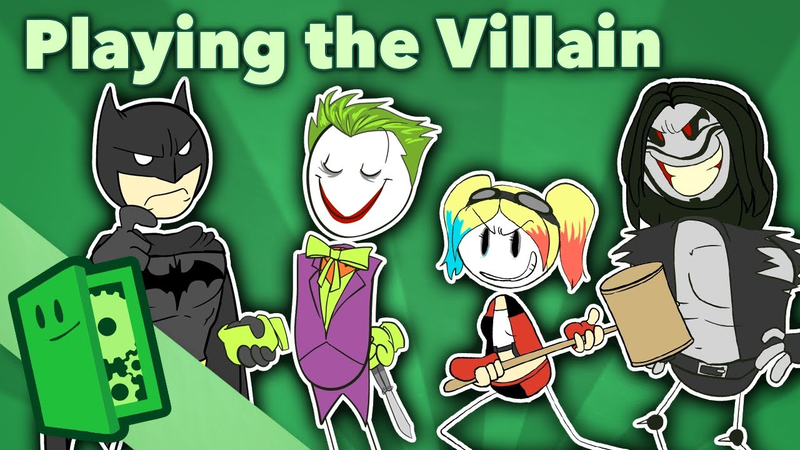
Playing the Villain - Being Good at Being Bad - Extra Credits
Playing a villain in tabletop role-playing games requires a delicate balance between narrative engagement and maintaining group cohesion.
- Effective villainy is defined by relatable motivations and clear internal logic rather than random acts of sadism or cruelty.
- A player-controlled villain must maintain group cohesion by providing a clear justification for why the party would tolerate their presence, such as a shared goal or potential for redemption.
- The primary narrative function of a villain is to act as a formidable obstacle that pushes heroes to their limits, ensuring the eventual victory feels earned.
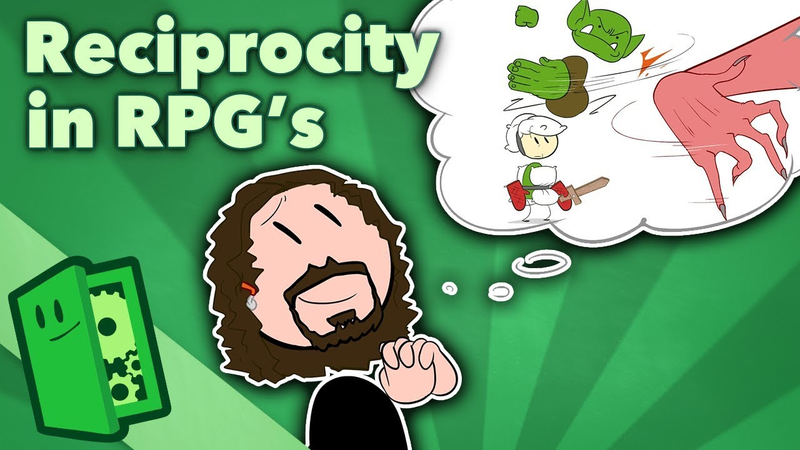
Reciprocity in RPGs - How to Share the Spotlight - Extra Credits
The core thesis of this analysis is that tabletop role-playing games (RPGs) are enhanced through the principle of positive reciprocity, where players intentionally embrace character failure to elevate the narrative and provide opportunities for others to shine.
- Tabletop RPGs are most effective when players prioritize collaborative storytelling over individual character optimization or winning.
- Positive reciprocity involves players intentionally embracing character failure to create narrative tension and provide opportunities for other players to succeed.
- The practice of 'selling'—borrowed from professional wrestling—is a core technique where players make others appear more skilled to enhance the group's dramatic narrative.
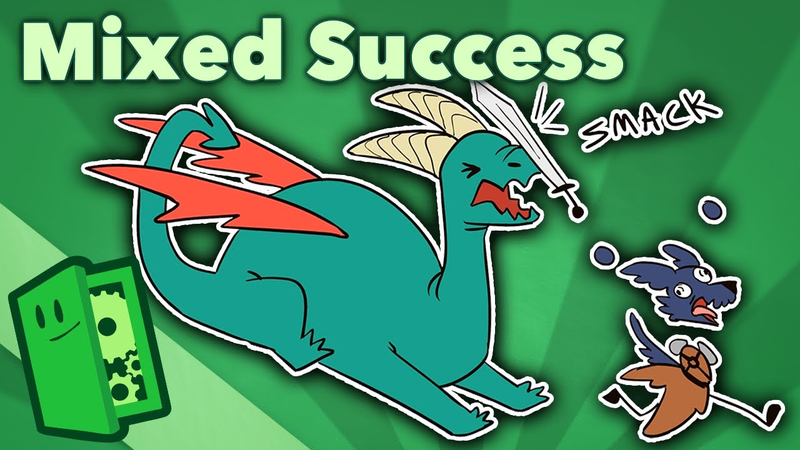
Mixed Success - Winning and Losing in Tabletop Roleplaying Games - Extra Credits
Tabletop roleplaying games (TTRPGs) are often perceived as lacking definitive win or loss conditions, yet they function through a continuous series of individual successes and failures that define the narrative experience.
- TTRPGs function through a continuous series of scene-based successes and failures rather than a singular win or loss condition.
- Modern game design utilizes a six-outcome framework—yes, no, yes and, yes but, no and, and no but—to create nuanced narrative progression.
- The 'failing forward' design philosophy ensures that character failures introduce new obstacles or plot developments rather than halting the narrative.
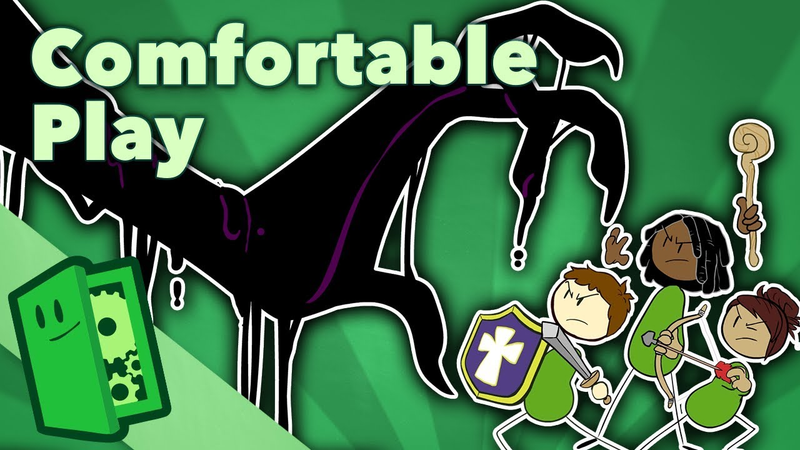
Comfortable Play - Respecting Boundaries in Tabletop RPGs - Extra Credits
Tabletop role-playing games (TTRPGs) offer a unique environment for players to explore complex, challenging, or uncomfortable themes.
- Emotional safety mechanisms are essential in TTRPGs to allow players to explore complex themes while ensuring participants feel respected and secure.
- Proactive communication regarding game themes and individual comfort levels before play begins acts as a vital emotional warning system.
- The 'X-card' method provides a non-verbal signal that allows any player to pause or redirect a scene immediately without needing to justify their discomfort.
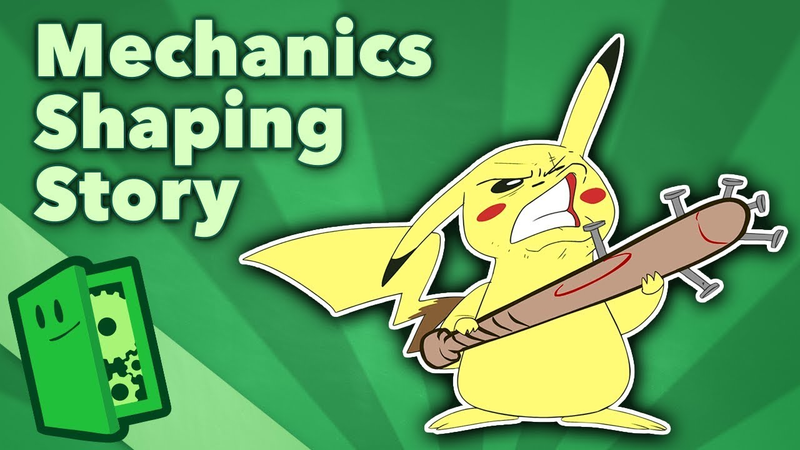
Mechanics Shaping Story - Re-examining the Core Gameplay Loop - Extra Credits
The core gameplay loop—the primary set of actions a player performs repeatedly—functions as a fundamental narrative tool that can either reinforce or contradict a game’s intended story.
- The core gameplay loop functions as a primary narrative tool that can either reinforce or contradict a game’s intended thematic goals.
- Mechanical dissonance occurs when a game's core actions—such as combat or resource management—undermine the stated narrative premise, as seen in the Pokémon franchise where combat-centric mechanics conflict with themes of friendship.
- Traditional JRPG and tabletop systems, inherited from Dungeons and Dragons, rely on a 'kill-loot-level' cycle that inherently frames the game world as a violent environment by incentivizing combat as the primary path to growth.
Games You Might Not Have Tried - ep 19 - Tabletop You Might Not Have Tried - Extra Credits
This overview explores diverse tabletop role-playing games (TTRPGs) that offer unique mechanical innovations beyond the standard conventions of popular titles like Dungeons and Dragons.
- Tabletop RPGs can move beyond traditional combat-focused systems by utilizing mechanics that prioritize narrative co-creation, such as the Powered by the Apocalypse engine used in Dungeon World.
- Game systems can fundamentally alter player agency by tying success to internal character motivations, as seen in Cavaliers of Mars where players must balance honor, love, and self-interest.
- Mechanical innovation often involves replacing standard dice with unconventional components, such as the playing cards in Castle Falkenstein or the physical letter-writing required for De Profundis.
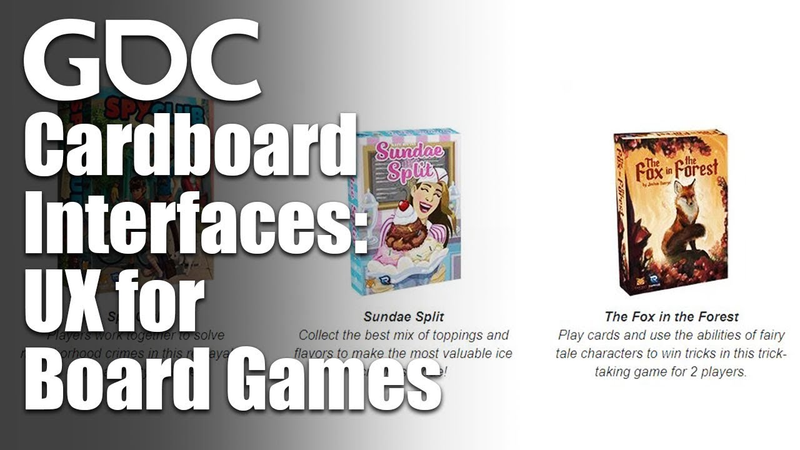
Board Game Design Day: Cardboard Interfaces: UX for Board Games
Board game design functions as a form of physical user interface engineering, where the primary objective is to facilitate player interaction with abstract systems.
- Board game usability can be measured using Jakob Nielsen’s five attributes: learnability, memorability, efficiency, accuracy, and satisfaction.
- When designing card layouts, prioritize information placement based on the player's context; for example, Seven Wonders places costs in the top-left for hand-held cards, while Dominion places them in the bottom-left because cards are played on the table.
- To maintain player engagement during scoring phases, designers should avoid slow, manual token-based systems and consider integrated score tracks, provided they align with the game's specific rhythm and frequency of scoring.
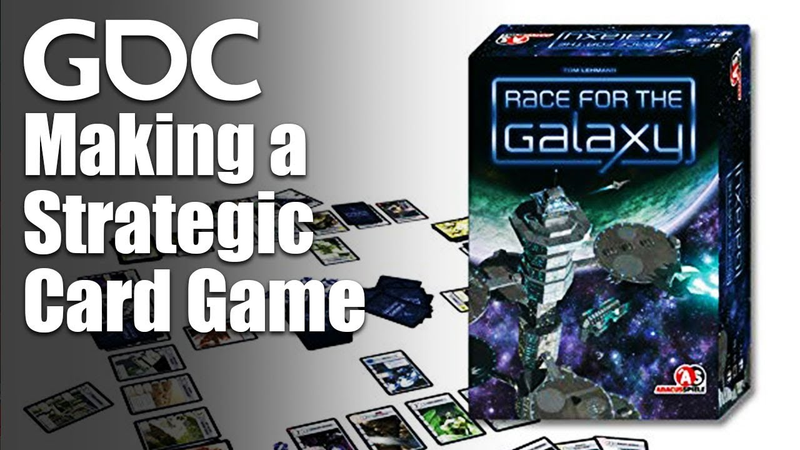
Designing Race for the Galaxy: Making a Strategic Card Game
Race for the Galaxy functions as a strategic card game that prioritizes player agency and economic tension by utilizing a dual-purpose card system.
- The core economic tension is driven by a dual-purpose card system where players must choose between using cards as currency or as permanent empire-building assets.
- Simultaneous action selection eliminates traditional turn-order constraints, allowing for a faster, high-stakes environment focused on tactical bluffing and hidden information.
- Anti-snowballing measures, such as individual bonuses for consume and trade actions, prevent dominant players from monopolizing resources and ensure long-term balance.