Board Game reports and market data
43 game industry reports, presentations and talks about board game from writers such as Game Developers Conference, Extra Credits and PocketGamer.biz, newest from 2026. Every document has a summary and key insights with the page they come from.
Documents

In the Hot Seat: Stefan Lampinen on how Chinese publishers are outpacing the West
Stefan Lampinen, founder of Game Advisor Ltd and a veteran of the global gaming industry, provides a strategic analysis of the evolving dynamics between Western and Chinese game markets.
- European markets should not be treated as a single entity; successful expansion requires a granular approach that accounts for distinct legal, cultural, and regional differences, such as the specific nuances between cities like Berlin, Munich, and Cologne.
- Chinese publishers like Tencent and NetEase are demonstrating high levels of sophistication by conducting deep-dive research into specific European micro-markets, including identifying individual studios in cities with populations over 100,000.
- Entering the European market requires rigorous preparation and strategic planning rather than rushed execution, as historical data shows that many large companies have failed due to a lack of localized positioning and messaging.
Board Games are in Trouble, and it's NOT Why You Think | Extra Credits
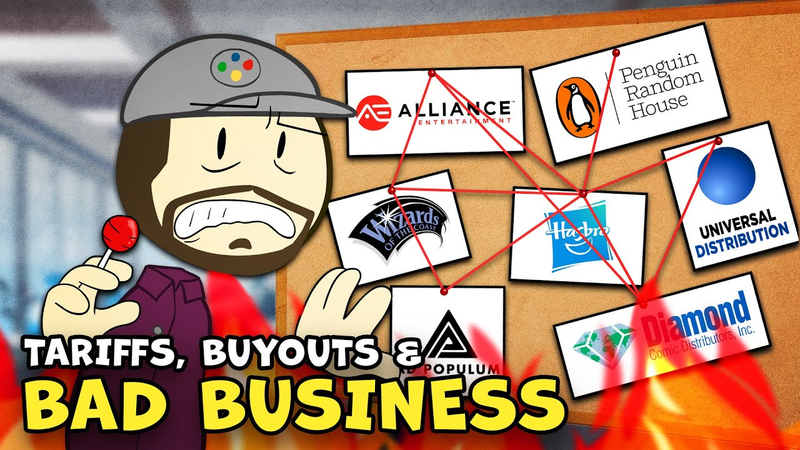
The board game and tabletop RPG industry is currently facing a systemic crisis driven by corporate consolidation, fragile global supply chains, and volatile trade policies.
- The board game industry is facing a systemic crisis driven by supply chain fragility, corporate consolidation, and volatile tariff policies that threaten the viability of publishers.
- The bankruptcy of Diamond Comic Distributors and the subsequent collapse of its subsidiary, Alliance Game Distributors, has created massive instability in the U.S. tabletop game distribution network.
- Modern board game production relies on 'just-in-time' supply chains that distribute manufacturing across multiple countries, making the process highly susceptible to border-crossing costs and tariff fluctuations.
Why Tariffs Are Killing Tabletop Gaming | Design Club
The tabletop gaming industry is currently navigating a precarious financial landscape defined by thin profit margins and a heavy reliance on overseas manufacturing, primarily in China.
- The tabletop industry relies on a fivefold markup from production cost to retail price, meaning minor manufacturing cost increases have a compounding effect that threatens the viability of small-to-mid-sized firms.
- Tariffs are forcing publishers to adopt defensive strategies, shifting investment away from experimental game design toward safer, established franchises and reprints.
- The lack of specialized domestic manufacturing infrastructure makes onshoring a capital-intensive, long-term challenge rather than an immediate solution to current import cost crises.

Sustainability at Embracer Group: FY 2024/25 ESG Fact Sheet
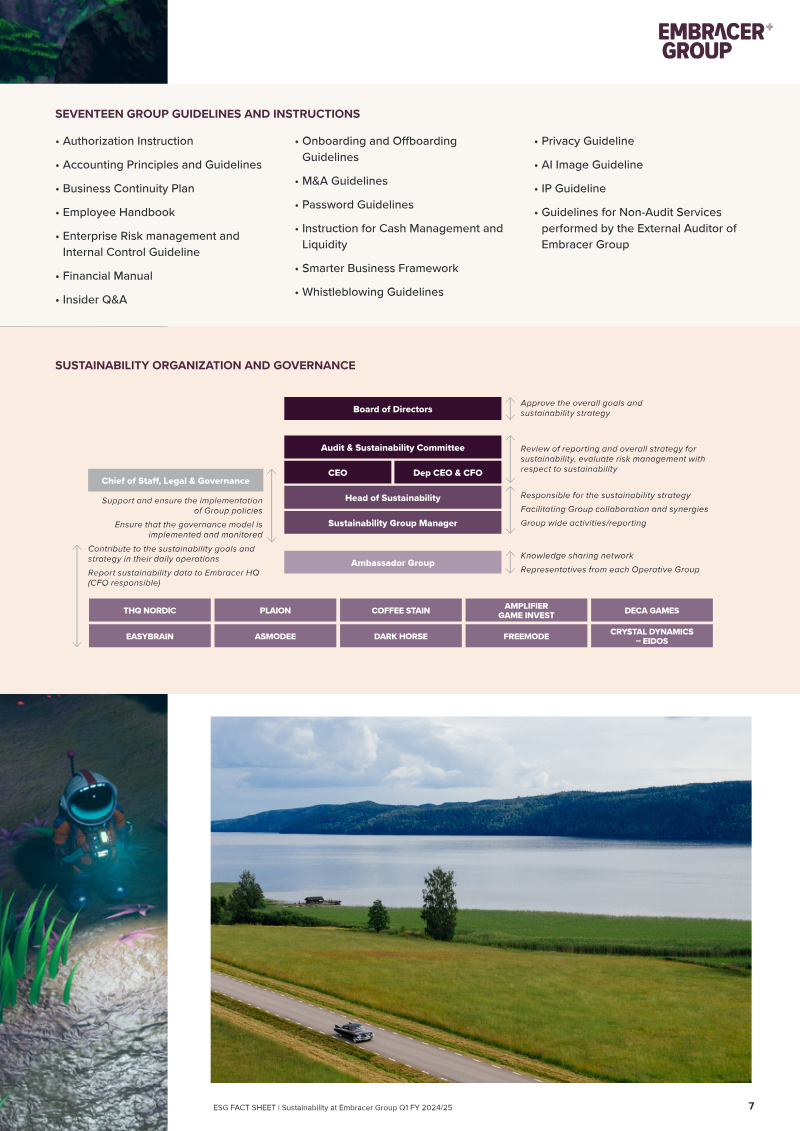
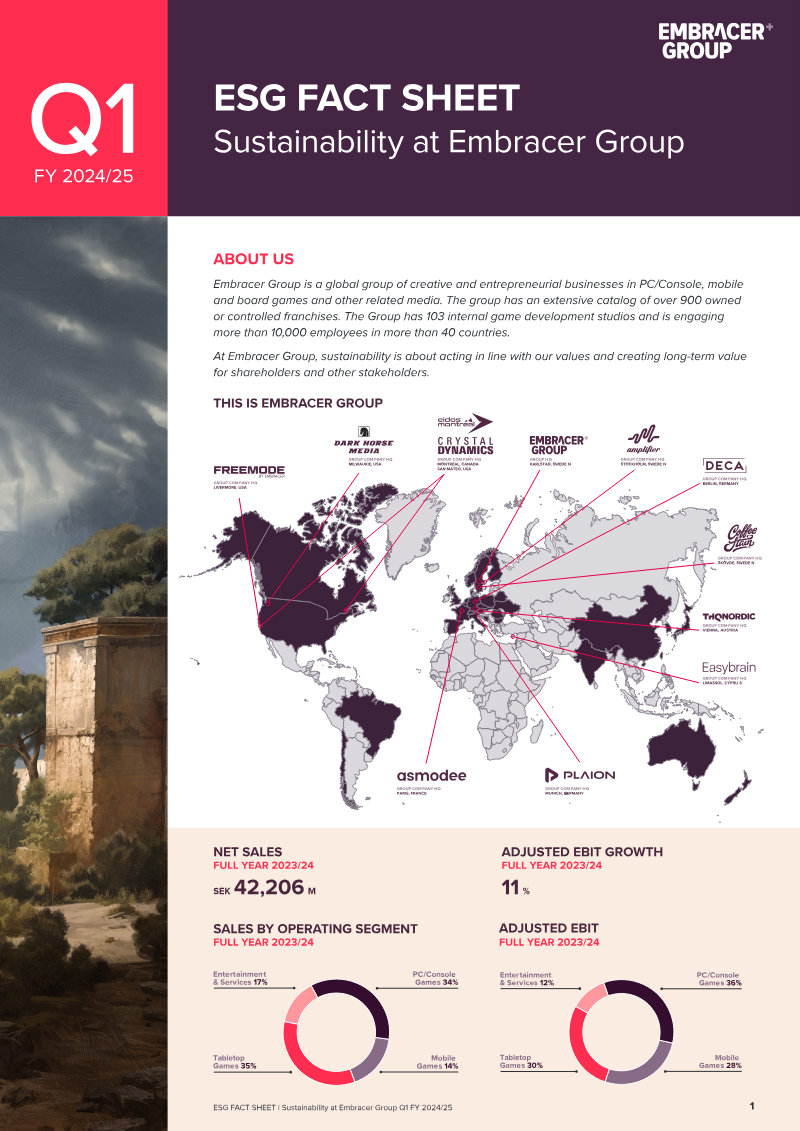
Embracer Group’s sustainability framework, titled Smarter Business, outlines the organization’s commitment to integrating environmental, social, and governance (ESG) principles across its global operations.
- Embracer Group is undergoing a corporate split into three standalone entities, requiring each new board to redefine and approve sustainability targets tailored to their specific operational contexts.
- The company aims to reduce Scope 1 and 2 carbon emissions by 45% by 2030, though 98% of its current total emissions are categorized as Scope 3.
- Female representation within the group stands at 30% for total employees and 26% for management roles.
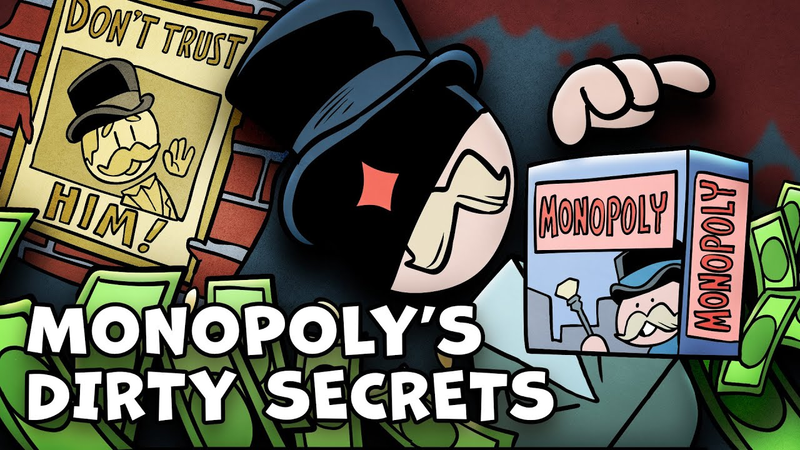
Monopoly’s Dirty Secrets: Theft, Erasure and Capitalism | Extra Credits Gaming
The board game Monopoly, widely recognized as a quintessential capitalism simulator, originated as an educational tool designed to critique the very economic system it now symbolizes.
- Monopoly was originally created in 1902 by Elizabeth Magie as 'The Landlord’s Game,' an educational tool designed to critique the societal harms of land monopolies and unchecked rent.
- The game’s transition to a commercial product occurred in 1935 when Charles Darrow sold a pirated version to Parker Brothers, who then marketed him as the sole inventor to suppress Magie’s contributions.
- Parker Brothers consolidated their market position by purchasing Magie’s patent for a nominal fee and systematically acquiring or disposing of competing versions of the game.
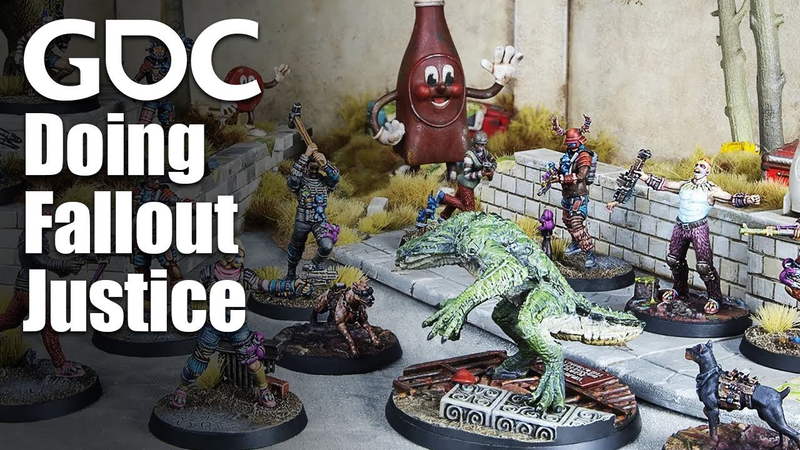
Making 'Fallout' for Tabletop (or How to Be Different but the Same)
Adapting the Fallout video game franchise into the tabletop miniatures game Fallout: Wasteland Warfare requires a delicate balance between honoring established lore and creating a functional, tactical skirmish experience.
- To adapt a video game into a tabletop experience, designers must rescale numerical data rather than porting it directly, as video game values are rarely balanced for physical play mechanics.
- The game utilized a 20-sided die system to ensure that low skill values remained viable, providing a 25% success rate for a skill value of one, while maintaining a non-guaranteed success ceiling for high-skill characters.
- To avoid the 'negative spiral' where winners become exponentially stronger, the settlement system rewards players with structural upgrades that provide tactical options without increasing the point-value of their units in future matches.
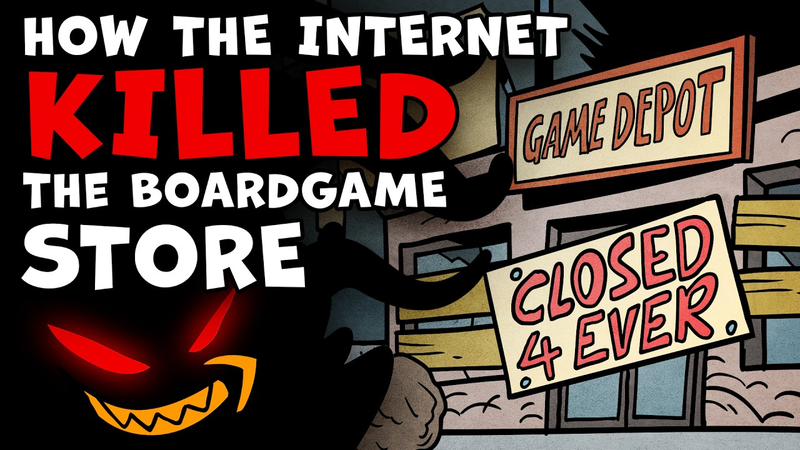
Internet Killed the Board Game Store - Extra Credits Gaming
The tabletop gaming industry has undergone a significant transformation since 2012, shifting from a model centered on independent hobby shops to one dominated by digital platforms, big-box retailers, and specialized cafes.
- The tabletop industry has experienced massive product saturation, with new annual game releases surging from 880 in 1990 and 1,265 in 2000 to 4,677 by 2019.
- Traditional Friendly Local Game Stores (FLGS) are struggling to compete with large online retailers that utilize superior bulk-buying power and exclusive distribution deals to undercut local pricing.
- Digital platforms like Magic: The Gathering Arena have contributed to the decline of physical retail by migrating significant segments of the player base away from in-person play.
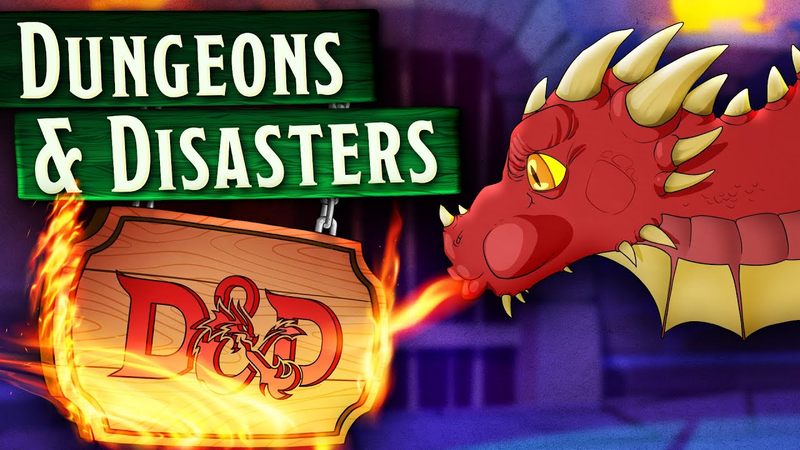
The History of D&D Hasbro Refused to Learn From
The history of Dungeons & Dragons (D&D) is defined by a recurring cycle of legal disputes, licensing shifts, and fan reactions that have fundamentally shaped the tabletop role-playing game (TTRPG) industry.
- D&D’s commercial success is historically tied to open licensing models, most notably the Open Game License (OGL) introduced in the early 2000s, which fostered community growth and third-party content.
- Restrictive licensing policies consistently trigger market decline and fan alienation, evidenced by the 2008 transition to the fourth edition's Game System License (GSL), which directly led to the rise of the competitor game Pathfinder.
- TSR’s aggressive legal strategy in the 1980s against third-party publishers and fans fragmented the market and incentivized competitors to develop original gaming systems.
The State and Future of Board Games 2023
The tabletop gaming industry is currently undergoing a fundamental transformation, shifting from a model of static product sales toward a dynamic, service-oriented ecosystem.
- Designers are increasingly prioritizing ecological sustainability to reduce greenhouse gas emissions while simultaneously lowering production costs to combat a softening economy.
- Rapid prototyping tools like Tabletop Simulator have become essential for hybrid development, allowing designers to iterate quickly despite the limitations of digital physical interaction.
- Game designers are leveraging community-driven platforms like Discord to treat games as evolving, collaborative projects rather than static products, often supporting players with alternative gameplay modes instead of traditional expansions.

The Tabletop Renaissance
The tabletop gaming industry is currently experiencing a significant renaissance, driven by a widespread consumer shift away from digital fatigue toward the tangible, social rewards of in-person play.
- Tabletop gaming is experiencing a renaissance driven by a consumer shift away from digital fatigue toward the tangible, social rewards of in-person play.
- Tabletop studios are becoming prime acquisition targets for entertainment conglomerates due to their high-margin, evergreen business models that avoid the costly live-ops infrastructure required by video games.
- The industry prioritizes high-quality physical production and unboxing experiences to create a competitive moat against the ephemeral nature of digital entertainment.
Creating Resonance with Thematic Tabletop Game Design
Board game design functions most effectively as an architectural art form rather than a purely mechanical engineering challenge.
- Resonance in tabletop design is defined by the formula: (Familiarity + Unexpectedness) - Chaff.
- Thematic integration requires that mechanics and win conditions directly mirror the goals and desires of the characters, as seen in the socio-political alignment of factions in the game Root.
- Designers should treat theme as a learnable skill rather than an engineering problem, using it to pull new players into the hobby by focusing on emotional connection rather than just mechanical puzzles.
Designing Great UX into Your Game Board and Pieces
Prioritizing intuitive user experience in board game design requires shifting the burden of learning from the player to the developer.
- Prioritize UX design within the game board and pieces themselves to reduce reliance on rulebooks, as players intuitively attempt to learn games by assembling components and identifying patterns before reading instructions.
- Use iterative prototyping tools like laser cutters and 3D printers to test board layouts early, as late-stage production changes are significantly more costly than refining physical components during development.
- Streamline the user experience by replacing ambiguous or language-dependent iconography with clear, consistent visual cues, such as using specific colors to map dice results to victory point conditions.