Tabletop reports and market data
Documents
Board Game Design Day: White, Brown, and Pink: The Flavors of Tabletop Game Randomness
Game design relies on the strategic application of randomness to balance player agency with unpredictable outcomes.
- Pink noise is the most effective framework for game design because it balances frequent small adjustments with occasional significant events, mirroring natural systems and human perception.
- Input randomness, which presents a randomized state for players to navigate, is superior to output randomness for supporting deep strategic planning.
- Output randomness determines the result of a player’s decision and is best utilized to introduce tactical variance rather than long-term strategy.
The State and Future of Board Games: From Apps to "Legacies"
The board game industry is currently undergoing a period of rapid expansion, marked by a market valuation exceeding $1 billion and the release of over 3,500 titles in 2017.
- The board game industry is experiencing rapid, sustained growth, with over 3,500 new titles being released annually.
- App-integrated board games are an emerging category that utilizes digital components to augment physical play, though they face resistance from players who prefer to avoid screens during tabletop sessions.
- Legacy games, which involve permanent physical alterations to components over a series of sessions, are becoming a permanent design tool rather than a passing trend, appealing to players accustomed to long-form video game campaigns.
Board Game Design Day: Board Game Design and the Psychology of Loss Aversion
Loss aversion serves as a foundational psychological principle in game design, predicated on the observation that the emotional pain of losing an asset is felt approximately twice as intensely as the joy of acquiring an equivalent gain.
- Loss aversion dictates that the emotional impact of losing an asset is approximately twice as intense as the joy derived from gaining an equivalent one, making it a primary driver of player engagement.
- Mechanics that threaten the removal of progress or force resource sacrifice compel players to act irrationally to avoid deficits, creating high-stakes environments that increase emotional investment.
- Designers utilize the endowment effect and endowed progress—providing players with a head start toward a goal—to foster artificial attachments that make the potential loss of progress feel like a significant personal setback.
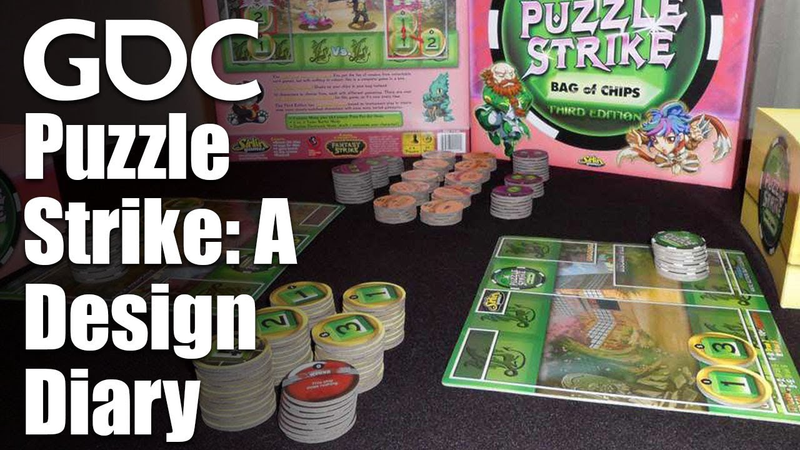
Board Game Design Day: Puzzle Strike: A Design Diary
Puzzle Strike functions as a strategic translation of high-intensity, competitive video game mechanics into a tabletop format.
- Puzzle Strike translates the mechanics of competitive puzzle-fighting games into a tabletop format by prioritizing direct player interaction over the passive, multiplayer solitaire style common in deck-builders.
- The game design utilizes asymmetric character abilities and mechanics inspired by real-time strategy titles like StarCraft to ensure long-term strategic depth and prevent gameplay stagnation.
- Core gameplay revolves around a constant tension between aggressive rushdown tactics and long-term economic development, forcing players to manage risks and resources carefully.
Creating 'Burgle Bros': The Fantasy of the Heist
In this 2017 GDC talk, board game designer Tim Fowers explores the intersection of game mechanics and emotional resonance, using his cooperative heist game, Burgle Bros, as a primary case study.
- Designers should treat board games as software that runs on people, focusing on engineering specific emotional states like tension and altruism rather than just simulating narrative tropes.
- To capture the 'fantasy' of a heist, replace rigid pre-game planning phases with dynamic, real-time exploration systems that force players to adapt to uncertainty.
- Using hidden information, such as face-down tiles, and unpredictable AI movement creates a balance between tactical agency and high-stakes risk that fosters collaborative decision-making.
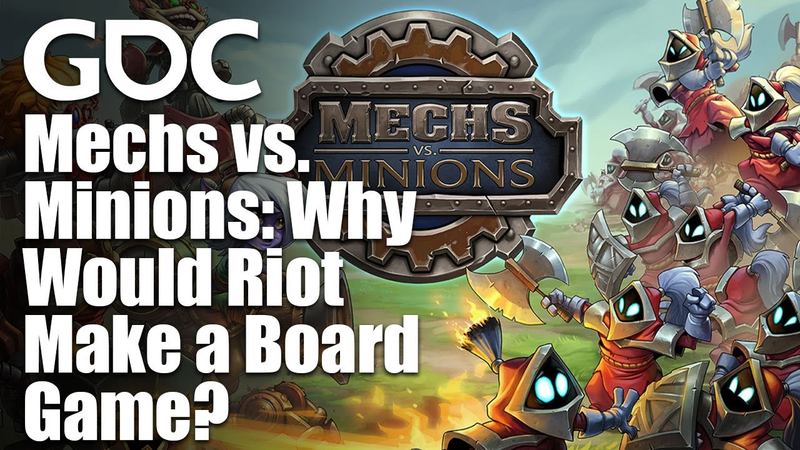
Mechs vs. Minions: Why Would Riot Make a Board Game?
Riot Games ventured into the tabletop market with Mechs vs. Minions to explore creative expression beyond digital platforms, utilizing the intellectual property of League of Legends to foster a unique, cooperative experience.
- Riot Games developed 'Mechs vs. Minions' not as a strategic market acquisition or user retention play, but as a passion project intended to explore their IP in a new medium and create a high-quality experience for their players.
- The project was driven by a small, internal team rather than a large studio mandate, allowing the developers to prioritize product quality over traditional profit margins by reallocating typical marketing budgets into high-end components and game tray design.
- The game design evolved from a competitive programming prototype called 'Weapons of Zombie Destruction' into a cooperative experience, as the team found that cooperative mechanics better suited the team-oriented nature of League of Legends players.
The State & Future of Board Game Design
The board game industry is currently undergoing a period of rapid expansion, characterized by a 10 to 20 percent annual increase in new titles and a increasingly sophisticated player base.
- The board game industry is experiencing rapid growth with a 10 to 20 percent annual increase in new titles, leading to a hyper-competitive market where high-quality design alone no longer guarantees commercial success.
- Designers are increasingly shifting away from self-publishing via crowdfunding toward traditional publishing models to better manage the financial and operational risks of global manufacturing and marketing.
- To remain viable amid low royalty margins, designers must adopt multi-disciplinary, iterative workflows and treat their work with an entrepreneurial mindset rather than focusing solely on creative expression.
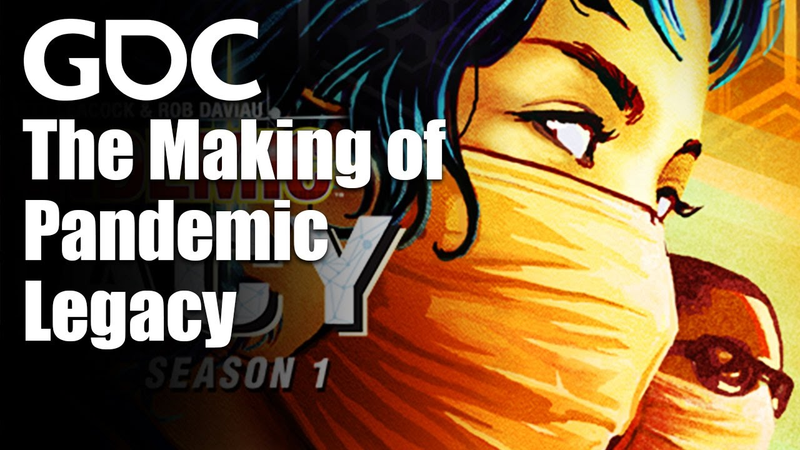
Board Game Design Day: The Making of Pandemic Legacy
The development of Pandemic Legacy represents a pivotal shift in tabletop design, moving from static, repeatable rule sets to evolving, narrative-driven experiences.
- Pandemic Legacy utilizes a 12-month campaign structure to deliver narrative content, balancing player engagement by setting the campaign length at approximately 15 games to ensure players feel the value of the purchase without experiencing burnout.
- The designers implemented a 'consolation prize' mechanic where losing groups receive additional event cards and funding in subsequent games, allowing different skill-level groups to maintain a consistent, challenging experience.
- To foster emotional investment, the game requires players to name their characters and tracks their personal history, including permanent 'scars' or phobias that persist across the campaign.
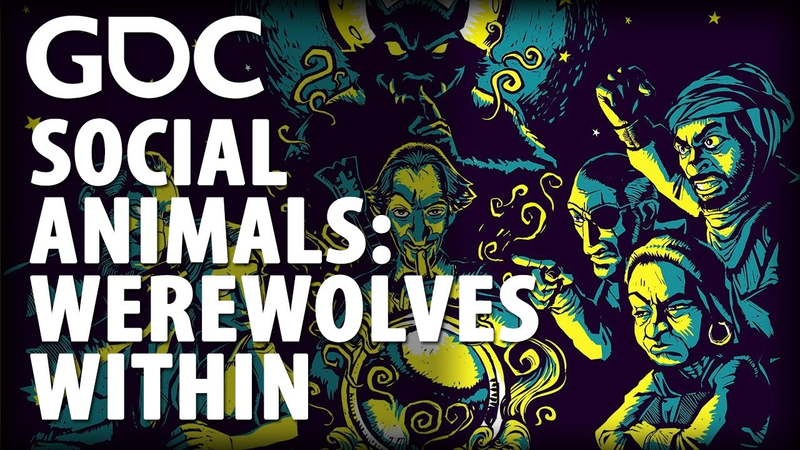
Social Animals: Werewolves Within and the Virtual Tabletop
The development of Werewolves Within centers on the thesis that virtual reality can successfully replicate the nuance and intimacy of face-to-face tabletop gaming by prioritizing social presence over complex digital mechanics.
- Virtual reality social experiences are most effective when they prioritize non-verbal cues like leaning, eye-tracking, and spatial awareness over complex digital mechanics.
- Stylized avatars function as digital masks that lower player inhibitions and reduce social anxiety, fostering more confident engagement than photorealistic representations.
- Design constraints, such as using gamepads instead of touch controllers and implementing randomized seating, prevent the misuse of physical gestures and keep the focus on social interaction.
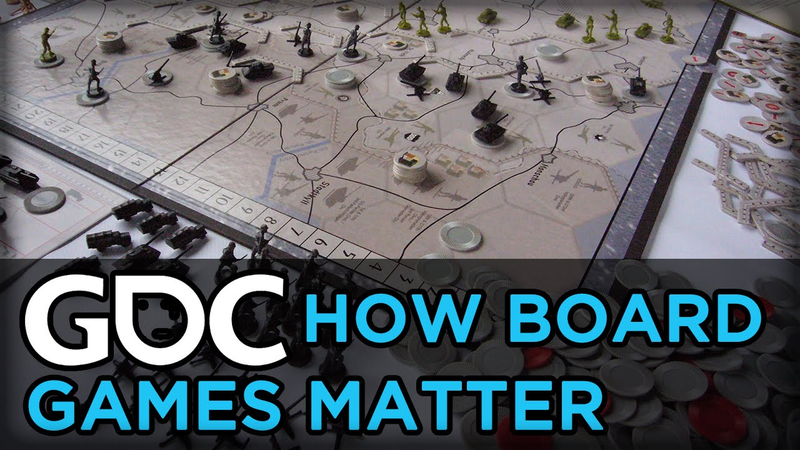
How Board Games Matter
Board games serve as a primary case study for the necessity of transparency in interactive design.
- Transparency in game mechanics increases player comfort and engagement by allowing users to understand the potential results of their actions before they commit to them.
- Complex systems, such as the diplomacy and happiness mechanics in Civilization IV, should be broken down into granular, readable UI elements that explain the specific modifiers behind AI decisions or game states.
- Designers should avoid forcing players to make critical, high-stakes decisions—such as drafting a deck in Magic: The Gathering—before they have had the opportunity to learn the game's core mechanics.