Streaming reports and market data
Documents
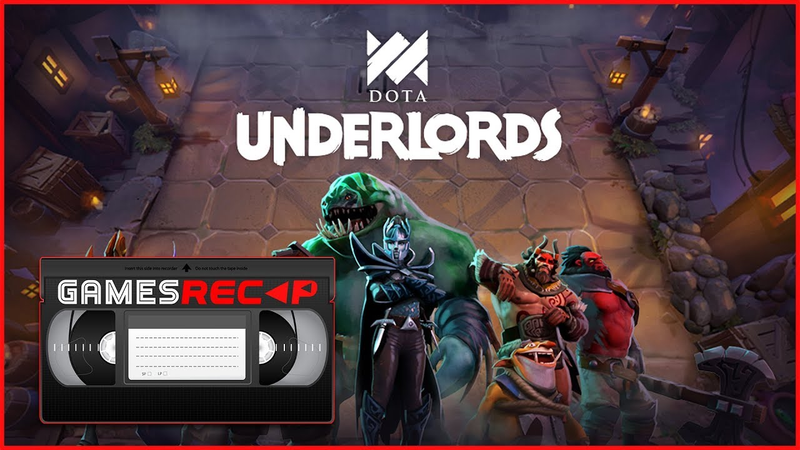
DOTA Underlords, Anthem Still Alive, Blizzard Departures | Games ReCAP Episode 008
Valve’s recent launch of Dota Underlords demonstrates the enduring power of established franchises, as the title secured 174,000 concurrent users on Steam within its first 24 hours.
- Valve’s Dota Underlords achieved 174,000 concurrent Steam users in its first 24 hours, proving the market demand for streamlined, tactical gameplay adaptable to mobile.
- Major publishers are facing a critical juncture where the high financial risk of $200 million-plus AAA budgets is driving a necessary shift toward smaller, more agile, and highly replayable development strategies.
- The failure of projects like Anthem highlights the unsustainable nature of crunch culture and technical instability, prompting industry-wide calls to reduce project scope to mitigate financial and creative risk.

Bernie Sanders Calls for Unionization and EA's Surprise Mechanics | Games ReCAP Episode 007
The video game industry is currently undergoing a critical transformation characterized by a fundamental tension between aggressive, short-term profit maximization and the long-term sustainability of its workforce and product quality.
- The gaming industry is experiencing a fundamental conflict between short-term profit maximization and the long-term sustainability of its workforce and product quality.
- Frequent layoffs and at-will employment models are driving a surge in unionization efforts as employees seek collective bargaining for equitable profit sharing and standardized severance.
- Electronic Arts and other industry players face mounting regulatory scrutiny for using 'surprise mechanics'—a rebranding of loot boxes—which critics equate to predatory, unregulated gambling.
Biggest Takeaways from E3 2019 | Games ReCAP Episode 005
E3 2019 served as a critical lens for evaluating the current state of the global gaming industry, highlighting a stark divide between successful creative strategies and systemic operational failures.
- Amazon Game Studios faces potential dissolution due to a lack of coherent leadership and the strategic failure of mandating the proprietary Lumberyard engine over industry-standard tools like Unreal or Unity.
- The gaming industry is increasingly pressured to abandon 'crunch' culture in favor of sustainable development models that utilize tighter project scopes to mitigate burnout in AAA production.
- Square Enix and Nintendo demonstrated that leveraging established nostalgia and innovative mechanics remains a highly effective creative strategy for market success.
Ubisoft & Square Enix E3 Press Conference | Games ReCAP Episode 004
Ubisoft maintains a robust and stable development model by leveraging established engines and iterative design across major franchises such as Assassin’s Creed, Watch Dogs, Far Cry, and the Tom Clancy series.
- Ubisoft’s strategy of leveraging established engines and iterative design for franchises like Assassin’s Creed and Far Cry provides a stable production model that minimizes the volatility and mass layoffs seen elsewhere in the industry.
- A two-year development cadence is proposed as the optimal standard for major titles, allowing players sufficient time to master complex gameplay systems before the next iteration is released.
- Square Enix’s modernization efforts show inconsistent results, with the Final Fantasy VII Remake succeeding through real-time combat and high fidelity, while projects like the Avengers title and the Final Fantasy VIII remaster suffer from a lack of comprehensive overhauls.
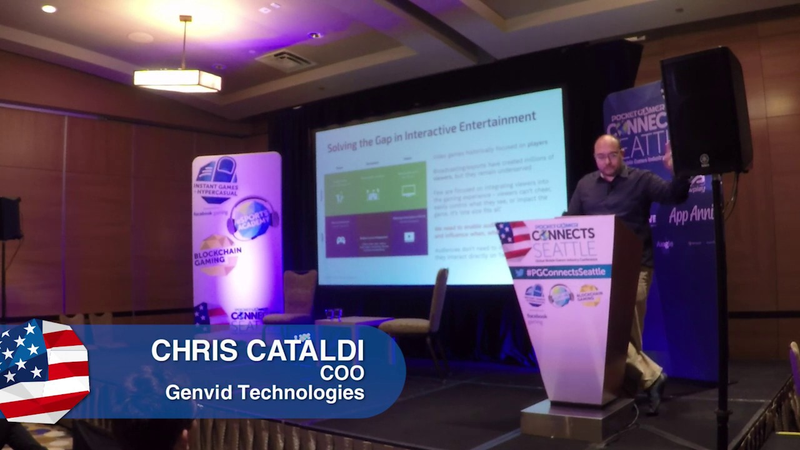
Interactive livestreaming and the future of esports
The future of esports lies in the evolution of interactive streaming, where game developers shift their focus from exclusively serving players to intentionally designing experiences for viewers.
- Game developers currently prioritize the player experience over the spectator experience, often disabling advanced camera tools and data access in live builds to prevent potential cheating or distraction.
- Interactive streaming technology, such as Genvid’s overlays, allows viewers to access real-time game data—like weapon loadouts, hitboxes, and win-loss probabilities—that is typically hidden from players to maintain competitive integrity.
- Future esports growth requires shifting from a player-only focus to a 'digital stadium' model where the broadcast medium is designed to be viewer-friendly for non-players, similar to how traditional sports evolved alongside radio and television.
Microsoft E3 Press Conference | Games ReCAP Episode 002
Microsoft’s E3 2019 presentation signaled a strategic pivot toward long-term ecosystem building, characterized by aggressive studio acquisitions and a focus on service-based growth.
- Microsoft is aggressively acquiring studios, including Obsidian, Ninja Theory, and Double Fine, to build an exclusive content library for the upcoming Scarlett console launch.
- The industry is shifting toward double-A development as a sustainable financial alternative to the high-risk, blockbuster-scale projects that currently dominate the market.
- Microsoft’s E3 2019 presentation prioritized service-based growth through the Game Pass model, though it faced criticism for lacking the surprise announcements needed to drive momentum for Gears 5 and Halo Infinite.
Nintendo E3 Press Conference | Games ReCAP Episode 003
Nintendo occupies a distinct position within the global gaming industry by deliberately eschewing the hardware arms race for graphical fidelity in favor of accessible, stylized gameplay and robust first-party intellectual property.
- Nintendo maintains market relevance by prioritizing stylized, accessible gameplay and first-party intellectual property over the industry-wide arms race for graphical fidelity.
- The Nintendo Switch platform successfully balances a dual-content strategy by integrating nostalgic remakes like Link’s Awakening with innovative titles like Mario Maker and third-party software.
- Nintendo’s brand strategy mirrors that of Disney, focusing on long-term brand equity and consistent, player-centric design to differentiate itself from competitors’ hardcore, corporate aesthetics.

Google Stadia E3 Press Conference | Games ReCAP Episode 001
The gaming industry is undergoing a fundamental transformation as traditional trade shows like E3 lose their status as the primary hubs for publisher announcements.
- The gaming industry is shifting away from physical trade shows like E3 toward digital-first, company-led events that offer publishers greater control over messaging and direct-to-consumer marketing.
- Google Stadia faces significant market skepticism due to a reliance on third-party titles rather than exclusive content, failing to provide a unique value proposition against established ecosystems like Sony and Microsoft.
- Widespread adoption of cloud-based gaming platforms like Stadia is currently hindered by technical barriers, specifically the requirement for high-speed internet and the risk of data throttling.

Legal Battle Royale: Not Boring Edition
The gaming industry faces a complex web of legal challenges that scale alongside commercial success.
- Developers must conduct rigorous, asset-by-asset risk assessments for intellectual property, as there are no universal legal standards for creative assets like dance-move emotes.
- Regulatory bodies are actively monitoring influencer marketing, requiring developers to ensure all material connections are disclosed through clear and conspicuous labeling.
- Data privacy compliance, particularly under standards like GDPR, requires a shift from blanket consent models to transparent, specific data collection practices.

Making New ISLANDERS Content Live
The development of ISLANDERS centers on a minimalist, iterative design philosophy that prioritizes intuitive gameplay and strategic depth over complex mechanical systems.
- The development team prioritizes a minimalist design philosophy, focusing on adding new building types like seaweed fields and monuments that integrate into existing scoring systems without increasing core complexity.
- Technical stability is maintained by shifting from procedural generation seeds to object-position-based save states, which mitigates compatibility issues and ensures consistent player experiences.
- Performance is optimized through efficient asset handling and mesh baking, while resource-intensive features like road systems and mobile ports are intentionally excluded to keep development costs manageable.

Google Stadia - Is Cloud Gaming For Real? - Extra Credits
The introduction of Google Stadia represents a significant shift in the gaming industry, moving away from local hardware processing toward a cloud-based streaming model.
- Google Stadia shifts gaming from local hardware to cloud-based streaming, aiming to eliminate the need for expensive consoles or PC upgrades by offloading computation to remote data centers.
- Latency remains the primary technical barrier, as the round-trip time for inputs and video feedback can severely degrade the experience in fast-paced or multiplayer games.
- The service’s performance is heavily dependent on the reliability of local internet service providers, where network instability or data caps can cause more severe interruptions than traditional hardware limitations.

How to get the best out of influencers
Effective influencer marketing in the gaming industry requires a fundamental shift from transactional, performance-based models toward long-term, authentic partnerships.
- Shift influencer strategy from transactional, performance-based models to long-term, authentic partnerships where creators act as creative collaborators rather than mouthpieces.
- Prioritize deep audience engagement metrics—such as participation in community events and sustained interaction—over vanity metrics like total subscriber counts or click-through rates.
- Avoid mass-emailing strategies in favor of personalized outreach that identifies creators whose specific content styles and demographics align naturally with the game.