Roguelike Deckbuilder reports and market data
28 game industry reports, presentations and talks about roguelike deckbuilder from writers such as Extra Credits, Game Developers Conference and Two & a Half Gamers, newest from 2026. Every document has a summary and key insights with the page they come from.
Documents

Design Club: Shroom and Gloom!
Shroom and Gloom represents a significant evolution in the roguelike deckbuilder genre by subverting established conventions popularized by titles like Slay the Spire.
- Shroom and Gloom utilizes a dual-deck system that separates combat cards from exploration and survival cards, creating a strategic interplay between the two mechanics.
- The game replaces traditional block mechanics with a health-management system where healing is tied to specific kill conditions, such as 'if fatal' effects, forcing players to plan turns around securing specific eliminations.
- The game features 'evolving' cards that become more powerful after being lodged in an enemy and returned to the player's hand upon the enemy's death.
Beyond Balatro: Why PlayStack doesn’t want a 100% hit rate
The modern gaming landscape is undergoing a fundamental shift where the traditional distinction between indie and AAA titles is becoming increasingly irrelevant.
- PlayStack strategically avoids a 100% hit rate to ensure resources are available for experimental projects that push genre boundaries.
- Maintaining an 85% profitability rate is the established benchmark for financial health at PlayStack.
- The traditional distinction between indie and AAA titles is becoming irrelevant, with success now driven by authentic, passion-led experiences rather than budget size.
Exploring A New Kind of Roguelite: Moonsigil Atlas | Design Club
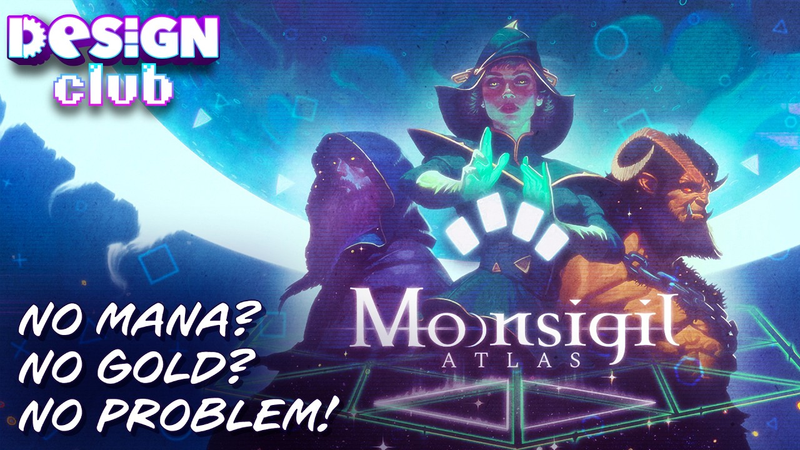
The roguelite deckbuilder genre has reached a point of saturation following the success of titles like Slay the Spire, leading developers to seek innovation by moving away from traditional mana-based economies and linear resource management.
- Moonsigil Atlas differentiates itself from the saturated roguelite deckbuilder market by replacing traditional mana-based economies with a spatial, grid-based combat system.
- The core gameplay requires players to physically place and rotate cards on a board, shifting the strategic focus from damage output to geometry and tactical positioning.
- Players manage board presence through unique mechanics like sigils for ongoing effects, defensive wards for damage mitigation, and Eternal cards that remain on the board.

🎲Dicero: Habby’s biggest bet (And biggest risk?)
Habby is undergoing a fundamental strategic transition, moving away from the hypercasual-adjacent success of titles like Survivor.io toward a more complex, midcore model exemplified by its latest release, Dicero.
- Habby is pivoting from hypercasual-adjacent titles like Survivor.io to a midcore model with Dicero, characterized by complex gacha mechanics, tiered evolution, and a slower-paced merging economy.
- The studio has abandoned rewarded advertisements in favor of a direct-to-consumer web store and high-intent monetization, marking a fundamental shift in its revenue strategy.
- Habby is currently facing its lowest revenue and download figures in recent history, casting doubt on whether its new, more complex gameplay can achieve the same market penetration as previous hits.

Slay the Spire II Early Access Review Bombing | Design Club
The recent backlash against Slay the Spire II highlights a growing friction between iterative development practices and consumer expectations within the modern Early Access model.
- Slay the Spire 2 is currently experiencing review bombing in Early Access, primarily driven by player frustration over balance changes—specifically the removal of 'infinite' deck loops—introduced in the game's opt-in beta branch.
- MegaCrit provides an in-game feedback tool accessible via the F2 key, which was recently expanded to allow up to 8,000 characters per report to facilitate direct communication between players and developers.
- The developers have implemented a voluntary, opt-in beta branch for the Early Access title to test major balance adjustments, including character card changes and complete reworks of end-game bosses, separate from the live build.

Why Slay the Spire 2 exploded: Review
Slay the Spire 2 has established a new benchmark for indie success, generating over $100 million in revenue within its first two weeks of early access.
- Slay the Spire 2 generated over $100 million in revenue within its first two weeks of early access, with long-term projections estimating total earnings between $250 million and $500 million.
- The game’s launch was driven by massive organic momentum, supported by 2.5 million wishlists and a pre-existing community of 670,000 Reddit users.
- The title achieved significant market visibility during its initial launch week, recording 4 million hours of viewership on Twitch.
Slay the Spire II Early Access First Impressions! | Design Club
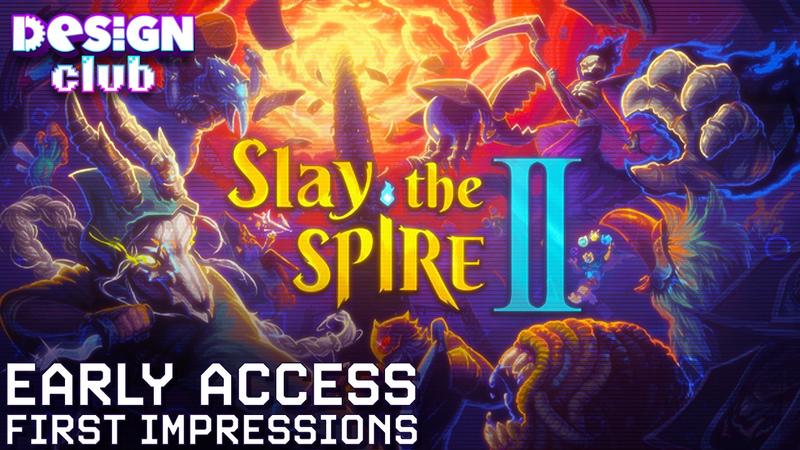
Slay the Spire II has entered early access with significant market momentum, evidenced by a peak of over 119,000 concurrent players on Steam.
- Slay the Spire 2 maintains the core gameplay loop of its predecessor, utilizing familiar mechanics such as three-potion slots, gold counters, and identical starting card values and upgrades.
- The sequel introduces refined visual fidelity, including an isometric perspective that adds depth to character assets like shields and swords, alongside new UI elements like a floor timer.
- New gameplay mechanics include 'enchantable' cards that grant innate and retain properties, and status effects like 'slippery,' which limits damage taken to one HP per instance for a set number of stacks.
The next evolution of Roguelites is finally here by Jakub Remiar
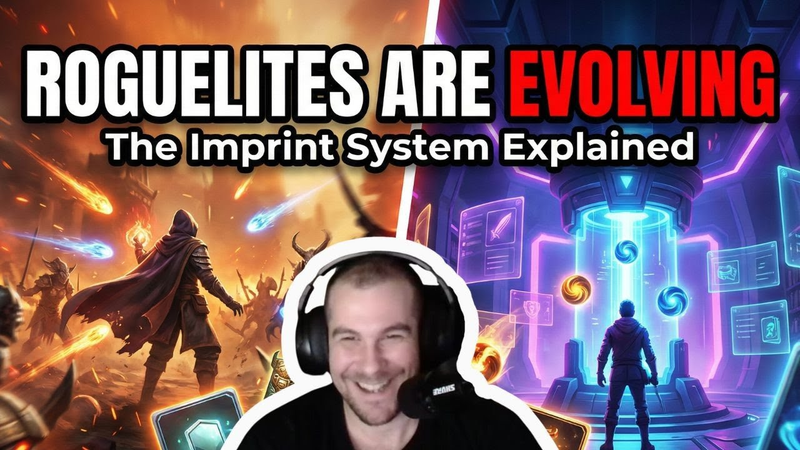
The roguelite genre, while currently dominating mobile and Steam markets through titles like Survivor.io and Vampire Survivors, faces a critical design stagnation.
- The roguelite genre is shifting from temporary, reset-heavy cycles toward an 'imprint system' that allows players to save successful builds as permanent, usable assets.
- By 2026, the adoption of imprint systems is expected to become a standard feature for major mobile studios and Western developers to combat design stagnation.
- Imprint systems increase player retention by allowing users to deploy their saved builds into diverse game modes like PvP, daily missions, and specialized tournaments.

Chaos Zero Nightmare Review: 20 Systems in 7 Minutes & players love It
Chaos Zero Nightmare has established itself as a significant contender in the mobile gaming landscape, generating approximately $8 million in revenue during its initial two-week launch window.
- Chaos Zero Nightmare generated approximately $8 million in revenue during its initial two-week launch window.
- The game maintains high engagement with approximately 800,000 daily active users by blending roguelike deck-building mechanics with gacha meta-progression.
- Localized dominance in specific regions, particularly Japan, is the primary driver of monetization efficiency and superior revenue-per-download metrics compared to global averages.
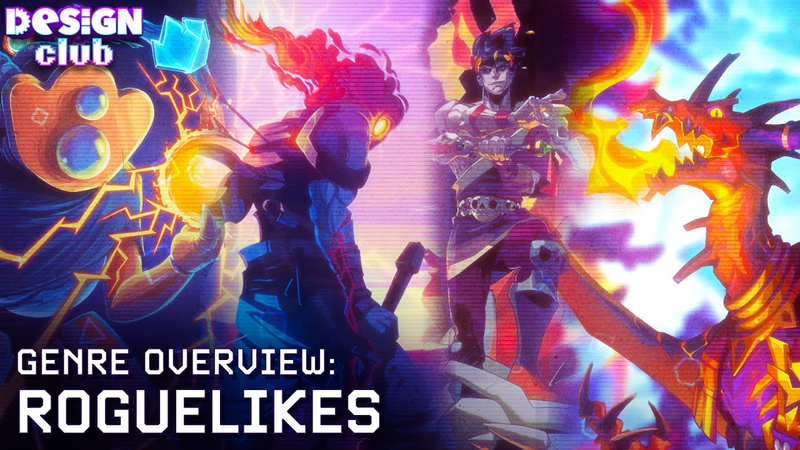
Roguelike Genre Exploration, Run 2!
The roguelike genre has evolved from a niche, punishing category into a pervasive design framework that influences modern gaming across diverse segments, including card games, shooters, and MMOs.
- The primary distinction between 'roguelikes' and 'roguelites' is meta-progression: roguelites feature persistent character upgrades or starting-state power increases across runs, whereas roguelikes require players to improve solely through increased game knowledge and skill.
- Core elements of the roguelike genre include short run durations (typically 30 minutes to two hours) and an expectation of frequent, repeated loss conditions that force the player to restart.
- Roguelike mechanics are increasingly viewed as a 'tag' or feature set—similar to RPG progression—rather than a rigid genre, as they are now applied across diverse formats including brawlers, shooters, and card games.

How Balatro Became a 7-Million-Copy Indie Hit | Harvey Elliott, CEO of Playstack
The success of the poker-themed roguelike Balatro, which has surpassed seven million units sold, serves as a primary case study for a publishing model that prioritizes niche community engagement over mainstream marketing.
- Balatro has achieved commercial success with over 7 million units sold by prioritizing niche community engagement over traditional mainstream marketing.
- Publishers can scale resource-constrained indie titles by focusing on games that combine an immediate, compelling core loop with long-term strategic depth.
- The publishing model for Balatro relies on organic discovery through social media and specialized forums to reach target audiences without aggressive, short-term promotional spending.

Roguelike Genre Exploration | Design Club
The roguelike genre has evolved from its rigid, turn-based origins into a versatile design framework that now permeates the broader gaming landscape.
- The roguelike label functions more as a set of design tags than a rigid genre, encompassing diverse titles ranging from deck-builders like Slay the Spire to action games like Hades.
- A core defining element of the roguelike experience is procedural alteration, ensuring that every individual run is unique through randomized seeds and encounters.
- Player loadouts—the tools, decks, or characters available at the start of a run—are essential to the roguelike structure, often allowing for strategic variety without necessarily increasing raw character power.