Roguelike Deckbuilder reports and market data
Documents

What Every Indie Dev Can Learn from Balatro’s Success
The commercial performance of Balatro serves as a definitive case study for the viability of premium-priced indie titles in a market increasingly saturated by free-to-play models.
- Balatro’s success demonstrates that a premium, non-monetized model can thrive by prioritizing a complete, consistent player experience over the grinding or segmented loops typical of free-to-play games.
- The game achieved high engagement and virality by focusing on a compelling, skill-based core loop that encourages players to share their high-score achievements.
- Authentic developer engagement is a critical marketing asset; the developer 'Local Thunk' maintained a consistent, transparent persona on platforms like X and Discord, which helped build player trust and community resonance.
Evolving Worlds from Chaos: The Art-Led Approach of 'Darkest Dungeon 2's' Procedural Generation
The development of Darkest Dungeon 2 centers on a deliberate shift toward an art-led procedural generation system, prioritizing the game’s distinct, painterly aesthetic over traditional, programmer-centric automation.
- Red Hook Studios shifted from a programmer-led procedural generation system to an art-led approach for Darkest Dungeon 2 to ensure the game’s distinct, painterly 3D aesthetic remained consistent across generated environments.
- The team abandoned an initial 'sequential plate' system because it created an unsustainable workload for the art team and failed to support the desired game design direction.
- The final solution utilized a grid-based system where environment artists defined a minimal set of road tiles, allowing Unity to generate complex, seamless biomes without requiring constant developer intervention.

Raid Rush Review: If you miss Battle.net tower defense, Raid Rush is your new addiction.
Raid Rush occupies a distinct position within the mobile tower defense genre by successfully blending traditional strategic mechanics with modern roguelike deck-building elements.
- Raid Rush generates approximately $24,000 to $28,000 in daily revenue, with ad-based monetization accounting for roughly 30% of total earnings.
- The game differentiates itself from standard roguelike tower defense titles by allowing players to build their own road paths, adding significant strategic depth that mitigates the staleness common in the genre.
- The US market accounts for 50% of the game's total revenue, with a notable secondary performance in Korea, proving that hardcore tower defense remains a viable niche for stable, loyal player bases.
Why Breaking Conventions Makes Better Games | Design Club Live
Intentional subversion of established design conventions serves as a critical catalyst for innovation, allowing developers to differentiate their titles and deepen player engagement.
- Breaking established game conventions is a powerful design tool to prevent repetition, particularly in roguelikes where players must engage with the same core loop over many runs.
- Effective rule-breaking often involves creating specialized mechanics for specific character classes or factions, such as Monster Train's 'Luna' clan which uniquely manipulates even and odd turn cycles.
- Designers must distinguish between 'specialization' (e.g., a specific character having unique movement abilities) and true 'rule-breaking' (e.g., fundamentally altering game-wide resource or turn-order mechanics).

Daniel Mullins: Making Games Alone (ish), Burning Through Savings & Failing Upwards | Ep. #042
The trajectory of independent game development is defined by a strategic blend of creative intuition, financial pragmatism, and iterative learning.
- Daniel Mullins attributes much of his early career success to luck, including an unsolicited $5,000 contract for a children's math game he received at age 18 after a stranger discovered his early work online.
- To ensure high streamability, Mullins designs games around 'whoa' moments—unexpected shifts in gameplay similar to those in Bioshock or Portal—which provide streamers with natural opportunities to display reactive personality.
- When working with publishers, developers should be wary of 'greenlight' deals where the publisher takes a revenue percentage without providing significant value-add services or marketing support.

Saying NO to Millions revenues?! Balatro: Power combo of Poker & Solitaire.
Balatro stands as a premier example of high-concept game design, successfully blending poker mechanics with roguelike deck-building elements to create a deeply addictive experience.
- Balatro, a premium poker-themed roguelike, has demonstrated strong engagement with daily active users (DAU) growing from 25,000 to 100,000 between its launch and October 14th.
- The game exhibits high retention metrics, with an average session duration of 12 minutes and seven sessions per day, totaling approximately 90 minutes of daily gameplay per user.
- If Balatro were converted to a free-to-play model with standard ad monetization, it could potentially generate approximately $350,000 per month in revenue based on its current user base.
Bringing Peglin to the mobile market | Dylan Gedig from Red Nexus
Dylan Gedig of Red Nexus Games discusses the strategic expansion of the title Peglin, a Pachinko-inspired roguelike, into the mobile market.
- Red Nexus Games is porting its Pachinko-inspired roguelike, Peglin, to mobile using a premium $10 pricing model instead of the industry-standard free-to-play or ad-supported structures.
- The decision to prioritize a mobile port was driven by direct community feedback requesting a portable version of the title, which began development as a PC project in 2019.
- Red Nexus Games is self-publishing the mobile version, relying on organic growth and their existing community rather than traditional user acquisition strategies or external publishing partnerships.
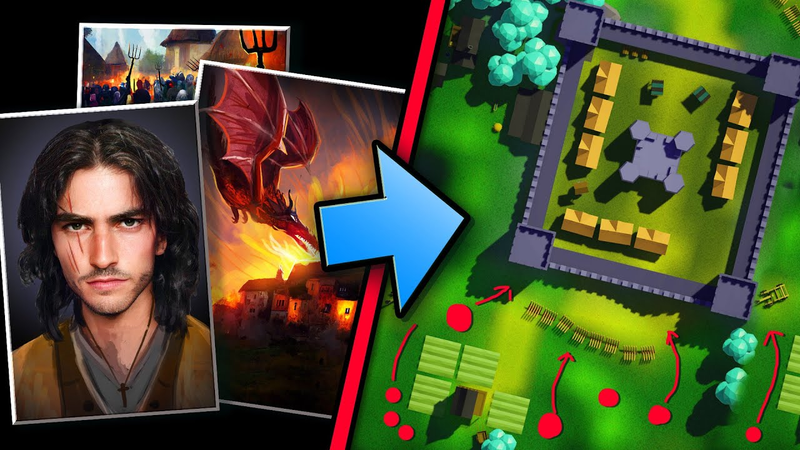
Our Deck Building Game Evolved Into Something Unexpected!
The development process of a new indie title reveals the critical importance of rapid prototyping and maintaining a clear design vision.
- Prioritize gameplay feel over initial design assumptions, as the team found that complex card-based mechanics felt like an exhausting math problem rather than an engaging experience.
- Avoid the 'fail fast' trap by avoiding long periods of complex architecture; the team spent 30 days on a complex code structure before realizing the core mechanics were not viable.
- Validate core gameplay loops early by creating 'quick and dirty' full-scale prototypes that encompass both early and late-game experiences.
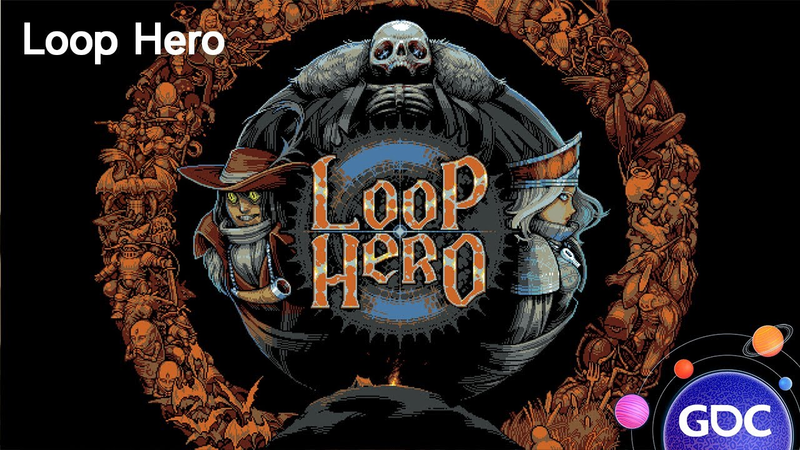
GDC Plays Loop Hero with Four Quarters team
Loop Hero centers on a unique design philosophy that shifts the player’s role from a direct combatant to an architect of the environment.
- Loop Hero originated during a 2019 Ludum Dare game jam, where the team focused on the core concept of a hero walking in circles to create an engaging 'zero-player' experience.
- The game's design relies on a 'mental training' philosophy where players act as passive observers, similar to watching a stream or caring for a Tamagotchi, rooting for the character's success despite having limited direct control.
- Developers implemented a complex enemy skill system where each chapter introduces new abilities for enemies, resulting in over 100 unique skills that required extensive coding and debugging to prevent game-breaking interactions.
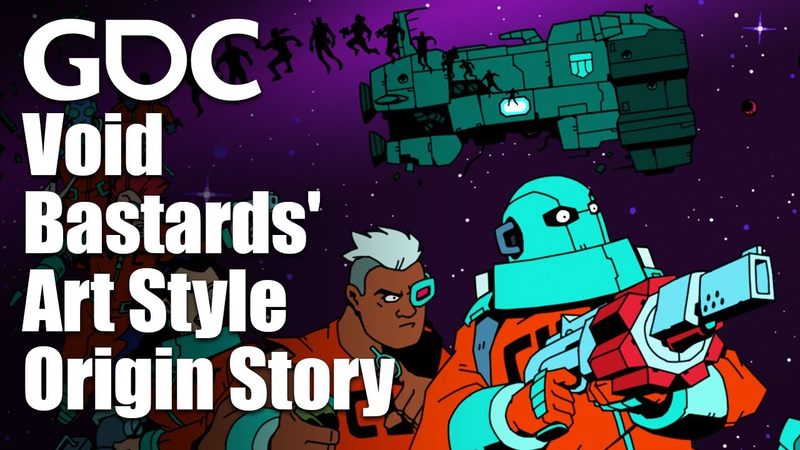
Void Bastards' Art Style Origin Story
The development of the art style for the 2019 game Void Bastards was a multi-year iterative process driven by a commitment to a cohesive comic book aesthetic.
- The development team for Void Bastards was geographically distributed across the UK, Canberra, Canada, and Scotland, necessitating early conceptual tools like a three-page comic to align the team on the game's tone and world-building.
- The game's core loop shifted from a single protagonist who accumulated genetic errors upon reincarnation to a system featuring a series of disposable prisoner characters.
- To manage production scope, the team opted for hand-designed spaceship layouts with procedural interior elements rather than fully procedural ship generation.
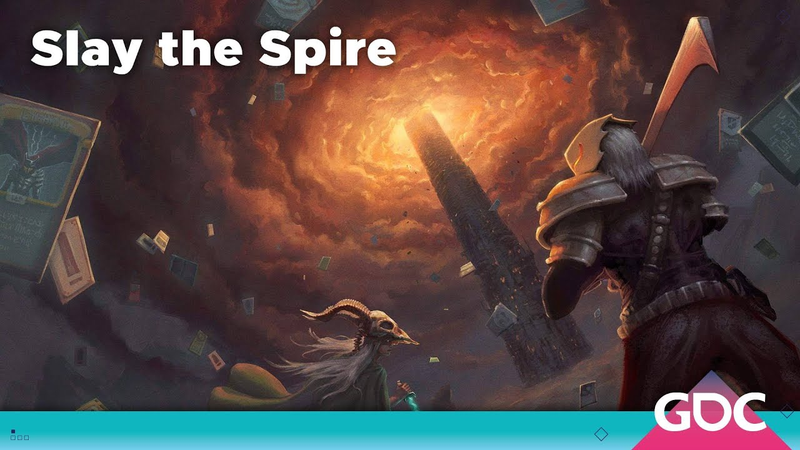
GDC Plays IGF Nominee Slay the Spire with Casey Yano
The success of Slay the Spire stems from a community-driven development philosophy that prioritizes player experience over rigid mathematical balance.
- Slay the Spire utilized Steam Early Access to gauge market interest, releasing with two of three planned characters to determine if the project warranted completion or should be scaled back.
- The developers leveraged gameplay data uploaded by the community to inform balance changes and identify which card mechanics were underperforming or confusing for players.
- The game's map system was inspired by FTL: Faster Than Light, shifting from a blind sequence of encounters to a visible, branching path that allows for strategic, long-term risk-reward decision-making.
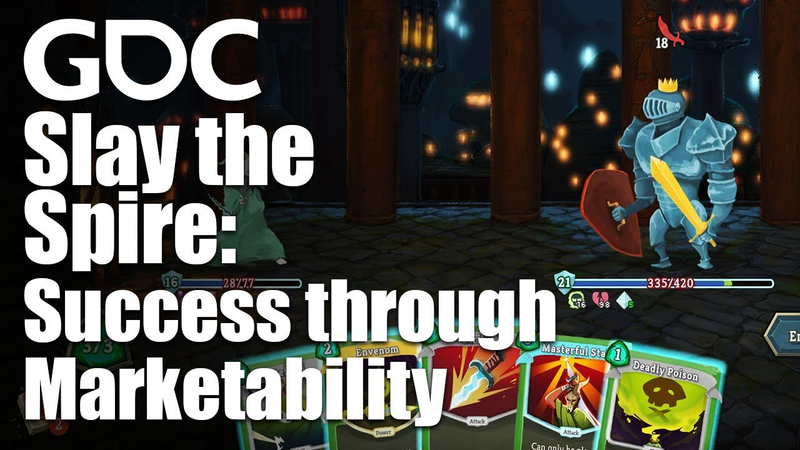
Slay the Spire: Success through Marketability
Slay the Spire demonstrates that long-term commercial success in the independent gaming sector is best achieved through a mechanics-first design philosophy and a commitment to radical transparency.
- Slay the Spire's success was driven primarily by organic player enjoyment and visibility on Twitch, which allowed a game with modest visual appeal to gain massive traction through streamer engagement.
- Steam's 'Top Sellers' list acts as a critical discovery multiplier; once the game broke into this list, sales shifted from a declining trend to a significant, sustained spike.
- Weekly patching during Early Access kept the community engaged and allowed the developers to rapidly fix bugs and iterate on features, which was essential for a small team without a dedicated QA department.