Roguelike Deckbuilder reports and market data
28 documents·8 writers
Documents
Game Developers Conference58 min
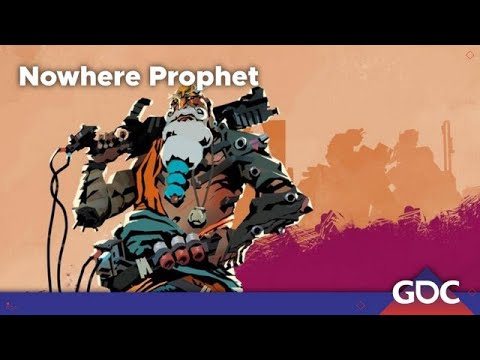
GDC plays Nowhere Prophet with Martin Nerurkar
Nowhere Prophet represents a strategic evolution in the deck-building genre, shifting the focus from competitive player-versus-player mechanics to a narrative-driven, single-player experience centered on convoy management.
- Developer Martin Nerurkar advises against solo development for large-scale projects, noting that the lack of internal checks and balances made the development of Nowhere Prophet an unsustainable and unhappy experience.
- The game's AI was optimized six to seven weeks prior to launch using a search algorithm that simulates multiple future move branches to evaluate and select the most effective strategic action.
- The visual aesthetic of Nowhere Prophet was heavily influenced by comic book art and graphic novels like Hellboy, specifically utilizing high-contrast black shadows and slim highlights rather than traditional 3D rendering.
Game Developers ConferenceJul 2019
Game Developers Conference36 min
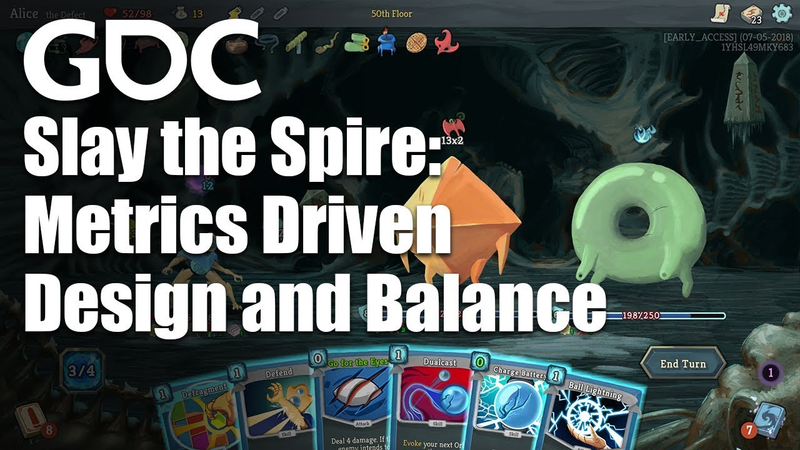
Slay the Spire: Metrics Driven Design and Balance
Strategic balance in Slay the Spire prioritizes meaningful diversity over mathematical equality, ensuring that every card serves a distinct purpose while avoiding mechanics that warp the core gameplay loop.
- Strategic balance in Slay the Spire prioritizes meaningful diversity over mathematical equality, ensuring every card serves a distinct purpose without warping the core gameplay loop.
- The development team utilized a dual-layered feedback mechanism that combined large-scale automated metric collection with qualitative insights from community channels, streamers, and direct player discourse.
- The Early Access model facilitated rapid iteration, using a stable beta branch to test major overhauls like the intent system and Ascension levels.
Game Developers ConferenceJun 2019
Extra Credits10 min
The History of Roguelike Deckbuilders - From Playing Cards to CCGs and Beyond - Extra Credits
The evolution of card-based gaming traces a path from traditional playing cards to the modern roguelike deckbuilder genre.
- Slay the Spire served as the critical inflection point for the roguelike deckbuilder genre, refining procedural dungeon exploration and strategic card progression into a commercially successful and highly accessible format.
- The 2014 title Dream Quest was the first to successfully integrate roguelike procedural generation with deck-building mechanics.
- The 2008 release of Dominion revolutionized card gaming by shifting deck-building from a pre-game meta activity into a core, real-time gameplay loop.
Extra CreditsJun 2019
Extra Credits9 min
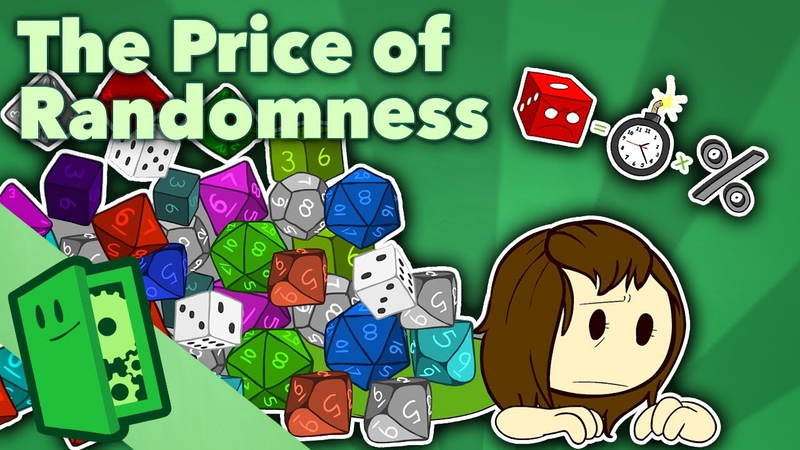
The Price of Randomness - Balancing RNG - Extra Credits
The design of random number generation (RNG) in video games requires a structured approach to balance strategic depth with player satisfaction.
- Portnow’s Postulate defines player frustration as the product of time lost and the probability of that loss occurring, serving as a diagnostic tool for balancing RNG.
- The 'true time cost' of a loss must account for cumulative progress, such as rank degradation or the time spent earning entry currency, rather than just the duration of a single match.
- In games like Hearthstone, a loss is effectively doubled in time cost because it negates the progress gained from a previous win, increasing the frustration threshold.
Extra CreditsJul 2018