Player Demographics

177 documents·72 publishers

Documents

Page 1
Report44 pages

Global Games Market Report 2024

The Global Games Market Report 2024 projects a modest 2.1 % year‑over‑year growth, bringing worldwide revenues to $187.7 billion in 2024 and reaching $213.3 billion by 2027 at a 3.1 % compound annual growth rate. PC gaming remains the largest segment, generating $43.2 billion in 2024 and accounting for roughly 22 % of total revenue by 2027, while consoles are expected to rise to a 30 % share as cross‑platform releases become more common. Mobile revenue growth has slowed after the pandemic, and its market share is projected to decline further, underscoring a shift toward PC‑centric titles.

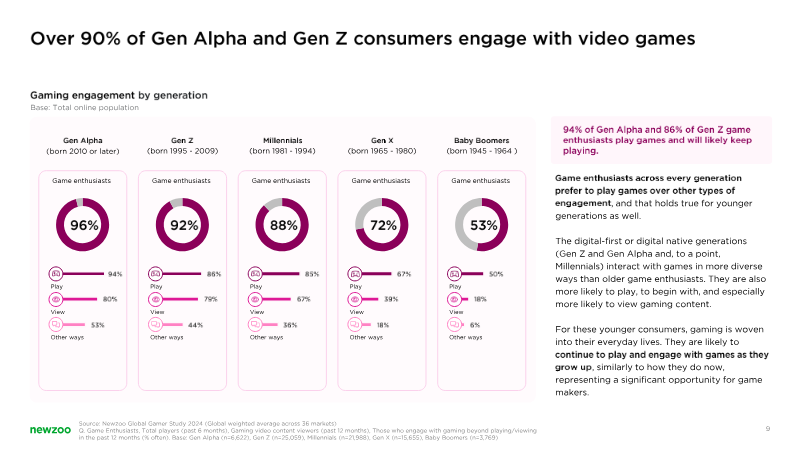
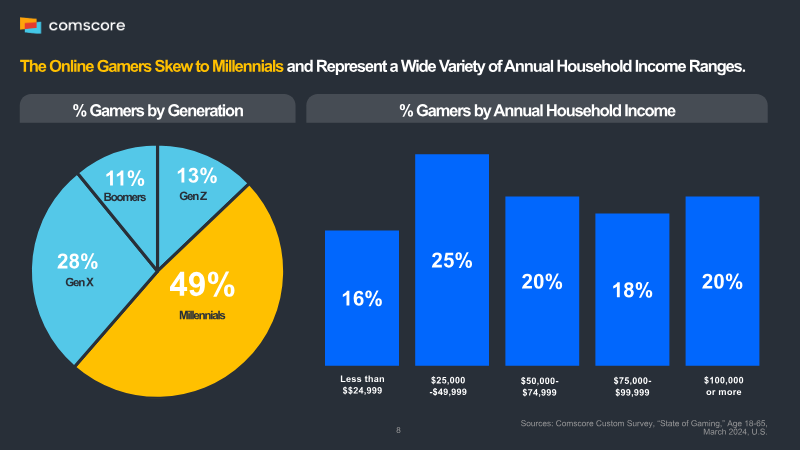
Player numbers are set to climb to 3.42 billion, a 4.5 % increase driven largely by PC adoption; mobile and console growth are more modest at 3.5 % and 2.3 %, respectively. The report’s methodology blends primary consumer research, macro‑economic data, app‑store feeds, and public company financials to estimate players, payers, and revenue streams. It also highlights the rising influence of user‑generated content (UGC) and cross‑generational appeal, noting that Gen Alpha and Gen Z together represent 94 % and 86 % of online gamers, respectively. UGC is emerging as a significant revenue source for both studios and creators, demanding strategies that balance older and younger player habits.

Key insights emphasize the growing importance of IP‑driven franchises, licensing, and transmedia ventures for revenue generation. Detailed breakdowns cover game delivery models, monetization tactics, genre performance, and regional revenues—including VR and cloud gaming metrics. The report promotes tailored consulting services such as TAM sizing, genre teardowns, audience analysis, campaign measurement, and live‑service strategy to help studios optimize development, marketing, and monetization in an increasingly competitive landscape.

  • The global games market is projected to reach $187.7 billion in 2024, growing at a 3.1% CAGR to hit $213.3 billion by 2027.
  • PC gaming is the leading segment with $43.2 billion in 2024 revenue, while console market share is expected to rise to 30% due to the prevalence of cross-platform releases.
  • Total player count is forecast to reach 3.42 billion, a 4.5% year-over-year increase primarily driven by growth in PC adoption.
  • Mobile gaming revenue growth has slowed post-pandemic, leading to a projected decline in its overall market share as the industry shifts toward PC-centric titles.
  • Gen Alpha and Gen Z represent 94% and 86% of online gamers respectively, highlighting the critical need for strategies that balance the habits of younger demographics.
+1
NewzooJan 2024
Page 1
Report72 pages

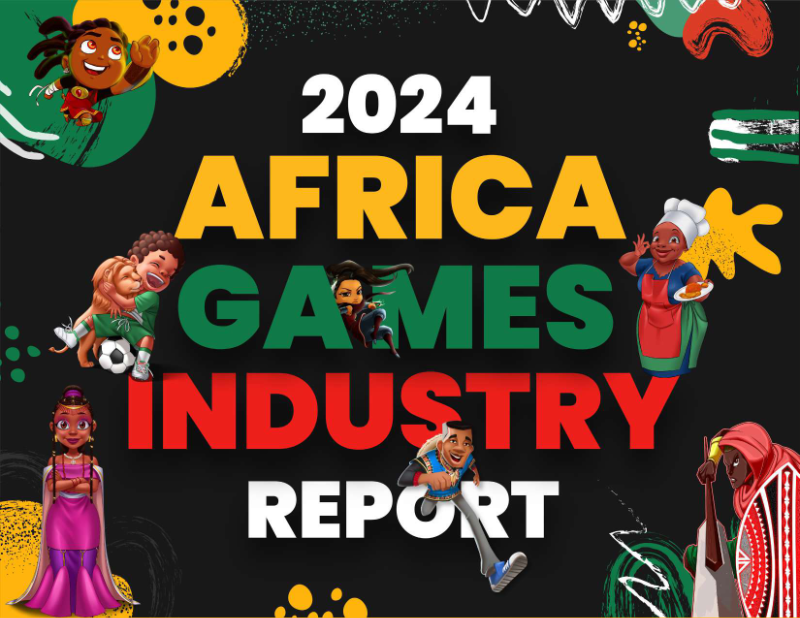
Africa Games Industry Report 2024

The Africa Games Industry Report 2024 presents a data‑driven assessment of the continent’s gaming ecosystem, targeting investors, policymakers, developers and the broader public. It argues that Africa’s youthful demographics, rapid mobile penetration and cultural diversity create a fertile environment for game development and monetisation. The report identifies fre‑to‑play with in‑app purchases as the dominant revenue model, while premium titles, ad‑based income, subscriptions and licensing remain viable alternatives for developers willing to overcome higher entry barriers.

Key findings show that the Sub‑Saharan gamer base has more than doubled from 77 million in 2015 to 186 million in 2021, with mobile gaming accounting for 95 % of players and nearly 90 % of the region’s $778.6 million revenue in 2022. Approximately one‑third of players make in‑app purchases, underscoring significant monetisation potential. The industry is largely composed of small to medium studios and solo developers, with Unity the preferred engine and mobile/PC platforms dominating. Yet only 36 % of respondents earn income from games, and infrastructure challenges—unreliable power (71 %) and costly internet (57 %)—continue to impede growth.

The report calls for coordinated action from investors, studios, policymakers and the public. It highlights mobile network operators and alternative payment systems as critical partners for expanding reach, while outlining a five‑factor ecosystem—reliable infrastructure, talent pathways, informed investors, connected industry and evidence of success—to unlock high‑value jobs, cultural exports and foreign investment. The overarching thesis is that Africa’s gaming sector is poised for rapid expansion, offering substantial economic and creative opportunities if these systemic barriers are addressed.

  • The Sub-Saharan gamer base grew from 77 million in 2015 to 186 million in 2021, with mobile gaming driving 95% of the player base and nearly 90% of the region's $778.6 million revenue in 2022.
  • Free-to-play with in-app purchases is the dominant revenue model, with approximately one-third of players currently making in-app purchases.
  • Infrastructure remains the primary barrier to growth, with 71% of developers citing unreliable power and 57% citing high internet costs as significant impediments.
  • Despite the sector's scale, only 36% of surveyed developers currently earn income from their games.
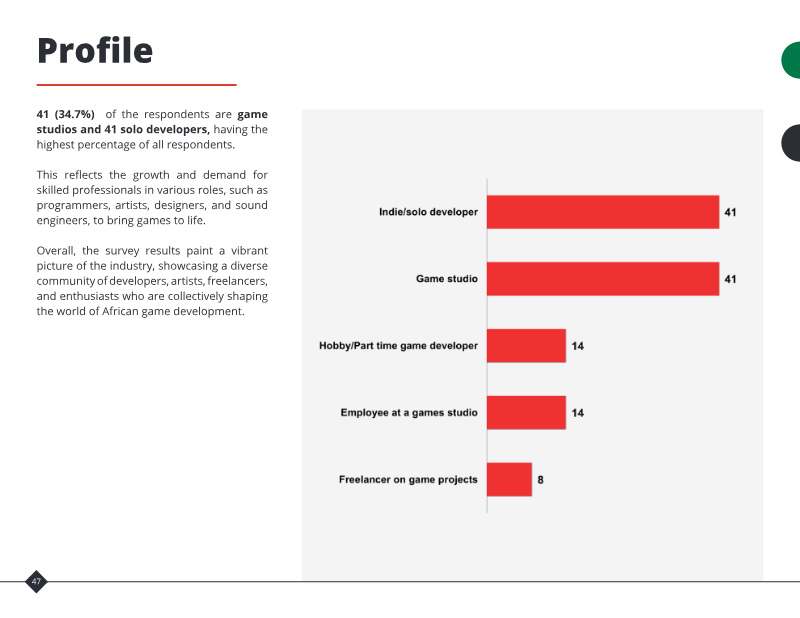
  • The industry is primarily composed of small-to-medium studios and solo developers who predominantly utilize the Unity engine for mobile and PC platforms.
Maliyo GamesJan 2024
Page 1
Report52 pages

Global Games Market Report

The global games market is entering a period of stabilization and renewed growth, with 2023 revenues projected to reach $184.0 billion. This recovery follows a post-pandemic correction and is supported by a massive player base of 3.31 billion people worldwide. While the industry faces macroeconomic pressures and shifting privacy regulations, long-term forecasts remain positive, with total revenues expected to climb to $205.4 billion by 2026. This trajectory is fueled by the maturation of the current console generation, the expansion of the middle class in emerging markets, and the increasing influence of transmedia strategies that drive engagement across multiple entertainment formats.

Market dynamics are shifting significantly across different platforms and regions. Mobile gaming remains the largest revenue segment at $89.7 billion, yet it is currently experiencing a 1.4% decline as privacy policies complicate user acquisition and monetization, particularly within the RPG genre. In contrast, the PC and console segments are the primary growth engines for 2023, benefiting from a steady supply of hardware and a robust slate of high-profile releases. Geographically, the Asia-Pacific region maintains its dominance, accounting for 46% of global revenue, even as regulatory hurdles in China slow its immediate growth. Meanwhile, significant capital infusions, such as Saudi Arabia’s $38 billion investment through Savvy Games Group, are reshaping the competitive landscape.

Technological and structural transformations are further defining the industry's future. Generative AI is emerging as a pivotal tool for managing the rising costs of AAA development, though its adoption is tempered by concerns over copyright and workforce impact. Revenue models have transitioned almost entirely to digital formats, with physical sales becoming negligible in the PC market and live-service models dominating console engagement. As the industry evolves, the rise of cloud gaming and handheld "complementary devices" like the Steam Deck are expanding how and where players interact with content, ensuring the market remains resilient despite shifting regulatory and economic conditions.

  • The global games market is projected to reach $184.0 billion in 2023, with a forecast to grow to $205.4 billion by 2026 supported by a 3.31 billion-person player base.
  • Mobile gaming remains the largest revenue segment at $89.7 billion, though it is currently experiencing a 1.4% decline due to privacy-related challenges in user acquisition and monetization.
  • PC and console gaming are the primary industry growth engines for 2023, driven by improved hardware supply and a strong pipeline of high-profile software releases.
  • The Asia-Pacific region continues to dominate the global market with 46% of total revenue, despite regulatory headwinds currently impacting growth in China.
  • Large-scale capital investments, such as the $38 billion commitment from Saudi Arabia’s Savvy Games Group, are actively reshaping the competitive landscape.
+1
NewzooJan 2024
Page 1
Report27 pages

Games Market Trends to Watch in 2024

The global games market in 2024 is characterized by a period of stabilization and strategic restructuring following the post-pandemic correction. While the industry saw a revenue decline in 2022, recovery began in 2023 and is expected to continue through 2024, driven largely by the expanding install base of current-generation consoles like the PlayStation 5 and Xbox Series X|S. Despite this growth, the year is defined as a lean period for many companies as they navigate high interest rates, reduced investment capital, and a highly competitive landscape where a small number of titles dominate the majority of player engagement.

Key findings indicate a significant shift in business models and platform strategies. While live-service games remain the primary revenue drivers, the market is experiencing oversaturation, leading many developers to return to premium, finite gaming experiences. Growth in multi-game subscription services is expected to slow as they face competition from free-to-play social platforms like Fortnite and Roblox. Additionally, mobile developers are increasingly diversifying by bringing their titles to PC to combat rising user acquisition costs and stricter privacy regulations. Major hardware and distribution shifts are also anticipated, including the launch of a new Nintendo console and the introduction of an Xbox mobile store on Android.

The scope of this analysis covers global market trends across PC, console, and mobile segments, with revenue forecasting extending through 2026. The methodology combines internal market data and analyst perspectives with a survey of gaming executives and industry experts from companies such as Ubisoft, Iron Galaxy Studios, and Savvy Games Group. Emerging technologies like generative AI are identified as tools for increasing production efficiency, though they are not expected to transform game development at scale within the immediate calendar year. Overall, the industry is moving toward risk-reduction strategies, focusing on established intellectual properties and cross-platform accessibility to maintain stability.

  • The global games market is in a period of stabilization and recovery throughout 2024, supported by the growing install base of current-generation consoles like the PlayStation 5 and Xbox Series X|S.
  • Developers are increasingly pivoting back to premium, finite gaming experiences to counter the oversaturation of the live-service market.
  • Mobile developers are expanding to PC platforms to mitigate the impact of rising user acquisition costs and stricter privacy regulations.
  • Growth in multi-game subscription services is expected to decelerate as they face direct competition from free-to-play social platforms such as Fortnite and Roblox.
  • The industry is preparing for significant infrastructure shifts, including the anticipated launch of a new Nintendo console and the introduction of an Xbox mobile store on Android.
+1
NewzooJan 2024
Page 1
Report55 pages

Xsolla Report: State of Play – Winter 2024 Edition

The global gaming industry is currently navigating a period of stabilization following a massive 26% growth surge between 2019 and 2021. While the rapid pandemic-era expansion has moderated, the sector reached $106.8 billion in 2023 and is on a trajectory to hit $205.7 billion by 2026. This growth is underpinned by a global player base expanding to 3.79 billion people, with mobile gaming remaining the dominant force, accounting for nearly half of all consumer spending. Despite a downward revision in year-over-year growth forecasts to 0.6%, mobile spending is expected to reach $111.4 billion in 2024, led by strong performance in the United States and Japan.

The industry is undergoing a significant structural transformation driven by technological shifts and regulatory changes. The transition toward digital-only monetization, cloud-based services, and the metaverse—projected to reach $996 billion by 2030—reflects a broader convergence with the entertainment landscape. Furthermore, the implementation of the Digital Markets Act is opening doors for alternative billing systems and direct-to-consumer web stores. These shifts occur alongside a demographic evolution where women now represent nearly 50% of the player base, though they remain underrepresented in executive and professional roles.

Financial dynamics within the sector show a complex landscape of consolidation and rising costs. While AAA development budgets have tripled over the last five years, the investment market has faced volatility, characterized by a cooling M&A environment and significant layoffs. Despite a drop in deal volume, strategic investment value surged by 577% in mid-2023, reaching $7 billion in a single quarter. To counter high user acquisition costs and stricter privacy regulations, developers are increasingly adopting generative AI for efficiency and pivoting toward community-focused organic reach, early access models, and influencer partnerships to ensure long-term sustainability.

  • The global gaming industry is projected to grow from $106.8 billion in 2023 to $205.7 billion by 2026, supported by a total player base of 3.79 billion people.
  • Mobile gaming remains the industry's primary revenue driver, accounting for nearly 50% of total consumer spending and reaching a projected $111.4 billion in 2024.
  • Strategic investment value saw a massive 577% surge in mid-2023 to reach $7 billion in a single quarter, despite an overall cooling in M&A activity and a volatile investment climate.
  • The metaverse is projected to reach a valuation of $996 billion by 2030 as the industry shifts toward digital-only monetization and cloud-based services.
  • Regulatory changes like the Digital Markets Act are forcing a structural shift toward alternative billing systems and direct-to-consumer web stores to bypass traditional platform constraints.
+1
XsollaJan 2024
Page 1
Report9 pages

Longitudinal Survey Report on Gaming Disorder: Japan

The study investigates how household rules governing video‑game use influence weekly play time and the emergence of gaming disorder among Japanese elementary and middle‑school students. By tracking participants over two survey waves—late 2022 to early 2023 and late 2023 to early 2024—the research tests whether specifying permissible gaming periods or prohibiting certain times can curb excessive play and related daily‑life problems.

A longitudinal sample was drawn from four elementary schools and four middle schools in Tokyo and Fukuoka, yielding 243 elementary and 201 middle‑school respondents after excluding esports players. Analyses focused on the 147 elementary and 107 middle‑school students who reported gaming at least once per week across both waves. Weekly gaming hours were calculated from weekday and weekend use, while gaming disorder was measured with the ICD‑11‑based Gaming Disorder Test and a custom scale assessing disruptions to sleep, meals, and routine. The presence of two rule types—“allowed‑time” (e.g., one hour per day) and “prohibited‑time” (e.g., no gaming after midnight)—was recorded at each wave and examined using cross‑lagged models and mixed‑design ANOVAs.

Results show that higher weekly gaming hours predict later increases in gaming‑disorder scores for both age groups (standardized coefficients .12 for elementary and .11 for middle‑school students), while disorder does not feed back into later play time. Gaming hours and daily‑life problems mutually reinforce each other, forming a negative feedback

  • Increased weekly gaming hours serve as a significant predictor for higher gaming disorder scores, with standardized coefficients of .12 for elementary students and .11 for middle-school students.
  • Gaming hours and daily-life problems, such as disruptions to sleep and meals, create a negative feedback loop where each factor mutually reinforces the other.
  • Gaming disorder symptoms do not appear to influence or increase future weekly play time, suggesting that excessive play is the primary driver of disorder rather than a consequence of it.
  • The study tracked 254 total students—147 elementary and 107 middle-schoolers—who played games at least once per week across two survey waves between late 2022 and early 2024.
  • Research methodology utilized the ICD-11-based Gaming Disorder Test and a custom scale to measure the impact of household rules, specifically 'allowed-time' limits and 'prohibited-time' restrictions.
+1
CESA – Computer Entertainment Supplier's AssociationJan 2024
Page 1
Report2 pages

Comportamientos e Intereses de los Videojugadores: Spain

The study investigates how Spanish video‑game players experience play, what motivates them, and which social and cognitive benefits they perceive. It situates Spain within a broader cross‑national analysis that also includes Poland, South Korea and Australia, focusing on active gamers who play at least once a week.

Data were collected through an online questionnaire administered to 12,847 weekly players across the four markets, of which 1,139 respondents were from Spain. The sample spans ages 16 to 65 plus and includes both genders, allowing comparison of habits and attitudes between men and women and across age brackets.

Among Spanish gamers, 80 % cite “meeting different people” and “stimulating the mind” as primary reasons for playing, while 78 % report that games help reduce stress and anxiety. Men are slightly more likely than women to feel less isolated (78 % vs 72 %) and to use gaming as a healthy outlet for daily pressures (75 % of men versus 60 % of women). Solo play remains the most common mode, yet eight out of ten men regularly play with others online, and roughly half of all respondents combine solo and online sessions.

Social interaction is linked to perceived skill gains: 78 % associate multiplayer play with enhanced creativity, 74 % with teamwork, and 64 % with improved cognitive and STEM‑related abilities. Integrated communication tools are used frequently by 29 % of younger male players, while 55 % of all participants view playing with others—whether online or in person—as a positive experience that fosters lasting friendships and shared memories.

Overall, Spanish gamers view video games as a versatile medium that delivers entertainment, mental‑health relief, social connection and transferable competencies, underscoring the sector’s relevance for both consumer satisfaction and broader wellbeing initiatives.

  • 80% of Spanish gamers play primarily to meet new people and stimulate their minds, while 78% use gaming as a tool to reduce stress and anxiety.
  • Multiplayer gaming is perceived as a driver for skill development, with 78% of players associating it with creativity, 74% with teamwork, and 64% with improved cognitive and STEM-related abilities.
  • Social gaming is a core habit, as 55% of all participants view playing with others as a positive experience that fosters lasting friendships and shared memories.
  • While solo play remains the most common mode, 80% of male gamers play online with others regularly, and roughly 50% of all respondents combine solo and online sessions.
  • Gender differences exist in perceived benefits, with men more likely than women to report feeling less isolated (78% vs 72%) and using gaming as a healthy outlet for daily pressure (75% vs 60%).
+1
AEVIJan 2024
Page 1
Report26 pages

Manifiesto de Video Games Europe 2024-2029

The European video‑game sector seeks recognition as a distinct blend of technology and creative culture and urges policymakers to embed this identity in the EU’s 2024‑2029 strategic framework. By positioning games as a driver of digital innovation, cultural expression, and economic growth, the manifesto argues that tailored legislation, financing, and data‑collection mechanisms are essential to sustain the industry’s momentum and competitiveness.

Between 2019 and 2024 the sector expanded by 16 %, reaching €24 billion in revenue and employing roughly 110 000 highly‑skilled workers across the Union. More than half of Europeans (53 %) now play games, with women accounting for 46.7 % of the audience and the average gamer aged 32. Research indicates that girls who game are three times more likely to pursue STEM studies, underscoring the medium’s educational impact. The self‑regulatory PEGI system, which has labelled over 40 000 titles in 40 countries, has cut non‑compliant sales by up to 50 %, demonstrating effective consumer protection without heavy legislative burden.

Current EU financing tools—tax credits and grants—are deemed insufficient to match the incentives offered by hubs such as Canada, the United Kingdom and France. The manifesto calls for a dedicated funding framework that channels public resources toward innovative, creative projects, alongside flexible talent‑attraction visas and Horizon‑funded labour‑market mapping to close digital‑skills gaps. It also highlights the strain of 850 new obligations introduced between 2017 and 2022, amounting to more than 5 000 pages of regulation, which increase compliance costs for developers and publishers.

To solidify the sector’s contribution, a unified intellectual‑property regime and a revision of NACE classification codes are proposed, enabling accurate economic measurement. Mandatory PEGI‑based age controls, parental‑lock tools and proactive chat moderation address the 53 % of Europeans prioritising child‑friendly environments. Finally, the industry’s low‑carbon digital products and initiatives such as “Playing for the Planet” and “Green Game Jam” are presented as foundations for a climate‑responsible future, aligning gaming with

  • The European video game sector generated €24 billion in revenue between 2019 and 2024, representing a 16% growth rate and supporting 110,000 highly-skilled jobs.
  • The industry faces a significant regulatory burden, having been subjected to 850 new obligations and over 5,000 pages of legislation between 2017 and 2022.
  • Current EU financing tools are insufficient to compete with global hubs like Canada and the UK, prompting calls for a dedicated funding framework and improved tax incentives.
  • The PEGI self-regulatory system has successfully labeled over 40,000 titles across 40 countries, reducing non-compliant sales by up to 50%.
  • Video games have reached 53% of the European population, with a demographic split of 46.7% women and an average player age of 32.
+1
AEVIJan 2024
Page 1
Report13 pages

Video Games Europe Manifesto 2024-2029

Europe’s video‑game sector has expanded by 16 % between 2019 and 2024, now delivering €24 billion in revenue and employing roughly 110 000 highly‑skilled workers. More than half of the continent’s gamers are under 20 years old, and nearly half of parents rely on the PEGI age‑rating system to ensure safe play. The industry’s dual nature—combining advanced technology with creative content—underpins a call for EU‑level measures that preserve an open, tax‑free single market, extend the Creative Europe programme, apply the General Exemption Regulation to games, and reinforce intellectual‑property protection while investing in digital‑skill education, particularly STEM pathways for girls.

The PEGI framework, supported by co‑regulation, has already classified around 40 000 titles across 40 European countries, halving non‑compliance penalties and cutting energy‑consumption violations by roughly 20 %. Nevertheless, the sector faces a regulatory load of 850 new EU obligations (over 5 000 pages of rules) introduced between 2017 and 2022. A shift toward transparent self‑regulation is advocated, emphasizing clearer in‑game purchase disclosures, stronger parental‑control tools, and EU‑wide educational programmes to close digital‑skills gaps and attract diverse talent.

Safety‑by‑design requirements now obligate all publishers to integrate PEGI‑based age classification, parental‑control portals, chat moderation, purchase limits and time‑spending caps, reflecting the predominance of minors among players. The climate‑and‑inclusion agenda shows progress: women represent 23.7 % of the video‑game workforce, surpassing the 17 % share in the broader ICT sector, and industry members are adopting gender‑equality guidelines and green initiatives such as the Green Game Jam. Coordinated self‑regulation, targeted public funding, and unified online‑safety strategies are presented as essential to sustain economic contribution, foster innovation, and position Europe as the leading hub for socially responsible game development.

  • The European video game sector grew by 16% between 2019 and 2024, reaching €24 billion in annual revenue and employing approximately 110,000 highly-skilled workers.
  • Between 2017 and 2022, the industry faced a significant regulatory burden consisting of 850 new EU obligations spanning over 5,000 pages of rules.
  • The PEGI age-rating system has successfully classified 40,000 titles across 40 countries, contributing to a 50% reduction in non-compliance penalties and a 20% decrease in energy-consumption violations.
  • Women currently account for 23.7% of the European video game workforce, outperforming the 17% representation found in the broader ICT sector.
  • Industry stakeholders are advocating for EU-level policies that include the application of the General Exemption Regulation to games, the preservation of a tax-free single market, and the expansion of the Creative Europe programme.
+1
Video Games EuropeJan 2024
Page 1
Report6 pages

2024 Professional Gamer Workforce and Career Structure in Korea

The analysis aims to map the composition, demographics, career trajectories, and income streams of South Korea’s professional e‑sports workforce, drawing on Statista surveys conducted between June and November 2024. It covers domestic players across major titles, Korean competitors active in overseas leagues, and the age, tenure, and earnings profiles of a sample of 138 active professionals, providing a snapshot of the industry’s structure during the current competitive season.

Domestic data identify 361 professional gamers, heavily clustered around four titles: League of Legends (58 players), Valorant (56), PUBG (54) and PUBG Mobile (48). Smaller but notable presences include Rainbow Six Siege (37) and Eternal Return (32). Internationally, 372 Korean e‑sports athletes were reported competing abroad, with League of Legends accounting for 169 participants and Overwatch 2 for 108, while StarCraft II, Valorant and other games each contributed fewer than 30 players.

Age distribution reveals a predominance of young adults, as 37.7 % fall within the 22‑24 year bracket, followed by 29.7 % aged 25 and older, 23.9 % aged 20‑21, and 8.7 % under 19. Career length shows a polarized pattern: 29.7 % have six or more years of experience, while the

  • South Korea’s professional e-sports workforce consists of 361 domestic players and 372 athletes competing in overseas leagues.
  • League of Legends is the dominant title for Korean professionals, accounting for 58 domestic players and 169 athletes competing internationally.
  • The professional player base is heavily concentrated in four domestic titles: League of Legends (58), Valorant (56), PUBG (54), and PUBG Mobile (48).
  • Overwatch 2 serves as the second-largest destination for Korean talent abroad, with 108 players currently competing in international leagues.
  • The workforce is primarily composed of young adults, with 61.6% of professionals aged 20 to 24 and only 8.7% under the age of 19.
+2
KOCCA – Korea Creative Content AgencyJan 2024
Page 1
Report7 pages

2024 E‑Sports Viewership and Engagement Trends in Korea

The analysis aims to map current e‑sports viewership and engagement patterns among South Korean audiences, highlighting how consumption devices, platforms, and motivations shape the market and indicating the potential for offline event conversion. Findings reveal a sharply concentrated viewing environment: personal computers account for 38.2 % of primary devices and mobile phones 35.9 %, together representing 74.1 % of usage, while laptops, tablets and televisions capture smaller shares. Platform preference is even more centralized, with YouTube commanding 78.5 % of respondents, far ahead of SOOP (14.1 %) and CHZZK (7.2 %).

Regularity of consumption is high; 38.5 % of participants watch e‑sports 1–2 times per week and 20.4 % watch 3–4 times weekly, meaning at least 58.9 % engage at least once a week. Weekday sessions cluster around one hour for the majority, whereas weekend viewing extends, with 22 % spending two hours on weekdays and 28.6 % doing so on weekends; longer sessions of five hours or more occur for 4.7 % of weekday viewers and 8.1 % of weekend viewers.

Motivational drivers are dominated by entertainment and self‑improvement: 62.1 % watch because the game is fun, 41.9 % seek to enhance their own gameplay, and 37.5 % cite stress relief. Additional reasons include boredom or free access (27.3 %), support for specific players (22.1 %), and social bonding with friends or coworkers (8.6 %).

The survey, conducted between June and August 2024, sampled 1,858 South Korean e‑sports viewers aged ten and older, with data supplied by C&I Research and the Korea Creative Content Agency. A clear majority—62.7 %—expressed willingness to attend live e‑sports events, while 26.9 % remain undecided and 10.4 %

  • YouTube dominates the South Korean e-sports market with a 78.5% platform share, significantly outpacing competitors SOOP (14.1%) and CHZZK (7.2%).
  • E-sports consumption is primarily mobile and desktop-driven, with PCs (38.2%) and mobile phones (35.9%) accounting for 74.1% of all viewing devices.
  • Engagement is frequent and consistent, as 58.9% of viewers watch e-sports content at least once a week, with 20.4% watching 3–4 times weekly.
  • Viewer motivation is driven primarily by entertainment (62.1%), gameplay improvement (41.9%), and stress relief (37.5%).
  • There is strong potential for offline market growth, as 62.7% of the 1,858 surveyed viewers expressed a willingness to attend live e-sports events.
+1
KOCCA – Korea Creative Content AgencyJan 2024
Page 1
Report33 pages

Italian Esports Report 2024: Market & Streaming Trends

The analysis evaluates Italy’s esports ecosystem in 2024, aiming to map its audience composition, revenue structure, and strategic priorities for industry participants. Findings reveal a core fan base of 7.3 million individuals, of whom 3.3 million regularly watch esports content. This audience skews younger, resides in urban centres, is predominantly male, and is more likely to hold full‑time employment than the broader gaming population, indicating a segment with disposable income and commercial appeal.

Revenue streams are heavily weighted toward advertising and sponsorship, with 80 % of organisations citing these as primary income sources and accounting for roughly one‑third of total market revenue. This concentration underscores the sector’s dependence on brand partnerships and suggests that monetisation beyond traditional media rights remains limited.

The study draws on a balanced consumer survey of approximately 1,000 Italian internet users aged 16‑65, conducted in September‑October 2024, and a complementary questionnaire administered to an equal number of esports‑industry stakeholders in partnership with IIDEA. All quantitative data are rounded, sourced from publicly available information, and have not undergone independent verification.

Overall, the Italian esports market emerges as a youthful, urban‑centric niche with significant advertising potential, yet its financial model remains narrowly focused. Stakeholders are likely to continue prioritising sponsorship acquisition and related promotional activities to capitalise on the identified demographic strengths.

  • Italy’s esports ecosystem comprises 7.3 million fans, with 3.3 million identified as regular viewers of esports content.
  • The Italian esports audience is characterized by a younger, urban-centric demographic that is predominantly male and more likely to be employed full-time than the general gaming population.
  • Revenue generation is heavily concentrated, with 80% of organizations relying on advertising and sponsorship as their primary income source.
  • Advertising and sponsorships account for approximately one-third of the total Italian esports market revenue.
  • Monetization strategies in the Italian market remain limited, showing a significant reliance on brand partnerships rather than diversified income streams like media rights.
+1
IIDEA – Italian Interactive Digital Entertainment AssociationJan 2024

Publishers

Related Topics