1 free read left. Create a free account for unlimited reading + AI research.
Create free account
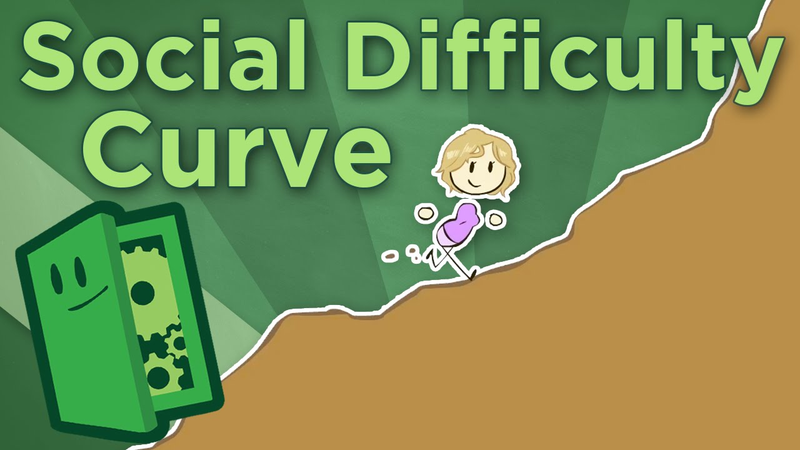
Social Difficulty Curve - Easing Players into Communication - Extra Credits
Key insights
5 takeaways- 01Game designers must apply the same pedagogical rigor to social interaction that they apply to mechanical difficulty curves to prevent player burnout and improve retention.
- 02Social skill in gaming should be treated as a progressive competency that evolves from solitary play to complex interpersonal coordination.
- 03Effective social design requires scaffolding, where early-game incentives are used to encourage players to transition from solitary play to team-based activities at a measured pace.
- 04Developers should implement a foundational solo-play phase, such as starting zones or single-player campaigns, to allow players to master core mechanics before introducing social distractions.
- 05Premature exposure to complex social requirements, such as guild management or high-level trading, before a player is socially acclimated often leads to alienation and decreased engagement.
Ask AI about this video
Transcript
it's been strange to me watching the evolution of social games and by social games I don't mean games running on a social network like Facebook I mean any game where you interact with other people sometimes friends sometimes strangers from across the world I would just call them multiplayer games but in the last few years we've seen an explosion of online interaction in our games and not just social interactions in terms of your standard synchronous multiplayer I'm talking about all kinds from the messaging system in Dark Souls to the chess by mail style of attacking villages and Clash of Clans because the internets become ubiquitous the real world dollar value of community has become clear to Publishers and so more and more games seem pressured to include a social element or tie-in and yet despite that on all the projects James has worked on the idea of a social difficulty curve has never been discussed there's a concept in game design we sometimes call the difficulty curve it's a graph of how a game's difficulty should increase over time in relation to a player's skill at that game we've settled on a version that's
almost universally satisfying you may have seen this before see this oscillating line moving diagonally upward as the player skill increases it's such a fundamental concept that at this point it's something almost every designer we know uses intuitively on most of their work Heck if you go to a school for game design it's probably one of the first things they'll teach you but while we use this for almost every part of our games from plotting out our levels to figuring out the overall Arc of the game we've got no analogous concept for the social side of play when you you get down to it though a challenge is a challenge whether it's mechanical or social and I've clearly seen games fail because their social play deviates wildly from that curve so let's talk about this because as we create games which involve interpersonal interaction it's important to recognize that a player's skill within the social framework of a game increases over time let's take MMOs as an example if you are anything like me you start out just playing solo then you periodically form pickup groups and begin to use the auction house next you start adding people to your friends list you've got a
group You Adventure with semi-regularly and you find yourself using the auction house all the time to make money and to put together the complex ingredient chains you need for crafting then as you get toward the level cap you join a guild and you start to take on multi-party raids and hey if you're a more active player than I usually am maybe you finally step up to do the heavy lifting and actually run a guild of your own this is a fairly good structure for the social experience you can see clearly how a player like me progresses from tackling minimal social tasks to taking on things I would refer to as having a high level of social difficulty of course even if you're building a game that focuses on multiplayer your game doesn't have to have all of these stages hardly after all there are plenty of great free-for-all and Team Deathmatch games out there but the one thing your game can't do is have the latter stages of this progression without the former ones and the one thing it absolutely has to do is help the player get better at or become more comfortable with the social tasks the game presents just like it does with standard gameplay challenges so over the next 3 weeks we're going to go through the stages of social skill
progression step by step starting today with the process of introducing your player to social systems and offering incentives to invite them to come out of their shell you can break social difficulty down even further than we will in this series but hopefully this will serve as a jumping off point okay so say hello to Emily she's just started playing our MMO and we're going to walk through the early steps of its social difficulty curve here we go to start with we have the first step of the curve solo play this one's fairly obvious it's the early period where Emily is essentially just playing the game by herself during this phase she'll be getting used to the rules and the mechanics of the game and she probably won't really want to be distracted by having to interact with other players MMOs have a lot going on she's probably got enough on her plate already in many games this phase is best done in an offline mode and it's WHY games that we think of as primarily multiplayer like Call of Duty still have an extensive single player campaign of course the solo experience doesn't have to be offline many online only games achieve it as well the starting areas in MMOs often serve this function often letting
the player play essentially by themselves but even in competitive multiplayer games like World of Tanks new players often Begin by just treating the other players as if they were NPCs not really socially interacting just playing the game however they think is best and the maps they're thrown into when they start allow for this lack of team play in a way that later Maps simply won't multiplayer games where this step isn't provided are substantially harder for many people to get into anyway the key here is simply to find ways to allow Emily that cushion period at the outset of our game where she can get her footing even if that period doesn't really represent the most exciting experience our game can offer if you look at dominations or any of the other Clash of Clans style games you'll see them doing this in fact most of the free-to-play mobile market has learned this lesson well and no matter what you may think of the rest of their games this is something we can learn from but this is only the beginning literally join us next week as we track Emily's climb higher up the social difficulty curve and really delve into the meat of how to get your player socially engaged with your game see you then
[Music]
Summary
Game design frequently utilizes a difficulty curve to manage player engagement, ensuring that mechanical challenges scale appropriately with a user's growing skill. However, a significant oversight exists in the industry regarding the application of this concept to social interaction. While modern games increasingly integrate multiplayer and community-driven features, they often fail to implement a structured social difficulty curve. This leads to situations where new players are overwhelmed by complex social requirements before they have mastered the core mechanics of the game, ultimately hindering player retention and comfort.
Social skill in gaming is a progressive competency that evolves from solitary play to complex interpersonal coordination. Effective game design should treat social tasks with the same pedagogical rigor as mechanical challenges. The progression typically begins with a solo-play phase, where players acclimate to the game’s rules without the distraction of external communication. This foundational stage is essential, even in multiplayer-centric titles, as it provides a necessary cushion for players to gain confidence. Successful examples include MMO starting zones or the single-player campaigns in competitive shooters, which allow users to treat other participants as non-player characters until they are ready to engage in team-based or guild-level activities.
The primary thesis is that games must scaffold social interaction to prevent premature burnout. By failing to provide a gradual transition from solitary play to high-level social engagement—such as guild management or complex trading—developers risk alienating players who are not yet socially acclimated to the environment. Designers should prioritize creating early-game incentives that encourage players to emerge from their shells at a measured pace. By mapping out a clear trajectory for social development, developers can ensure that interpersonal challenges remain satisfying rather than obstructive, ultimately fostering a more robust and engaged community.















Comments