1 free read left. Create a free account for unlimited reading + AI research.
Create free account
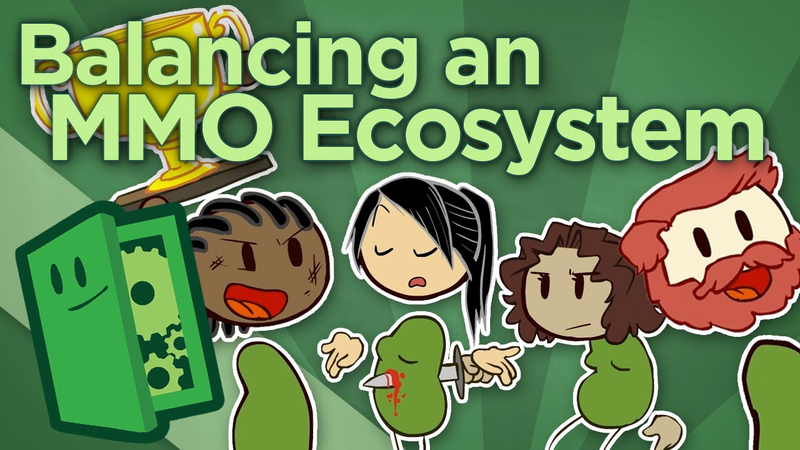
Balancing an MMO Ecosystem - Getting a Mix of Player Types - Extra Credits
Key insights
6 takeaways- 01Long-term MMO sustainability depends on maintaining a balanced ecosystem of four distinct player types: achievers, explorers, socializers, and killers.
- 02Player types exist in an interdependent feedback loop where the dominance of one group often leads to content stagnation, new player alienation, or total population collapse.
- 03Achievers focus on progression and mastery, making them primary targets for killers, which creates a tension that can drive achievers out of the game if not properly managed.
- 04Explorers act as a stabilizing force in the ecosystem because they are less deterred by killers and provide achievers with new techniques while disrupting killer playstyles.
- 05Game developers can curate specific player experiences by intentionally adjusting mechanics to favor or suppress certain archetypes, moving beyond accidental population shifts.
- 06Socializers require a critical mass of peers to remain engaged, a dynamic that is highly vulnerable to disruption by excessive killer activity.
Ask AI about this video
Transcript
Last week we talked about Bartle's simple breakdown of different player types in massive multiplayer games. This week we're going to talk about the practical application of this system. How do you balance an MMO so it doesn't become dominated by one type of player? Now, remember that a lot of this comes from the study of MUDs way back in the day. So, not all of it's going to apply perfectly to modern multiplayer games, but it's worth knowing just to understand how your game varies from this norm. And you'd be surprised how many games still fit incredibly well. So, what do I mean by player population balance in a massive environment? It's simply the balance between the number of achievers, explorers, socializers, and killers in your game. If you've played any smaller MMOs, you've probably noticed that they often drift toward being populated largely by only one of these groups. Sometimes a game just becomes a place to hang out where the players are more interested in chatting with their friends and being together as a group than in the gameplay itself. This is what happens when a game becomes dominated by socializers. Sometimes a
game simply becomes about the grind or the scoreboard or the leveling tree. There's no one really to socialize with and no one to fight. No one's really exploring the game world. Instead, the players are playing simply to get further in the game, each in their own small bubble. That's what happens when a game becomes dominated by achievers. Sometimes a game becomes all about the neat little secrets and the hidden Easter eggs, and everybody is a buzz about it for a few days, but then it burns out after a month or two because no one really cares about the game itself. They just liked finding all the little curiosities the devs had embedded in there. That's what happens when a game becomes dominated by explorers. And finally, sometimes a game becomes so vicious and cutthroat that new players are instantly destroyed the moment they join the game, and everybody's got to be watching their back all the time, which generally leads to a shrinking player base as new players are put off from joining. This is what happens when a game's dominated by killers. Obviously, most of those outcomes would be considered suboptimal for a lot of MMOs. Although, it is important to note that there are times when you might want an imperfectly balanced player base. I'll talk about that later in the episode.
For now, the question becomes, how do you keep your players in balance so things don't drift toward one of these outcomes I described? Interestingly, Bartle found a clear correlation between many of the player populations. Achievers are most affected by killers. The more killers there are out there getting in the way of their achieving, the less happy achievers are. Maybe a few killers can give the gameplay more of a semblance of risk and give a feeling of real worth to achievers accomplishments, but increasing the number of killers in your game generally decreases the number of achievers who will stick around. Killers, on the other hand, thrive off of killing achievers, and why wouldn't they? Those guys provide a decent challenge, and they really seem to hate being killed, which is pretty fun. So, the more achievers you have in your game, the more killers it'll attract, which, of course, leads to a sort of natural equilibrium of killers and achievers. Mind you, this isn't a one-to-one correspondence, but all other things being equal, there is usually some natural balance point for killers and achievers. This leads us directly to explorers because they can influence this delicate balance. See, explorers aren't usually as bothered by
killers as the achievers are. After all, they're far less concerned about the negative repercussions that the game may apply for getting killed. So, unless there are so many killers out there that exploring becomes really difficult, killers won't dramatically decrease your explorer population. But, killers hate explorers because they don't care about getting killed, and sometimes a seemingly weak explorer will use some strange combination of equipment and techniques killers never encountered before and actually defeat them, which is super embarrassing. Achievers really dig explorers, though. The things explorers figure out eventually trickle down into the achiever community, giving them better techniques for conquering the game. This means that you can up your achiever population by increasing the number of explorers, which in turn can be a good way to counteract having a superfluous number of killers populating your game, as the explorers are less bothered by killers than the other player types. This brings us to socializers. Socializers have an internal feedback loop. Increase the number of socializers and there'll be more people to talk to, making your game that much more appealing to socializers.
On the other hand, decrease the number of socializers in your game and all of the sudden there's no one to chat with, so all of your socializers will probably migrate somewhere else. Killers can affect the number of socializers in your game though. Socializers don't generally like getting killed. They find it really mean and unpleasant and it really gets in the way of the talking. So, if you find your game getting caught up in a runaway feedback loop where socializers are completely taking over, increasing the number of killers in the game can help to thin the herd, so to speak. Of course, you do have to make sure not to overcompensate and end up with runaway feedback in the other direction. As for the killers, well, we've kind of already covered them. They end up in a rough equilibrium with the achievers, slightly increased by the number of socializers available for easy squishy kills and slightly decreased by the number of boring, embarrassing explorers there are mucking about. Knowing all of this, you can modulate your population dynamics by gently trying to encourage one group or another through the mechanics and content you create. Just be aware that not all games want the exact same balance. Most MMORPGs are aiming for a
fairly well-distributed balance of these groups, which isn't to say that all of the groups are going to be in equal number, but that an equilibrium is achieved in their effect on the game across all the different player types. That equilibrium is not the ideal player mix for every game though. Games like Call of Duty, for example, are killer and achiever focused. Sure, there are some socializers and some explorers in there, but Call of Duty's really focused on people playing for the mastery of the game or for the Schadenfreude of making somebody scream in rage on the other side of the wire. If the other groups ended up losing interest and sort of filtering out, that would probably be okay for a game like this. But that said, few of the massive scale multiplayer games will remain massive if they tip too heavily toward one single group. So, hopefully today's episode and the work of of Bartle will help you understand the way player populations feed back into one another in order to help you balance your game for the population you want. See you next week.
Summary
Maintaining a healthy ecosystem in massive multiplayer online games requires a strategic balance between four distinct player types: achievers, explorers, socializers, and killers. When a game environment becomes dominated by a single group, it often leads to negative outcomes, such as the stagnation of content, the alienation of new players, or the eventual collapse of the player base. Achieving equilibrium is essential for long-term sustainability, as these groups exist in a complex, interdependent feedback loop where the presence of one type directly influences the retention and behavior of others.
The interaction between these groups is defined by specific behavioral dynamics. Achievers, who focus on progression and mastery, are frequently targeted by killers, creating a natural tension that can drive achievers away if left unchecked. Conversely, explorers are less deterred by the threat of being killed and can serve as a stabilizing force; their discoveries often provide achievers with new techniques, while their unpredictable playstyles can frustrate and deter killers. Socializers rely on a critical mass of peers to maintain engagement, creating a self-reinforcing loop that can be disrupted by excessive killer activity.
Developers can modulate these population dynamics by adjusting game mechanics and content to favor specific groups. While most massive multiplayer games aim for a diverse, well-distributed population to ensure a vibrant community, some titles intentionally skew toward specific archetypes to suit their core gameplay loops. Ultimately, understanding these interdependencies allows designers to move beyond accidental population shifts and instead curate an environment that supports the intended player experience, preventing the runaway feedback loops that threaten the longevity of large-scale multiplayer titles.






















Comments