Player Behavior reports and market data
Documents

The Play of Stillness: Designing Experiential Play Spaces
Game design often suffers from an over-reliance on constant interactivity, mistakenly treating mechanical input as the primary source of player engagement.
- Designers should prioritize experiential spaces that foster mental activity and interpretation over constant mechanical input or feedback loops.
- Deep emotional resonance is achieved by balancing predictability with uncertainty, which compels players to construct their own internal models of the game world.
- Minimalist design approaches, as demonstrated in titles like 30 Flights of Loving and P.T., use sparse information to force players to project personal meaning onto the environment.
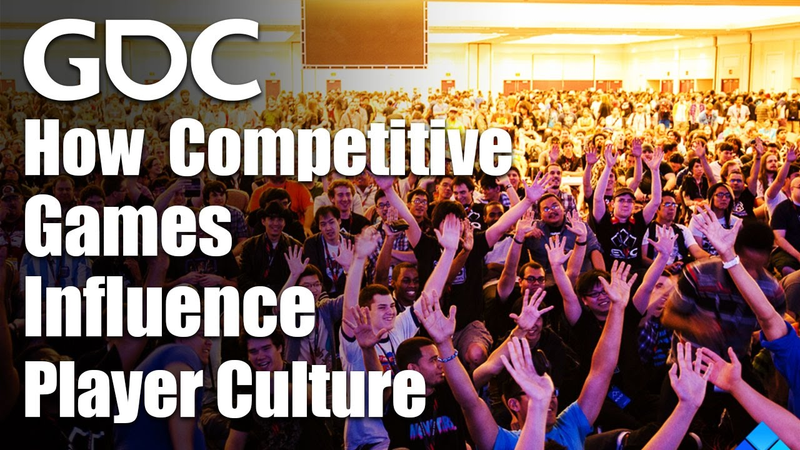
Arcade to eSports: How Your Competitive Game Influences Player Culture and Values
The evolution of competitive gaming from the arcade era to modern eSports reveals that the structural design of a game directly dictates the values and social dynamics of its player base.
- Game structural design directly dictates the values and social dynamics of a player base, meaning competitive ecosystems must be built to reflect the game's inherent culture.
- The fighting game community maintains a grassroots, open-bracket culture by prioritizing direct participation and personal mastery over the passive consumption models common in modern eSports.
- To sustain competitive ecosystems, organizers should avoid standardized, spectator-focused industry models and instead foster accessible entry points through youth and collegiate formats.
De-Gamification - Flexibility to Play Your Way - Extra Credits
De-gamification serves as a critical design methodology that involves the intentional removal or relaxation of extrinsic motivators—such as scores, timers, leaderboards, and resource limitations—to evaluate the core, intrinsic appeal of a game.
- De-gamification is a design methodology that removes extrinsic motivators like scores, timers, and leaderboards to isolate and evaluate the core intrinsic appeal of a game's mechanics.
- Developers use de-gamification as a testing tool to determine if movement, exploration, and interaction are inherently engaging without relying on external validation or performance pressure.
- Removing systemic constraints during development often reveals new creative possibilities, as testers frequently invent their own challenges when freed from rigid objectives.
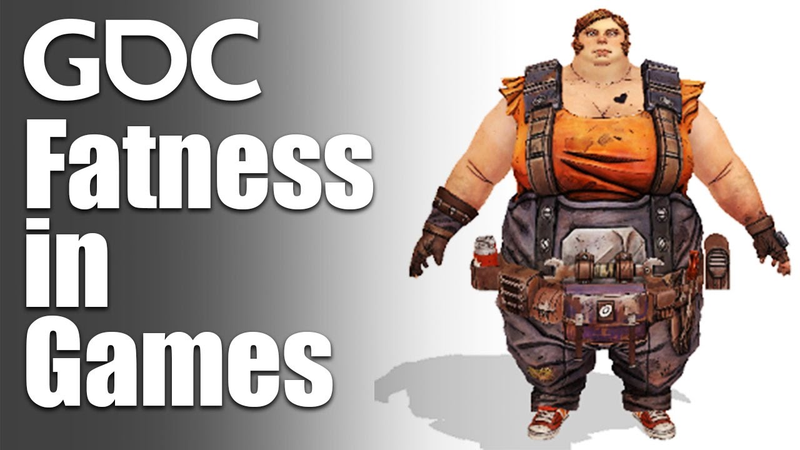
Portrayals and Pitfalls of Fatness in Games
Video games frequently perpetuate systemic fatphobia by relying on reductive tropes that equate larger body types with moral failings, incompetence, or comedic relief.
- Video game character design frequently reinforces systemic fatphobia by using larger body types as shorthand for moral failings, incompetence, or comedic relief.
- Fat characters are often relegated to the 'sitcom effect,' where their physical appearance is treated as a punchline or an object of pity rather than a component of a well-rounded character.
- Nuanced representations of fat characters remain rare outliers, with titles like Borderlands 2, Pokémon X/Y, and Saints Row serving as exceptions to an industry-wide lack of body diversity.

The Anatomy of Gamer Motivations: What We Learned from 250,000 Gamers
Gamer motivation is defined by six primary psychological clusters—Action, Social, Mastery, Achievement, Immersion, and Creativity—which serve as the foundational framework for understanding player behavior.
- Gamer behavior is categorized into six primary psychological clusters: Action, Social, Mastery, Achievement, Immersion, and Creativity.
- Analysis of 283,000 unique users demonstrates that player preferences are not monolithic but vary significantly based on demographic factors.
- Predicting long-term player retention and guild longevity requires advanced analytical techniques, including machine learning, factor analysis, and social network analysis.

One Up: How Our Game Saved a Life
Pixelberry Studios operates on the core philosophy that mobile gaming can function as a powerful vehicle for social change without sacrificing commercial viability or entertainment value.
- Pixelberry Studios successfully integrated anti-cyberbullying narratives into 'High School Story' by partnering with the Cyber Smile Foundation, reaching over 5 million players.
- The initiative generated $350,000 in charitable contributions, demonstrating that socially conscious content can drive significant philanthropic impact.
- Data shows that embedding social impact features and support resources into gameplay bolsters player engagement and retention rather than alienating the user base.
Advanced Game Literacy - Finding Meaning in Games - Extra Credits
Advanced game literacy involves the ability to interpret and analyze the deeper meaning behind game mechanics, themes, and narrative structures, moving beyond surface-level evaluation.
- Advanced game literacy requires moving beyond surface-level evaluation to analyze the deeper meaning behind mechanics, themes, and narrative structures.
- Developers must prioritize intentional design and cohesive vision over derivative content to provide the necessary substance for meaningful cultural discourse.
- Elevating the medium to the status of literature or film does not require increased budgets, but rather disciplined project management and a commitment to resonant experiences.
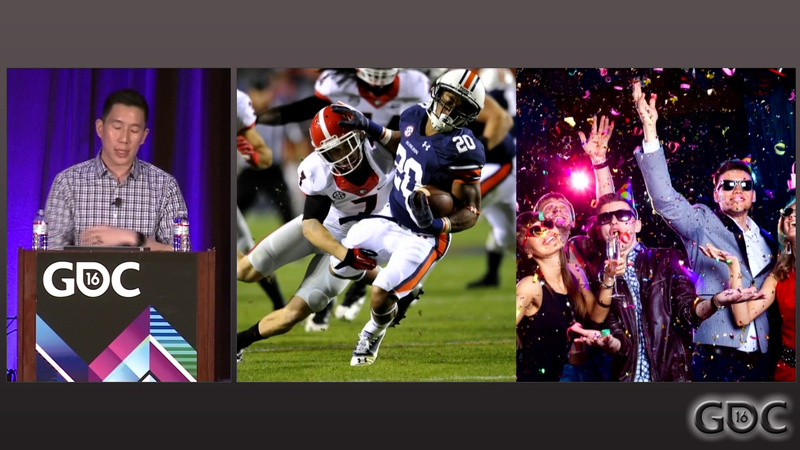
The Gamer Motivation Profile: Model and Findings
Gaming motivations are driven by 12 core factors categorized into three primary clusters: Action-Social, Mastery-Achievement, and Immersion-Creativity.
- Age is a more reliable predictor of gaming motivation than gender, accounting for twice the variance in player preferences across most categories.
- Gaming motivations are structured into 12 core factors grouped into three primary clusters: Action-Social, Mastery-Achievement, and Immersion-Creativity.
- Gender-based differences in competitive play diminish significantly after age 45, suggesting that industry design strategies should prioritize age-based segmentation over gender-based assumptions.
Basic Game Literacy - Why It's Hard to Learn How to Play - Extra Credits
Game literacy remains a complex, non-binary challenge that significantly impacts the evolution of the medium.
- Game literacy is a sliding scale rather than a binary state, meaning even experienced players often lack the mechanical intuition required to navigate genres outside their personal expertise.
- The industry lacks a universal standard or accessible entry point for newcomers, creating a barrier to entry that is significantly higher than that of literature or film.
- Designers rely heavily on internalized conventions like health bars and specific control schemes, which are intuitive to veterans but alienating to those without prior gaming experience.

Beat it: A Retrospective of Need for Speed: Hot Pursuit
Need for Speed: Hot Pursuit serves as a pivotal case study in bridging the gap between console connectivity and actual player behavior.
- Criterion Games developed the 'Autolog' system for Need for Speed: Hot Pursuit to facilitate asynchronous social interaction, allowing players to compete with friends without requiring them to be online simultaneously.
- The Autolog system utilized a 'beat it' recommendation engine that specifically targeted players with notifications when a friend surpassed their leaderboard time, creating a persistent competitive loop.
- To maximize engagement, the game featured a dynamic feed that tracked every action and provided direct, in-game calls to action, allowing players to jump immediately into events where their friends had recently set records.
Governance in F2P Multiplayer Games
Traditional free-to-play models often struggle with player burnout due to an over-reliance on content-driven drip strategies.
- Shift from content-driven drip strategies to high-agency systems that prioritize emergent player governance and social hierarchies to reduce player burnout.
- Design game architecture to facilitate proximity, repeated informal encounters, and rich communication channels to foster self-organizing communities.
- Function as an architect of physical laws rather than a moderator, providing tools that allow players to negotiate their own norms and resolve disputes.
Because Games Matter - How Video Games Saved My Life - Extra Credits
Video games serve as a profound source of purpose, community, and recovery for individuals facing life-threatening crises.
- Video games can serve as critical tools for recovery and survival by providing patients with a sense of agency and goal-oriented purpose during long-term hospitalizations.
- Multiplayer gaming communities function as global support networks that can transcend cultural barriers and provide access to specialized knowledge, including life-saving medical expertise.
- Single-player role-playing games offer psychological benefits by allowing individuals in crisis to engage in heroic, goal-driven narratives that foster the will to survive.