1 free read left. Create a free account for unlimited reading + AI research.
Create free account
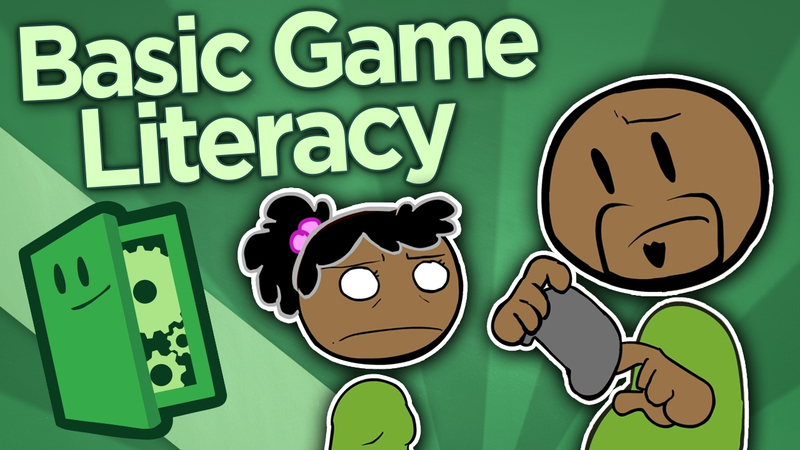
Basic Game Literacy - Why It's Hard to Learn How to Play - Extra Credits
Key insights
6 takeaways- 01Game literacy is a sliding scale rather than a binary state, meaning even experienced players often lack the mechanical intuition required to navigate genres outside their personal expertise.
- 02Designers rely heavily on internalized conventions like health bars and specific control schemes, which are intuitive to veterans but alienating to those without prior gaming experience.
- 03The industry lacks a universal standard or accessible entry point for newcomers, creating a barrier to entry that is significantly higher than that of literature or film.
- 04The AAA market's reliance on sequels forces new players to navigate established narrative and mechanical jargon, effectively functioning like starting a long-running book series in the middle.
- 05Increasing universal game literacy is a prerequisite for creative maturation, as it would allow developers to move beyond repetitive tutorials and implement more sophisticated, nuanced mechanics.
- 06Expanding player literacy is essential for the medium to reach its full creative potential, foster new voices, and successfully integrate into educational environments.
Ask AI about this video
Transcript
Recently, James was on a panel talking about gaming literacy, and it got him thinking. What does it mean to be literate in a medium? Is it something we've already achieved in games? And if not, is it something we need to achieve? When talking about media literacy, I think it helps to break it up into two different types. Basic literacy, the type of literacy that's required just to read the text in the first place, and advanced literacy, the type required to dig beyond the surface level and really analyze a work. And neither of these is binary. Each exists on a scale. We all have varying levels of basic and advanced literacy in the different types of media we consume. You don't just achieve advanced literacy in a medium and instantly understand the full depth of every work within it. And both of these literacy types become even more complicated when you apply them to games. Like, okay, let's start with basic literacy. Have we achieved universal basic literacy for games?
Well, clearly not. When we talk about somebody's ability to read in our medium, what does that mean? Does it mean simply being able to play a game at all? Or does it mean the ability to play a game from start to finish, completing it like you might a book? Or does it sometimes mean one and sometimes the other? After all, we might say that you have experienced Super Mario Brothers even if you've only played the first few worlds yourself. You've seen enough to have a conversation about the game. We can discuss it, and unless we're getting into very specific details, you can hold your own, add to, and get something out of that conversation. But would we say the same thing about BioShock or Braid? Can one say that they have experienced BioShock if they've only played up to the first Big Daddy fight? Can you have a really complete conversation about Braid if you don't know the twist? And this question isn't even as simple as it first appears. I mean, when considering this myself, my initial assumption was, "Oh, this only applies to narrative-heavy games, the kind which might require you to experience the
whole narrative to understand the piece, just like any other narrative medium. But, that assumption is incorrect because this isn't just a narrative thing. There are plenty of games that don't fully reveal their mechanics until you're deep into the game. I mean, imagine trying to talk about Frog Fractions to somebody who's only played the beginning. And besides, not all narrative-heavy games necessarily require you to play all the way through to have sufficiently experienced them, either. Take The Witcher 3. It focuses on telling a variety of small, self-contained stories, often allowing the central narrative arc to take a backseat. You can argue that somebody who's only gone through even as little as the Bloody Baron questline has experienced that game and can, on the broadest level, talk about it meaningfully. So, clearly finding a comprehensive definition for what basic game literacy is is a puzzle we are far from solving, but for right now, let's just assume the lowest bar possible and simply say that basic literacy is the ability to play a given game at even a
novice level. So, by that metric, have we achieved universal basic game literacy? Not by a long shot. There are a lot of people who essentially don't know how to read when it comes to video games because they've never learned the unique skills necessary to do so. If you've ever handed a controller to a parent or a grandparent who doesn't really play games and watched them stare at the thing in bewilderment as they hold it all wrong, you know what I'm talking about. In games, things like understanding how a controller works or being able to navigate simulated 3D space is like being able to sound out words and having at least enough vocabulary to know what most of them mean. These are the sort of basic skills required to access most texts in this medium, which means that many people still aren't even nominally literate in this medium, which in some ways holds us back. But, even this basic literacy, the ability to experience a text in the first place, is even more complicated than that, because it's not something you just have or don't have. It's a
scale. Some books are harder to read than others. Not harder to deeply understand, mind you. I mean, literally harder to read at even a basic level. Some of us would have no problem reading your average Drizzt novel, but would be completely frustrated trying to read Ulysses. Games are the same way. I mean, heck, I have spent my whole life doing this, and I'm not even sure I am games literate enough to play Europa Universalis 3. I know literally over a dozen people who have picked up Dwarf Fortress and did the gaming equivalent of picking up a book that you think you want to read, getting a few pages in, and then putting it down forever. And this is a strange thing, because with the way our medium works, there are people who have been playing Madden non-stop for years, but sit them down in front of a tactics game, and you might as well be asking them to read French. And what's more, we have built up so much internalized vocabulary over years of playing that jumping into our medium as a newcomer now is even more
difficult. I mean, if I showed you a game character with a little red bar over their head, you would instantly identify that as a health bar, right? You and I are so used to that, we basically never even bother defining it any longer. But, that's not always the case for people just entering games, and that's not to say that we should just change all of our games to accommodate people who are just getting started, but we don't even have a great place for them to start. If you were to Google books for a beginning reader, you would get a fairly consistent set of recommendations for where to start. The few places that have even attempted to make similar lists for games frequently contradict each other based on the list maker's preferences and personal play habits. So, we have a ways to go before we actually achieve or even facilitate a basic universal literacy in games. Now, why is this important? Well, because universal literacy in other fields created an explosion of creativity as new voices which had never been part of the conversation before provided us with new ways to look at those media and
created new works that changed the very foundations of what we thought was possible with them. Whether this be in traditional literature or in fields like music where simply expanding who was basically literate in the field led to jazz and rock and rap. This expansion of literacy has always led to new work and new thought. It's also important because a higher level of basic literacy allows creators to do more. For example, when film started to become popular, the audience didn't innately and instinctually understand what a cut meant. We instantly read them as basic jumps in time or place today, but early audiences had to learn that. Today, the level of basic literacy among film-goers has risen to such a degree that even the most pablum commercials use cuts without worry. And because filmmakers can now rely on that tool and use it liberally without any explanation or introduction, they can present us with works that would be impossible to comprehend without that universally shared
knowledge. I would love to get to a point where we could cut down most of our tutorials and never had to drop features because they demand a level of audience literacy that we can't yet 100% guarantee. On top of all of that, the modern AAA industries' focus on sequels makes developing universal basic games literacy even more complicated. Imagine a world where almost all of the major books published each year were part of an existing series. If you're just starting to learn how to read, on top of that struggle, now you're wrestling with being thrown into the middle of every story with a bunch of characters, jargon, places, and past events that you're just expected to know. That's what we do, except we're doing it with narrative and mechanics and systems, making it that much harder. Luckily, games have one advantage. Our entire medium is designed to be engaging, and this means that many people, often when they're very young, just struggle through all of this and learn on their own because they so want to be literate.
They want to have access to all the things this literacy grants. But, even so, we as a community should think about games literacy. How much does it matter to us to expand who is literate? How much does it matter to us to increase the average level of basic literacy amongst players so that designers can do more with our games? How much does it matter to us that we achieve that universal literacy so our games can be used in schools? I know that's a lot to puzzle through, and I realize that we kind of introduced more questions than we answered, but sit tight. We haven't even started into advanced games literacy yet. Join us next time as we dive into what it means to be games literate on a higher level. See you then.
Summary
Game literacy remains a complex, non-binary challenge that significantly impacts the evolution of the medium. The core thesis posits that while basic literacy—defined as the fundamental ability to play and engage with a game—is essential for the medium’s growth, the industry lacks a universal standard or accessible entry point for newcomers. Unlike literature or film, where foundational skills are more broadly understood, gaming requires a diverse set of mechanical and spatial skills that vary wildly across genres and platforms.
The analysis highlights that game literacy is a sliding scale rather than a binary state. Even experienced players often lack the specific vocabulary or mechanical intuition required to navigate genres outside their personal expertise, such as moving from sports titles to complex strategy games. This barrier is exacerbated by the industry’s reliance on internalized conventions—such as health bars or specific control schemes—that are intuitive to veterans but alienating to novices. Furthermore, the prevalence of sequels in the AAA market forces new players to navigate established narrative and mechanical jargon, effectively creating a high barrier to entry that mirrors the difficulty of starting a long-running book series mid-way through.
Achieving higher levels of universal literacy is vital for the medium’s creative maturation. Drawing parallels to the development of film, where audiences eventually mastered the language of editing, the analysis suggests that a more literate player base would allow designers to move beyond repetitive tutorials and implement more sophisticated, nuanced mechanics. Expanding literacy is not merely about accessibility; it is a prerequisite for the medium to reach its full creative potential, foster new voices, and integrate effectively into educational environments.

















Comments