1 free read left. Create a free account for unlimited reading + AI research.
Create free account
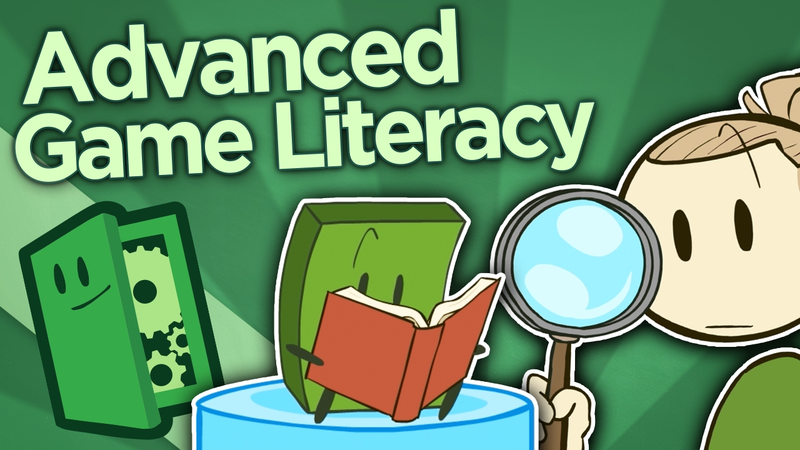
Advanced Game Literacy - Finding Meaning in Games - Extra Credits
Key insights
6 takeaways- 01Advanced game literacy requires moving beyond surface-level evaluation to analyze the deeper meaning behind mechanics, themes, and narrative structures.
- 02Developers must prioritize intentional design and cohesive vision over derivative content to provide the necessary substance for meaningful cultural discourse.
- 03Elevating the medium to the status of literature or film does not require increased budgets, but rather disciplined project management and a commitment to resonant experiences.
- 04Game journalism must shift from providing simple quality labels to offering critical analysis of why specific design choices succeed or fail.
- 05The gaming community needs to foster a civil environment where theories are debated through the lens of content rather than through unproductive conflict.
- 06Academia serves as a secondary, reinforcing force that pushes interpretations to their limits once a critical mass of literacy is achieved within the industry and player base.
Ask AI about this video
Transcript
Last time we talked about basic game literacy and why it might be important, but there's another type of literacy we need to discuss. The type of literacy which allows us to analyze, interpret, and get more out of our games than just what's there on the surface level. Advanced game literacy. But where do we begin? Well, we have to start with consumers, you good folks, the people who buy and play the games, and with developers, the people who put these games together. Now, I suspect that a tiny subsegment of you are probably letting out horrified gasps at this, having noticed that there is a group I just left out, academics. For years, academia has believed itself to be the purveyor and driving force behind advanced game literacy, and I realize I'm going to ruffle some feathers saying this, but it's not. not to say that academics and the academic world are not super important to advanced game literacy. They are, and I'm going to get to exactly why later, but academia just is not where advanced
game literacy is really going to come from. So, why do I focus on consumers and developers instead? Well, let's tackle the question of developers first, because you may think of developers as being highly game literate. After all, we're the ones who make these things, but that's often not the case. Many developers do a solid workmanlike job without ever really thinking too deeply about what they do. And unfortunately, there are a lot of developers working out there who don't even deliver on a fundamental level, flooding the market with mediocre clones and big-budget flops. If we can raise the level of game literacy amongst developers, not only will we do more holistic development in our industry and waste far less dev money as a result, but perhaps more relevant to this discussion, we'll produce more games that have stuff going on at a deeper level. This will give the rest of the community something more to think about and analyze as they play, and just by regularly exposing players to work with more substance will raise the level of game literacy in the
community as a whole. Because right now, we only get a few games a year that really function on a deeper level. That's just not enough to kickstart this process. Anyone really looking to read more deeply into their games has to wait months between releases that they can really sink their teeth into. And that's just not enough to sustain a culture of analysis. Oh, and before anybody tries to argue that trying to make more games with depth will make gaming less fun. Not at all. So many of the hit games that have historically received praise for having more to them are games that can be enjoyed on every level and often are nearly universally loved. Silent Hill 2, BioShock, Undertale, basically anything FromSoftware makes. Building more substance into a game filters through all levels of enjoyment. Because taking the time to really think through how all of a game's parts need to fit together in order to deliver on the substance beneath a game's surface will make all of the surface level elements even better. So, how do we go about this? Well, that's sort of on us as developers. It's a discipline. It
requires us to better manage our projects, to work to self-educate, to communicate clearly, and to have a central vision that we share on the project. Oddly enough, the one thing that it doesn't require is that we do more work. It takes just as much time and money to build a bad Dark Souls clone or another empty shooter as it does to craft something that will still capture the minds of players a decade later. Which brings us to consumers. Because if the consumer isn't examining, enjoying, or getting something from the depth we strive to build into our games, all that effort is wasted. So, what can we do to increase advanced literacy among consumers? Well, as I mentioned, some of it'll just happen naturally by osmosis if there are more games with substance out there. Simply by being immersed in it, players will start to look for metaphors and mechanics more often, to more frequently question why certain elements are placed as they are, to search out connections to other themes and other works. But, we need more than simply that. First, we're
going to need more from game reviews. We've talked about it before, ages ago, but we need more than reviews which simply list a game's surface level contents. We need more reviewing which is truly worth reading instead of simply skipping to the number at the end. I know that sounds harsh, but if all a review ultimately tells you is how good the graphics or the controls are, there's no real reason to read anything before the bullet points and the numerical breakdown at the bottom. And if the players have no reason to read these things, they'll never benefit from whatever analysis the reviews might provide. We need more reviewing which critiques and examines, even if only for a portion of the review. This is a huge part of how universal film literacy increased over the last half century, and I think we should look to that example. And I know that there are writers and outlets already striving to do this, and that is wonderful. Please keep going, but we need that to become the norm. We need reviews that don't simply apply useless labels like good and bad. We need reviews which really dig into why parts of a gaming
experience felt good or bad. Even that simple exercise, when applied to a game that has a little more meat on its bones, will yield results that are truly worth reading. Next, we as a consumer base have to be willing to examine our medium. Games are a medium as worthy of examination as any other. Phrases like reading too much into it or making too big a deal out of it, strike that nonsense from your vocabulary. We've got to stop being afraid of somehow killing the fun by examining our games more closely. I mean, think of all of the hours and years of fun that we've had just digging into the lore and meaning of three Dark Souls games. We also have to be civil to each other. People have got to feel safe positing ideas and throwing out theories. Even if we think somebody's theory is utterly absurd, we need to engage in that dialogue in a civil manner, demonstrating why we disagree using the text, the game itself, rather than launching into a mere shouting match. We can't just be looking to prove we're right. And now,
finally, academia. I think it's been a mistake to try and lead the advanced game literacy charge with academia. The academic role here is incredibly important, but sequentially, I think it's the last role. Once game makers are creating more games with depth worth unraveling, and more of the audience is to some degree looking for and enjoying that depth, then it's academia's role to be the vanguard, to push that as far as it can go, to give us the interpretations and examinations that no one outside of academia could give. This will validate creators and trickle down to consumers, providing them with new and intriguing ways to think about their games. Once we hit a certain critical mass of advanced game literacy, academia will serve to continually push that universal literacy level higher and higher, much as it has done with every other art. Okay, I won't labor this idea of literacy any further, but just one final thing. Increasing advanced games literacy doesn't mean that everybody has
to be searching for meaning in every game they play all the time. It simply means that more people have the option to, that you won't miss it when some game with the potential to deeply resonate with you comes along, and that the developers don't miss the chance to put those resonant elements in there in the first place. At the end of the day, higher universal advanced games literacy means getting to have more of those moments where you gather your friends at a diner and talk late into the night about just what that incredible game you played today was really saying. Because those are some of the most rewarding moments you can have over a film or a book or any media, and we deserve to have more of those with games. See you next week.
Summary
Advanced game literacy involves the ability to interpret and analyze the deeper meaning behind game mechanics, themes, and narrative structures, moving beyond surface-level evaluation. The primary thesis is that fostering this literacy requires a collaborative effort between developers and consumers, with academia serving as a secondary, reinforcing force. By shifting the focus from superficial metrics to substantive analysis, the industry can elevate the medium to a level of cultural discourse comparable to literature or film.
Developers play a critical role by prioritizing intentional design and cohesive vision over the production of derivative or mediocre content. Integrating depth into game design does not necessitate increased budgets or labor; rather, it requires disciplined project management and a commitment to creating resonant experiences. When developers consistently produce games with substance, they provide the necessary material for a culture of analysis to flourish.
Consumers must complement this by engaging in critical examination of the medium, moving away from dismissive attitudes toward deep analysis. This shift requires a transformation in game journalism, where reviews move beyond simple quality labels to provide meaningful critiques of why specific design choices succeed or fail. Furthermore, the community must foster a civil environment for discourse, where theories are debated through the lens of the game’s content rather than through unproductive conflict.
Ultimately, academia’s role is to act as a vanguard that pushes these interpretations to their limits once a critical mass of literacy is achieved. Increasing advanced game literacy does not require constant analysis of every title, but rather ensures that both creators and players have the tools to recognize and appreciate profound, resonant experiences when they occur, thereby enriching the long-term cultural value of the gaming medium.



















Comments