Player Behavior reports and market data
Documents

Beyond Ageism: Exploring VR Games for an Older Audience
The gaming industry possesses a significant, untapped opportunity in the 50-plus demographic, a segment that demonstrates a robust interest in immersive technology.
- The 50-plus demographic represents a significant, untapped market for VR that values high-quality, challenging, and aesthetically mature content rather than simplistic brain-training games.
- Developers should prioritize inclusive design by implementing seated play modes, adjustable UI scaling, and intuitive motion controls to accommodate physiological needs related to vision, hearing, and balance.
- Successful engagement requires avoiding ageist tropes and instead focusing on mechanics centered on exploration, social interaction, and lifelike aesthetics that respect the player's intelligence.
Make your game grand in Russia
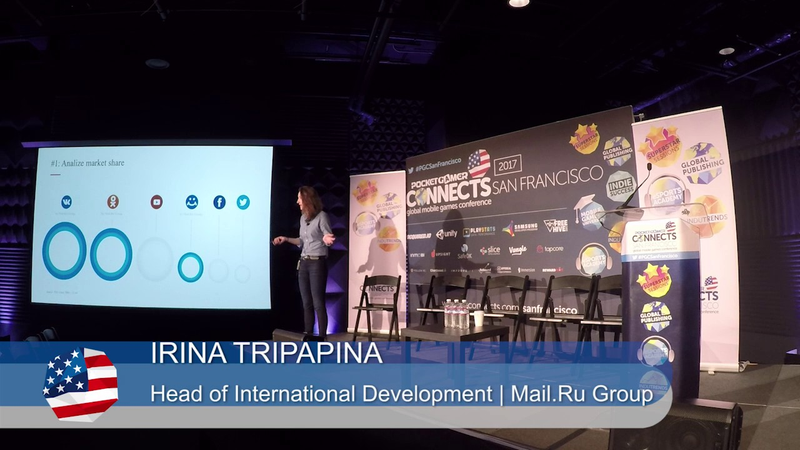
The Russian mobile gaming market presents a significant growth opportunity for global publishers, characterized by a large user base, lower competition, and cost-effective entry barriers.
- Russia is the fifth-largest mobile gaming market globally, boasting over 62 million users and significantly lower acquisition costs, with average Cost Per Install (CPI) rates around $1 compared to $16 in the United States.
- Android is the primary platform for scale, with an audience nearly three times the size of the iOS market.
- Localization is a critical success factor for complex genres like RPGs and strategy games, as only 7% of the Russian population speaks English.
Advanced ad strategies that drive revenue and boost engagement
Mobile game developers often fail to maximize ad revenue due to overly conservative monetization strategies and a lack of granular player segmentation.
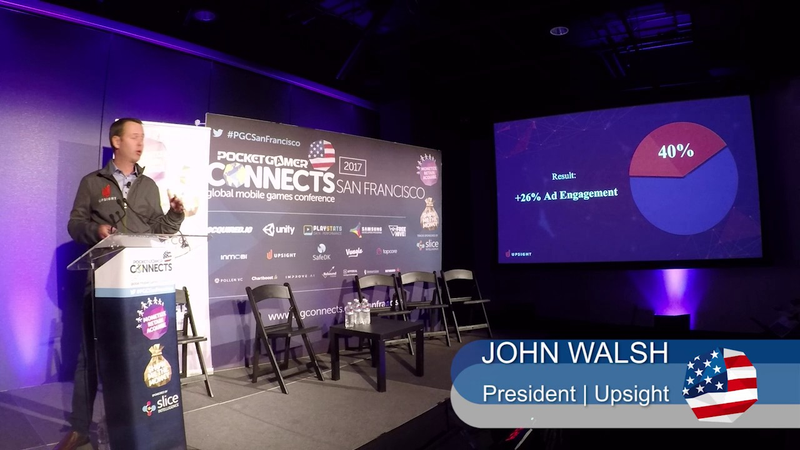
- Implementing a dynamic, behavior-based ad strategy can increase daily revenue for an app with 200,000 daily active users from $2,000 to over $7,800, yielding an incremental annual gain of more than $2 million.
- Developers should aim for at least 40% of the daily active user base to engage with rewarded video ads to maximize monetization potential.
- Ad opportunities should be integrated directly into the core game loop rather than hidden in menus, and developers should remove arbitrary restrictions like level-gating or wait times to boost engagement.


Essential Video Game News: Market, Consumption, Use 2017
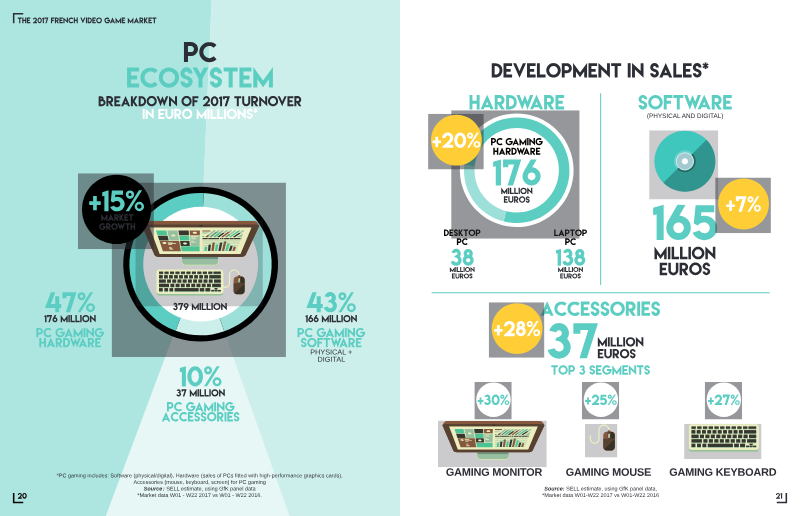
The French video game industry reached a significant milestone in 2017, solidifying its status as a cornerstone of mainstream leisure.
- The French video game market reached a valuation of 3.46 billion euros in 2016, followed by a 14% growth rate in early 2017.
- Gaming has achieved mass-market status in France, with 52% of the population identifying as regular gamers and an average player age exceeding 30.
- Digital platforms account for 58% of game transactions, while physical retail remains the dominant channel for families and younger demographics.
The Design of Time: Understanding Human Attention and Economies of Engagement
Human attention serves as the primary currency in the modern digital landscape, necessitating a fundamental shift in how developers approach game design.
- Game designers must shift from aggressive engagement tactics to models prioritizing player autonomy and long-term psychological well-being to avoid the diminishing returns caused by player normalization of repetitive stimuli.
- Sustainable engagement is achieved by engineering social ecosystems that foster community interaction and collective investment rather than relying on superficial retention metrics.
- Designers should implement varied temporal rhythms, such as daily rituals and multi-year objectives, to cultivate anticipation and habituation that feels rewarding rather than coercive.

Throwing Out the Dopamine Shots: Reward Psychology Without the Neurotrash
The game industry must pivot away from the pervasive reliance on oversimplified neuroscience, particularly the misuse of dopamine as a catch-all explanation for player motivation.
- Designers should replace oversimplified neuro-metaphors like 'dopamine' with proven behavioral psychology frameworks, specifically operant conditioning and structured feedback loops.
- Engagement is best sustained by balancing reward schedules, utilizing a mix of fixed and variable intervals to maintain player interest over time.
- Developers must prioritize player agency and the 'illusion of control' to prevent users from feeling manipulated, which is essential for long-term retention.

Lifestyle Games - The Play's the Thing - Extra Credits
The concept of lifestyle games identifies a distinct category of titles that transcend traditional genre labels—such as MOBAs, MMORPGs, or shooters—by becoming central to a player’s social life, daily routine, and identity.
- Lifestyle games are defined as titles that integrate into a player's daily routine, social life, and personal identity, transcending traditional genre classifications.
- To achieve lifestyle status, games must feature robust social interaction, functionally infinite content through competitive or procedural systems, and a consistent update cadence that validates the player's time investment.
- Successful lifestyle titles require mechanical or narrative depth that encourages engagement outside of active play, supported by external ecosystems like wikis, streaming, and esports.

Player Segment Analysis: Example Report
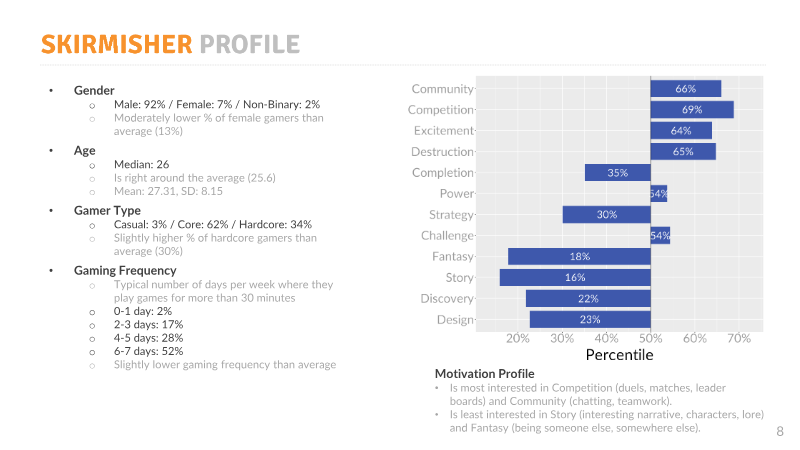
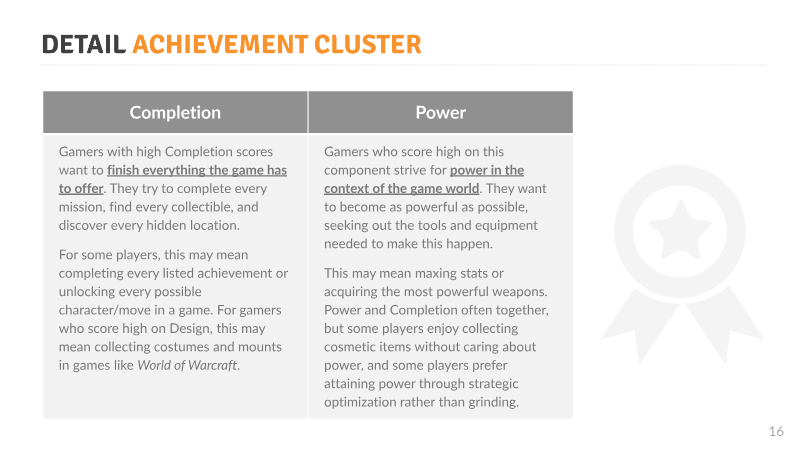
This analysis provides a comprehensive framework for understanding player behavior by mapping psychometric data to specific gaming motivations.
- The research utilizes a dataset of over 400,000 global participants to map psychometric data against specific gaming motivations like mastery, achievement, and social interaction.
- Player segments are identified by filtering out base-rate popularity bias, revealing unique mechanics that drive engagement for specific player types rather than just general game popularity.
- The study sample consists primarily of core and hardcore gamers with a median age of 25, recruited through social media sharing.

Liminal Space - Incorporating Real Life into Games - Extra Credits
Modern gaming platforms have evolved from simple, isolated hardware into connected systems that aggregate significant amounts of personal user data, including contact information, social connections, and behavioral habits.
- Integrating real-world personal data into games creates opportunities for deeper emotional resonance and immersion, but it carries significant risks of causing real-life distress or social friction.
- Developers must prioritize player agency by adopting an opt-in model for data access, requiring explicit authorization for specific features rather than relying on complex opt-out menus.
- The use of personal data, such as social connections or contact information, must be managed carefully to avoid the accidental inclusion of sensitive individuals, such as deceased friends or estranged contacts.

User Research on Destiny
The development of Destiny necessitated a fundamental shift in user research methodology, moving away from traditional testing frameworks toward a highly integrated, automated system.
- Bungie implemented strict security measures—including metal detectors and locked-down testing platforms—to allow for playtesting six months earlier than would have been possible otherwise.
- To ensure data accuracy, Bungie used post-stratification weighting to align their lab sample with the general player population, confirming that internal playtest data yielded the same directional results as external agency-recruited participants.
- The development team utilized a 'frustration button' feature during playtests, allowing players to log specific moments of difficulty that were then mapped against XYZ coordinates and video footage to identify pain points and highlight 'awesome moments.'

Choice Architecture, Player Expression, and Narrative Design in Fallout: New Vegas
Modern role-playing game design often struggles to reconcile linear cinematic storytelling with the need for authentic player agency.
- Modern RPG design suffers from 'choice conflict,' where gameplay mechanics force players into roles that contradict their intended character expression, undermining narrative weight.
- Narrative architecture should move away from binary moral extremes and high-stakes dilemmas in favor of tactical dialogue systems that offer clear forecasting and validated consequences.
- Developers should define specific, supported character archetypes to ensure that player choices are balanced with meaningful trade-offs rather than arbitrary win-loss outcomes.

From Rational to Emotional: Designs that Increase Player Retention
Long-term player retention in the gaming industry relies on transitioning from purely rational mechanics to a framework rooted in emotional design.
- Long-term player retention is driven by shifting from purely rational mechanics to an emotional design framework that incorporates visceral, behavioral, and reflective components.
- Designers should utilize the peak-end rule, which posits that players evaluate their entire experience based primarily on the most intense moments and the conclusion of the session.
- Integrating players into social structures like guilds significantly increases both retention rates and player spending compared to those who play solo.