PC reports and market data
Documents
GDC Plays Loop Hero with Four Quarters team
Loop Hero centers on a unique design philosophy that shifts the player’s role from a direct combatant to an architect of the environment.
- Loop Hero originated during a 2019 Ludum Dare game jam, where the team focused on the core concept of a hero walking in circles to create an engaging 'zero-player' experience.
- The game's design relies on a 'mental training' philosophy where players act as passive observers, similar to watching a stream or caring for a Tamagotchi, rooting for the character's success despite having limited direct control.
- Developers implemented a complex enemy skill system where each chapter introduces new abilities for enemies, resulting in over 100 unique skills that required extensive coding and debugging to prevent game-breaking interactions.
Interactive Story Without Challenge Mechanics: The Design of Firewatch
The design of Firewatch centers on the prioritization of narrative integrity over traditional challenge-based mechanics.
- Design narrative-driven games as a series of 'interesting outcomes' rather than 'interesting choices,' shifting the focus from risk-reward analysis to the organic, often invisible, results of player behavior.
- Implement a centralized 'fact-checking' system to track game state variables, preventing logic conflicts where redundant or contradictory story facts cause bugs in complex, branching narratives.
- Use 'reactivity' to support a wide spectrum of player possibilities, ensuring that even if a player ignores specific quest instructions or sequence-breaks, the game world acknowledges their actions through altered dialogue and narrative consequences.

How to get money from a publisher (with just a DEMO)
Securing funding from a game publisher requires a strategic approach centered on building trust and demonstrating professional credibility.
- Secure publisher funding by creating a highly polished 15-to-30-minute demo that highlights core mechanics rather than a finished product.
- Establish professional credibility by maintaining a dedicated website, a Steam page, and a consistent social media presence to signal legitimacy to investors.
- Execute a targeted outreach strategy by contacting 100 to 200 individual publishing contacts, using personalized emails rather than automated blasts to avoid spam filters.
Abby & Tony from Black Tabby Games | Game Dev Unchained Episode 261
Black Tabby Games demonstrates that independent game development thrives when creators prioritize audience cultivation and rigorous financial planning over traditional publishing models.
- Prioritize building an established audience before launching crowdfunding campaigns to secure capital while maintaining full creative control and intellectual property ownership.
- Treat crowdfunding platforms as tools to monetize a pre-existing community rather than as a primary method for generating initial interest or discovery.
- Ensure financial viability by setting funding goals that rigorously account for labor, taxes, and total production costs.
We Made 1000 Video Games About Failure
The Wowie Jam 3.0 game development competition challenged participants to create video games centered on the theme "failure is progress."
- The Wowie Jam 3.0 game development competition generated over 1,000 entries in 72 hours, all centered on the theme that failure is a form of progress.
- Winning entry 'The Over' utilizes a dual-progression system where players must balance immediate, failure-based assistance against long-term, success-based upgrades.
- Developers frequently subverted traditional win-loss conditions by implementing mechanics where death triggers environmental changes, new abilities, or strategic advantages.
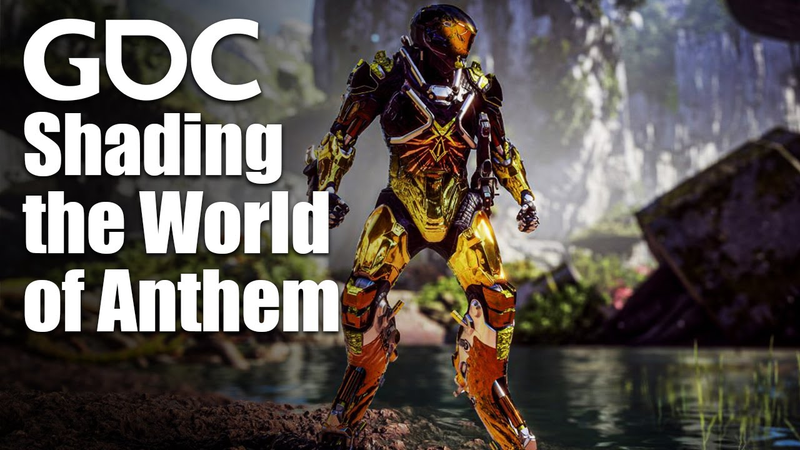
Shading the World of Anthem
The development of Anthem required a sophisticated approach to environmental rendering, necessitating a balance between high-fidelity visual complexity and the rigid performance constraints of the Frostbite engine.
- The development of Anthem utilized procedural shaders to simulate dynamic environmental phenomena like lava flows and precipitation while maintaining performance within the Frostbite engine.
- Lava rendering combined photogrammetry-derived textures, height maps, and flow maps to accurately replicate fluid movement and temperature-based color gradients.
- Weather systems achieved environmental reactivity by using world-space normals and layered ripple nodes to dynamically adjust surface properties like reflectance and porosity for rain and puddle accumulation.
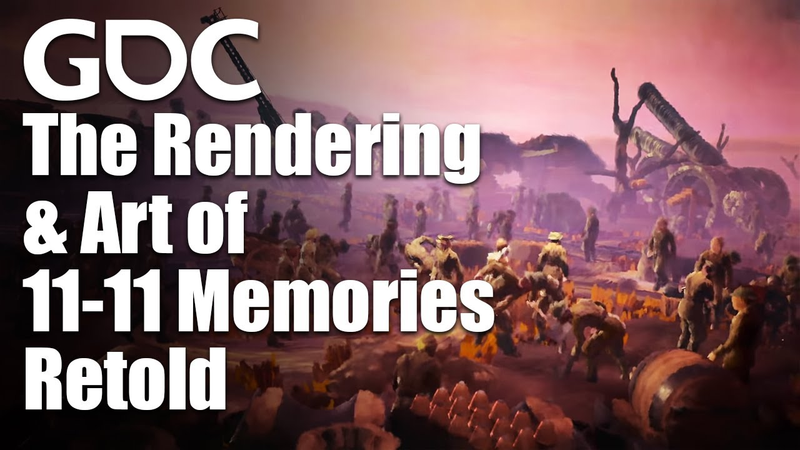
A Living Painting: The Rendering and Art of 11-11 Memories Retold
The development of 11-11: Memories Retold demonstrates a successful integration of technical engineering and artistic vision to create a distinct, oil-painted aesthetic within a 16-month production cycle.
- To achieve a painterly aesthetic in '11-11 Memories Retold,' Aardman Animations developed a custom rendering pipeline that uses motion vectors to ensure brush strokes move coherently with the scene, preventing screen-door flickering.
- The rendering pipeline utilizes a coarse culling system with 16x8 tiles to manage particle-based brush strokes, while a Kawase blur filter is applied to backgrounds to soften edges and maintain a painterly look.
- To optimize performance, the team repurposed an unused channel in the G-buffer to store specularity data, freeing up an entire buffer for the painterly effect at the cost of more expensive lighting calculations.
I suck at 3D and REMADE Resident Evil 8 Village... (IN ABOUT A WEEK)
This project demonstrates the feasibility of recreating high-fidelity environments from AAA titles like Resident Evil Village using modular assets and rapid prototyping techniques within the Unity engine.
- Atmospheric fidelity in 3D environments is driven primarily by lighting, sound design, and volumetric fog rather than the creation of unique, custom-built assets.
- Modular asset packs and rapid prototyping allow indie developers to recreate high-fidelity AAA-style environments, such as Resident Evil Village, within a one-week development window.
- Strategic 'asset flipping' is a viable production technique when developers treat game environments like film sets, prioritizing composition and visual consistency over individual prop creation.
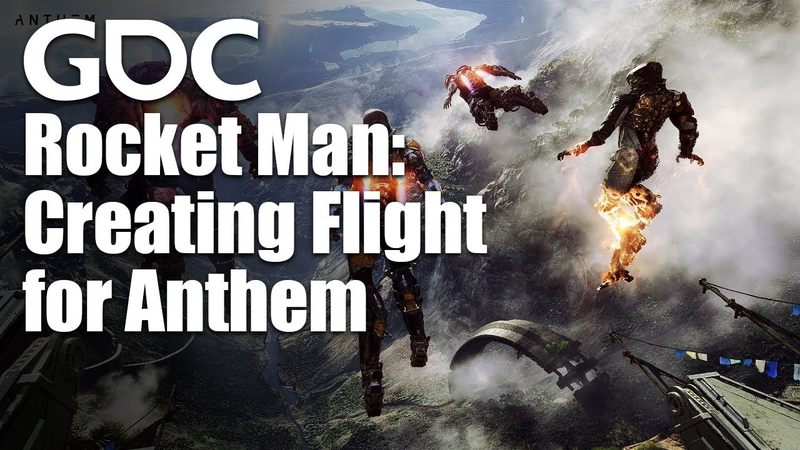
Rocket Man: Creating Flight for Anthem
The development of flight mechanics in Anthem centers on the pursuit of a high-fidelity superhero fantasy, prioritizing intuitive, fluid movement over strict adherence to realistic physics.
- To solve the problem of players bypassing level design by flying over the map, BioWare implemented a heat-management system that forces players to navigate through cooling environments like waterfalls or water surfaces, turning traversal into a skill-based mechanic.
- The team abandoned realistic physics in favor of 'game feel,' utilizing a binary boost state that triggers immediate visual feedback—such as camera shake, field of view adjustments, and post-processing effects—to simulate speed while the character's actual velocity ramps up over time.
- To maintain consistent physics, the game capsule never rotates on the X or Z axes; instead, all banking, pitching, and rolling visuals are handled entirely through animation, requiring 27 unique base poses per suit to cover slow, medium, and fast flight speeds.
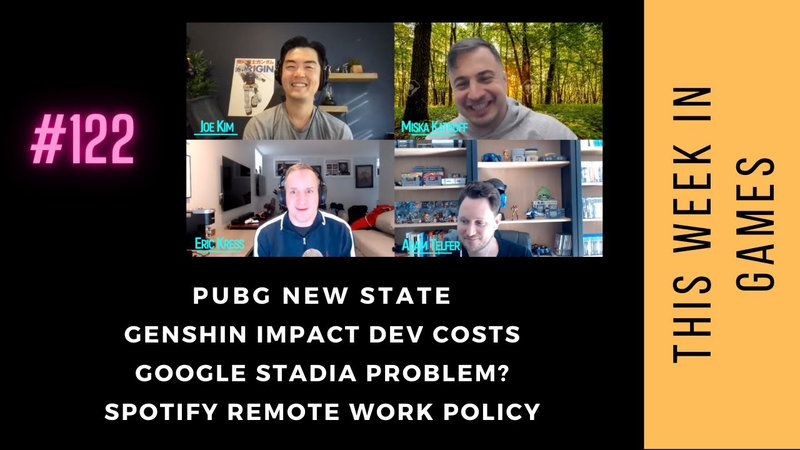
TWIG 122: PUBG New State, Genshin Impact Dev Costs, Google Stadia Problem, Spotify Remote Work
The gaming industry is currently undergoing a significant strategic recalibration, characterized by a retreat from forced live-service models toward more sustainable, premium-focused development.
- Modern AAA gaming dominance requires massive capital, exemplified by Genshin Impact’s $100 million initial development cost and $200 million in annual maintenance.
- Major publishers are shifting away from forced live-service models toward sustainable, premium-focused development to mitigate the financial risks of project failures.
- The gaming market is experiencing extreme saturation, creating high barriers to entry that favor established studios with significant capital reserves over mid-sized competitors.
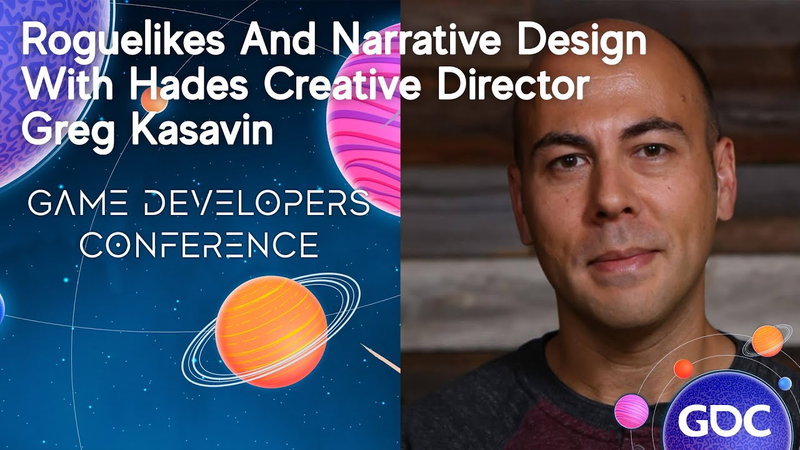
Roguelikes And Narrative Design With Hades Creative Director Greg Kasavin - GDC Podcast
The transition from game journalism to development offers a unique perspective on the industry, emphasizing the importance of analytical rigor in creative production.
- Supergiant Games maintains a small, stable team structure to preserve the long-standing personal relationships and collaborative synergy that define their development process.
- The studio prioritizes the element of surprise in game design, intentionally avoiding sequels to ensure each project offers a distinct and novel experience.
- Supergiant Games utilizes Early Access to shorten the feedback loop, allowing them to test core ideas and validate narrative resonance with players long before a full release.

TWIG 121: BlizzCon 2021, Valheim Built By 5 Devs, Zynga Accelerates Growth, Rovio M&A Target
The gaming industry is currently defined by a tension between massive corporate consolidation and the surprising agility of small-scale development teams.
- Major industry players like EA are driving consolidation through large-scale acquisitions, exemplified by the $1.2 billion purchase of Codemasters.
- Large publishers face significant growth headwinds due to the post-IDFA environment and the technical challenges of scaling new titles while managing third-party data sharing risks.
- Blizzard Entertainment is experiencing internal development delays for major titles like Overwatch 2 and Diablo IV, forcing a reliance on legacy franchises such as the Diablo II remaster.