PC reports and market data
Documents
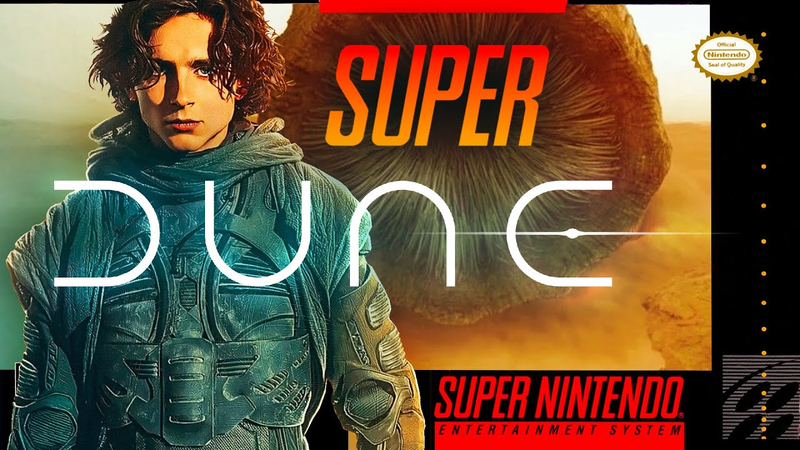
I Made DUNE Into 2D Pixel Game Art...
The primary objective of this artistic demonstration is to translate the cinematic scale and atmosphere of the film Dune into a 2D pixel art environment reminiscent of Super Nintendo-era games.
- Achieving a sense of massive scale and atmospheric depth is the primary requirement for successfully translating cinematic source material into a 16-bit pixel art format.
- High-fidelity pixel art can be achieved efficiently by scaling gradients down and back up to create intentional banding, rather than relying on manual, pixel-by-pixel placement.
- Complex dithering effects can be simulated rapidly by applying noise filters to textures, while high-contrast highlights and lowlights are essential for defining surfaces like stone and metal.

5 Secrets For Gorgeous 2D AND 3D Game Art
Creating high-quality game art requires a departure from rigid creative constraints and an embrace of unconventional workflows.
- Prioritize visual uniqueness and memorable silhouettes over hyper-realism to differentiate smaller projects from AAA competitors.
- Maintain visual cohesion across all assets by establishing standardized rules for geometry, beveling, and texture fidelity.
- Utilize reference materials, such as photographs or existing models, to improve efficiency and overcome the difficulty of starting from scratch.

I made Call Of Duty... but it's 2D
This analysis outlines a methodology for creating 2D game art by deconstructing complex visual scenes into basic, abstract shapes.
- High-quality 2D art is achieved by prioritizing silhouettes, color gradients, and layered depth over complex sketching or painting skills.
- Visual coherence should be tested by blurring the scene or viewing it from a distance to ensure the abstract foundation is solid before adding fine details.
- Environment construction relies on building structures from simple geometric forms like rectangles and rounded pills using tools such as the polygon lasso.
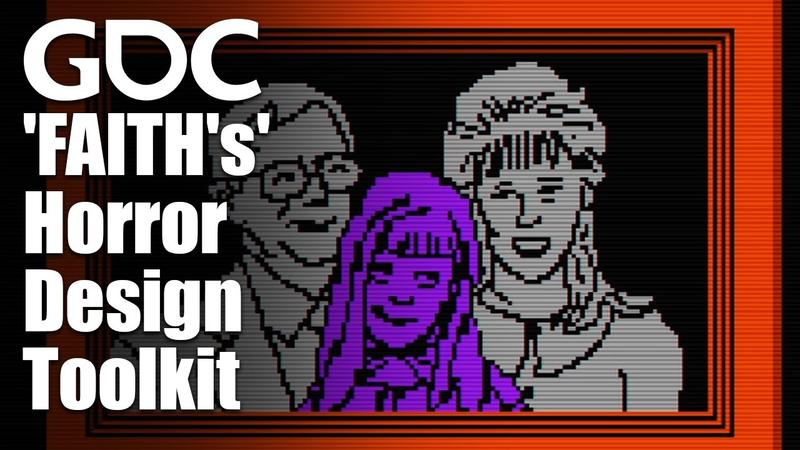
MORTIS 101: 'FAITH's' Horror Design Toolkit
Effective horror design relies on a cohesive framework built upon three foundational pillars: narrative, mechanics, and affect.
- Effective horror design relies on a cohesive framework of narrative, mechanics, and affect to cultivate persistent dread rather than relying on superficial jump scares.
- Developers should prioritize minimalism and the fear of the unknown to subvert player expectations, turning routine interactions into sources of apprehension.
- High-stakes mechanics, such as one-hit-kill scenarios, must be balanced with generous save points and respawn systems to maintain tension without causing player frustration.

WorldBox release date hack
Steam store pages allow developers to bypass standard character limitations in the release date field, providing a strategic opportunity to increase game visibility.
- Developers can bypass standard Steam release date field character limits to inject custom marketing copy into store listings.
- This technique forces custom text to appear in the Steam wishlist widget and the hover tooltip, areas that typically do not display a game's short description.
- The hack serves as a functional workaround to provide immediate context to potential players who interact with a game listing before clicking through to the store page.
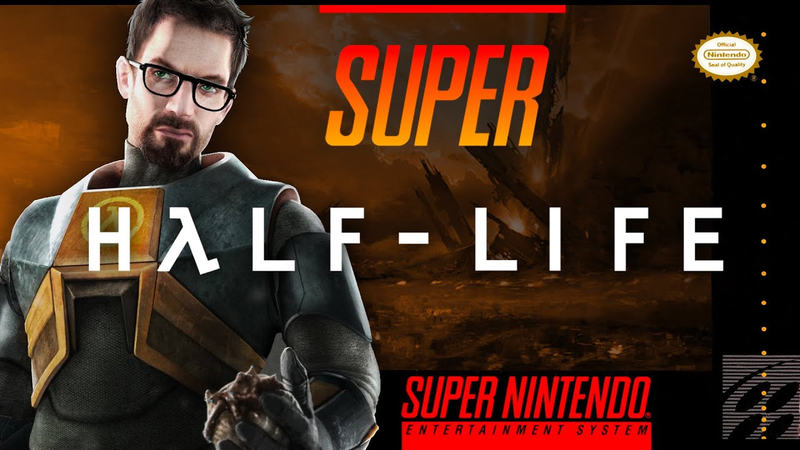
I made HALF-LIFE... but it's 2D
This analysis outlines an efficient workflow for creating 2D game environments and character assets, using a reimagining of the Half-Life 2 setting, City 17, as a practical case study.
- Maintain visual cohesion in 2D environments by applying consistent lighting rules, specifically using 45-degree highlights and lowlights across all assets.
- Establish atmosphere and contrast by prioritizing foreground elements, which are essential for grounding the player's perspective and setting the mood in darker game environments.
- Increase asset creation efficiency by using custom brushes, stamps, and foundational shapes from resources like the Noun Project to build complex cityscapes.

Fireside Chat: Amir Rao and Kelly Wallick on 'Hades'
Supergiant Games achieved significant success with Hades by shifting from a philosophy of constant reinvention to one of synthesis, combining successful mechanics from their previous titles, Bastion, Transistor, and Pyre.
- Supergiant Games utilized Early Access as a core development strategy for Hades, allowing the team to iterate based on player feedback and manage complex, overlapping game systems that would have been difficult to test in isolation.
- Before the 2018 Early Access launch, the studio conducted three one-month 'rehearsal' updates to test their internal production pipeline and determine the optimal cadence for content delivery.
- The team transitioned from a four-week update cycle to an eight-to-ten-week cycle during Early Access to better accommodate the needs of development and content integration.
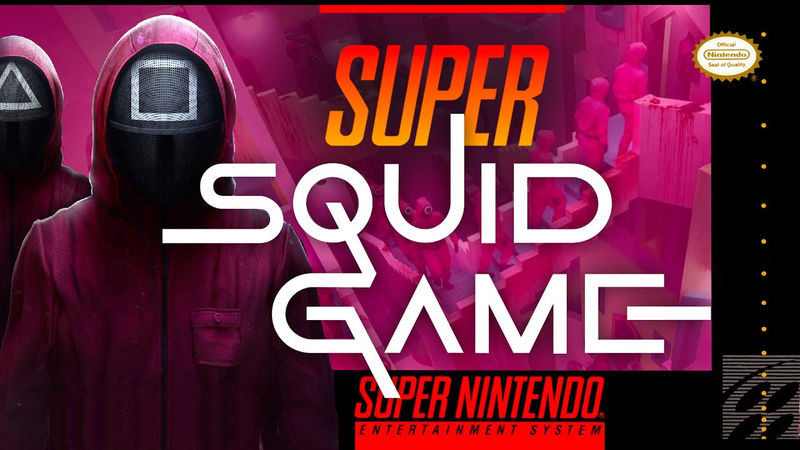
I made Squid Game into a 2D GAME!
The development of a 2D, 8-bit adaptation of the Squid Game television series serves as a practical demonstration of game design principles and technical implementation.
- The project demonstrates that complex, high-stakes narrative concepts can be effectively translated into accessible 2D formats by focusing on core gameplay loops and atmospheric design.
- Visual fidelity in retro-style games is achieved through nearest-neighbor image interpolation for crisp pixel edges and posterization to convert high-resolution assets into pixel-art avatars.
- The MC Escher-inspired maze stairs utilize a three-color gradient technique to simulate depth within an 8-bit aesthetic.
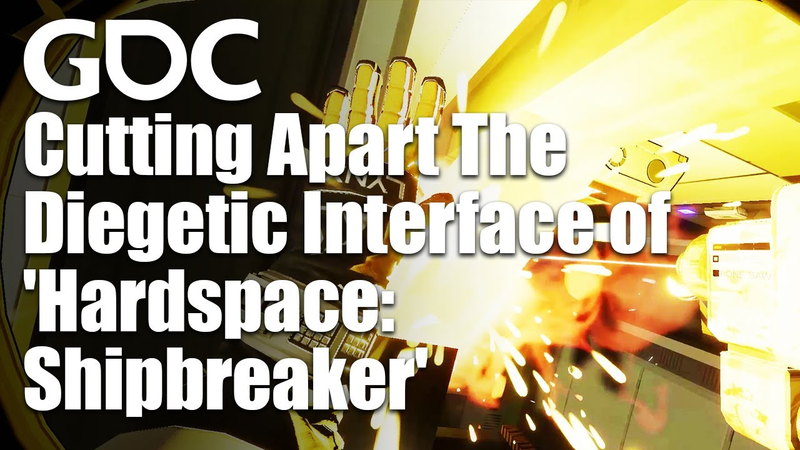
Cutting Apart The Diegetic Interface of 'Hardspace: Shipbreaker'
The design of Hardspace: Shipbreaker demonstrates how diegetic interfaces can serve as a primary vehicle for both narrative depth and functional user experience.
- Blackbird Interactive utilized a diegetic UI design approach in 'Hardspace: Shipbreaker' to embed narrative and game presence directly into the player's interface, effectively turning UI elements into world-building tools.
- The redesign process was driven by four pillars of information architecture, focusing on clear hierarchy, reduced screen clutter, and contextual responsiveness to gameplay events.
- To overcome limited development resources and short release cycles of one to three months, the team integrated UX, game design, and narrative disciplines from the start to create inexpensive, immersive solutions.

I made Resident Evil 4... BUT IT'S 2D
The process of reimagining Resident Evil 4 as a 2D side-scrolling experience serves as a technical case study in game design, art direction, and rapid prototyping.
- A functional 2D prototype of Resident Evil 4 was developed in a seven-day rapid development cycle using the Unity engine.
- Core gameplay loops including exploration, combat, and inventory management were successfully translated from 3D to 2D by prioritizing atmospheric consistency and visual hierarchy.
- Environmental depth was achieved in a 2D space through the strategic use of color theory, gradient-based lighting, and trigger-based overlays for interior transitions.
Let's make a PICO-8 Game in 30 Minutes!
PICO-8 functions as a specialized fantasy console engineered to facilitate rapid game prototyping through a highly constrained, integrated development environment.
- PICO-8 functions as a specialized fantasy console that accelerates prototyping by integrating sprite, tile, and audio editors into a single environment, bypassing the overhead of traditional game engines.
- Developers can achieve rapid, pixel-perfect prototypes by leveraging modular, state-based Lua scripting and existing open-source codebases, such as the movement logic from Celeste.
- The platform enforces strict token limits, requiring developers to prioritize efficient code and modular design to maintain functionality within the console's constraints.
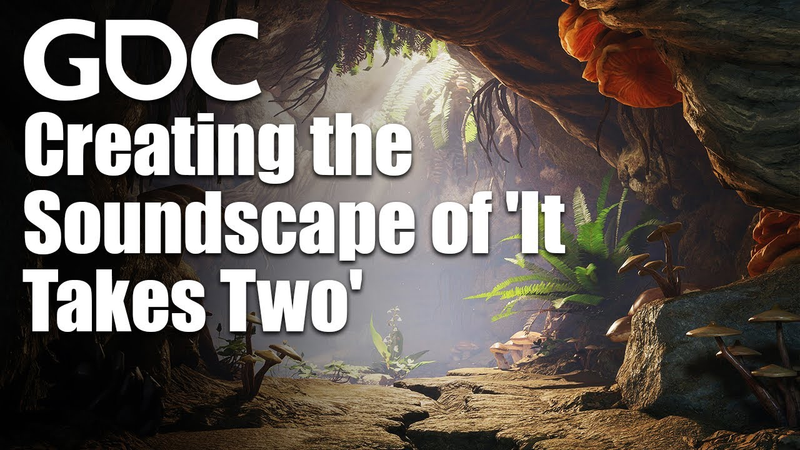
Creating the Soundscape of 'It Takes Two'
The development of It Takes Two required a specialized audio strategy to address the inherent challenges of a split-screen cooperative experience.
- Hazelight Studios developed a custom spatial panning system for 'It Takes Two' that decouples attenuation from panning, allowing the game to prioritize the closest listener for volume and the listener with the best forward angle for directional positioning.
- To manage split-screen audio, the team implemented a system where non-spatialized 2D sounds are panned toward the specific player's viewport—May’s world slightly to the left and Cody’s to the right—to maintain mix clarity.
- The audio team utilized 'bigness' and exaggeration, inspired by Pixar, to emphasize important gameplay elements and maintain a clean mix during chaotic sequences by ensuring the most critical sounds are prioritized in the soundscape.