PC reports and market data
Documents
Building a Mixing Sandbox for 'Just Cause 4'
The development of the audio mix for Just Cause 4 at Avalanche Studios centered on transitioning from a traditional, compression-heavy approach to a modular, system-driven "sandbox" framework.
- Avalanche Studios transitioned from a dynamics-driven mix in 'Just Cause 3' to a state-based, siloed architecture in 'Just Cause 4' to eliminate audio pumping and CPU-heavy side-chain compression.
- By implementing granular microstate snapshots for vehicle audio, the team reduced the authoring time for a single vehicle mix from several hours to just a few minutes.
- The team abandoned traditional side-chaining and compressor-based mixing in favor of a priority-based system that uses game-design parameters to modulate EQ, balance, and spatial imaging in real-time.
Making Your First Indie Game (5 Tips for 2021 & 2022!)
The primary objective for aspiring indie game developers is to successfully transition from hobbyist to professional by prioritizing the completion of a first project over the pursuit of a perfect "dream game."
- Prioritize project completion over perfection by limiting scope, as time is the developer's most valuable resource for long-term sustainability.
- Develop a highly polished prototype to secure external funding from sources like publishers, Kickstarter, or platform deals, which provides the necessary accountability to finish the project.
- Build a community early through consistent social media engagement and devlogs to generate the momentum and wishlist requests required for visibility on platforms like Steam.
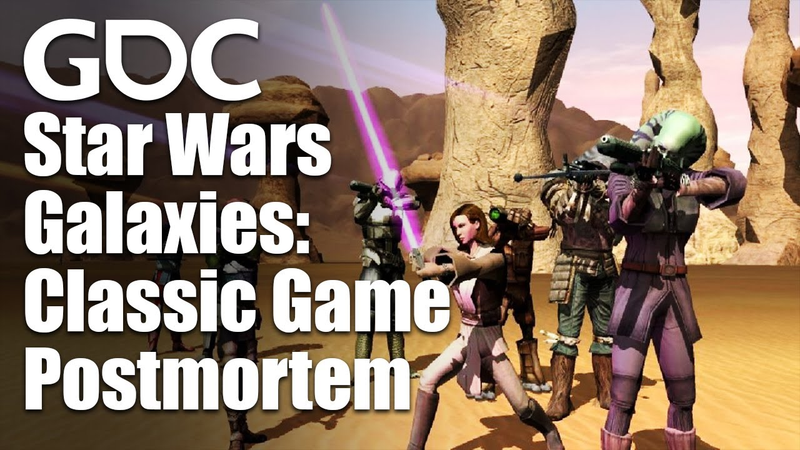
Classic Game Postmortem: 'Star Wars Galaxies'
Star Wars Galaxies represents a landmark experiment in early 2000s massively multiplayer online game design, prioritizing player agency and sandbox freedom over traditional quest-driven progression.
- Star Wars Galaxies suffered from a rushed development cycle, with the team forced to launch the game after only two years and nine months of production, resulting in a poor initial user experience and high player churn.
- The game pioneered advanced technical features for 2003, including a procedural terrain generation system that allowed for runtime building placement and a character customization system utilizing morph targets.
- The game's economy was entirely player-driven, requiring users to bootstrap resources from nothing, which created deep engagement but caused significant database stability issues.

How to Brand a New Game Studio with Joe Nickolls, President of Timbre Games
Establishing a new game studio in the competitive Vancouver market requires a strategic shift toward human-centric employer branding.
- Prioritizing a values-driven, human-centric culture over traditional corporate prestige allows new studios to differentiate themselves and attract high-quality talent in competitive markets like Vancouver.
- Timbre Games achieved a workforce composition that is 67% women by removing exclusionary, jargon-heavy language from recruitment processes and prioritizing transparent communication.
- Operational success is driven by the philosophy that internal culture directly dictates creative output, ensuring team cohesion translates into high-quality player-facing game design.
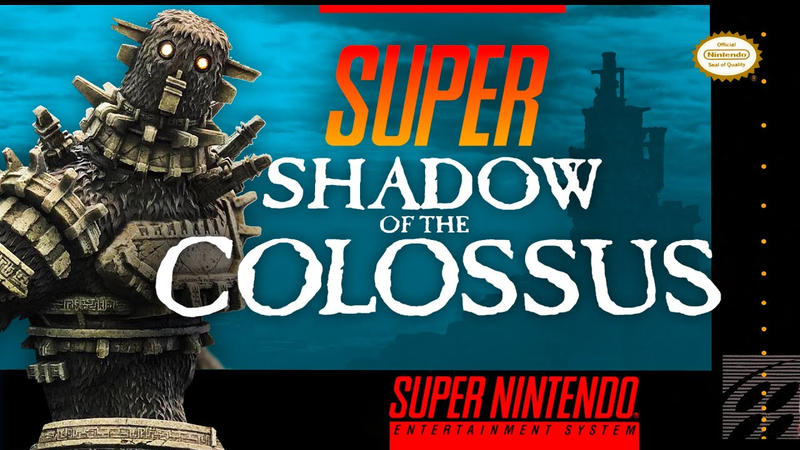
I made Shadow of the Colossus... BUT IT'S 2D
The challenge of translating the atmospheric scale and complex mechanics of Shadow of the Colossus into a 16-bit, 2D Super Nintendo-style experience serves as the primary focus of this development project.
- The project successfully distilled the core emotional experience of the 3D title Shadow of the Colossus into a 2D, 16-bit format through a compressed three-day development sprint.
- To achieve a retro aesthetic, the developer created 4K assets in Photoshop and used nearest-neighbor resampling to downscale them into crisp, pixelated visuals.
- A dynamic orthographic camera system was implemented in Unity to simulate the original game's sense of vast scale by adjusting zoom levels based on player proximity.
I made Skyrim... BUT IT'S 2D
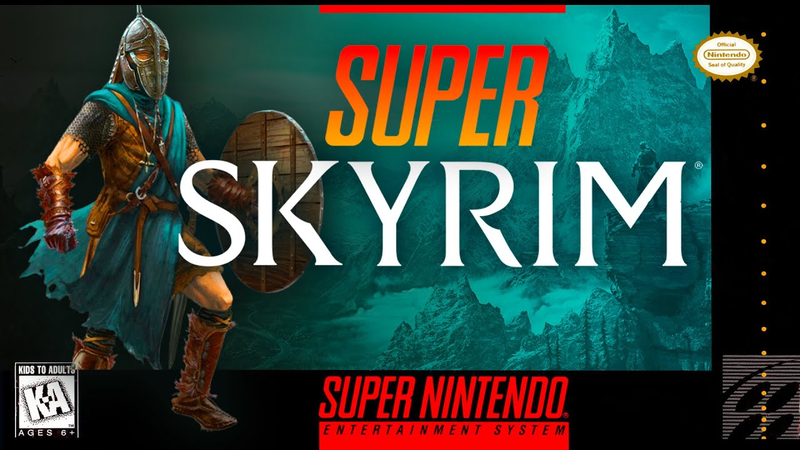
Recreating the complex, three-dimensional world of Skyrim as a two-dimensional side-scrolling adventure requires significant artistic adaptation and technical simplification.
- Adapting 3D open-world titles to 2D requires significant creative liberty and technical simplification, as demonstrated by a seven-day development project using Unity and Photoshop.
- Visual depth in a 2D side-scrolling format is achieved through layered illustration, parallax scrolling, and the strategic use of foreground elements like moss or stones.
- To maintain visual fidelity, the project utilized a 4K canvas and color palettes sampled directly from the original Skyrim assets.
I PLAYED YOUR GAMES! | Game Design Feedback
Indie game development often hinges on the delicate balance between innovative core mechanics and the accessibility of the user experience.
- Indie titles like Hoverblade, The Court of Wanderers, Raw Shire, and Sky Tale suffer from a disconnect between atmospheric ambition and the practical clarity required for player engagement.
- Poor execution of fundamental design elements—specifically unintuitive controls, poorly paced tutorials, and cluttered UI—frequently obscures the core gameplay quality.
- Developers should prioritize visual distinction by utilizing ambient occlusion, color grading, and environmental depth cues to improve immersion and readability.
Ghost in the Machine: Authorial Voice in System Design, 'Frostpunk' & Beyond
The concept of authorial voice in game design posits that a creator’s worldview is inherently embedded within their work, manifesting not only through narrative, visuals, and audio but also through the underlying mechanics and system balance.
- Game mechanics are not neutral; they carry the authorial voice and worldview of the designer, meaning every systemic balance decision communicates a value judgment.
- In Frostpunk, the design team realized that balancing mechanics—such as the penalty for amputations—required careful ethical consideration, as purely functional math can inadvertently express a worldview the designer does not hold.
- Designers must be aware that players increasingly analyze games beyond surface-level narratives, interpreting the underlying systemic rules as a form of communication or ideological statement.
Superstar Session: Why Protection Matters?
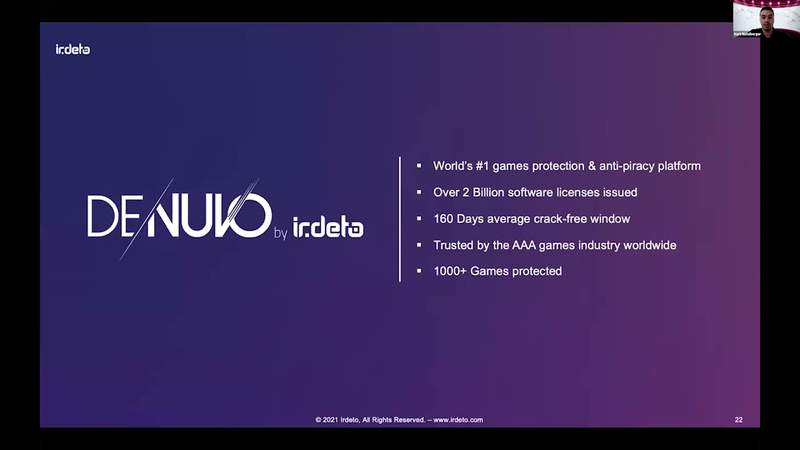
Mobile gaming has experienced significant growth, particularly during the pandemic, with mobile titles now accounting for 66% of total app store revenue.
- Mobile games now generate 66% of total app store revenue, making the protection of game integrity a critical financial priority for publishers.
- Security analysis of the top 50 Google Play Store games shows that 98% are susceptible to tampering, with 49% having active, functional cheat versions available.
- Memory editing tools like Game Guardian pose a significant threat, with 16% of top-tier mobile titles currently vulnerable to runtime modifications.

Sell Your PC - Games Will be Created with Phones
The mobile gaming industry faces significant challenges regarding market saturation, high development costs, and the difficulty of game discovery.
- Frogmind’s Hype platform aims to democratize game development by shifting workflows from PC-based environments to a mobile-first, no-code editor.
- The platform enables rapid development by allowing users to 'remix' existing projects, reducing creation cycles from months to hours.
- Hype addresses mobile discovery challenges by using an algorithmic, short-form video-style feed that prioritizes personalized user engagement over static app store charts.

Breathing Life into Greek Myth: The Dialogue of 'Hades'
The development of Hades represents a significant evolution in narrative design for the roguelike genre, demonstrating how extensive voice acting can transform the experience of repeated player failure into a compelling storytelling mechanic.
- Supergiant Games produced a fully voiced experience for 'Hades' featuring over 21,000 lines of dialogue and 30 characters, despite initially underestimating the final scope of the project.
- To differentiate the game's setting, the team utilized a cultural accent divide where characters native to the underworld speak with American accents, while those of Greek or surface origin use British accents.
- The narrative design used extensive voice acting to mitigate the frustration of failure in a roguelike, ensuring that even repetitive gameplay loops remained engaging through constant dialogue updates.
How To Make A 2D Platformer In Unity (THE FASTEST WAY!)
Accelerating 2D platformer development in Unity relies on leveraging pre-built frameworks and modular architectural patterns to minimize redundant coding.
- Accelerate development by utilizing pre-built frameworks for physics, movement, and animation to bypass the time-intensive initial setup phase.
- Implement a singleton-based architecture to provide global access to core components like the player and game manager, reducing complex dependency chains.
- Integrate PSB files and layered Photoshop workflows to enable dynamic graphic updates that automatically propagate throughout the project.