PC reports and market data
Documents
Designing for Inclusivity in 'The Sims'
The development of The Sims franchise serves as a case study for integrating inclusivity into game design and studio culture.
- Maxis integrates diverse employee lived experiences into game development by actively consulting internal staff from various cultural and educational backgrounds to inform content, such as the 'Discover University' expansion pack.
- The studio maintains a 'people-first' culture by utilizing four core values—create collaboratively, challenge ourselves, champion inclusivity, and be authentic—which were defined by internal staff interviews rather than external agencies.
- To minimize hiring bias, recruitment panels are specifically trained to identify implicit bias and utilize standardized interview questions designed to prioritize inclusive perspectives.
We Went Undercover to Win a Massive Game Jam
This analysis examines the competitive strategies and outcomes of participating in the GMTK 2022 game jam, a high-volume development competition featuring thousands of global entries.
- The project achieved a 74th place ranking out of approximately 6,000 submissions, placing the entry in the top 2% of all participants in the GMTK 2022 game jam.
- The development team prioritized a rapid, iterative approach within the 48-hour time limit, utilizing 'hacky' but efficient code and placeholder assets to ensure core mechanics were functional before polishing.
- The game design focused on a grid-based puzzle concept centered on dice-rolling mechanics, featuring chain reactions, re-roll systems, and environmental hazards like lasers.
Creating Narrative Context for Store Cosmetics
The integration of narrative design into the development of in-game cosmetics serves as a critical strategy for enhancing player engagement and driving store performance.
- In-game cosmetics with strong, resonant narrative themes consistently outperform items that lack a defined player fantasy, regardless of visual quality.
- Development data from the multiplayer action game Spellbreak demonstrates a direct correlation between narrative clarity and the commercial success of store items.
- Studios should integrate narrative designers into the early concept phase to provide thematic prompts and personality traits before visual production begins.
Sparking Curiosity-Driven Exploration Through Narrative in 'Outer Wilds'
Outer Wilds functions as a masterclass in curiosity-driven game design, prioritizing player-led discovery over traditional linear progression.
- Outer Wilds uses a non-linear narrative structure to support its core design goal of curiosity-driven exploration, ensuring that no game content is permanently gated and players can freely investigate the world at their own pace.
- The game utilizes a 22-minute time loop to encourage experimentation and failure as a form of progression, allowing players to revisit information infinitely without the pressure of needing to memorize every detail.
- To make the long-dead Nomai alien species relatable, the narrative team iterated extensively on their voice and personality, creating distinct character arcs that provide emotional stakes for the player.
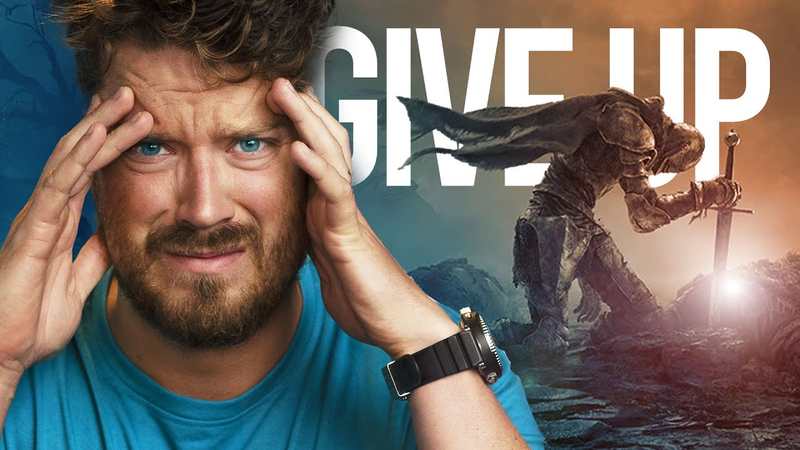
Should You Give Up On Game Dev?
The question of whether to pursue a career in indie game development often stems from a crisis of identity, where creators feel their passion has diminished or their creative output no longer meets their own high expectations.
- Decouple your professional output from your personal identity to prevent burnout and the stifling pressure of treating projects as 'idols'.
- Recognize that feelings of diminished creativity are often a sign of professional maturation and increased critical standards rather than an actual loss of skill.
- Take a sabbatical from development to gain the necessary distance to determine if your passion for the craft remains genuine.
The Stuff Nobody Tells You About Game Development
The development of independent video games is characterized by significant psychological and technical hurdles that often lead to project abandonment.
- Building a direct email list by offering free demos is the most effective strategy for ensuring a successful launch, as it allows developers to bypass third-party platform dependencies and coordinate mass engagement.
- Indie game projects frequently fail due to 'feature creep,' where developers add unnecessary, complex mechanics to compensate for insecurity, leading to project abandonment.
- Game development timelines are inherently unpredictable because minor adjustments to internal systems often trigger cascading technical failures.
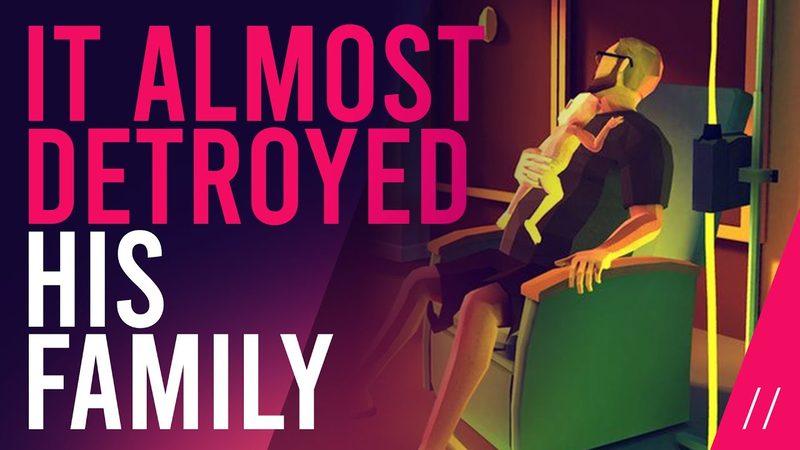
Faith, Family, & The Dark Side of Game Dev | EP 006
The pursuit of a sustainable career in independent game development requires a fundamental decoupling of personal identity from professional achievement.
- Developers must decouple personal identity from professional achievement to avoid burnout and the erosion of family relationships caused by equating self-worth with industry prestige.
- Prioritizing faith and personal presence over the pursuit of industry milestones fosters a resilient mindset that views professional setbacks as growth opportunities rather than catastrophic failures.
- Creating emotionally resonant games, such as 'That Dragon, Cancer,' demonstrates that authentic narratives regarding suffering and doubt build deeper player connections than traditional, didactic storytelling.
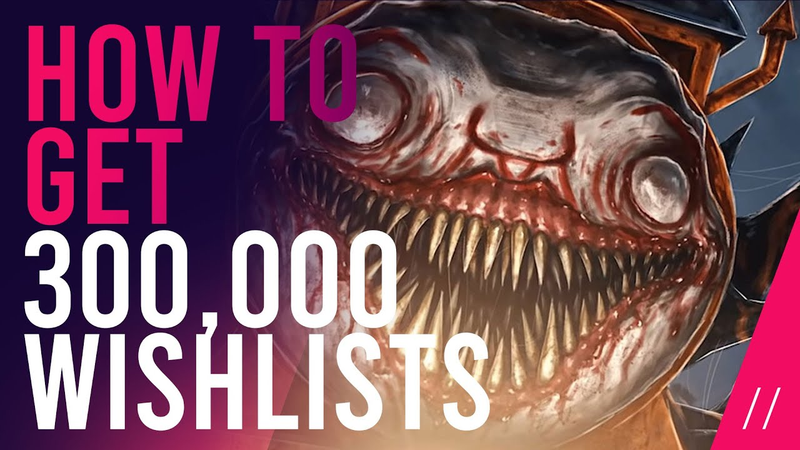
Choo-Choo Charles & The Secret To Its Success | EP 005
The success of the indie title Choo-Choo Charles serves as a blueprint for solo developers aiming to achieve commercial viability through strategic marketing and disciplined production.
- Solo developers can achieve significant commercial scale by prioritizing marketability and audience engagement over personal passion projects, as demonstrated by Choo-Choo Charles reaching 370,000 Steam wishlists.
- Development updates should be treated as high-stakes narrative content, using conflict-driven storytelling and unresolved tension in devlogs to drive click-through rates and wishlist conversions.
- A strong, high-contrast visual hook is essential for immediate concept communication, allowing developers to maximize impact while managing limited resources through efficient asset customization.

Making 90s Games Full Time — Full Time Game Dev Podcast Ep. 004
The development of retro-inspired, point-and-click adventure games represents a viable path for solo developers to secure professional publishing deals and transition into full-time careers.
- Solo developers can secure professional publishing deals by creating retro-inspired, point-and-click adventure games that leverage pre-rendered 3D graphics.
- Using tools like Blender and Visionaire Studio allows developers to achieve a high-fidelity aesthetic that serves as a distinct marketing hook while avoiding the technical overhead of real-time engines.
- Rigorous project management, including modular design and detailed documentation, is required to prevent scope creep and manage the complexity of large-scale environments.
Being A Solo Dev Is Horrifying — Full Time Game Dev Podcast Ep. 003
Transitioning to full-time independent game development requires a fundamental shift from a passion-driven creative mindset to a disciplined, entrepreneurial approach.
- Transitioning to full-time independent development requires shifting from a creative-only mindset to an entrepreneurial approach that treats game projects as professional business ventures.
- Developers should validate niche concepts through rigorous market research, SEO analysis, and audience surveys before committing significant resources to production.
- Securing visibility in a saturated market is best achieved by integrating the community into the development process, such as involving streamers in voice acting or content creation.

The Married, Full Time Indie Dev Team — Full Time Game Dev Podcast Ep. 002
Operating as a full-time, married indie development team, Black Tabby Games demonstrates a sustainable model for independent production through the creation of the episodic narrative horror title Scarlet Hollow.
- Black Tabby Games sustains long-term project viability by treating marketing as a holistic, ongoing practice that prioritizes deep community integration over traditional press coverage.
- The team drives recurring revenue and wishlist growth by utilizing Early Access and episodic releases, supplemented by consistent Patreon support and A/B testing of store assets.
- The studio maintains complex narrative depth in 'Scarlet Hollow' by using a tracking system that monitors ten character variables across five axes to influence evolving relationship dynamics.
Your First Indie Game Should SUCK
The primary objective for aspiring indie game developers is to transition from hobbyist to professional by following a structured, iterative development roadmap.
- Prioritize completing a modest, low-stakes first project to build psychological resilience and technical skills rather than attempting a high-fidelity commercial debut.
- Limit the scope of your first project to a labor-time budget of $10,000 to $30,000 to ensure the game is finished quickly.
- Use industry-standard engines like Unity or Unreal and leverage asset stores to focus on core system development instead of creating basic assets from scratch.