1 free read left. Create a free account for unlimited reading + AI research.
Create free account
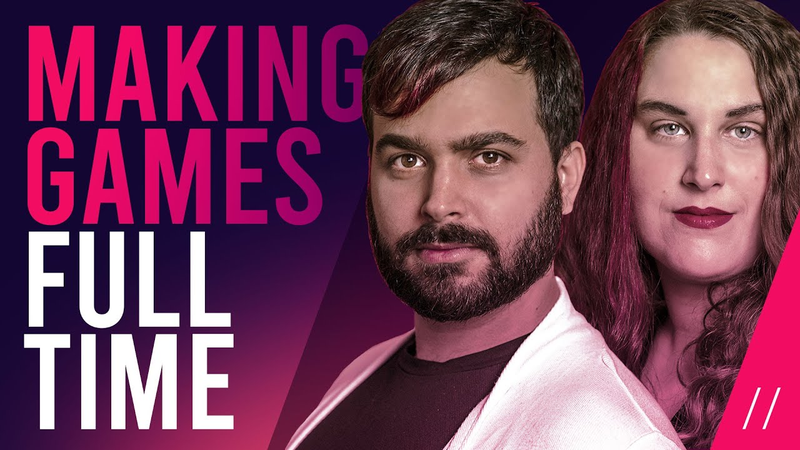
The Married, Full Time Indie Dev Team — Full Time Game Dev Podcast Ep. 002
Key insights
6 takeaways- 01Black Tabby Games sustains long-term project viability by treating marketing as a holistic, ongoing practice that prioritizes deep community integration over traditional press coverage.
- 02Production relies on a labor-intensive, hand-drawn visual style managed through the Ren’Py engine, requiring thousands of unique sprites and backgrounds.
- 03The team balances a collaborative creative process with a structured workflow by maintaining a clear division of labor between artistic/narrative design and technical/business management.
- 04The studio maintains complex narrative depth in 'Scarlet Hollow' by using a tracking system that monitors ten character variables across five axes to influence evolving relationship dynamics.
- 05The team drives recurring revenue and wishlist growth by utilizing Early Access and episodic releases, supplemented by consistent Patreon support and A/B testing of store assets.
- 06Community engagement is fostered by integrating tools like Discord directly into the game experience to encourage organic word-of-mouth marketing and theory-crafting.
Ask AI about this video
Transcript
All right, we are recording. How's it going, guys? My name is Thomas Brush. I make indie games for a living and so does Tony and Abby. Guys, you want to introduce yourself? Tell us a little bit about your studio and your game. I'm Abby. This is Tony. Yep. We are an indie game studio called Blacktabby Games and we make Scarlet Hollow, which is a choose your own adventure choices matter style uh narrative horror game that's releasing episodically through early access on Steam. Yeah. So, we've got it running right now during the podcast, guys, and it's beautiful. Like, the illustration is incredible. And Abby, you do the illustration, correct? I do. Yes. All of the art in the game is by me. So, and you're you're you're traditionally a graphic uh art a graphic novel artist, right? Like that's what you did prior to indie games. Yes, I have seven published graphic novels and probably more on the way. Undoubtedly more on the way. It's definitely my passion, but I've uh also
been working on this visual novel and it's uh it's pretty much the same thing. Yeah, [laughter] except I have to learn how to do sprites and stuff. I have some examples of what the actual art looks like because I work traditionally with uh pen and paper. So, oh, so these Oh, these are actually handd drawn on paper. Yeah, the coloring is all digital, but Yeah. Okay. And then Tony, you're doing the code, right? Yep. And then we write the game together. Yeah. I'm working on the first draft of episode 4 right now. That's usually how we do it. I do the first draft uh in Celtics, which is the software that we use. It's very helpful for writing branching narratives. And then uh pass it off to Tony, and Tony puts it to the game and edits as they go. Sweet. Well, guys, I'm going to run an intro here. Um, after we run the intro, what we're going to talk about is, well, I want to talk about the production, like the nitty-gritty of it, but also community building. I think that's really important. And you guys mentioned that before the podcast, we're going to talk about building a community. And if that sounds boring to my audience, guys, I just want to let you know, those of you listening, this is huge. Like,
community building, I mean, Tony and Abby, correct me if I'm wrong here. Without community building, you wouldn't be making money. You wouldn't be full-time game developers, right? Yeah. Yep. That's how it works for everybody. You got to build an audience and maintain it. So, it makes every new game you make easier to sell because you have people who are already going to buy it. I totally agree. All right, I'm going to run that intro, guys, and I'll see you on the other side. By the way, guys, feel free to download my free 2D game kit below. It's totally free. It's my treat to you. I used this exact 2D game kit to make a game for PewDiePie in 14 days, and then I got to play it in front of his subscribers, which was really awesome. Um, so download that, use it however you want. It's my treat to you. Yeah. Okay, let's
talk about this beautiful, beautiful handdrawn game, Scarlet Hollow. I want to talk about the production. How do you guys work as a team? What's the sort of production environment work look like? Where do you work? All those questions go. Well, one of those questions is a very easy answer. Where do we work is right here. Right here. [laughter] You can tell from how cluttered everything is. This is our workspace. Is it your house? Yeah, this is our house. Yeah, this is this is a home office in our apartment. Yeah, we've got a twobedroom. So, Gotcha. We got a steel during the pandemic. Dude, is that like so hard though? Like not separating your lives? like you're just work work is your life and your life is your work. I like it. Yeah, [laughter] I like it a lot. Uh it helps that we now have a studio that is separate from like where we sleep and do kind of normal day-to-day activities. Yeah. Uh for a while I've been a professional like independent creator since I was 20. So most of my adult life has been spent kind of figuring out how to work from
home. So, at this point, I figured out what works. And it really helps to have just a separate space where you go to work and not to like have fun or uh sleep, which I used to have just my bedroom would be my studio and everything. And it was uh not very fun. It's also easier when work is something that you're passionate about. Yeah. Like I've before this worked jobs for other people where if I had to do anything outside of my eight hours at the office, I would have broken down into a puddle pretty quickly. And I wound up burning out on those jobs fast anyways. But when you're making something that you own and control and that you're passionate about, I don't know, it's easier to stay engaged with it. Yeah. You don't uh half your house does not turn into just like and here's where I go to have a horrible time every day. Yeah, [laughter] exactly. Well, I I don't think we clarified this. We probably talked about
it prior to the podcast. You guys are married, right? So, you're a couple making games. So, your marriage is games and your games are your marriage. It's like all mixed together in a big bundle, right? Have it any other way. Yeah. I feel like we're really lucky in that we like each other a lot and can spend literally every second of the day together. We work together. Yeah, definitely. Do you guys ever fight about your games? Like have marital disputes about your games every I think I think the worst that we get is probably like a tense discussion where we're on separate sides of wanting something in the game, but we always we always resolve it pretty quickly. Yeah. Who wins? It depends. Yeah, it depends on uh it depends on what the given thing is. Like I think something that's helpful about being married is that we're good at communicating with each other and listening to the other person.
Yeah. I have a bad habit of not pushing back for most things and I know about that and I don't take advantage of it. Yeah. And it wants to talk through instead of just Yeah. instead of just having me be like, "Oh, it's okay. Yeah, that's fine. We'll go with what you want." And not kind of standing up for what I think is better for the game. So, in terms of production, let's talk about this. You're working in your house um or your apartment. Um you're pretty much working I'm really quick. Your schedule just really quick. Is it sort of whenever you want to work or is it 8 to 5? It's always Yeah, it's basically as much time as possible. like like between releases we take quite a bit of time off to recharge and uh and like at different milestones within a cycle we might take a week or two off or you know working more lightly to reenter ourselves. Yeah. But a basic schedule for kind of the times
that aren't crunch which is usually like two months out of the year when we're doing 16 hour days and that sort of thing. uh it gets pretty rough. But for the most part, I work from like 9 to 9 to 6 or something. Six or so. Sometimes a little longer than that. And uh we do it most days. We try and take a weekend day off. Yeah. Just one weekend day, which is new for me. Turns out taking a day off a week actually is very helpful. That was something I introduced. Yeah. And uh concept of taking time off. I don't want to get rid of having time off. Such a boring concept to you guys. Yeah. when I was like just independent on my own kind of like as my own boss all the time instead of having two bosses uh I was not very kind to myself and I feel like it's a lot I feel like um like if you guys had like do you have kids? No. Okay. If and when it happens you guys just should uh teach them how to make games and then you could be like the von trap family making games all of you. There you go. All in a house homeschooling them only
in game making. [laughter] I know. and then just make millions, you know, they'll write a tell all book about how terrible their childhood was. Oh, I'm sure. See, that's the thing with that's so cool though about your situation versus like I don't know my situation and most game developers. The the struggle with game development, especially when it's a hobby [clears throat] is you have to somehow sneak it into your current social schedule. And that's tough when you've got a spouse. And it's nothing against spouses or my wife or somebody else's wife or husband. It's just hard because essentially you're saying, you know what, I don't want to watch Obi-Wan tonight. I'm actually going to go into the other room and make my game. Or I don't really want to hang out. I don't want to go out to dinner. I would rather make my game. And that's really tough. And it it turns into this um well, it just turns into kind of a hassle of trying to figure out where to fit game development into your relationships. But for you guys, it's it's a pivotal part of your relationship. Um, and so I
guess it's like I don't know, you don't have to worry about that, right? Yeah. Yeah. Like, in fact, before we were working on games, we both had pretty intense all-consuming jobs where Abby was uh full-time cartoonist who would often in the two months or so leading up to a book release be working 16-hour days every single day. So, I would never see her. And then I was running a tech startup. So there were really weird periods of crunch right up to like major funding milestones or releases. Um the funny thing working together on this is just like synced those schedules up. Yeah. Which is great. So much time together. Man, that's that's you're really lucky honestly. I mean, to be able to have a relationship that works both just from an emotional perspective and just loving each other, but also you work well together, that's a big deal. I think
that's pretty awesome. So, you work together, you're you're you gota, you know, it's not 9 to5, it's whenever uh you're in your apartment, so work is your life, but it's not really work. It's more like life is your work. Um, and my next question, what's that? He said it's play. Yeah. Having fun making something that we want to see made. That's right. I say it's you're playing God. You're you're building a world. [laughter] You're you're you're creating people. You're creating this whole world and it's all yours and it's so it it really is playing. It's a lot of fun. Um, but my next question is as it relates to your relationship, your working relation spec relationship specifically, um, who is it 50/50 in terms of the workload or is is it the illustrations are just they take way more time than say Tony what you have to do like what's who's bearing the burden? Probably 5050. Okay.
So like the illustrations take a lot of time but we both do the writing which is considerable. The coding is considerable as is keeping track of all of the different variables and sort of adapting the script to to work well is a piece of interactive media. like I think the first three episodes there right now combined 400,000 words long and there's something like,00 decisions in them. Uh all of which have anything from wide ranging huge consequences on how the story progresses. Um or they change almost imperceptibly how another character views and interacts with you by a certain amount. That's that's quite a bit of work. And then during all the extra time, I do all the business and marketing. Say Tonyy's in charge of business and
marketing. [laughter] We actually have So Tony really bears the burden here because that because that is a lot. Right. Pull up in my office and draw my little pictures and Tony has to talk [laughter] to Yeah. Right now we're actually working on a second smaller unannounced game in parallel. So, I'm working on the script for that while Aby's doing the first draft of the script for episode 4. So, we both fill our schedules up. Gotcha. Now, in terms of the code, well, actually, I want to start with you, Abby. Can you give me a quick breakdown of what your day looks like, um, your processes, the software you use, how it's handed off to Tony, and then Tony, I want to hear about you and what your process is. Yeah. So over the course of making an episode, there's like a lot of different stages of how that process goes. There isn't really a typical day. So maybe maybe if we give the big picture first, we can dive into things. Yeah. The timeline is I write the first draft, Tony starts coding, and then I
get kind of what art we need as we go because we go um scene by scene. So we can test it as we go. We test as we go. And then of course before the first draft is written, there's probably a month of just going on a lot of long walks and whiteboarding everything that happens in that given episode. Yeah, like we have the broad picture, but actually figuring out how that plays out like changes up until the last second basically. So I actually have some examples though of what the art winds up looking like. So I uh these are this is like a typical background. Can you bring that closer? Sure. As you can see, it's an 18 by 24 piece of paper. Abby, that is so cool. Oh, thank you. Oh, yeah. Here, I'll show some line art. You can show just so impressive. So, I'm going to switch between screens here. Here's the game. And here is Aby's work. So, that's how it starts. Man, you got to sell these things for like five grand a pop. [laughter] That's why I'm holding on to We've got a big pile.
How many backgrounds are there now? A couple hundred, I think. Oh, really? Yeah. Never mind. Does it Does it start as a little thumbnail, Abby, or is it just you just go for a big one? Sometimes I just go for it if I already know what it's going to look like. Um I'm I really like drawing backgrounds. It's super fun. So then, uh I scan that in and in Photoshop I add color and effects and that sort of thing. Make it look nice. And then we do something pretty unique with sprites compared to most visual novels where we insist on having a very dynamic range of them oftent times with our characters interacting with the background. Bring that closer, Abby. Yeah. Hold the stack, please. I'm not trying to make you work here. I just know my audience would love to see this. So, yeah. So, this is on vellum. So, it's like super good. That's great. Wow. Thank you. And I uh put that over top of the backgrounds to make sure that they work in the backgrounds. There's one with some faces on it. And then I can draw over it with more
paper to get like variations in facial stuff and body stuff. And I scan all of this stuff in and then just like edit the sprites individually. Sweet. Hey, did you do your own tattoo? Oh, uh I designed my own tattoo, but it's a really good one. Right. I like this a lot. Oh, cool. What is it? What? What's that? I'm trying to see here. And then this black part has bone in it. Thank you for noticing. That looks like it hurt. Uh, it's okay. It's a pretty good part of the body to get tattooed. I also have my full back done. And that hurt. Aby's goth, so she has like really good pain tolerance. I love you. Wait, wait, wait. You said Abby is goth. Yes. Goth. That's why I like horror so much. No, I do too. I was especially a goth. I wasn't a goth in high school, but I deep down was. I was more like the emo trendy guy. Um. Oh, nice. Always love. I think I still am, honestly. Congrats. That's a great [laughter] I didn't lose my soul.
You can show these bats, too, because those are ones that interact with the background page. Yeah. So, this is like here's some bats that hang in a cave at some point. So, I have to draw them over the background, make sure that they fit. How do you scan these in and how do you remove the white? Oh well. So I um scan them in. I have a large format scanner. So you can scan up to 11 by7s, which means the background actually has to be split into four scans. And uh then I have to put that together in Photoshop. There's actually a really handy tool like just kind of an auto stitch. And then um there's a little process you can do where you select everything, copy it uh while it's still black and white line art and then um do a thing with channels where you paste it on and then it selects all of the black and then you can fill in all of it at once. So that's what I do for all of it. Then I wind up with wizardry is what it is. Yeah, I recommend looking it up. It's actually a super easy little technique and I use it all the time because you can also fill it in with stuff that
isn't black. So if you want to do an outline that's a different color to kind of mesh better with what you're doing that too. Yeah. Like in our next game instead of a gray because the next game's whole like you know monotone just in black and white you've replaced it with like a gray adjacent red. Right. Yeah. Just so it's not actually black and white cuz actual black and white sometimes looks it's a little harsh on the eyes. It looks a little less uh intense. So Yep. So, you're giving a little bit of a sepia tone to it. Kind of. Yeah, a little bit of a sepia. All right. A little more pleasant. So, yeah. Uh, that's kind of how it goes. And then I' How many sprites do we have at this point? Something [snorts] like 3,000 unique sprites. So, yeah, that's what all those little faces and stuff. Everyone changes their outfit every episode because it's a new day. Yeah. Um, that was a Kickstarter. We have a lot of Oh, man. people just like in different positions and environments. So, like a scene might have a whole new list of characters. We
have talking versus non-talking varants again just to make it sort of as immersive as possible. Yeah. Nighttime shading sometimes on on some of them. So, so it's like it's not 3,000 drawings and a lot of times, right? Like for a given character's list of say 60 sprites in a scene, half of them are mouth open variants of sprites that already exist or they're doing something with the eyes where they're glancing at someone else or they're looking away from you. Okay. Um, does it have you gotten past the point where this isn't stressful anymore? Where you've got it streamlined? Yes. Okay. I feel like I'm Was there ever a point where it was like what the hell am I doing? Yes. What was that like? Well, I just had to push through it. I feel like I do that with most of my projects, though. I kind of push myself to learn something new. Uh, get really stressed out in the first couple of months, but then just figure it out from
there. So, we've we've ramped it up. We've ramped up the intensity of what we're doing over time as our skills have grown. Always got to challenge yourself, which of course means we also every now and then feel like we have to revisit the earlier episodes. Yeah. And Oh, that's that's bring that level up. Gotta be careful with that. Yeah. We don't get stuck in a pit generally. If it's something that I can't stand to look at anymore and if I have the time to fix it, then I'm like, well, I might as well. Especially if it's character art that wasn't like on model, right? But yeah, I as somebody who's done like web comics and had to finish projects and not have to keep going back and fixing things. It's it is really easy to get stuck in that trap, but at some point you just have to tell yourself, well, other people don't see it the way that I do. Yeah. So, it's like we we we've been doing and I think this is the last time we're doing it, like a single large
patch in between episodes to give people a reason to replay. And sometimes that'll be a little new art or replacing something old. And we have one of those that's dropping tomorrow actually. And I think it's what? It's redoing two backgrounds that had been bothering you. Yeah. Weren't up to snuff. One of them specifically was supposed to be, "Wow, it's so pretty up here in the mountains of North Carolina, and the background was not." It was not. Yeah. Other people liked it, but I knew I could do better. Yeah. You got to be so careful. I'm I'm the same way, Abby, with my games. Well, my my previous two games are 2D. My new one's 3D and that's a different artist. That's Filipe, my 3D modeler. But there's a point where you just got to like let it go. But I'm sure you've let go a lot of things. Um it's just backgrounds bugged you too much. You couldn't sleep at night. Yeah. And all of this is like very consciously tied to marketing cycles where you know this is a patch that we're releasing in
conjunction with the Steam summer sale starting. So, it's an opportunity for people to replay, talk about the game more, and then organically boost things there. So, it's there's there's a methodology to this. We're not just constantly revising things because they bother us. We just sometimes have a list of to hit our release deadline, we have to do a quick version of this art and eventually we'll revisit it. Okay. Uh, by the way, Abby, I'm looking at your art right now. We're looking at, you can't see my screen, but we're looking at like a library or something. lots of books. And there's something I noticed about your artwork is you you you not only are you illustrating the illustrations, but you're illustrating the paintings in the illustration. And it's so impressive. Like right now it's I can't The lady just moved in front of it, but yeah, it's like a a man being carried on a iron bar. He's he's tied to it. Yeah. And there's so much detail even there. It's plot relevant. What's that? that it's a very plot
relevant painting. I love that. That's so cool. Yeah, there's a character uh Ree who is a painter. That background took me probably the longest in recent memory. You'll probably get to the basement with his art. Yeah. Over the course of this stream. It's something like 30 or 40 paintings that I had to do inside of the background. I'm looking at him. So, I had to learn how to digitally paint for that. Um but I think I did an okay job. And of course in the script I was just like, "Yeah, you know, it's like a cross between Goya and Basinsky. You could just do that, right, Abby? I sold my future [laughter] self." So I guess I thought when I was looking when we were talking about that part of the script, I thought that was going to be like five paintings, but it's it's something like 30. Yeah, it's incredible. Okay, so let's really quickly let's let's I mean we can sort of segue um into your responsibilities, Tony, and I know that includes community building. Now, side note, Abby, I know that your community was a that you had for your graphic novels was a huge part
of your Kickstarter, but I do want to talk about Tony. Tony, what when you what's the handoff look like when you get something and you bring it into I'm assuming you're using Unity, right? We're using Renpie. Whoa. Wait, what is that? Sorry, that is that is a Pythonbased engine for visual novels. If I were to go back and do everything again, I probably would have done Unity, so console ports would be less of a pain. But this was like the free open- source out of the box has a lot of support, does everything that we want, you know, pretty easily and the couple things that it doesn't do, we can build in Python. So regarding Unity's just really quick question when you say porting to Unity or porting to other platforms is it possible to port this to platforms with this program? You can't there's like at least a couple porting houses that have like build built parsers. Uh the main issue is Renpie runs on Python which um at least
the Switch and the PlayStation don't natively support. So to port it, you need to actually either build a virtual machine that that runs Python within something that um those consoles can handle or you build a tool that essentially ports it over to another engine for you. So it's it's a significant burden. Well, I'm looking at it right now. I've got it pulled up on screen so that everybody can see it. Um, if you're listening to the audio audio only podcast, um, it's renpi.org, right guys? Uh, renpy.org. And it says Renpie is a visual novel engine used by thousands of creators from around the world. Blah blah blah blah blah. They can be both visual novels and life simulation games. Um, so it runs on Android 5.0, HTML 5, which is
that's pretty good. Um, because I think you can kind of port that to consoles. uh Linux, uh Windows 7, Mac, and iOS. Pretty good. Um yeah. Okay. So, I had no idea about this software. This is really, really cool. Um so, it's very niche. Yeah, it is. And that's that's what would concern me. And it makes sense that you might want to use Unity later is it's like, well, how do I port this, you know? Um, but yeah, that's I'm glad you found some when you're evaluating tool sets like there is there is some value to picking something that specializes in what you're trying to do really well, right? Uh instead of going with something that's, you know, the most commonly known thing that may not have that specialized support. Gotcha. Gotcha. Okay. Well, uh, if you guys started a new, I guess, franchise, a new IP, would
you use Unity? Yeah. So, we we have like a second game we're working on and that's going to be in Unity. Gotcha. Yeah. Kind of a practice shift. Practice run. So, when it when Now, sorry, we're sort of derailing the conversation, but back to you, Tony. Like, um, you take these illustrations and you bring them into Renpai, right? What does that look like? So, we do the script first. Um, which is for my own workflow. I manually transcribe things over because that's what gets me to think about line edits the most effectively is if I'm writing it myself, I can sort of hear it in my head and then change things. Um, from there there's a lot of fleshing things out, restructuring conversations so they flow better as complex dialogue trees, adding a lot more branching to the narrative. Uh, something that we do in
this game that's a little unique is we have a pretty complex relationship system that we built. So instead of the typical thing you would expect in a game like this where you know you talk to someone and they either like or dislike uh something that you say, we've built it so that it can affect one of or more than one of a set of 10 variables um that are opposed on like five different axes to each other so we can build like a more complete picture. So, for instance, if like you're not emotionally close to someone, but you're nice to them all the time, that character can start to view you as insincere or a bit of a kiss ass or something like that. And then that affects um you know, dialogue from that character that affects the facial expressions they use that affects decisions down the line and how that character will factor into it. Um so, there's a lot of working that in. So, it's very nice of you to keep
very nice of you to keep saying we when it's like Tony came up with this [laughter] and I was just sitting there like you want to what how many axis? It sounds it sounds really challenging. I got to admit it doesn't sound some like something I would want to do. It's uh it's it's a good practice in character study because you have to actively think about how a character's like mental model of you the player changes based on the things you say. Um which adds a lot of extra depth there. So, generally on a scene by-cene basis, I will flesh out the script more, do all of that, and then once we have a sense of that scene, I'll put together a list for Abby. That's here's the backgrounds that we need. Generally, you have a sense of the backgrounds. Yeah. First draft, I kind of have a list going. Generally, here's like 20 to 30. If it's not a scene that uses the default standing sprites, here's like some
amount of unique sprites that we need from the scene that captures the whole emotional range of the characters. And then every single line of dialogue for the most part, um, I change out the sprites for every character in that scene so that they're reacting to everything that's going on. Sometimes if someone's like in a more passive role and a lot of other people are, you know, speaking, they'll kind of passively sit there. But I like to make sure that people's eyes are following who the speaker is. That if they hear something that might elicit an emotional response, they fa, you know, react to that with their facial expressions. Yeah. So, the next step once that list is over is while Aby's drawing them, I'll generally go through and I will just trusting Abby with the end product, [snorts] put all of those sprites in there before we have those files. Um, which for a given scene
is maybe moving sprites like two or three thousand times. And then once we have a significant chunk, generally a couple a couple new scenes completely finished, we send that out for alpha testing, do a round of testing, and then move. Um during this time, we also send the list of sounds we need to our sound designer. We work with our musician to figure out, okay, what scenes need new tracks and how do we capture the, you know, the the emotional range that we want in those scenes with those tracks. Generally, I'm we start out conservative about how many new tracks we need for an episode and then uh, you know, we'll think, oh, this scene can be like quiet or it can have a track we previously used and then we realize we need something new. Okay. So then that happens. I think we probably go through four or
five testing rounds before a given episode is done and then we release it. Okay. Well, let's talk about that. So, sounds like you guys have not only do you have a ton of work to do just in terms of illustration and bringing this into the software and making an actual game, but you've got to manage a community. Tell me specifically, you could ramble on as long as you want because I'm really curious about this. How do you There's a lot of questions here actually. How does managing a a community, building a community, and also releasing episodic content to that community, how do those two things relate to you guys paying the bills? Um, I think the the biggest The biggest thing there is we're we're kind of at a point in time
where the most effective marketing you can do for a game is word of mouth reliant. Um, so part of that is here's new content, here's an opportunity for people to organically talk to all their friends and try and convince them to play it. Here are ways that we are keeping users engaged over a long period of time. And they're not necessarily giving us multiple iterations of purchases because we just sell the game in one chunk. But if we do merch, they buy merch from us. Uh since we now have an alpha testing Patreon tier, they sign up for that, which is pretty significant. Um, and they help tremendously with the social media push around a new episode. Like I think a bottom line to point at is think the the week we released into early access on
Steam, we got something like it was like $14,000 in sales that week. And when episode 3 released, which was just a content update, it wasn't old people paying for new stuff, we got around, I think it was like 11 or 12,000 in new sales that week. Um, so our community is like gone to great lengths to ensure that we have a longer tale than most games uh would have. Where does your community exist? Just really quick, where do they exist? Where are they? Are they is it Twitter, Instagram, Tik Tok, email? What is it? So Abby has uh like 40,000 Twitter followers, so that's a good starting point. Yeah, that's pretty good. Our Yeah, our studio has like 2600, but they are an extraordinarily engaged 2600. Like a low performing tweet from that account
will get something like 70 fave faves. Um they love making fan art, too. Yeah, they love making fan art. If you can get people invested enough in your thing to make fan art, that's incredible. Yeah, they they exist on Discord and Reddit. So, we have a subreddit for the game that's currently at 550 members. We have a Discord that's nearing 1500. Great. The Discord is that's I mean that's basically a forum, right? It's a bunch of people kind of sitting there. Uh it's wildly engaged. when you finish the game and you're excited to talk about it, you have a place where you're directed to that has other people excitedly talking about it. So, that's great for growth because we link it from the game itself. That's right. Let me let me pull that up really quick to show the audience. So, on the main menu here, guys, um right here, you can see there's a button on their main menu on the game, which is very interesting to me. It's uh I I wouldn't have thought to put it in the game, but it's right here. join our
Discord. Um, and it's not just there. Uh, when you finish an episode, there's a menu that prompts you to follow us on Twitter or join our Discord before moving on to the next chapter. It helps that ours is a mystery game. So, a lot of people do want to do this because especially since there's so much branching and we have like the trait system that kind of gives you certain h uh facts and and things that uh other traits might not give you. It means that people want to compare a lot of notes. They want to do multiple plays. They want to figure out what they can actually see in the game. Right. So, when you create a character for the game, you get to pick two out of list of seven traits. Mhm. Um, which are they're sort of like, call it skills in Disco Alisium if they were one and done choices and you didn't put points in them over time. Yeah. Um, but there's all on top of getting unique information from each trait and getting unique kind of easy way outs to major decisions from each
trait. Uh, the combinations of them sometimes yield unique information. So, there's roughly 21 playthroughs worth of information. Yeah. That some people, bless their hearts, have done on their own. But it also creates this great framework where each individual playthrough can be so different from someone else's that there's real value to people joining our community and pooling their resources together to be able to come up with the sharpest theories about what will happen next. That is so cool. You know, it's I was just thinking, not only have you guys incorporated your game into your marriage, but you've incorporated your game into like your friend group. It seems like you've built a friend group or like a not a cult. I wouldn't say that, but like just a community. It's really cool. And I think that's like you're really good at at you're really good at combining making
your game part of people's lives. Um, and I think that's the future for sure. And it in terms of just marketing and entrepreneurship, it's a great [snorts] business decision for sure. Yeah. Um, yeah. I heard once kind of early on in my career like as long as you have a thousand people thousand people Yeah. who like are really excited about the things that you make, you're going to be good. You'll be fine. And that'll just grow. It'll grow. Yeah. Yeah. I totally agree. I totally agree. So this community building [snorts] um how in terms of the fi financial side of it because I think a lot of people are probably curious like okay like is there a point of diminishing returns where it's like we need to stop making this game because everybody's paid as much as they're going to pay for this game. So we're not going to keep making more episodes. And I know your episodes, maybe you clarified this, but I just to
double make sure my audience knows, the episodes are are you don't have to buy a new episode. They're just included in what you already bought, right? Yeah. Yep. And there's there's a planned seven. There will be no more than seven. There will be no fewer than seven. This is also uh a good thing is knowing your story is going somewhere means that you can kind of put the hints in as you go and people know that those hints are going to pay off. Gotcha. So, that's also a big kind of kind of up for us. Well, how does that translate to sales though? Uh, hate to be so capitalistic. I'm just curious how how does it other than the purity of the art, what's the benefit in doing episode of content for something that's already been purchased? The purity of the art is the financial benefit there. The game is very good, so people keep buying it. And again, so Steam is promoting it more is what you're saying. Yeah. They keep coming back. they'll keep sharing it. Um, and I think a good way to look at it is almost like early
access right now is kind of pre-orders. So, we when we released onto early access, I think we had 4,400 wish lists and we have 28,000 now. And there isn't any sign of that growth slowing. Yeah. feel. It kind of proves since this is our first game. Yeah. I think a lot of people were kind of skeptical that it was going to work. Um, which is fair. Like it was our first effort. A lot of people just don't want to buy a narrative game until it's finished. Yeah. Which is fair. You want to experience it all at once, right? But some people are okay testing it out first. Yeah. So, it pays enough for us to survive right now. And because of the growth we've seen on, you know, the wish list trajectory and because we haven't seen that tail slow, we know that the big payday is when the game is done. Yeah. Um Yeah. And you know, in the meantime, I
said, we're working on a second thing right now. And that's that's a way that we can uh tap into our audience with like smaller projects every now and then to continue to be like comfortably financially independent. Yeah. A lot of kind of independent work is making sure you have just enough to hit the next goalpost. So yeah, uh we we have that. Yeah. every time we have a new alpha build ready, more people join the Kickstarter tier to test that out. And that's recurring revenue that that's coming out of this. And like a lot of a lot of this kind of intense excitement and passion about what we're doing is I think because other than that, we're upfront about yeah, you're just paying us a dollar amount for something. We're not overmonetizing it. we're not going to stretch this out longer than we have to or want to. Uh
that's what leads to the kind of trust where someone or a lot of people will, you know, throw in monthly support just because they care about what's being made. Okay. So, let's let's uh I want to wrap up the podcast um with you guys giving me advice. Okay. I need advice. Okay. So, I'm in conversations with some publishers and some of them are they want to release My Game Father early access. And my question is, and My Game Father is a first-person shooter um sort of horror doomesque game. And I won't discredit any of these opinions because I've been, you know, from what I've learned, it's actually a very and this is purely a business a business question. So from a profitability perspective, this is a has has been a good idea for a lot of games. They do early access. So my question is,
if you were me, what would you do? Why would you want to do early access? I think is the that's the question for you. Basic question. No, I mean it's about profitability. are focused on an individual developer because you see a lot of people who jump into early access without like a clear idea of why their game is suited for it and then when in a lot of cases someone will do that it won't work well in early access and then inevitably that's what it's blamed on. So, I think anyone who's thinking about this first needs to ask, why is early access good for my game or bad for my game and what am I getting out of it? So, like for us, we wrote this game as an ongoing mystery where we had an episodic structure in mind. We had cliffhers in mind, uh, kind of
structuring it off of serialized mystery TV, looking at like what, you know, Life is Strange did and what Telltale Games did. And we went into that with the focused mindset of like the value here is early access lets us create a community where instead of just doing a Kickstarter and disappearing for how many however many years it takes us to make the game, we're continually every six, seven, eight months or so coming back with a huge amount of new content that moves the story forward and gives folks an opportunity to like talk about the game so much with themselves and then eventually with other people. Um, and that's the value. It it also like for something that branches as much as ours does, like you can't actually pay for the sort of QA testing you need to find bugs because again there's
thousands of permutations in any given world state and you don't know where something's going to break. Um, so it's like, so for us that was like the clear answer to the question. Yes, we're doing this release structure because it fits with what we're trying to do narratively and those pauses are actually going to make it a more memorable and stronger narrative for people. Yeah. Um, and it fills a lot of like quality assurance gaps that we have where without having thousands of players playing each new episode before the game is like finalized and gets that stamp on it that says, "Yes, this is a 1.0 release. We can polish it to the expectations that other people have." Cool. So, like I think the question is like with with with your new game, what are you trying to do with it narratively? What are you trying to do with it gameplaywise? And um terms of creating new content where you can
leverage early access to either grow a community around it or really test out or polish new features. um versus is this going to be more effective with a huge release. Yeah. And I think one other thing to keep in mind too is there's an adage you see a lot with game marketing that I think is somewhat right and somewhat wrong, but it's that you only have one launch or one release. And I think a lot of folks read that to mean, you know, like let's say you go into early access, that is your launch, end of story period. That's the only time you'll get press coverage or anything else. But I think what that really means is you have one opportunity to make a first impression, right? You have one opportunity to show that you're making something great. Um,
so with our episodic format when we went into early access, there was here's episode two. It's two hoursish long for a single playthrough. You can probably squeeze quite a few out of it because of the branching, but it was also polished to the state you would expect a proper release to have. Um, which is what let us have a successful launch there. It's what let us outperform a lot of the predictive measurements you would have, you know, kind of gauged based off of our wish list numbers or all this other stuff. Um, but if we like flubbed and episode 2 wasn't good, that would have been it. Um, so that's another thing to keep in mind like if you are looking for essentially paid testing or whatever when it launches, is it going to be of the same level of polish for the content you're putting out there that a full release would have? Okay, man. That's that's definitely uh that's a really good answer to the question because it really just surely I
mean you don't necessarily know the right answer but I think it's good to ask those questions um about the value of early access. I mean certain games are going to benefit from it versus other games more than someone else does, right? Yeah. Like you know what you're making more than any publisher you're talking to knows what you're making. Yeah. So, it really falls on an individual developer to know themselves and their product well enough to know these are its strengths and these are its weaknesses. How do I lean into that? Great. That's good advice, man. Um, okay. So, let's end this podcast with a couple quick sentences. You want to talk data points really quick? Let's talk. Can we do that? I'm not sure if you have that list up still. Um, yeah, I have the list up. Give us Give us your list. units sold, give us your wish lists, let us know about the data for the game. Yeah, for sure. Um, so speaking about the early access thing, um, and how do
we keep people coming back, especially when they only play once, stuff like that. Uh, a couple of the first charts I sent your way are just, you know, weekly peak concurrent players grafted over time for our episode one release, which was a pre, you know, a free prologue, and then what we have so far with early access. So, something that demonstrates how this format works for us. When episode one came out, can I show this on screen? Uh, do you want me to show it on screen? No. Can I? I I mean, I have it. You sent me an email, right? Yes. Yeah, it's in an email. You mind if I share this on my screen? Yeah, do it. Okay, let's let me pull that up really quick. Yeah, you got it. Hold on. I can walk through each and every one of these. Go ahead and keep going and and I'll pull it up. Okay. Uh, so yeah. So, for when episode one first came out, we had a peak of like 32 concurrents on it. And, you know, it it fell off over time, but there's still a good baseline there. But then when episode two comes out and we
enter early access, we have a peak of 84. Yeah. And then, you know, that that that diminishes to a lower level again, but higher baseline than you have with episode one. And then when you get to episode 3's release, that peaks to 200 concurrence and again it diminishes again, but that new baseline it's diminished to is twice as much as the old one. So there, and you see this with our Discord server, you see this with our concurrent players where there's kind of a vague doubling that happens every time new content comes out. I don't know if that'll hold, but like I it speaks to what we're making for sure. Um, we've also got some wish lists here. So, we we did a weird roundabout thing with doing our early access bit where we started with a free page on Steam
thinking we would just do paid episodes as DLC. That didn't quite work with how the game was coded. So, we decided to pivot to the early access thing. And there were a couple other games that were doing the same episodic narrative thing that took the early access plunge right before us that we could use as case studies. So Tiny Bunny was a big one there. Um, and when we made our new page, we were able to, and this was just from announcing it and hitting up our mailing list and the whole workflow, but day one of that new page was a thousand organic wish lists outside of any major Steam events. Um, which is which chart are we looking at right now? This is wish listless over time scarlet hollow parenthesis early access. Got it. Um, and you can also see like where those major bumps are. Yeah. Um, so that then went up dramatically when episode 2 came out. We started to get good reviews and good press. Uh you
can see uh talking about those content patches that we've been planning around sales events before where that first content patch was and there's another noticeable jump in outstanding wish list which is again tied to um a spike in sales correlated with that patch because Steam likes it when you update games. You can see another huge spike when episode 3 came out. A little bump. Wow. For Ludo almost like the launch. Hm. The episode 3 launch is almost identical to the page launch. It's really great in size. Yeah. It's awesome. Yeah. And then there's another graph under that where we have the daybyday wishlist ads which has a lot of different spikes there to look at. Glad to share this with people. Um so you can see the page launch. You can see what early access uh's launch looked like. You could see what uh Gab Smolders's episode 2 let's play did. the Kotaku review, a much smaller spike from
being on our best games of 2021 list. Then you can see that free content patch, pretty sizable spike there. You could see the episode 3 launch, which is a huge spike and again about equal to going into early access, which is phenomenal. Um you can see similar candles with the last chart too which is just you know where where various sales happened right very cool it works for us it's not going to work for everyone and that's something that uh I try and be very conscious about when I talk about this stuff because I do think early access has especially for narrative games a really bad reputation that isn't quite earned in like game development and game marketing community. Um, but I think a lot of that is just this part of human nature where something is either all good or all bad and it's difficult to talk about the
nuance of it and like the nuance of well actually this is really good for some people and it's really bad for others. And you have to figure out are you some people or are you others? And uh you have to figure out like is this the right risk to take. Um, and and a lot of this too is just like a downside to this sort of cycle is this is an exhausting marketing cycle where I would say probably half of my time working on our studio is marketing in some way or be that you know community management, be that social media management, be that submitting to events, be that networking, be that sending things out to press or influencers or whatnot. Yeah. Um, and then another thing that I just want to comment on with like these sales
numbers and these wish list numbers too, and this all goes back to community being king where you know the episode 3 launch both in terms of new new wish lists and in terms of sales. It's very close to going into early access. We got a fair bit of press coverage when we went into early access. We got a fair bit of press coverage when we went into when we released episode 1. Episode 3 didn't get much in the way of press coverage. Yeah, those spikes are from all of the, you know, time and effort that we've put into building and nurturing a community and engaging them over time and creating the sort of art that they want to engage with, that they want to make a part of themselves, and that they want to share with the rest of the world. Yeah. All right. Well, that's that's that's all you have to do. just make art that people love so easy.
That's Yeah. You know, it's sad though because there's so many games out there that have all of that and they just don't do well. And uh it's it's true. I think you got to be 50% a marketer, 50% an artist. You've got to do both. And yeah, um, and even if even if some games do okay with no marketing, how much better would they do if they would just put forth the effort to build that community? Because ultimately at the end of the day, a community is a marketing tool. In fact, it's like the number one marketing tool. Yeah. And I think one last thing I want to add because the word marketing I think a lot of people find confusing. Uh marketing describes more things than just tweeting or buying ads or or anything like that, right? Marketing is making, you know, over the course of years 10 different variants of your Steam
capsule and carefully AB testing them like week over week to see which one gets more engagement. It's constantly reworking what what your gallery of screenshots looks like, what the writing on your store page looks like. It's looking before you go into making your game, what what are other things that are like what I'm trying to make that are already out there and why do people like them, right? Is there commercial room for what I'm making? Yeah. Um, it's it's like and anything. Yeah, marketing is also that thing that you showed on our menu and at the end of our chapters where we have a button in game that you can click to join our Discord server and talk about it. Yeah. Um, yeah. Things where don't assume people will just get so involved that they want to seek you out. Make it very easy for them. Make it easy for them, right? It's called a funnel. Mark. Yeah. Marketing is also deciding
at the end of an episode you get two prompts. Follow us on Twitter or join our Discord because people clicked less if there was a third pointing them to to our subreddit. Yep. Man, that's so funny. That that is absolutely what marketing is. At the end of the day, marketing is doing your best to get as many people to buy a product or at the very least get them interested in the product and and at least convert to some sort of warm lead or be part of your community. That that's what marketing is. And I think you totally um it makes sense why you want to clarify what that word means because most people when they hear it, it's like kind of like the word networking. It's like I don't want to talk about that so I'm not going to listen. I I can't handle this. I I got to make my game. But really, marketing is just just get get people engaged, get people to to think about your game and maybe even drool about your game so that when you launch it, you make a sale. At
the end of the day, guys, I think it's and and I'm talking to my audience right here. At the end of the day, we are making products. It's it is art, but it is a product. And the goal is to make people want to not only want the game, the goal is to get them to want the game, but also enjoy the game after buying it. So, it's kind of like um it's kind of like thumbnails for YouTube. It's like you definitely want to do some a little bit of clickbait to get people to click, but you want to follow through in your video on what the clickbait promised. The same is true with a game. You want to make them salivate over your game, but you better make sure that you make the game that you promised. And that's the challenge. And I think that's why it's really cool that you two are doing what you're doing because it seems like you're both both parts of the equation and you're doing it really well. Thank you. Yeah, no problem. All right, guys. Man, we're just at just at an hour in five, four, three, two, one. So, we made it to
an hour of chatting. This was really good considering we already did a podcast by the way to my audience. We already did a podcast and it got corrupted. So this is our second podcast. We've we are twohour long friends which is really great. Um okay, links in the description guys. Um so check out Tony and Aby's game below in the description. And you guys could send me a couple links if you want after the podcast and we'll put them in the description. Um support Tony and Abby. They deserve it. They're working hard. And that's about it. Thanks for joining on the podcast, guys. Yeah. Thanks for having us again. Yeah. [laughter] Yeah. No problem. All right. I'm going to run a quick outro here and I'll talk to you guys privately on the Discord. Sounds good. Get over here. Hey, thanks for watching. By the way, if you haven't downloaded that free 2D game kit below, click below. It's my treat to [music] you. I used this game kit to
make a game for PewDiePie in 14 days. And I actually got to play it with him in front of his audience, which was really cool. This game kit is totally free. It's my treat to you. And you can use it however you want. You can make a commercial game and make a million bucks off this game kit. I don't care. Or you could just use it for a hobby project. It's my treat to you. And by the way, if you haven't clicked like, that would mean a ton to me. Hit subscribe. And also, this is important. Hit that notification bell. Here's why. If you get notified of when I'm live, you can watch me make my next game and let me know in the chat what you think about the game or any ideas you have. [music] And you might just show up, your chat might just show up in the next video that I upload. All right, I'll talk to you later. Bye. I love you, too.
Summary
Operating as a full-time, married indie development team, Black Tabby Games demonstrates a sustainable model for independent production through the creation of the episodic narrative horror title Scarlet Hollow. By integrating professional and personal lives within a dedicated home office, the team balances a collaborative creative process with a structured workflow. This approach relies on a clear division of labor, where hand-drawn artistry and narrative design are paired with technical coding, business management, and data-driven marketing strategies to ensure long-term viability.
The production process centers on a labor-intensive visual style, utilizing thousands of unique sprites and hand-drawn backgrounds managed through the Ren’Py engine. To support deep narrative complexity, the team employs a sophisticated tracking system that monitors ten character variables across five axes, allowing for nuanced relationship dynamics that evolve based on player choices. This technical foundation is complemented by an iterative development cycle that emphasizes scene-by-scene testing and collaborative brainstorming, ensuring that quality remains consistent throughout the episodic release schedule.
Community engagement serves as the primary engine for growth, with the team leveraging Early Access and episodic releases to foster a dedicated player base. By integrating community tools like Discord directly into the game experience, they encourage collaborative theory-crafting and organic word-of-mouth marketing. This strategy, bolstered by A/B testing store assets and consistent Patreon support, has proven effective in driving recurring revenue and increasing wishlist engagement. Ultimately, the success of this model highlights the necessity for indie developers to treat marketing as a holistic, ongoing practice, proving that deep community integration can effectively replace traditional press coverage as a primary driver of long-term sales and project sustainability.






Comments