1 free read left. Create a free account for unlimited reading + AI research.
Create free account
Should You Give Up On Game Dev?
Key insights
6 takeaways- 01Recognize that feelings of diminished creativity are often a sign of professional maturation and increased critical standards rather than an actual loss of skill.
- 02Decouple your professional output from your personal identity to prevent burnout and the stifling pressure of treating projects as 'idols'.
- 03Avoid rigid, singular professional identities to maintain a healthier perspective and prevent the stagnation associated with existential career pressure.
- 04Take a sabbatical from development to gain the necessary distance to determine if your passion for the craft remains genuine.
- 05Validate the market viability of creative ideas through practical experimentation, such as releasing vertical slices or samples, before committing to full-scale production.
- 06View creative paths as complementary rather than mutually exclusive, allowing for the simultaneous pursuit of multiple professional interests like writing and game development.
Ask AI about this video
Transcript
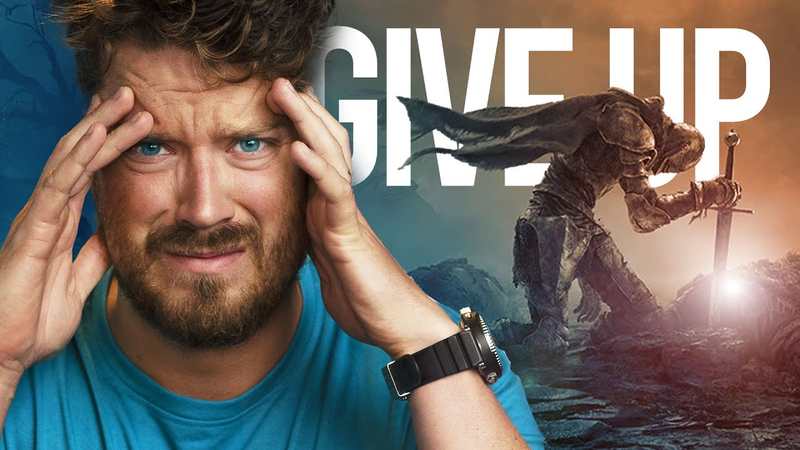
there's this looming question in most of your brains and it's in my brain too even today should i actually continue to pursue making indie games or is this a pipe dream i actually got an email from one of you one of my subscribers uh your name is seth and seth's subject line in the email was i don't know who i am or who i'm supposed to be seth everybody feels this way i even feel this way sometimes now by the end of this video we're going to have seth's question hopefully answered and all of you are going to have a better idea of is making indie games something i should actually pursue is this crazy and how do i approach it now i want to help you guys out as best as i can on your indie game journey so there is a link below for a free 2d game kit there's also a free 3d course below and a free webinar about how to make six figures before you even finish your game i've done this multiple times click those links below they're totally free no gimmicks here they're my treat to you all right let's
read seth's email here basically seth says he used to call himself a storyteller he says that this title acted as a rock for him and he knew he could always conjure up a really great story but recently that rock has begun to shrink what was once a boulder is now a pebble he says his mind feels muddled and distant when it comes to searching for ideas and it's beginning to frustrate him for years now he says i've always wanted to create a game since then he says he's slowly sinking into desire rather than action we're going to talk about that feeling he finishes off with a question he says am i really meant to be a game dev or something simpler like a writer i guess the question i'm trying to ask is what should i do firstly let's address this feeling of what was once a rock in your mind this identity of being a storyteller and it now being a pebble i want to address this well firstly of course what was once a
rock became a pebble when you're younger let's say you know the house you grew up in seemed a lot bigger but when you return to it it's a lot smaller the same is true with our ideas when we're younger we think our ideas are awesome but in reality they're actually pretty small and they're not the best ideas ever and i've actually been struggling with this myself in my next game called father during the production of father i kind of feel sometimes that the story is very very weak that the gameplay is weak and i compare it to my other games and i think those were my glory days and i'm just so slowly burning out and losing my luster but i presented father to my friends and family to publishers and they love the game and they love the story the truth is as we get older we mature okay and that makes things look smaller and smaller and smaller and it's not that our ideas and it's not that our skill is shrinking
it's actually that we're able to see more clearly what our ideas value actually is but let's kind of talk about this whole pebble metaphor in a different way you mentioned that your identity as a storyteller was your rock and now it kind of feels like it's shattered that it's not really there anymore and it's really made you sad it's made you disappointed well this is also true of anything that's your identity you guys have heard me say this before if something is your identity you're going to eventually be disappointed identities are temporary therefore they really shouldn't even be a part of your day-to-day life you shouldn't identify with one thing you really shouldn't be identifying with anything i believe you should identify with things that are eternal i believe in god so i think that should be your only identity but all things on this planet turn to dust so
when you make them your identity you're actually putting your anchor into something that is not going to last and it will disappoint you so instead of you being a storyteller instead of you being a game developer instead of you being an artist or a digital entrepreneur or a youtuber or a gamer those identities those should be passions they should not be identities they should be dare i say hobbies i actually consider this me making youtube videos me making video games i actually consider this a hobby despite the fact that it makes me hundreds of thousands of dollars every year it's still a hobby in my brain because quite frankly just because it makes money doesn't make it any more valuable eternally it's just a hobby it's just a silly game so you need to minimize that rock to the size of a pebble which it sounds like you've done i think you just need to embrace the fact that it is actually just a pebble this identity in storytelling making
games being an artist it doesn't need to be an identity anymore you need to let it go now don't get me wrong i totally know this feeling that's why i'm speaking to it i totally understand how it feels to obsess over something and turn it into i guess i would call it an idol an idol that's manifest and you've put it on your shelf and you worship it you need to toss that idol out you need to just have fun again you need to fall in love again with telling stories now that brings me to my next point here ultimately you're not going to move towards something that you don't love worship is a lot different than love worship can be a perverse form of love and worship can inspire fear and it can inspire regret and it can also force you to sort of stay put and not move towards something but when you actually see something for what it is it's easier to love it
appropriately so my question to you seth is do you actually love making games you don't know whether you want to be a storyteller or a game developer many of you watching this video you don't know whether you want to be a graphic designer or a game developer or maybe a musician or maybe you want to get into sales or engineering if you don't know you really need to figure out what you actually love now we're going to talk about profitability and the whole business side the practical side but knowing what you love is really really important before you even think about making money from something do you actually love making games so here's how we find out we find out what you love by taking a break it's kind of like a really toxic relationship and you just need a break the same is true with your passions or in your case potentially your idols you
need to take a break from them you need to take a sabbatical you need to have lent away from your game away from your stories away from your digital products whatever your passion is distance yourself from it and i had to do this recently i distanced myself from my game father because i was so obsessed that i started to hate it with a passion i was worshiping father this game i was working on and i was at a point where i just wanted it to explode i wanted it to die i wanted to bury it you need to take a break so i would recommend two weeks off minimum don't think about your stories or your games or your passions take a break take a breather come back to that project or that story that you're working on and then reconsider if you actually love it okay which one do you love more
telling stories writing novels or your video game or for those of you watching which one do you love more getting a law degree or making indie games getting an engineering degree or that engineering job you have or making games it's really hard to know what to pursue when you don't know what you love so once you've figured out what you love we now have that answer okay we're going to push that aside now we need to figure out what you're good at okay there's a difference and and specifically when it comes to what you're good at what will make you money so it's a totally different question and a totally different function okay this one's all about business and entrepreneurship so this question the way you find the answer is kind of what you did with hio you make a vertical slice you make a demo and then you release it to the public you release it on each io on social
media to your friends and family but i would highly recommend you do the same with your stories release both a demo or a a sample manuscript for your for your stories or your novels because you're considering being a novelist and then release a small little demo and maybe even pitch it to publishers and see if publishers are willing to fund it now here's the ideal situation what you found out you loved the most if that is connected to which product is also loved the most by your community if those are linked and tied together if they're the same thing you're in for a treat it means that what you love is also profitable and that is a recipe for success and we really need to figure out if that's true now it's okay if it's not true it might be that you're what you love isn't actually profitable but if you find that they're the same you should pursue that now i'll leave you with this seth
i think you might be thinking a little bit too binary and dare i say dramatic about which path to choose they're not paths they're not doors okay you can go through both doors because well they're not doors it's kind of like diving into a river and figuring out you know do you like swimming in that side of the river or this side of the river or maybe you want to swim in the middle okay you don't have to pick either right now the same is true for you guys watching you don't have to pick do i want to be a youtuber or do i want to make games do i want to be a gamer or do i want to be like streaming product reviews or do i want to be a lawyer or an engineer you don't have to figure out exactly which one you want to do i really don't like this mentality and i see people fall fall prey to this all the time and a lot of people say well the older you get you need to figure out what you're going to do and you need to lock in on one thing
sometimes i think that's true but i'm 31 years old now i pay the bills my family's building wealth i have kids and yet i i'm spinning like five six plates at a time i'm running on online school i'm doing youtube videos i'm making indie games i'm working with publishers i'm writing a book i'm making movies i'm doing all this stuff and i don't know which one's the best path and i don't really think of it that way because ultimately back to our original point it's not an identity for me they're hobbies they just happen to make me money and i think you should think about it the same way seth minimize the value minimize the importance of making games or being a storyteller ultimately minimize your career don't over value it and the moment you do that you can actually fall in love again and see it for what it is and see more clearly
the path you should take don't forget guys to download that free 2d game kit below also check out my webinar below on how to make six figures before you finish your game and also my free 3d course below totally free no gimmicks my treat to you guys they're going to help you out a lot links in the description be sure to leave a like subscribe for more indie game dev content and leave a comment about which path you guys want to take do you want to be an indie game developer let me know i'll talk to you guys later cheers
Summary
The question of whether to pursue a career in indie game development often stems from a crisis of identity, where creators feel their passion has diminished or their creative output no longer meets their own high expectations. This struggle frequently manifests as a feeling that one’s creative "rock"—a core identity as a storyteller or developer—has shrunk into a mere pebble. This phenomenon is often a natural byproduct of maturation, where increased experience allows for a more critical, realistic assessment of one’s own work, rather than an actual loss of skill or creative potential.
To navigate this uncertainty, creators should decouple their professional pursuits from their personal identity. Treating game development as a hobby rather than an all-encompassing identity prevents the burnout associated with idolizing one's work. When a project becomes an "idol," it creates fear and pressure that stifle creativity. Taking a sabbatical from development allows for the necessary distance to determine if the passion for the craft remains genuine. If the desire to create persists after a break, the next step is to test the market viability of one's ideas through practical experimentation, such as releasing vertical slices or manuscript samples to gauge audience interest and potential profitability.
Ultimately, the choice between creative paths, such as writing versus game development, is rarely a binary decision. Successful creators often manage multiple professional interests simultaneously, viewing them as complementary activities rather than mutually exclusive career paths. By minimizing the existential weight placed on a single career choice, individuals can maintain a healthier perspective, allowing them to pursue multiple interests effectively while avoiding the stagnation that comes from rigid, singular professional identities.









Comments