PC reports and market data
Documents
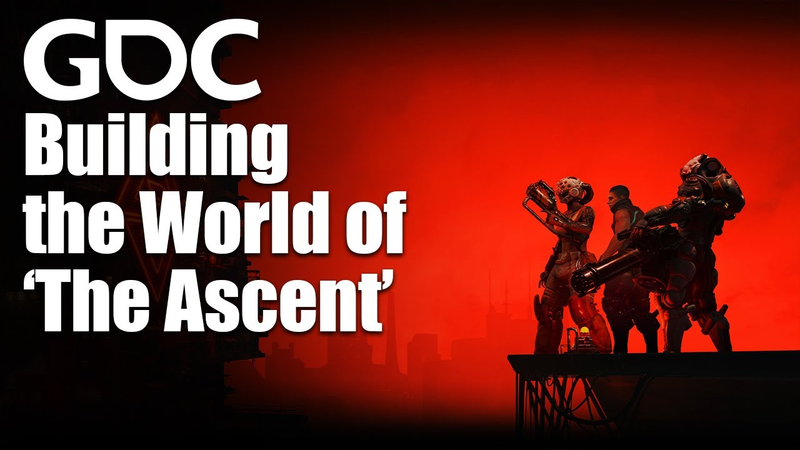
Building the World of 'The Ascent'
The development of the cyberpunk action game The Ascent demonstrates how a small team can achieve high-fidelity world-building through a strictly constrained, tech-driven production pipeline.
- The development team managed over 8,000 individual assets by utilizing a modular construction pipeline that prioritized shared texture sheets and trim sheets over traditional high-to-low poly workflows.
- Strict adherence to a three-color palette and the use of vertex colors combined with light-baked ambient occlusion kept total texture memory usage under 100MB.
- Procedural tools built in Houdini were essential for generating architectural elements like rooms and pipes, allowing a small team to populate a sprawling environment efficiently.
Micro Postmortems: 'Sky', 'Blaseball', and 'Space Warlord Organ Trading Simulator'
Modern game development increasingly relies on community-driven narratives and collaborative, sustainable production models to achieve both critical success and long-term player engagement.
- Game development is shifting from auteur-driven models to a 'constellation approach,' which prioritizes team health, fair compensation, and flexible collaboration to produce projects reflecting collective rather than singular visions.
- Titles like 'Blaseball' demonstrate that treating simulation outputs as definitive narrative truths allows developers to foster a living, evolving world driven by player influence.
- In collaborative production environments, selecting partners based on empathy and shared creative perspectives is more critical to long-term success than prioritizing raw technical skill.
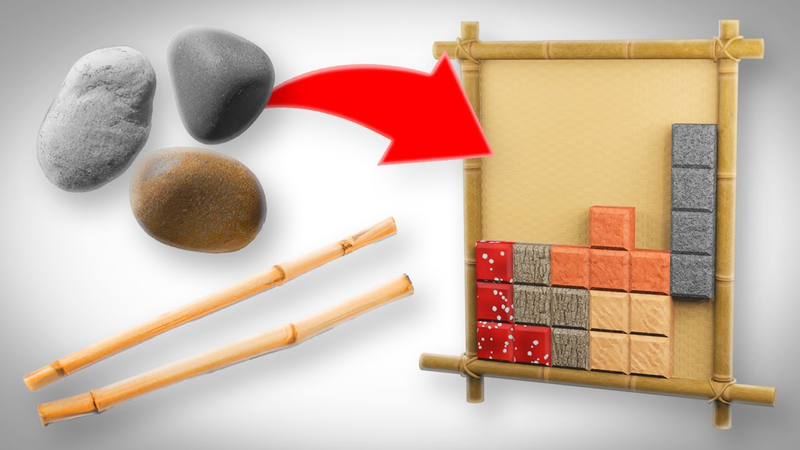
Game Developers Touch Grass For The First Time
This project explores the creative potential of game design outside of traditional digital environments by challenging two professional game developers to create functional games using only natural materials found in a forest.
- Physical constraints and natural materials can serve as a catalyst for innovation, forcing developers to abandon habitual digital design patterns.
- The project successfully developed four distinct prototypes using only forest materials, ranging from simple skill-based tests to complex strategy games.
- Integrating 'satellite mechanics'—such as teleportation and destruction tiles—into a physical bridge-building game created a depth of strategy that the developers found difficult to conceive within standard digital workflows.
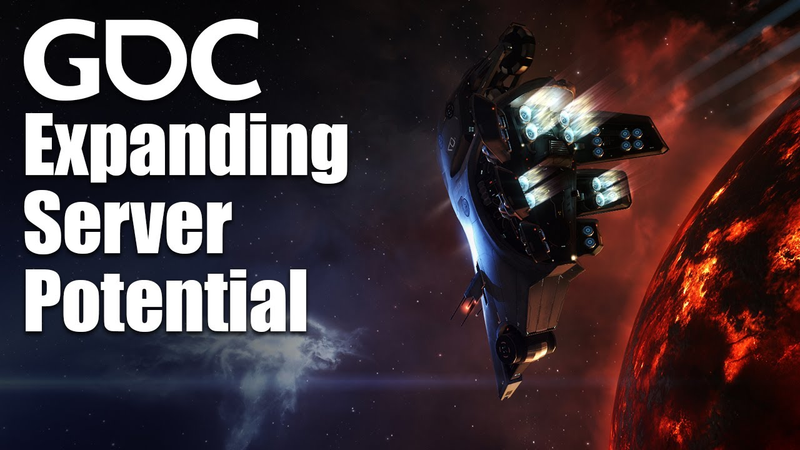
Quasar, Brightest in the Galaxy: Expanding 'EVE Online's' Server Potential with gRPC
EVE Online is undergoing a fundamental architectural transformation to ensure the long-term viability of its twenty-year-old single-shard MMO environment.
- CCP Games transitioned EVE Online's architecture to a domain-service model using gRPC, Kubernetes, and Go to move away from a 20-year-old monolithic codebase that had become difficult to scale and maintain.
- The adoption of gRPC and Protocol Buffers allowed CCP to offload serialization tasks from Python to C++, resulting in an average performance increase of 60 milliseconds in messaging latency.
- By shifting to domain-specific services rather than a single monolithic database, CCP decoupled data ownership, allowing teams to manage specific domains like user, skill, or market data independently.
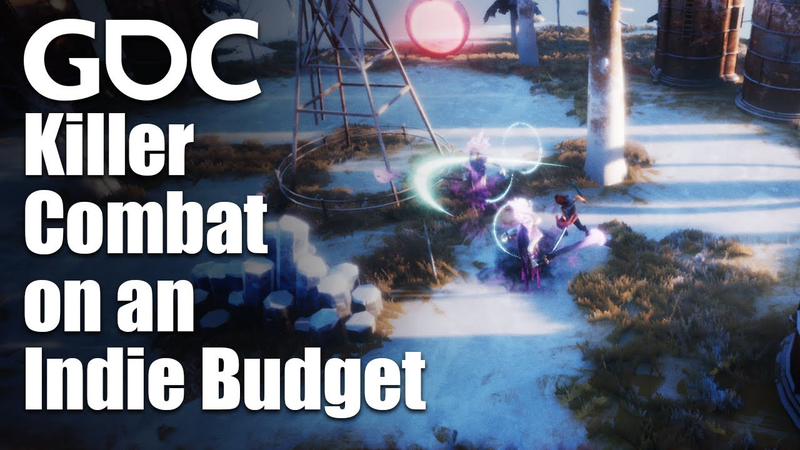
Dreamscaper: Killer Combat on an Indie Budget
Developing a high-quality combat system within the constraints of an indie budget requires a disciplined focus on core design pillars and iterative refinement.
- Define core design pillars early—such as 'purposeful action' and 'tough but fair'—to guide development and ensure combat systems remain focused on player strategy rather than RNG.
- Invest in hit reactions and state machines to add depth without increasing player complexity, as these provide critical feedback that makes combat feel responsive and interactive.
- Implement a 'hit stop' system that freezes the attacker and target for approximately 115 milliseconds (7 frames) upon impact to create a visceral, satisfying sense of weight in combat.
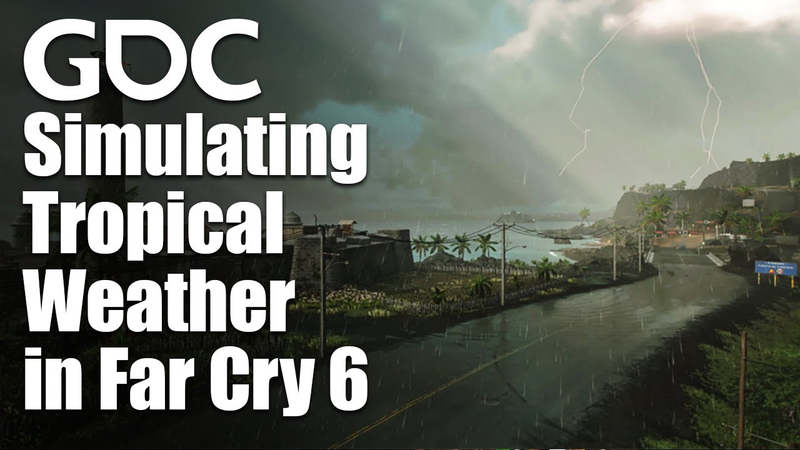
Simulating Tropical Weather in 'Far Cry 6'
The simulation of dynamic tropical weather in Far Cry 6 relies on a centralized Weather Manager that orchestrates transitions, lighting, and atmospheric effects through artist-designed presets and regional curves.
- The Far Cry 6 weather system utilizes a centralized 'weather manager' backend and a 'weather database' frontend, allowing developers to drive visuals, audio, and gameplay through unified parameters like wetness and rain factors.
- To implement wetness across diverse assets without disrupting artist pipelines, the team used a unified porosity-based formula that generated maps for existing PBR shaders, ensuring consistent material behavior without requiring manual asset updates.
- The team managed global illumination by fading out indirect lighting during high cloud coverage, while using a voxel-based system that packs 13 frames of data—11 for time-of-day increments, one for local lights, and one for sky occlusion.

Structure of Networked Action Games | Saturday School #3
The presentation outlines the fundamental architecture required for building responsive, deterministic networked action games.
- Treat game logic as a deterministic simulation function where the current state and player input produce a new state, ensuring consistency by decoupling the simulation loop from the rendering loop.
- Implement a fixed-tick system for physics calculations instead of variable frame rates to maintain a synchronized frame of reference across all clients and the server.
- Use integer-based ticks for state updates to prevent the synchronization discrepancies and floating-point errors common in network-based physics simulations.

How I Recovered From Quitting My Game ($50,000 Spent)
The development of an indie game titled Father, a horror-themed first-person shooter, serves as a case study for the psychological and professional challenges inherent in independent game production.
- A developer abandoned a $50,000, six-month indie horror project due to personal insecurity and imposter syndrome after an initial publisher rejection.
- The developer's attempt to pivot to a 'marketable' project failed to resolve creative dissatisfaction, proving that chasing perceived market trends is not a substitute for authentic creative vision.
- Revisiting the original project after a period of detachment allowed the developer to objectively validate the game's core value and potential.
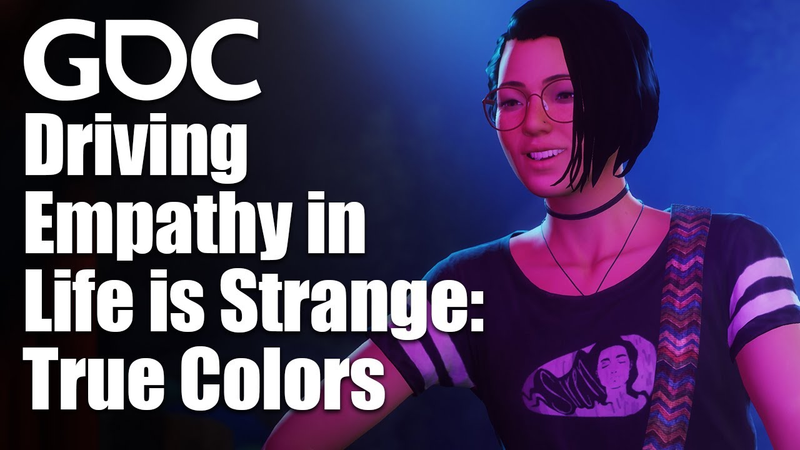
Ghost in the Empathy Machine: Exploring Player-Character Connection in Life is Strange: True Colors
Narrative storytelling has evolved from ancient oral traditions into a sophisticated medium for exploring human interiority, with modern video games serving as the latest frontier for fostering deep emotional resonance.
- The narrative arc of interactive media is shifting toward interiority and empathy, moving from passive observation to active participation in a character's emotional state.
- In 'Life is Strange: True Colors,' developers maintained player connection to the protagonist, Alex, by capping NPC empathy insights with a brief, reflexive thought from Alex to realign the player's perspective.
- The 'junkyard smash' scene in 'Life is Strange: Before the Storm' demonstrated that player-character alignment does not always require lockstep control; allowing the character to act out of character can deepen the player's connection to their internal struggle.

The Dark Side Of Game Development
The pursuit of a full-time career in independent game development often leads to a cycle of psychological distress, characterized by five specific mutations that erode an individual’s well-being and creative passion.
- Independent developers often suffer from identity collapse, where their sense of self becomes dangerously tethered to professional output and commercial success.
- The 'maturation paradox' occurs when rapid skill growth leads developers to perpetually scrap and iterate on previous work, preventing the completion of finished products.
- The 'numbers trap' forces a shift from creative passion to business-centric survival, which frequently transforms independent development into a source of isolation and frustration.
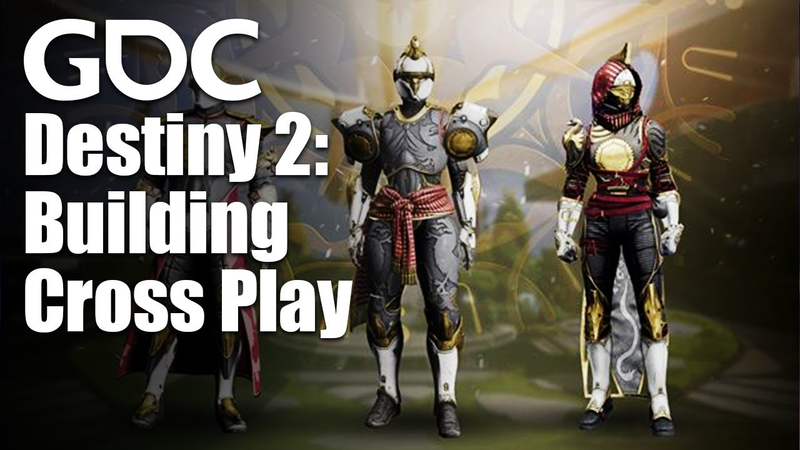
Bringing Players Together: Building Cross Play for 'Destiny 2'
The implementation of cross-play for Destiny 2 represents a strategic shift toward unifying a fragmented player base across seven distinct hardware platforms.
- Bungie transitioned from platform-specific social systems to a unified 'Bungie Name' identity system to ensure players remained recognizable when moving between seven different platforms.
- The development of Cross Play for Destiny 2 took approximately one year, moving from initial planning in summer 2020 to a full public release in August 2021 during the 'Season of the Lost'.
- To maintain competitive integrity, Bungie implemented two distinct matchmaking pools: a console pool (Xbox, PlayStation, Stadia) and a PC pool (Steam, Microsoft PC Store), preventing PC players from entering the console-only matchmaking environment.

5 Steps To Gorgeous Game Art
Achieving high-quality game aesthetics is a strategic endeavor that relies on fundamental design principles rather than raw artistic talent.
- High-quality game aesthetics are achieved through strategic design principles rather than raw artistic talent, allowing indie developers to prioritize intentionality over high-fidelity assets.
- Using established color harmonies—such as complementary, triadic, or analogous schemes—creates visual appeal that is naturally processed by the human eye.
- Scenes should be constructed as coherent compositions of basic shapes like squares, circles, and triangles before any complex details are added.