PC reports and market data
Documents
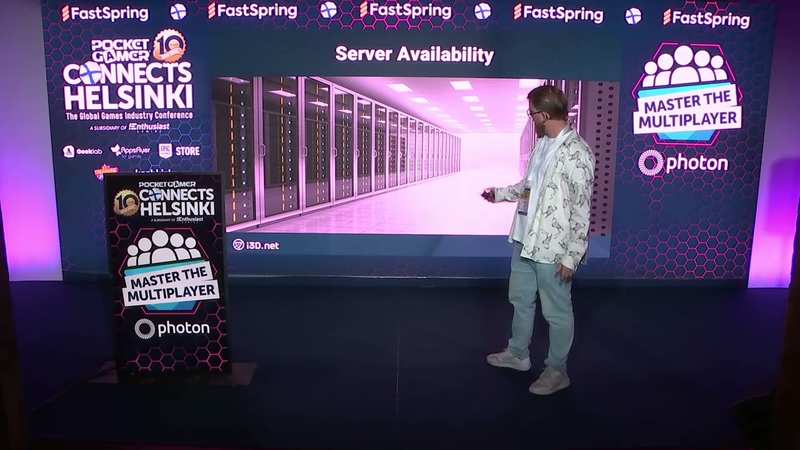
Session: No More BS: Demystifying Game Hosting Beyond Marketing Speak - Lucas Tak, i3D.net
Effective multiplayer game hosting requires balancing high-quality player experiences with strict cost management.
- To minimize latency, game servers must be physically located near the player base to overcome the speed-of-light limitations inherent in data transmission.
- A hybrid hosting strategy is the most effective approach, combining the rapid scalability of cloud computing for fluctuating player counts with the cost-efficient, high-performance nature of bare metal servers for steady-state traffic.
- Direct peering agreements with local internet service providers are essential to bypass inefficient public routing, which reduces both latency and unnecessary bandwidth costs.
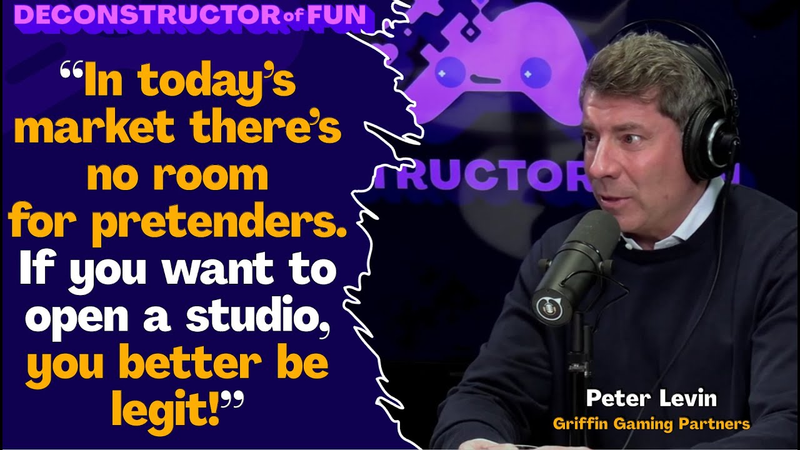
Peter Levin on Transmedia Trends, the Future of Global Gaming and Finland’s Gaming Legacy
The global gaming industry has transitioned from a niche hobby into the apex predator of the entertainment landscape, fundamentally altering how intellectual property is developed and consumed.
- Gaming has evolved into the primary entertainment medium, necessitating that legacy media companies treat it as a core business unit rather than a secondary licensing revenue stream.
- Successful transmedia adaptations require authentic creative leadership that prioritizes the player experience and deep integration over superficial brand licensing.
- The Finnish gaming ecosystem serves as a global model for success, characterized by a data-driven approach to mobile development and a disciplined, global-first entrepreneurial mindset.

Saying NO to Millions revenues?! Balatro: Power combo of Poker & Solitaire.
Balatro stands as a premier example of high-concept game design, successfully blending poker mechanics with roguelike deck-building elements to create a deeply addictive experience.
- Balatro, a premium poker-themed roguelike, has demonstrated strong engagement with daily active users (DAU) growing from 25,000 to 100,000 between its launch and October 14th.
- The game exhibits high retention metrics, with an average session duration of 12 minutes and seven sessions per day, totaling approximately 90 minutes of daily gameplay per user.
- If Balatro were converted to a free-to-play model with standard ad monetization, it could potentially generate approximately $350,000 per month in revenue based on its current user base.

Escape From Hadrian's Wall with Jim Gray | 356
The modern landscape of virtual reality development is defined by a transition from high-budget, tethered corporate projects toward agile, independent production models.
- The VR industry is shifting from high-budget, tethered corporate projects toward agile, independent production models focused on standalone hardware.
- Developers are increasingly abandoning proprietary engines in favor of Unreal Engine to improve efficiency for gameplay-focused titles.
- Commercial viability for independent studios now relies on iterative development cycles that incorporate community feedback early in the process, rather than the traditional AAA singular launch model.
How He Made $3,000,000 From His Indie Game — Full Time Game Dev Podcast Ep. 020
The indie game industry offers significant financial potential for developers who prioritize unique creative visions and sustainable production models.
- Early Access is a viable strategy for long-term development, as evidenced by Lens Island growing to ten times its initial scope during a three-year Early Access period.
- Steam treats an Early Access launch and a 1.0 full release as two distinct opportunities for store visibility, providing developers with two separate chances to gain traction and exposure.
- The conversion rate of wishlists decreases over time, meaning a large pool of wishlists accumulated over several years may be less effective than a smaller, more recent pool generated during a Steam Next Fest.
How To Avoid Game Dev Burnout
The primary challenge of indie game development is the inherent unpredictability of the creative process, which often leads developers to prioritize extreme work hours over physical and mental health.
- Chronic, high-stress game development habits—such as skipping meals, sleep deprivation, and prioritizing work hours over health—can lead to severe physical consequences, including life-threatening cardiac events like arrhythmia and heart failure.
- Sustainable game development requires treating physical health, including consistent exercise and proper nutrition, as a non-negotiable priority rather than an optional activity to be sacrificed during crunch periods.
- Game development is inherently stressful because it involves building complex products without a blueprint, leading to constant uncertainty regarding development timelines, technical feasibility, and the ultimate quality of the game.

Making of Thronefall: Final Devlog
The development of the medieval base defense game Thronefall concluded with the release of version 1.0 on Steam and the Nintendo Switch, marking the end of a three-year production cycle.
- Thronefall evolved from a failed turn-based card game prototype into a successful action-oriented strategy title over a three-year development cycle by a two-person team.
- The tower upgrade system was significantly expanded during development, growing from four initial variations to sixteen distinct options.
- The team utilized asset-bashing techniques and iterative level design inspired by historical ruins to maintain a rapid production pace.
How To Make Indie Games Full Time (Before Finishing Your Game)
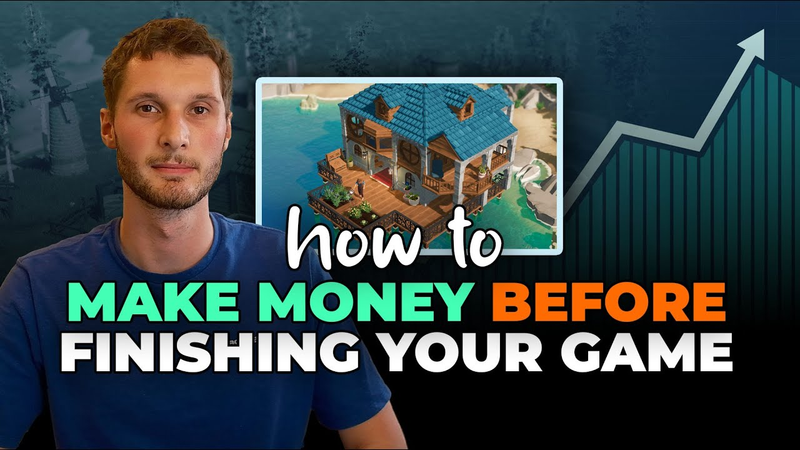
Transitioning to a full-time career in independent game development requires a strategic, multi-stage approach to funding that often necessitates personal financial sacrifice and diversified income streams.
- Julian Ball funded the development of Lens Island through a combination of personal savings, a pre-existing YouTube channel, and a $60,000 Kickstarter campaign.
- Lens Island has achieved significant commercial success, selling approximately 200,000 copies and generating roughly $3 million in gross revenue over three to four years.
- The studio's financial requirements scaled significantly over time, moving from a lean operation supported by personal savings to a peak burn rate of $100,000 per month.
Is It Too Late To Make Indie Games?
The indie game industry is not in a state of decline, but rather experiencing a shift in how success is defined and achieved.
- The indie game market is not struggling; rather, the industry's challenges are concentrated within AAA studios and publishers that prioritize risk-averse, uninspired 'solid' games over unique, innovative experiences.
- Indie developers possess a competitive advantage because they are not constrained by corporate structures or shareholder demands, allowing them to take the creative risks necessary to build games with strong, unique hooks.
- Large-scale publishers often impose corporate oversight that can water down an indie developer's original vision, potentially making the final product less competitive in a crowded market of 30,000 annual Steam releases.
4 CRITICAL LESSONS I've Learned (After 10 Years Of Making Indie Games)
Drawing from over a decade of experience in the indie game industry, this analysis outlines four essential strategies for developers aiming to achieve professional success and financial sustainability.
- Prioritize the validation of the first 15 minutes of gameplay to ensure a high-quality experience that elicits a positive emotional response before committing further development resources.
- Scale game development exclusively by expanding upon the validated core segment rather than building out unproven concepts, which prevents the dilution of overall quality.
- Focus narrative and linear game development on the 'bookends' by front-loading rewards to hook players and ensuring a high-value, satisfying conclusion to maintain engagement through potential mid-game grinds.

TWIG #302 Epic Legal Showdowns, Ubisoft Woes, and MMO Thrills
The global video game industry is currently navigating a period of significant structural volatility, characterized by shifting consumer ownership rights, evolving hardware paradigms, and the struggle to balance profitability with creative output.
- Western AAA publishers are struggling to replicate the dual-skew mobile and PC development models mastered by Eastern firms like HoYoverse, whose title Genshin Impact has generated over $4 billion in mobile revenue.
- The industry is shifting from aggressive expansion to cautious portfolio management as developers face audience cannibalization and the rising costs of maintaining high-fidelity gaming experiences.
- Major publishers are increasingly leveraging artificial intelligence to reduce headcounts and bolster profit margins, contributing to a period of structural volatility and internal instability at firms like Ubisoft.
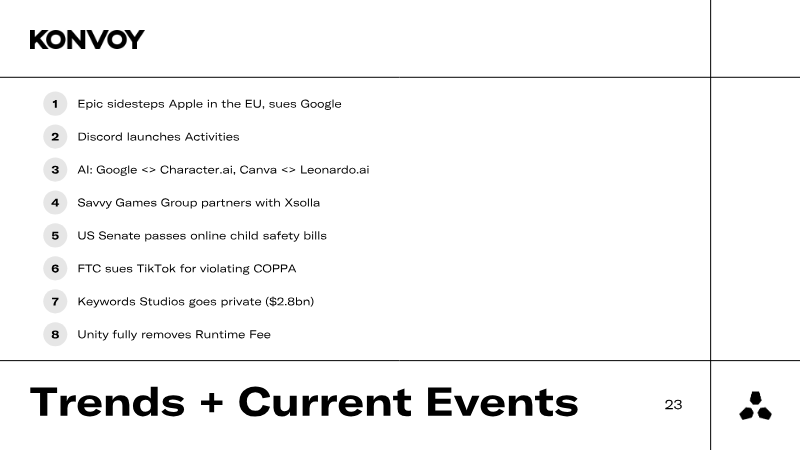
Gaming Industry Report: Q3 2024
The global gaming industry is currently navigating a period of stabilization and strategic recalibration, with the total market size projected to reach $188 billion in 2024.
- The gaming market size in 2024 is $188 billion, showing a 2.1% year-over-year growth. Asia-Pacific accounts for the largest share of gamers with 1,809 million (53%), followed by Europe with 454 million (13%).
- Venture funding in Q3 2024 reached $517 million across 92 deals, marking a 1% increase in funding quarter-over-quarter but a 14% decrease in the number of deals. Total private market funding for 2024 is $3,739 million, with a 15% QoQ increase in Q3.
- Public market gaming ETFs are significantly outperforming the S&P 500, with leading ETFs up 22-36% year-to-date compared to the S&P 500's 21%.