PC reports and market data
Documents
Jonas Tyroller: Making Games Alone Again, Project Overload, Profitable Game Ideas | Ep. #043
Solo game development requires a disciplined approach to project management, where the limited number of major releases in a career necessitates rigorous commercial validation before long-term commitments.
- To achieve full-time indie success, developers must prioritize efficiency and validate ideas rigorously before committing years of development, as the ROI on long-term projects is often not guaranteed.
- Working with a team can be more cost-effective than working solo; sharing royalties is a secondary concern compared to the necessity of partnering with people who improve the project's quality and output.
- Game performance can be significantly optimized by using scripts to merge individual meshes into single objects at runtime, which reduces draw calls and improves frame rates.
If You Want To Make Games Alone... WATCH THIS
The decision to pursue solo game development versus team-based collaboration centers on the trade-off between creative autonomy and the increased probability of commercial success.
- The primary goal of team composition should be 'talent density,' where you only bring in partners who can perform specific tasks better than you to improve the overall quality of the final product.
- Revenue sharing with partners or publishers is largely irrelevant to financial viability because game success follows an exponential distribution, meaning you are either far above or far below your break-even point regardless of a 50% split.
- Partnering with others increases the likelihood of a project's success, often providing a greater net benefit than the cost of splitting royalties.
Daniel Mullins: Making Games Alone (ish), Burning Through Savings & Failing Upwards | Ep. #042
The trajectory of independent game development is defined by a strategic blend of creative intuition, financial pragmatism, and iterative learning.
- Daniel Mullins attributes much of his early career success to luck, including an unsolicited $5,000 contract for a children's math game he received at age 18 after a stranger discovered his early work online.
- To ensure high streamability, Mullins designs games around 'whoa' moments—unexpected shifts in gameplay similar to those in Bioshock or Portal—which provide streamers with natural opportunities to display reactive personality.
- When working with publishers, developers should be wary of 'greenlight' deals where the publisher takes a revenue percentage without providing significant value-add services or marketing support.
Sorry Gamecraft, You Got It WRONG
The central debate concerns whether the mobile game industry’s genre stagnation is a result of platform-enforced distribution duopolies or inherent consumer preferences.
- The mobile game industry's genre stagnation is driven by a whale-centric economy where a tiny fraction of users generates the vast majority of revenue, rather than by platform-enforced distribution duopolies.
- Developers are economically incentivized to prioritize high-monetization genres like 4X, casino, puzzle, and RPG because these formats align with the spending habits of high-value players.
- The current market operates on a performance marketing model where user acquisition costs are bid up to match the lifetime value of whales, creating a cycle that discourages innovative content.
GTA6 Gets Delayed (Good!), Xbox Hikes Prices & Polygon / Giant Bomb RIP | Games For Breakfast
The gaming industry is currently navigating a period of significant structural and cultural transition, marked by shifting economic models and evolving standards for developer welfare.
- Grand Theft Auto 6 has been delayed until 2026, a move intended to prioritize product quality and reduce reliance on harmful crunch culture.
- Microsoft is increasing prices for Xbox hardware and major software titles as part of a strategic shift toward service-based revenue models like Game Pass.
- The gaming media landscape is facing a sustainability crisis, evidenced by the decline of independent outlets such as Polygon and Giant Bomb.

Dear Creatives, I Bet You Can Relate. Let's fix it!
The primary challenge for independent game developers and creative professionals is the tendency to juggle an excessive number of projects, leading to paralysis and a lack of focus.
- Optimize creative output by adopting a rigid project hierarchy consisting of one main project, one side project, and multiple low-priority learning or tool-development tasks.
- Evaluate project viability using the Ikigai framework, which requires the intersection of personal passion, existing skills, market demand, and financial sustainability.
- Mitigate the sunk cost fallacy and shiny object syndrome by treating every project as a calculated bet with a defined exit strategy and estimated return on investment.
Game Dev Mistakes Nobody Is Talking About
The discussion between indie developers Matt Dabrowski and Thomas Brush identifies critical pitfalls that often hinder the success of independent game studios.
- Prioritize a strong, immediate 'hook' that captures player interest within the first five seconds of a trailer to remain competitive in a saturated market.
- Avoid rigid, formal Game Design Documents in favor of flexible, living documents that evolve alongside the project's development.
- Allocate significant development time to essential but often underestimated tasks such as UI design, controller remapping, and platform-specific integrations like Steam.

Cross-Border Publishing: Lessons From Netease’s Once Human
The global expansion of Chinese game development is exemplified by the strategic launch of the survival title Once Human.
- NetEase achieved a peak of over 200,000 concurrent users for 'Once Human' by prioritizing a PC-first launch before expanding into a cross-platform mobile version.
- The studio opted for global self-publishing to maintain direct control over player relationships, brand messaging, and the ability to iterate rapidly based on community feedback.
- Monetization for the Western market was intentionally restrained, focusing on cosmetic items and engagement-driven systems rather than the more aggressive models often seen in mobile-first markets.


The State of Video Gaming in 2026
The global video game industry is currently navigating a period of significant contraction and structural realignment following a decade of rapid expansion between 2011 and 2021.
- The video game industry is in a period of contraction, with real-term spending on content declining by approximately 12% since 2021.
- AAA production budgets have ballooned to between $200 million and $500 million, contributing to a capital-constrained environment marked by record-high layoffs and studio closures.
- A small cohort of entrenched live-service titles now dominates the market, acting as 'black holes' that consume the majority of player time and spending, making new independent launches increasingly difficult.
How UGC Is Extending the Lifespan of Games with Uri Marchand, CEO of Overwolf
User-generated content (UGC) has transitioned from a niche hobbyist pursuit into a professionalized, essential component of the modern gaming industry.
- UGC has evolved into a professionalized, essential live-operations engine that allows developers to outsource content production and significantly extend the lifecycle of AAA titles.
- Standardized revenue-share models successfully incentivized the ecosystem, resulting in $240 million being distributed to independent creators in the previous year.
- The integration of AI is expected to further democratize game development by lowering technical barriers and increasing the efficiency of complex asset creation.
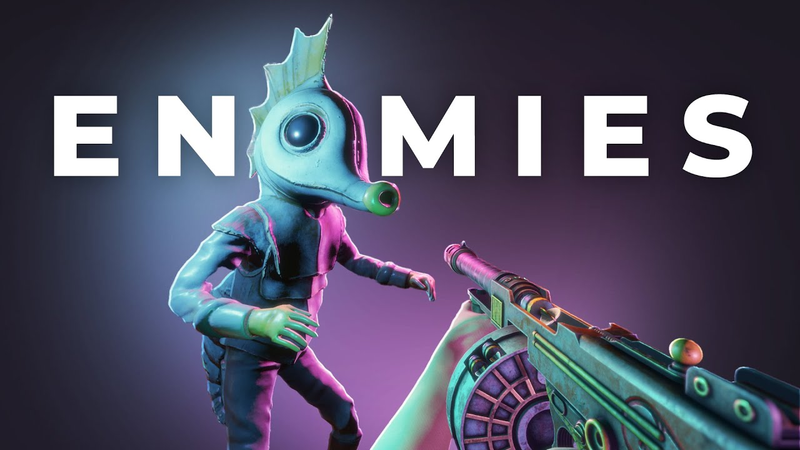
Adding Enemies That Are ACTUALLY FUN To My Indie Game (Devlog)
The primary objective of this development process is to create a unique, engaging enemy for an indie game by leveraging existing code structures rather than building from scratch.
- Efficiency in game development is maximized by using parent prefabs and modular logic to repurpose existing attack patterns and behaviors for new enemies.
- New enemy functionality can be created by swapping visual assets and animation controllers on established base code rather than building systems from scratch.
- Gameplay balance is achieved by implementing specific delay mechanisms that provide players with a fair reaction window to retreat from incoming attacks.

Kingdom Come: Deliverance 2 director hopes “AI revolution” will allow him to make games faster
The creative director and co-founder of Warhorse Studios, Daniel Vávra, discusses the successful launch of Kingdom Come: Deliverance 2, which achieved 2 million units sold within its first two weeks.
- Kingdom Come: Deliverance 2 sold 2 million units within its first two weeks, meeting internal projections based on pre-order data.
- Warhorse Studios scaled its team to 250 employees over a six-year development cycle that included navigating the COVID-19 pandemic.
- The studio attributes its commercial success to maintaining creative autonomy under Embracer Group, avoiding the trend-focused 'corporate product' model common in modern AAA development.