VideoDeconstructor of Fun
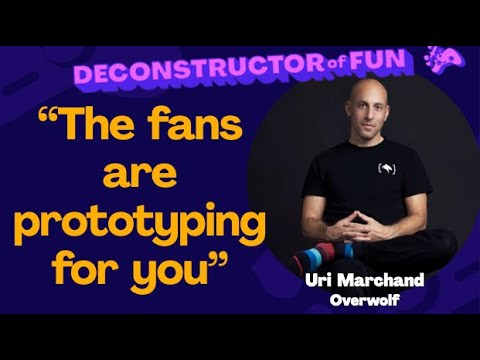
How UGC Is Extending the Lifespan of Games with Uri Marchand, CEO of Overwolf
28 Apr 202555 min video
Transcript
[Music] Uri Marshand, welcome to the podcast. Thank you. Thank you for having me. Welcome back. I would say you've been here before. Indeed. I have been here uh with the wonderful Lee uh some time ago after we done the Tavix acquisition. That was that was a fun uh episode. Yeah. And you're still in the same place with the wooden background. So I brought my wooden background just to uh just to counter it. Uh balanced. Thank you. Yeah, just exactly. So, talking about playfields, Overwolf sits at the intersection of UGC, modding, and gaming ecosystem, right? What is Overwolf? Overwolf is the guild for in-game creators. The way we think about what we do is we're building a new profession. That's why the guild part. And with this new profession, we're helping people creating mods or apps or private servers or any UGC around games. We're helping them make a living from their passion of
building content around games. So, if Unity or Unreal are engines that help you build games, we're like an engine that helps you with the tech tools to build the mods, the live ops to manage them and distribute them, but also the monetization tool to allow you, if you want to do that, to make a passion from your make a living from your passion, I would say. So, yeah, this is what we do. This is what we're about. Nice. And I mean it is I'm saying nice, but the thing is like I remember like back in the days when there was a game called Command and Conquer the first version, I was modding it. I was I remember putting in like dinosaurs in it and replacing some of the troops with that. So modding has existed for a long time, but you made it into a platform and for the kids that I used to be to be able to make a living out of that. Correct. And and you're right, modding has existed since uh gaming started pretty much. Uh, I think mostly because people who back then had PCs that were kind of the first gaming devices pretty much were also techsavvy and they wanted to kind of play around with things, make it their own, um, understand how these games
work, which resulted in additional content. And then we came to the generation of folks creating map editors. And I just talked with Paul Sams the other day and he mentioned how much Blizzard had invested in these map editors and how much they contributed to the longevity and the ongoing engagement with their titles. Um, and today I think game studios, publishers, they invest more and more in making this not only, hey, here's a map editor for you to create something within our game, but also here's a way for you to make money out of that. And uh a whole ecosystem is formed around both mods and other forms of UGC web stores. You've seen what good looks like, but have you seen great? App charge is the direct to consumer platform backed by the likes of Supercell and built by monization pros from Moonactive, Platika, Huge Games, and others. People who know the difference. App charge powers over half a billion dollars in transaction a year
for top studios, optimizing every detail. Deeply personalized web store offers, custommade design, industryleading monetization features, in-game payments SDK, and more. 70% of top grossing games already have a web store, but the ones scaling fastest, they're doing it with app charge. Learn more at appcharge.com. Yeah. And some of the biggest games are of course derived from mods. Whether we're talking about TFTs or, you know, League of Legends or or in the sense PUBG, all are kind of iterated from mods. Yeah, it's it's really expensive to come up with uh new core loops, right? And uh mods are the the perfect uh like trial ground for new game designs or new game loops and all those things. And when you see that something sticks with a mod, now you have an option as a an entrepreneur or a game developer to say, "All right, those guys
have definitely figured out something. I can now take it, polish it, make it better." And I think this is what we've seen obviously in the case of uh Arma. Um and then the evolution from Arma all the way to Fortnite through PUBG, etc. And and talking about these big publishers, you know, the the Fortnite or Epics and um Craft Dens and other ones like some major publishers are embracing UGC and there are others that are resisting it. Like where do you see the industry heading in terms of modding? I think more and more publishers, including ones that have resisted in the past, are embracing. Um, a very cool example from this week, uh, just a couple days ago, we've announced a partnership with Warner Brothers for Hogwarts Legacy. And, you know, you would think that with one of the biggest IPs in the world, Harry Potter, it's going to be extremely complicated for a company like Warner Brothers to say, "Hey, we actually want to do modding." Um, and it, you know, it was a long conversation and they had to kind of feel comfortable with our ability to provide for them a safe uh, solution
that is perfect in terms of quality for their players, but also has the appropriate guard rails for people not starting to work on content that um, you know, uh, the IP owners would not appreciate. Um, and so once we've crossed this chasm of providing them the comfort, you know, here we are. We just made the announcement. We're going live today and let's see what the future holds. But we're very optimistic. So I do see a shift towards thinking about this in a much more embracing manner if that makes sense. What's the reason for company like one or a game like Hogwarts Legacy that was you know top selling game of 24 or was it 23? Either 23. Yeah. years go fast. So, so what do you think? I mean, you know it, but what's the reason for them to embrace modding and especially what a year and a half after the launch of the game? So, I think the the core reason is wanting to provide to provide
more content to their fans and players. Um, and I think this is pretty much fundamentally true across the entire kind of realm of folks that want to integrate UGC. Uh, at the end of the day, it's very difficult to create content inhouse. It's very expensive to create content inhouse. But if you provide the right tools for thirdparty developers, it has been proven across many titles that they will create content. Even if you don't provide the tools, like in the case of Minecraft and how that evolved on the Java ecosystem, they would still find a way to create content that would make the game what it is today. I mean, you know, Rockstar released uh GTA 5 ages ago and the game still sells magically, you know, millions of units and, you know, that's I think as a result of it being so popular at Twitch because of the 5M ecosystem, which is again UGC, GTA 5 roleplay. And so I think fundamentally for Warner Brothers, that was like the main thing. and and then obviously the expectation is to increase their concurrent players. Um and so when they
want to release additional titles potentially in the future, they have a more engaged audience uh that is reactivated against a game that they might have played a year ago. They've stopped playing, but holy now there's additional content. Why not? I want to check it out. So I think this is fundamentally how these folks are think about that. So it's the uh the longevity thinking. It's somebody doing live ops while you're not doing the live ops in between. the the releases that that on AAA can you know be a fiveyear pause in between the next Hogwarts or I don't know pretty much so like you know when when a game like this releases uh you know it could drive 50 60 70 100 200 hours for the hardcore fans but at some point you know there's not much for me to do in the game and instead of the studio being dependent on their own internal resources to kind of make this content machine work obviously they can deleg ate that to their fans and their fans can sometimes come up with ideas that otherwise would never have existed
like in those you know new uh mods that have transitioned to major genres examples that we had. Uh but sometimes it's just you know a new creative angle that speaks with a very small cohort um that is now really excited about the narrative and they continue to play. Um and because you don't have kind of almost any cost in producing that apart from obviously the preparation the live ops which we're helping them with you know they they have almost only to gain and so fans are prototyping for you and testing it for you. What is the reason that the companies would not embrace this type of approach? I think traditionally um there were concerns around um hey it's my game people create stuff around my game how am I going to be able to benefit from that it's my game it's my IP there was a lot of that that we've heard um I think that with time people understood that if people are creating
content for your game and then to use this content people actually need to purchase your game then here's your business there's a good reason for why people continuously buy GTA V, good reason for why people still buy Skyrim and I think a lot of that is related to UGC. So I think this is one um I'd say main reason for why people avoided that in the past. Second thing is just the complexity um running this as a live ops service doing curation and moderation for the content. Uh you know general councils in big companies are pretty paranoid and they're paid to be paranoid and they're not necessarily going to get their yearly bonus if uh the you know the concurrency is going to increase because of UGC. However, they are going to get fired if someone's going to submit a piece of content that is owned by Disney and then they're going to get a lawsuit, for example. Um, and we're here to solve all these needs. So we would a make sure that the content is
appropriate and b we have the kind of the safety mechanisms uh in the process of moderation and curation um you know to make sure that if indeed something kind of is released that is inappropriate we'll take it down immediately and if we need to um defend ourselves we will provide the studios with full like inification and like all all basically a full insurance uh suite for their UGC ops which I think the general councils would appreciate. So I think it's a mix of the two. Uh one is hey just stay away from my game. It's my game. That's that's like one and then second the complexity of running a live ops UGC business. Uh yeah I understand it. It's a it's a little bit of a like a defensive thinking rather than it's kind of weird because you have these great examples even coming in from you know companies like Blizzard and Riot uh finding success now Warner Brothers and then some other companies still uh being afraid of the negative rather than
embracing the positive given the long cycles of the releases. Interesting. Yeah. I mean being a friend of negative also touches on the fact that um you know 5 years ago, six years ago, seven years ago there wasn't a good third party solution that helps you with mitigating all these needs. Uh right now there are solutions you know we have our solution there are other solutions out there in the market and so um you know you could even go and and work with Steam Workshop even though that does not provide you with uh crossplatform support or it does not provide you with uh some of the guardrails that we have in place. You know, I think one of the reasons why um Skyrim mod monetization failed about a decade ago is uh how um kind of the the the whole sort of policy around how that went around and uh attribution rights and you we can we can dive deeper but I think um now compared to the situation you know five six seven years ago there are
a lot more solutions that can make your life easier should you want to go and explore this route. Game devs, we know that great gameplay is what players love, but integrating metagame features like challenges, progression, rewards is crucial for retention and monetization. However, coding them is a tedious and timeconuming process. That's why top studios have turned to Hero. Hero provides a complete suite of battle tested metagame features that are quick to implement, letting you spend more time on the core gameplay experience. Ready to ship fully featured, engaging games? Check out Hero today by clicking the link below. Well, talking about different solutions or especially talking about especially UGC, uh what do you think about platforms like Roblox and Fortnite Creative? Uh what is their impact on modding? I think it's a it's it's a really good question, but I think that um they legitimize modding in a lot of ways. uh you know when Roblox started it took
them a long time to get to the traction level where they are today and you know I know that uh back in the early days it was very difficult to get people to understand what Roblox is about and they've reached obviously their inflection point uh more than a decade in and now everyone appreciates what Roblox is and it's amazing what they were able to build with uh Fortnite u obviously a little bit of a different story but similar in essence in what it's going to modding in UGC. It's a big uh backwind because you know when Tim Sweeney is publicly saying hey round about 50% of the engagement on UEFN is driven by creators by UGC by you know the platform that we built and obviously 100% is driven on the Roblox side of things then you know folks like Warner Brothers they're saying oh interesting how can we do that and if there are ways for us to kind of participate in that um so yeah so I think uh I don't know if this makes sense but I think you know that's kind of how I I would think about
that. I think it's a it's a significant backwind. It pushes things forward, pushes innovation forward and legitimizes, you know, this whole UGC mining side thing from transitioning from just being like a side hustle to a real profession. Yeah. Well, well, talking about a profession and then profession talking about money, let's put it that way. Um, how does Overwolf balance supporting both independent creators and at the same time ensuring that the game developers all benefit from UGC financially? Um, through Refshare, uh, you know, with the games that we work, uh, like Arc, uh, the creators get 50% of what they sell and then we split the rest with the studio. And so predominantly there's a revenue stream that's being generated. The key part is the creators because I think even if for the studio it's not a very significant revenue stream at the moment for the creators it's what's going to convince them to come back and create more content create more content
which then would increase the longevity of the game and the amount of people playing the game which then would increase the game sales. And so um the first answer to your question is revshare that kind of splits between the parties that are involved in building this whole thing. But then the second thing is game sales and you know this is how the studios get the revenue. Got it. And and and it's almost like there's a very limited downside to the studios participating because it seems like most of the studios that particip like that take part in this and and are part of Overwolf uh don't have a live ops model. They they don't have live games. They don't have microtransactions. So for them it's more like we don't do it and then there's going to be the silent period between our uh releases. Yeah. Or we do it, we keep our fans engaged, they come up with new ideas, we keep our community going and through that we uh likely keep our audience for the next
release. Yeah, I mean I agree with how you're saying it. It's like there there's almost no reason why not to do it. uh you know apart from it does take some resources uh you do you know need to have a couple people interacting u the community team is going to be busier when these content releases through the communities are happening but I think it's a worthwhile investment particularly when um there there are third party services that will give you the full package so that you don't need to spend a lot of engineering power on that or anything like that it's mostly people that, you know, I would actually argue that, you know, game producers and uh community managers, they could actually benefit a ton from interacting with creators because they're going to get direct feedback on the game. Uh they're going to get ideas on what build in the next, you know, sequel of the franchise. Um, so you know, instead of just immersing yourself in a three, four, five year cycle of building the
next version of the game, doing that while speaking with creators and seeing what creators create can actually bring amazing ideas to the table. Yeah. Yeah, of course. I agree. It's testing and especially having the the relationship with your community that is ongoing is important rather than being silent and then coming out like, "Hey, we have a new game. Go spend $80." Exactly. It's like, no, it's I understand. I understand that part that that makes the sense. Uh, but talking about the creative creators, uh, how sustainable is modding economy for them? Like, do they make enough to make it a full-time or is it more like, you know, you're going to school or university, and then you're modding on the side and and hustling a little bit of like you don't do you're not doing food deliveries, you're doing mod deliveries. Like, where are we on this? Uh, it it really depends on the creator. And I think if we compare this to a platform like YouTube, obviously there are a lot of YouTubers, right? Um but there are only a small percentage of these YouTubers who are making a living building YouTube videos.
It's sort of the same in modding. Um last year we helped modders and app developers and private server earners earn $240 million. And there are creators that are like companies um and they make millions of dollars a year. There also creators who are individuals that make a couple hundred dollars a year. And so it's a very wide range. Um, but the bottom line is that you can be successful and you can make a living building UGC around existing games. I'll give you one example. Uh, there's a creator, uh, his name is Sandy on Arc. Um, and through his premium mods, he's generating, you know, over $10,000 a month, which is a decent outcome. It's not maybe, I mean, for now he's not going to be like a millionaire out of that, but, you know, it's a decent outcome. It's a decent living uh for someone who's kind of again living off their passion. Yeah. I mean, being a millionaire is is like it's a it's a quite of achievement. I know we say it kind of casually, but like if you're making 10,000 bucks of uh
of modding a game you like and having a community that plays it, that's really good. You're making like doctor money. Like Absolutely. There's nothing to sneeze on. No, no, no. This is really good. I mean, again, there there are many art creators. Uh he's one of the successful ones. Um but I think this this is exactly kind of what we're enabling. Even $1,000 a month, you know, it's it's a nice additional uh you know, income. It's like owning a flat and renting it to to people uh or something in the neighborhood of a flat. And so yeah, so so I think and at the end of the day, you know, some studios when they look at these numbers, you know, for ARC, we think that we're going to do in uh 25 like high single digits in terms of the total revenue uh just based off of what we've done in 24. Um so as a studio, you can look at that. All right, I'm getting like 25% rev share off of that. It's like couple million. Uh why should I do that? Well, I I think the
reason you should do that is that it incentivizes the creators because for the creator uh that I just mentioned, you know, they're making good money. They're going to keep on creating content and that content is going to get more people to buy the game. And selling the game is really your business model. And so that this is kind of how I'm thinking about this. Yeah. And you know, revenue share is a is a tough business model. What have you learned about revenue share through running Overwolf for what almost a decade now? Um, more than a decade. So, we started Yeah. Yeah. Yeah. We we we we started as creators back in 2010. We were modders. This is how we started and we failed and mid 2013 we had to think about after, you know, we've raised like something like uh $900,000. Uh we had no money in the bank. Um, we've built a bunch of tech and a bunch of tools to create those experiences, but no real traction, no unic economics. We then pivoted to build a platform and we've committed to being the number one company in the
world that serves third party creators. So, because we were creators, we we knew what the gaps are. We knew how hard it is to both build things and then distribute them and then monetize them. So, we thought, hey, if we're going to solve all these needs for third-party creators, a bunch of people are going to be happy. And then we've expanded our UGC categories from apps to mods, private servers, and recently web publishers. And this is our story. Right now we're about 210 people. And the key KPI of the company is what I mentioned previously, how much we're helping creators earn per year. And again, 24 $240 million. So that is kind of, you know, where we are. What have we learned about Revshare? I think Revshare is is it's it's probably the um the healthiest in in my opinion model for building a creator ecosystem. Um and the reason is that if if there's revenue generated, there's quality, there's
retention because otherwise you cannot monetize. And so revenue uh even though a lot of companies prefer not to have revenue as their like key KPI it doesn't feel like it's inspirational or altruistic but at the same time allowing creators to make revenue is and the revshare business model indicates that the tools work the go to market works the monetization works the quality is there the attention is there so this is kind of how we operate this is why I think it's healthy to this ecosystem you know if you look at UFN there were like models around that where creators could get recognized and uh they would make revenue basically from contributing to engagement and driving cosmetic sales. um and figuring out like the right formula to how to quantify that. It's a tricky it's a tricky thing because you know I I think a world in which within those islands you actually sell stuff uh that are you know yours uh that you've built kind of like what's happening in
the GTA 5 ecosystem or uh private server ecosystem or the Minecraft private private server ecosystem. I think it's uh I don't know, it's like slightly healthier to uh monetize directly from your own experience compared to saying, "Oh, your game went viral. This might have contributed to cosmetic sales. Here is $10 million." It's it's more it's, you know, I don't know if you know kind of uh if I'm being clear enough, but I think that it's healthy in building creator ecosystems. Yeah, I I mean uh of course I agree the the models that Netflix or Apple Arcade or UFN have created around engagement is is like u I don't know it's like you're inventing a new type of economy when you know that the model that Roblox has or even app store or Google store that works because you sell and the portion of that goes to the platform and the portion that goes to the creator and then the rest is divided between different type of services that help you to sell more uh to to more users. So
yeah uh yeah I I do believe in capitalism. So so I I understand how it works. Yeah. I don't need to come up with a a different method of value distribution. So yes uh makes sense. But has there been um like usually with platforms like the the main challenge is is how you do the revenue share and there's always some sort of a changes because nobody is ever happy with their share. the better you do the less the more unhappy uh parties there will be. Uh that's the usually the the case of of platforms. Have you encountered that? Yeah, I mean I've over the years we've had u mostly on the app developer side people reaching out to us and saying hey you know we're just at that scale I think we should uh revisit the rev share and um we were very clear from from day one that um we're going to be kind of playing uh
a neutral game. We don't want to play favorites with creators because once we start going that route, I I feel like it's an endless um journey and endless hustle. You know, someone's coming into the platform, what's my ref share, what's that person's ref share? No, we just want to we want it to be aligned. And if you're feeling like you're better off on your own, you don't want to work with us, that that's totally fair, but it's extremely complicated. I'll give you an example. let's say um our our rev share is 7030 um we provide not just distribution but also the engine and acceleration services. So um and we take pride of that um monetization through ads, subscriptions like all of that is baked in. I know that there's controversy around um the app store kind of tax. Um I appreciate that our approach is different. If you dive into the details of what we provide um we provide multiple layers apart from distribution
apart from the engine monetization good market acceleration like all those things like real-time telemetry for the games like those are those are really expensive things to run and we need to think about the health of our business as well for the whole thing to work and kind of be here for the long term. All right let's assume that we have two different rev shares one's 30% the other one's 20%. We're going to start having people in our monetization department saying, "Oh, this person is getting 20%. Let's give them the cheaper ads uh because we can retain 30% from the ones that are getting the more expensive ads." And we don't want that. Just creates complexity. It creates like uh an environment that's really hard to manage. So, you know, we'd rather have a level playing field. Set the rules and stick with them. Yeah. Kind of keep like keep the course. Makes sense. Oh, but it's it's always challenging the better you go. We also had graduate ran you with investors saying, "Hey, you know, uh yeah, it's pretty like if we just increase our repare by 5%. Um that
sounds like, you know, all goes to the bottom line." So my answer is always, "Oh, you're right. It always goes to the bottom line." But you know what? If I'm a developer and you would do that to me, that's a huge baker of trust. And I would look that exact day. I would look for alternatives. This is not the right way to play. This is against our culture and we're not going to do it. So, not in my watch and I don't I don't plan to go off guard. Yeah. Make This podcast is brought to you by Apps Flyier. In today's digital world, understanding your app's journey from discovery to download is more than just insightful. It's essential. Enter Appslier, the leader in mobile attribution and marketing analytics that allows you to measure the full potential of your marketing efforts, making every ad dollar work smarter. With Apps Flyier, that's your new reality. Dive deep into datadriven insights that reveal exactly where your users come from and how they'll interact with your
app. Appslier, where your app's potential meets performance. It makes sense. same rules for everybody is the uh is the easiest model to operate. Easiest, simplest, most sustainable and if you've set your numbers correctly and if you're continuously working to earn this rev share instead of saying, "Oh, I'm entitled to no one's entitled to anything." If you continuously kind of work to earn it, then then I think that's the right way to play. M well moving away from from difficult topics of ref share to even more difficult topics of AI. What do you see the uh the impact of AI and modding? Like do you see these AI generated mods a threat or an opportunity? Opportunity. Uh for for us the way we think about AI is that AI is like a tool. Um, and if there is a great prompt to mod, um, and a lot of iterations potentially around the prompt to mod,
but at the end of the day, a very satisfying experience, then that's great. Um, I think we we're speaking with pretty much every interesting startup that we know in this domain and we're trying to think with them on how to create environments. You know, creating a 10k by 10k map in arc takes a lot of time. But what if we had a prompt to map uh with a couple additional prompts to like really level up the map? That's a huge starting point for some creators and now they can uh invest more resources and fine-tuning the environment and all that. And something that would otherwise take them a couple of months can now take them a couple of weeks. This is amazing. So I'm all for it. We've not yet seen it integrated in uh this way. Uh hopefully we will. I we're using a ton of AI in development and with our marketing team obviously. So it's deeply integrated with the company and whenever we're thinking about a new tool if we can make it better with AI then sure. Yeah. And to some extent do you believe it will democratize democrat that's a
democratize democratize modding by allowing more people who might have very creative ideas but just get you know murdered by how difficult it is to actually put their ideas into a software. Yeah, totally. I think it would reduce barriers, um, democratize creation, and I'm all for it. It also means that we'll have a bunch of other problems that we need to solve, like discovery, uh, like how do you surface the cool content if you get a lot of shitty content now, uh, being submitted? How how do you know the the noise from like the good stuff? Uh, but that that's a challenge uh, worth solving. So, well, talking about Yeah, I 100% agree. talking about the uh the evolution and strategy of Overwolf. Um you've grown significantly over the past decade plus supported modders, supported UGC creators. What have been the biggest challenges in scaling the
platform? Um it's a really good question. I'm trying to I think it depends on the verticals. I think you know in modding it's sales cycles. Um so I mentioned the announcement that we had with Wild Brothers. Uh I think first time I discussed that with David Hadad was like like two and a half years ago or so. Um and so things take time because it requires a lot of work and consensus and integrations. So, I'd say long sales cycles and patience. That that's one um big challenge. I think the other one from back in the day, it took us time to earn the trust of um the the big publishers and to kind of make sure they're feeling really really comfortable with all the content created in Overwolf that the content created in
Overwolf is safe. Uh for example, Riot Games at the beginning, you know, League exploded and people started creating UGC for League of Legends. Um, and at the beginning it was like, uh, what are you guys doing in our game and why are you doing it? And it took a lot of conversations and a lot of meetings uh, with the teams over there, flying over to Los Angeles, spending time with them, sharing with them how we're thinking about the content, why we think it makes sense, but also them being very very open and focused like it's a very much community first company. So, if the community wants to create something, great, we'll support it as long as it doesn't hurt the integrity of the game. And so, there was that as well. um you know introducing the content to new games. But I think those are probably the two areas that are more unique. All the rest is like scaling a business is uh it's pretty hard like u raising money for example, right? Another one uh no one wanted to invest in Overwolf back when we've done our our pivot uh because we're we were like scrappy modders trying to raise venture money
for a vision that people couldn't really wrap their head around. We we thought we could, but a lot of investors thought we're crazy and back then there weren't like the backwind from Roblox and and UF. So, um I think it was it's not where it is today where it's uh a lot easier. Um so, you know, back in the day raising money was also difficult. So, I don't know a lot of challenges. Yeah. How did you overcome that? Like one of the typical conversations that I have with founders is the difficulty of raising capital on a little bit of a newer idea and convincing the VCs like how were you able to convince the investors in this in a way idea that they don't have any reference point towards? Um I I think back then when we've done our a round the the first part I focused on is the team. Uh we've proven that
with not a lot of cash we were very committed to a specific execution. We were wrong with our strategy. Uh but we were committed and we were able to execute and I felt like we had a good um we play we play to win and we play nice culture and that's that's the first part. The second part is we said look we're not inventing the wheel. We're just taking something that has always been out there and we're making it better. And I think it's always for investors uh a bit of you know it's it's a game of managing risk and the more validation you get the happier you are to invest. And so if if you check the box and you think that the team has the execution capability and the right culture and the right mindset and they would win at every cost. And so that that's the first part. And then the second part they're not trying to create uh oxygen from moon dust. They're actually taking something
that has existed and they're trying to make it better and if they have other examples from other ecosystems that have formed around platforms uh like in our case then you know maybe this could work. So so I think for us it was a mix between um not positioning this as if we're inventing the wheel but really talking about the reality which we're not not inventing the wheel. try to try and make it better and you know it's at the end of the day a platform and technology and a live ops business and all those things um plus team I think so what do you think this makes sense like as an investor is this how you think about those things as well um it's a the difficult part is when you get a lot of soft nos you know too early come with a lead um you know we'll get back to you circle back that kind of stuff when those nos start accumulating and the founders are trying to understand how they could position themselves to move
forward because it could be demoralizing but what you're essentially if you said this if I heard correctly just keep on executing uh and show that you can execute and get back to the investor show that you've made progress that um that you're not you know just out there pitching and going to work as soon as they give you you know 20 millions uh but you're actually moving forward and it's they can jump on or or uh or not. And and that's the uh that's the way because what's easiest in fundraising is when you get a lot of yeses, especially in the beginning when everybody's believing in you and it just cascades and you're basically just giving nos to investors. But turning that no around the other way is is quite difficult and not many founders are able to do that. But you've been naturally very successful in in fundraising. So, so um yeah, I think we've been both successful and very unsuccessful. So, so you know at the beginning no one wanted to invest and then uh as the company reached an inflection point and I think we got more
validation then yeah we had a lot of demand for for investments. Um so so we've gone through this uh whole cycle and I think you know at the end day it comes down to obviously validation risk mitigation all those things and you know I understand like I understand why investors told us no back in the early you know in the early days because we had very little proof we had a lot of conviction and some execution capabilities but very little proof and we had to do a lot of convincing on our thesis that what happened in gaming over the past like couple decades is missing like a home. It's missing like a guild. it's missing like a live service and an operating system and full platform and this would at the end of the day what helped us uh get to where we are today and talking about um the industry and and the uh the challenges so the industry is not going as hot it was a couple of years ago with with gaming y what do you see overworld's role in the future of you know PC is there potentially mobile gaming coming in like
how do you see the company evolving in the current state where the growth is much more incremental than it was before. Yeah. Uh so I think you know in a world in which I can't remember the exact stats. I think like 80% of the game play is in on like 61 games. Um and uh if you read Matthew Ball's like recent blog post um then I think uh new games releases are accountable for you know ballpark 15% of play time and then you know 80% 80ish% of play time is on the more kind of established mature life services etc. So I think our responsibility is to for these games allow creators that otherwise would have had to build new games from scratch allow them to participate in the ecosystem of the larger games. I do see a future in which studios can be formed on top of existing IP. It doesn't have to be don't have to invent the wheel. I mean you know you can work in small
studios, you can work in uh big studios in huge publishers. Um, some people can make an awesome living on a five, six, seven, eight people studio creating an amazing experience that's going to be used by a lot of people because it rides the wave of another IP, say like Harry Potter or something else. It doesn't really matter. So I think our responsibility is to enable this new kind of generation of game creators that are not necessarily looking to invent the wheel and build their own game from scratch and then release it and compete with tens of thousands of other games on Steam or on console or mobile. So I think that that's that is kind of our responsibility in terms of platform focus. We're already already on console and so it's going to continuously grow on Xbox Play PlayStation the other consoles that are I think a better fit for our form of UGC enablement. Uh compared to the mobile device, smaller screens, it's a bit trickier. Um PC is going to be obviously continuously core to what we do. So I think for us moving
forward, it's predominantly these two platforms. And with mobile, I could easily tell you, oh sure, we're going to focus on mobile. It's a huge market. But realistically, I don't yet know how exactly modding is going to work on mobile games and how they're going to monetize and like how that, you know, it's just more complicated on mobile games. And I feel like we have still so much to do with consoles and PC. And I'd much rather focus on consoles and PC and, you know, AAA titles compared to um other mobile games that I don't yet know how to solve the problems that they need to solve. Attention app and game developers. Are you ready to unlock the secrets behind the world's top performing apps and games? With Sensor Tower, you get the ultimate competitive edge, whether it's breaking into new markets, fine-tuning your UA strategies or boosting monetization. Dive into data like never before. Track global trends across app stores. Analyze market leading inapp purchase and inapp ad strategies. and
benchmark your performance with realtime insight. The best part, Sensor Tower doesn't just deliver data, it helps you turn it into action with intuitive tools and expert analysis. It's everything you need to make smarter, faster decisions. Thousands of app and game studios, from indie creators to global giants, trust Sensor Tower to help them win. So why not you? Start your free trial today at sensortowwer.com. That is sensortowwer.com. And would it be correct to assess that Overwolf is the you know probably preferable partner to premium games. So not the ones that are running as games as a service because they are essentially modding their product themselves and updating but more for for these one-off purchases. I mean
I believe so. I think we could also be very useful for live service games. Uh but at a different strategy obviously if uh they monetize cosmetics you cannot open it up for creators. Uh breaks your business model but maybe there are other things. Maybe there are maps. Maybe there are other ways to do UGC for your title. It's very kind of title specific and title dependent. If you think about, you know, a game like League, um, for example, you know, Riot always experiments with different game designs and different maps. Uh, I think a map editor could be cool. Uh, you know, a lot of permutations around ARAM or Summoner's Rift and all those things could be cool in enhancing what players could do with the game um while not hurting the business model. Obviously, you'd have huge problems m with matchmaking. Like you might be have you're having endless cues for your very kind of esoteric uh map, but if one map explodes, you know, that could be cool for the game. Uh could create something interesting. Uh I don't know, you know. So, I think it's good for both, but
you're right that for the premium paid titles, it's slightly more relevant because of the opportunities it creates. Yeah. and and the uh the numbers that Matthew Ball has in his presentation. I think they're taken out of Nuzu's uh decks, but um y um the uh it's he he presents the the engagement times, but not all games are made for engagement. Actually, smallest percentage of games are made against engagement. Correct. There's plenty of premium games that have are just not designed. You play them once through, it's 20, 30, 40 hours and that's it. No, absolutely. Uh but and you know and at the same time I think uh if there was some sort of a repetitive content machine for these games and they were insanely popular then increasing that time from 30 40 hours to oh there was a new like DLC level mod that may cost you five or 10 bucks but it gives you another 15 20 hours in an experience that the g the game studio would never do. That's pretty cool. Yeah, agree. Um, I want to
have like uh four a little bit more uh random questions at the end. So, let's uh let's entertain this. So, what what's what's a game that blew your mind recently? H can I pivot and talk about a mod? Yeah, of course. That that was just last week. I was blown away with this. Uh this guy worked on so Arc is uh survival crafting and you can like tame creatures and all that. So this creator created this gigantic prehistoric snake that a lot of YouTubers picked up and were excited about that. And what was nice about the snake is just the physics and how it felt so real. Um and I I know the person worked on it for a good few months. Uh released it, sort of exploded on YouTube, got a lot of sales. I was really blown away with uh the fidelity
of like the the quality of the physics and the model and how this whole thing uh played around. That that that was that was awesome to see. I'm like look as a gamer like to be honest I'm I'm pretty much an online gamer. Like I'm still climbing my ladder in League and and TFT. That that's that's my thing. And every once in a while I'll play something else but I'm I'm like when I have time I play competitively. Unfortunately, this this is kind of how I've always been an RTS player. All right. Um and um All right, let's move to the second one. If you could fix one thing about gaming industry's approach to UGC, what would it be? Um one thing I don't know uh h Okay. So, so I think it's it it's it's not like an overnight fix that I'm going to talk
about, but it's like a change in mindset. The the change in mindset I'd want to fix is just the the way people think about premium mods. um the way people think about creators selling mods because I think like the way I'm thinking about this is um it's true that mods have always been free and they're going to continue for the for the most part to be free but I see zero difference between a creator who's a modder in Helsinki to a game studio that is developing a game in Philadelphia or doesn't really matter where they are if at the end of the day the quality of the output is amazing and satisfying for the consumer, then I think this is what we're trying to achieve. We're in the entertainment business and this is what we're trying to achieve. And I I would want the industry to be a lot more open uh to premium mods and creator building those experiences and rightfully being paid for the time they spent uh building these mods. I think we're on the right
path. Um, and if a decade ago, over a decade ago with Skyrim, all those things didn't really work out, now they actually do work uh with some of the games that we support, but I would want to see this continue. I want to see, you know, the the big studios sometimes when we speak with them about premium mods, they're like, "Oh, no. Uh, we're going to start free. We're not sure what the community is going to say. Um, let's take it like a crawl, walk, run approach, which I appreciate. I, you know, no worries about that." But I think there will be a world in five, six, seven years or so in which it it would just be trivial. Oh, of course we're going to do paid mods. Everyone's doing paid mods. Why not do paid mods? Some creators, some studios, some really amazing studios, this is what they do. Instead of building new games, they're building premium mods. So, you know, why not allow them to make a living? That's that's probably been too long of an answer, but uh you know, I think this is the direction. Yeah. Rising tide out. Well, what what do you say? It's a rising tide lifts all boats. Yes. Rising
tide lifts all boats. Yep. And that's with the bonds as well. Oh, absolutely. Okay. Um, two more. What do you think the gaming industry is most ripe for disruption right now? Saying usually say is probably going to be dumb, right? Um, well, it's kind of your business, so No, I don't like Oh, yeah. Uh uh but also saying you know AI and Jenna it's like uh yeah we're all talking about this day in day out. Um you know cloud gaming uh you know that that has also had its wave in-game advertising. Um I don't know like the I don't know um you know maybe maybe in how uh you know it has been a brutal year in a lot of studios money bea became expensive
and when money becomes expensive uh and it's harder to get money um then a lot of people are uh losing their jobs uh and and become more conservatives. So, I'd say, you know, maybe maybe something around that. I'm trying to like sharpen what I would change in that. Um, you know, may maybe too many studios chased unsustainable ideas. Maybe too many VCs invested in things that were born with a sin. Apologies for the um because you know building an initial game getting initial traction it's one thing having a small team raising you know singledigit millions building something amazing and then iterating off of that and working in like a 10 20 people team. It's a different thing you know raising hund00 million working with like a 200 people team and then taking five seven you know
maybe seven years to release a title. Um I I think the first version is a lot healthier. Maybe I'm wrong and you know I do not have that experience but it's just it gets a lot harder and it's a much bigger risk. Um you know it's like uh you know it's a lot more complicated. So, so I think may maybe if if we were more conservative on how we would in invest the money and um start those things both in big studio and smaller maybe that's a health a healthier thing. I don't think I've as answered your question. And uh so I'll stick with cloud gaming. Let let me put it the way you answered this question how I understood this uh because we had a so much influx of money and cheap money into the gaming uh that made the companies that were the startups that got this money instead forcing them to innovate something new they were chasing the biggest categories because they had a lot more resources to do that. And
when you do that, you kind of kill the innovation because you're not trying to challenge the incumbents with something that like by creating something new. You're trying to challenge them at their own game by being a little bit better, more efficient, more this, more that, but essentially the same but better, but not new. And what you're saying is where the industry is more ripe for disruption is by limiting the resources. Yeah. you were able to create something new just like what we saw in the AI competition right now. The limit the the resources got more limited, people got more innovative. The same way is going to happen in your way. Did I understand this correctly? I mean way better than I understood it. So yeah, you asked the question, you answer a lot better than I did, but but yeah, it's in this it's in this neighborhood. I I I agree with you. Okay. Uh well, last Yeah, last one. This is the uh the easiest one. If you were to start Overwolf today and you'd be you know with all your
knowledge but minus the years uh what would you do differently? The the main thing um and it's from the early days and it's probably the hardest learned lesson is uh commit to is focus is commit to one thing and commit to being the best in the world in that specific thing. Back when we started, we wanted to build everything. We felt like we could build both the engine and the apps themselves. And it felt like, oh, sure, we could do everything, but we could not have been more wrong. And um after making the decision to focus on building this UGC platform and focusing just on that and not the content and just being the best in the world at that, I think this is when we start we started being on course. So I think this is the one thing I would have done differently which sort of touches maybe on your previous question around innovation. It's like figuring out this thing that is new that is meaningful that you have a chance at being the best in the world at and fully committing to
it. Of course while seeing validations like you're not you cannot like um just do things uh without proof that you're in the right direction. But if you are, then just don't get distracted with all sorts of pivots and all sorts of other ideas that could be very brutal and harmful. Well, thank you for that. And Oy, Marshant, always a pleasure to have you on the podcast and I think Overwolf is doing a very valuable things for the industry as a whole. Thanks. Um, modding, especially for these games that have long release breaks, is is super important. Keeping the community alive. Um, and and most importantly, innovating. I mean, that's uh putting the players in a place where they can innovate, when they can create is so powerful. So, um, I'm definitely rooting for Overwolf and and modding community. Thank you. Thanks for having me. That was a lot of fun. Thanks everybody for
listening. and Overwolf overwolf.com uh reach out to Uri and and the uh the company to work with. So, thank you. Thank you. [Music]
Auto-generated captions from YouTube — names and numbers may be misheard.




















Comments