The global video game industry is currently navigating a period of significant contraction and structural realignment following a decade of rapid expansion between 2011 and 2021. Real-term spending on game content has declined by approximately 12% since 2021, as the market shifts from a growth-oriented environment to a capital-constrained, zero-sum landscape. This downturn is marked by record-high layoffs, widespread studio closures, and a sharp reduction in venture capital funding. The industry is increasingly dominated by a small cohort of entrenched live-service titles that act as "black holes," consuming the vast majority of player time and financial resources, which makes the launch of new, independent titles increasingly difficult.
Market dynamics are further complicated by extreme resource inflation, with AAA production budgets frequently ballooning to between $200 million and $500 million. While mobile gaming remains the primary driver of global revenue, it faces its own challenges, including declining download volumes and rising user acquisition costs. Meanwhile, the console sector shows signs of stagnation, with current-generation hardware trailing its predecessors in total unit sales. As traditional growth models stall, the industry is pivoting toward new strategies, including the integration of programmatic advertising, the adoption of generative AI to improve production efficiency, and a push toward cross-platform accessibility to maximize player retention.
Geographically, the center of gravity is shifting toward Asian markets, where local developers are increasingly challenging Western incumbents with high-performing, globally resonant titles. Concurrently, the rise of user-generated content platforms like Roblox and the maturation of PC-based modding ecosystems are redefining how players engage with digital worlds. Looking forward, the industry is pinning its recovery on technological advancements in cloud computing and AI-driven development, alongside regulatory shifts that may allow developers to capture a larger share of revenue through alternative distribution channels. Success in this new era requires moving beyond traditional gameplay loops toward interconnected, persistent ecosystems that prioritize social infrastructure and long-term engagement.
Aream & Co · 2026
Newzoo · 2025

Aream & Co · 2025
Konvoy · 2024

Aldora · 2024
Konvoy · 2023

Newzoo · 2023
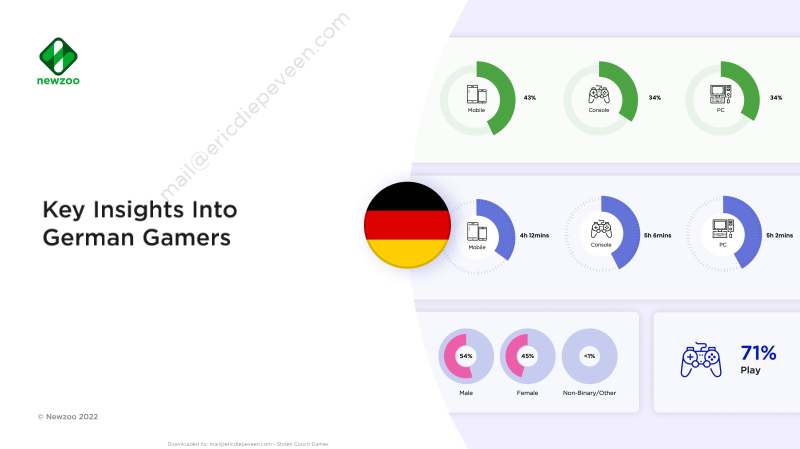
Newzoo · 2022

SuperData · 2020

Koei Tecmo
GungHo Online Entertainment

Ubisoft · 2026