PC reports and market data
Documents
Which Game Engine Is Best In 2025? UNITY vs. UNREAL?
The choice between Unity and Unreal Engine remains a central debate for independent game developers, particularly those focused on first-person shooters.
- Both Unity and Unreal Engine face significant performance bottlenecks regarding real-time shadow casting, requiring developers to manually limit the number of shadow-casting lights to maintain acceptable frame rates.
- Unreal Engine is often preferred for 3D and FPS projects due to its out-of-the-box support for features like Lumen, which provides real-time global illumination that is more difficult to achieve in Unity.
- The choice of game engine is frequently driven by team familiarity with specific programming languages, such as C++ for Unreal, and the need for cost-effective development tools for early-stage studios.

Let's Review Your Games — Ep. 020
Independent horror and experimental titles often succeed by prioritizing unique, surreal atmospheres over technical polish.
- A strong, eccentric creative identity can allow a game to transcend technical limitations and resonate with audiences more effectively than conventional, polished products.
- Developers must balance atmospheric choices like heavy post-processing or excessive darkness with functional accessibility to ensure players can navigate environments without frustration.
- Weak opening sequences risk losing players before they engage with core mechanics, making early narrative hooks and clear combat feedback essential for retention.
Top Differences Between Mobile and AAA Live Service Games (Scott Hartsman Interview)
The gaming industry is effectively bifurcated into two distinct sectors: the core PC and console market and the mobile and casual live service market.
- The gaming industry is effectively split into two distinct sectors: core PC/console games and mobile/casual live service games, each requiring fundamentally different business models.
- Mobile and casual live service games operate as a math-driven business focused on minimizing user acquisition costs while maximizing the lifetime value of each player.
- Top-performing mobile titles often utilize 'gacha' or pulse mechanics, requiring players to spend currency for random chances at items or heroes, which must then be collected in multiples to reach full power.

Let's Review Your Games — Ep. 018
Indie game development requires a rigorous focus on professional polish and intentional design to elevate projects beyond the perception of unrefined asset flips.
- Atmospheric immersion and narrative clarity are the primary drivers of player retention, requiring a shift away from generic musical scores toward reactive, thematic soundscapes.
- Effective indie storytelling should prioritize environmental cues and central mysteries over text-heavy exposition to maintain player engagement.
- Professional polish requires cohesive typography, modern lighting techniques, and directional shadows to prevent projects from being perceived as unrefined asset flips.
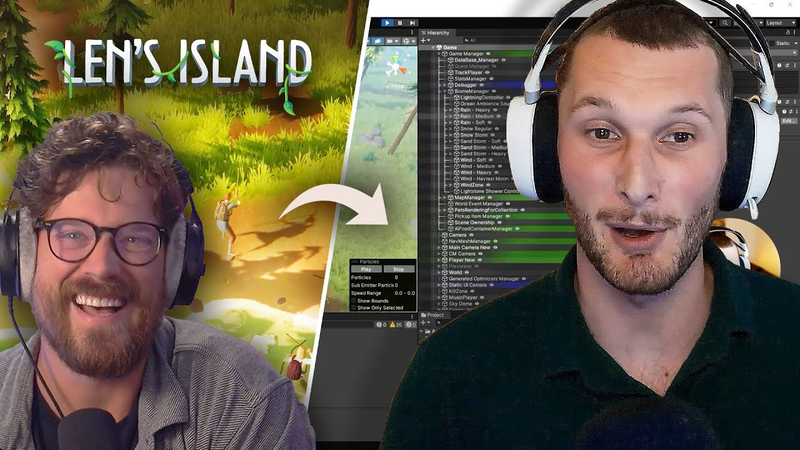
What A $1,000,000 Game Looks Like In Unity (w/ Julian Ball)
The development of the open-world sandbox game Len’s Island serves as a case study in balancing technical constraints with high-fidelity visual design within the Unity engine.
- The developer of Len's Island prioritizes cinematic visual quality by designing assets to look intentionally flat or 'bad' in their raw state, relying on a heavy post-processing and color-grading pipeline to achieve the final aesthetic.
- To maintain high performance on hardware like the Steam Deck, the team built a custom occlusion optimization system rather than relying on standard Unity tools, while also using a mix of hand-built assets and procedural grid-based systems.
- The game utilizes Unity's Universal Render Pipeline (URP) and manages complex runtime tasks, such as rebuilding the nav mesh every time a player places a building foundation, to allow for an open-world sandbox experience.
How To Start Making Games With NO EXPERIENCE
The development of successful indie games is often characterized by a transition from early personal isolation to professional collaboration, rather than innate technical mastery.
- Fredrik Prantare, creator of Core Keeper, grew the game to over 4 million copies sold, with figures currently approaching 4.5 million units.
- Prantare’s development journey began in high school by utilizing level editors in games like Heroes of Might and Magic III, which helped him build foundational design skills.
- The transition from a high-schooler with low academic attendance to a leader of a 50-person team was driven by years of iterative failure in various project 'constellations'—small, collaborative groups formed to build games.

Let's Review Your Games — Ep. 017
Modern indie game development requires a rigorous focus on technical optimization, particularly for the Steam Deck, which has emerged as a critical platform for reaching contemporary audiences.
- Prioritize technical optimization for the Steam Deck, as it has become a critical platform for reaching modern indie gaming audiences.
- Implement the 'isekai principle' by dropping players into an unfamiliar environment with a clear, immediate motive within the first five minutes of gameplay.
- Improve visual clarity by using high-contrast, cinematic lighting instead of ambient light to ensure the protagonist is easily distinguishable from the environment.

I Was Wrong About Making Games...
The primary thesis of this analysis is that indie game developers often hinder their success by obsessively pursuing groundbreaking, unique mechanics rather than focusing on quality and execution.
- Success in the indie game market does not require creating a groundbreaking or entirely unique mechanic; focusing on executing a solid, high-quality game within an established genre is more effective.
- Attempting to force innovation often leads to bloated codebases, development paralysis, and wasted resources, as evidenced by the speaker's failed attempts to iterate on complex, 'unique' mechanics like magnetiles or skydiving.
- Leveraging your specific strengths—your '20%' or forte—is the most reliable way to ensure quality, as seen in the speaker's shift from struggling with new mechanics to focusing on storytelling and atmosphere in his title, Twisted Tower.

Why Did Microsoft Cut 9,000 Jobs This Year?
Microsoft’s recent workforce reductions, totaling approximately 15,000 positions across 2024, signal a period of significant instability within its gaming division.
- Microsoft cut approximately 15,000 positions across its gaming division in 2024, representing roughly 4% of the company's total workforce.
- The layoffs are attributed to a systemic management failure and a strategic pivot away from hardware toward a reliance on Game Pass and third-party partnerships.
- The acquisition of Activision Blizzard is identified as a primary catalyst for the current crisis, as the company struggles to generate sufficient returns by forcing high-value intellectual properties into a subscription-based model.
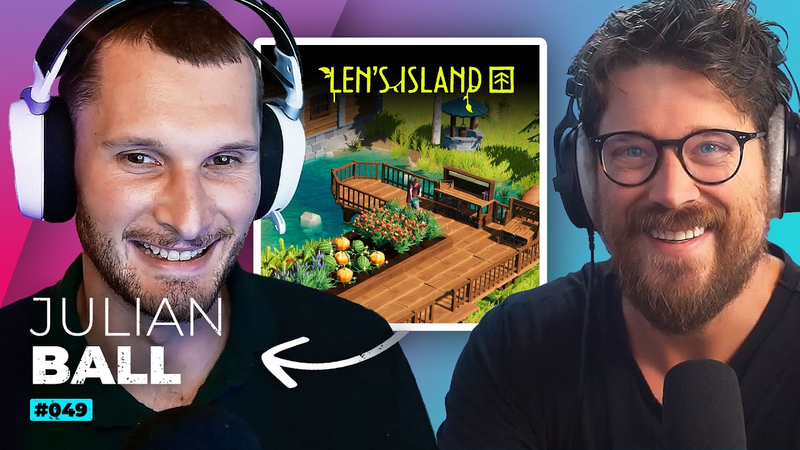
Julian Ball: Why His Game Took 8 Years To Make, How Launch Went, Staying Motivated | Ep. #049
The development of Lens Island serves as a case study in the endurance required for long-term independent game production, spanning an eight-year cycle that culminated in a successful commercial launch.
- Julian Ball spent eight years developing his open-world sandbox game, Lens Island, which combines elements of Diablo, Stardew Valley, and Minecraft into a single cohesive experience.
- The development of Lens Island required building a massive amount of content, effectively creating four games' worth of mechanics to support diverse playstyles like farming, building, and combat.
- To maintain project momentum over an eight-year cycle, Ball utilized a team-based workflow where he acted as a director, offloading specialized tasks like 3D art to experts while focusing on high-level design and artistic vision.

The Story of Medal: Shaping the Future of Gaming Content
The evolution of Medal from a failed game development project into a dominant gaming content platform illustrates the strategic shift from creating individual titles to building infrastructure that facilitates community engagement.
- Medal currently supports 2 million daily active users and facilitates the creation of over 5 million gaming clips every day.
- Integrating Medal’s clipping tools into games has been shown to increase both user re-engagement and organic baseline growth by approximately 5% each.
- The platform successfully scaled by prioritizing a high-quality utility tool over immediate social network features, leveraging existing ecosystems like Discord to bypass traditional user acquisition costs.
Stop Killing Games, Nuance, and Jobs! | Gaming News | Games For Breakfast
The video game industry is currently navigating a period of profound instability characterized by widespread corporate layoffs and a strategic pivot toward artificial intelligence.
- Microsoft has laid off 9,100 staff members as part of a broader industry-wide post-pandemic correction that has led to the cancellation of multiple high-profile projects.
- Consumer spending among the 18- to 29-year-old demographic has declined by 25%, driven by macroeconomic factors such as student debt and reduced disposable income.
- The 'Stop Killing Games' initiative has successfully triggered a formal review process within the European Union to address consumer concerns regarding the permanent loss of access to purchased digital software.