PC reports and market data
Documents
How to Make a Successful Game! - 10 Short Tips - (Theory) [2018]
The pursuit of commercial success in game development requires a structured approach to design, centered on ten core factors that influence player engagement and marketability.
- Success factors in game development act as multipliers rather than additive components, meaning a deficiency in any single area can disproportionately undermine a project's overall potential.
- Developers should evaluate projects using a 10-point diagnostic framework covering ease of learning, visual communication, skill ceiling, player fantasy, graphics, shareability, social mechanics, differentiation, fluid gameplay, and motivation.
- The framework utilizes a comparative scoring system where multiplying the scores across all ten dimensions generates a total success index to identify and prioritize design weaknesses.

How to Fix Your Game When You Find Out That It Sucks!
This analysis outlines a strategic framework for identifying and rectifying fundamental design flaws in game development, specifically focusing on the strategy title Ovus Nova.
- Prioritize early, iterative feedback loops to identify 'game breakers'—mechanics that hinder engagement, clarity, or marketability—before development progresses too far.
- Address gameplay friction by observing player interactions to pinpoint where confusion occurs, rather than forcing a flawed design.
- Improve player comprehension by replacing abstract visual effects with recognizable animations and establishing clear, distinct faction dichotomies, such as biological versus robotic.
4 Reasons My Game Sucks!
The development of the strategy game Ovus Nova faces four critical design flaws that threaten its long-term viability.
- The game suffers from a single dominant strategy that eliminates the need for player experimentation and renders gameplay repetitive.
- Frequent pausing mechanics severely degrade pacing, stripping the game of the tension and unpredictability required for engaging content.
- New players face significant barriers to entry due to a lack of visual clarity regarding factions, objectives, and unit logic.
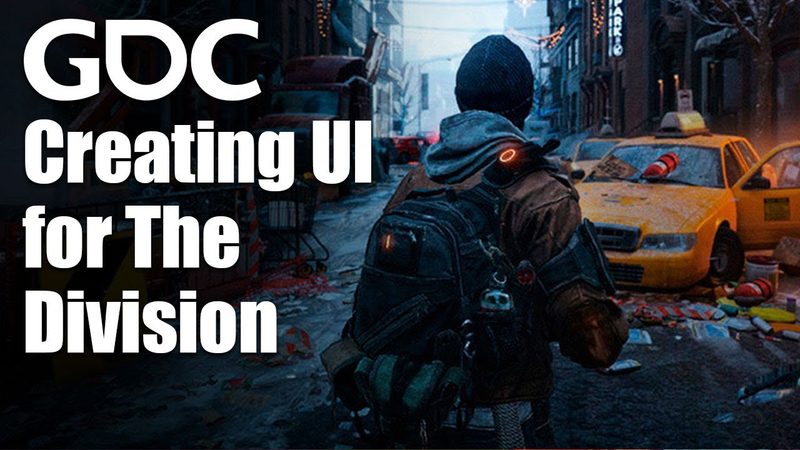
Lessons Learned Creating UI for The Division
The user interface for The Division represents a significant shift in development methodology, moving away from traditional canvas-based systems toward a node-based, immediate-mode architecture within the Snowdrop engine.
- The Snowdrop engine UI system uses a node-based visual scripting architecture instead of a traditional canvas, allowing for 5,500 nodes to be utilized across game systems by the time of the Survival DLC release.
- Prioritizing rapid iteration is a core pillar of the engine, supported by keeping compile times around one minute and ensuring editor startup times remain within a few seconds.
- Moving loop execution from the node-based script system into the underlying C++ code can yield massive performance gains, such as reducing a specific graph's execution time from 20 milliseconds to 0.6 milliseconds.
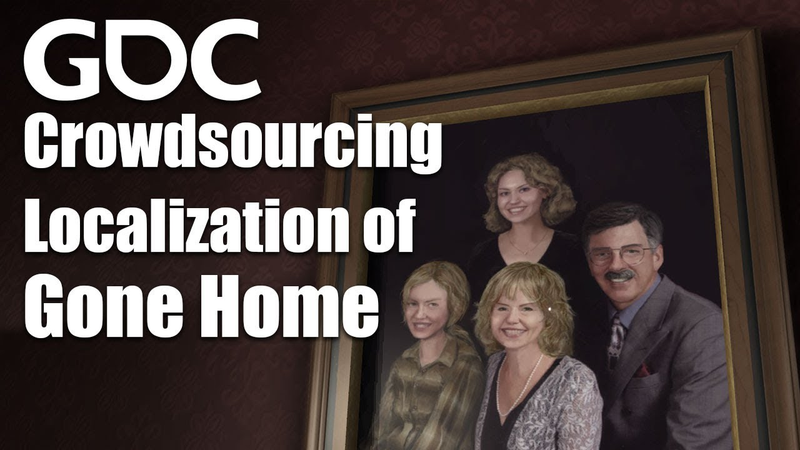
Crowdsourcing the Localization of Gone Home
The Fullbright Company utilized crowdsourced localization to bring the narrative-heavy indie game Gone Home to international markets without incurring the high costs associated with professional translation services.
- The Fullbright Company successfully localized Gone Home into over a dozen languages by utilizing a crowdsourced model to bypass the high costs of professional translation services.
- To overcome the challenge of narrative embedded in 3D assets, developers implemented a text-only system using dynamic overlays for in-game objects and standard subtitle files for audio.
- The localization workflow was designed for accessibility, allowing community volunteers to contribute using only simple XML and plain text files without requiring specialized software.
Solo Indie Dev - 2. Month Review
This two-month progress review evaluates the experiences of a solo indie game developer balancing game production with YouTube content creation.
- The primary barrier to solo indie development is the psychological 'Dark Night of the Soul' phase, where the initial excitement fades and discipline is required to overcome self-doubt.
- The developer failed to reach the target of 200 subscribers, prompting a strategic pivot away from daily content creation due to concerns over video quality and searchability.
- Playtesting for the project 'Nova' revealed that the current gameplay iteration lacks sufficient engagement, necessitating further refinements before a vertical slice can be completed.

OVUS NOVA - Big Update Trailer! - (March 2018)
Ovus Nova is an experimental strategy game centered on the management and tactical deployment of space-faring creatures.
- Ovus Nova is an experimental strategy game focused on managing space-faring creatures through two core mechanics: unit duplication and directional detonation.
- The game features a tactical pause mode that allows players to halt real-time combat to strategize and adjust unit positioning.
- A resource-based ability system, controlled via keyboard shortcuts, enables players to execute specialized actions like instant hatching and area-of-effect damage.
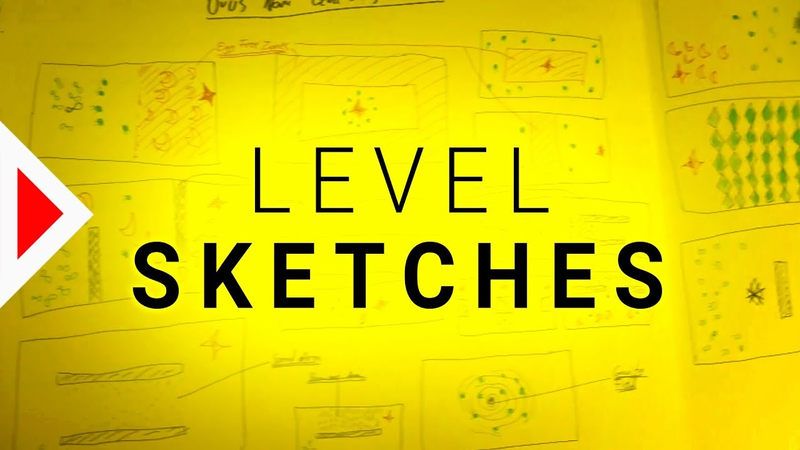
Sketching Levels for Ovus Nova - (Level Design Ideas)
The development of the strategy game Ovus Nova centers on a design philosophy that prioritizes mechanical depth through a limited set of versatile features rather than an expansive, feature-heavy approach.
- The development philosophy for Ovus Nova prioritizes mechanical depth by utilizing a limited set of versatile features that can be combined for maximum strategic complexity.
- Level design incorporates egg-free zones to restrict spawning locations, forcing players to adopt specific tactical positioning.
- Walls are being implemented to manipulate unit movement and pathfinding, enabling the creation of complex layouts like mazes and protected safe zones.
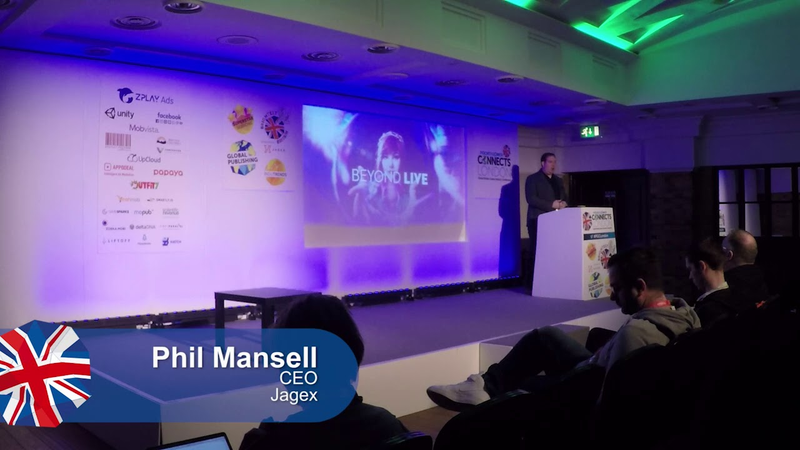
Living games: Jagex, RuneScape and the evolution of live games
The evolution of the gaming industry has shifted from traditional product launches toward the "living game" model, characterized by persistent, social, and service-oriented experiences.
- The 'living game' model prioritizes long-term retention over traditional product launches to offset rising user acquisition costs and capture player investment in deeper, persistent experiences.
- Jagex achieved an average player lifespan exceeding seven years for the RuneScape franchise by restructuring operations to focus on core intellectual property and service-driven engagement.
- Developers can drive long-term retention by integrating RPG mechanics—such as progression, collections, and leveling—into diverse game genres.

The Legality of Loot Boxes - Designing Ethical Lootboxes: II - Extra Credits
The push to regulate in-game loot boxes through existing gambling legislation presents significant legal and operational risks that could inadvertently harm the gaming industry and its consumers.
- Classifying loot boxes as gambling risks assigning real-world monetary value to digital items, which could lead to litigation over account bans as players might claim the seizure of valuable property.
- Legal reclassification could create significant operational liabilities for developers, including potential legal exposure during server closures, game rollbacks, or the deletion of digital assets.
- Broad gambling legislation may inadvertently capture standard game mechanics, such as random loot drops in raids or dungeons, forcing developers to adopt more restrictive or expensive monetization models.

Finally a VLOG again! :D - (Video Production) - 2nd Vlog
Content creation for YouTube requires significant time, technical effort, and strategic planning.
- Prioritizing audio recording as the foundational step allows creators to structure narratives and pace content before designing secondary visual elements.
- Content production is resource-intensive, with consistent output over a two-month period generating more than 500 gigabytes of raw footage.
- High-volume video production requires significant investment in robust data backup solutions and hardware to manage massive storage requirements.
Level Design Workshop: Designing Celeste
The design philosophy behind Celeste centers on a fractal narrative approach, where individual levels function as self-contained stories that dictate pacing and mechanical structure.
- Level design in Celeste is structured as a hierarchy of stories, where individual screens represent quick, simple challenges that aggregate into larger, thematic area arcs.
- The development process relies on iterative 'brute force' refinement, evidenced by the developer discarding 20 levels from a single area because they failed to align with the intended mood.
- Levels are designed to be permissive, allowing for multiple solutions and emergent gameplay, which accommodates both casual players and speedrunners who may discover unintended shortcuts.