PC reports and market data
Documents

Write a Game Engine? - WHY and HOW.
Developing a custom game engine is a complex undertaking that offers significant advantages in architectural control, specialized functionality, and educational depth, though it carries substantial risks and development overhead.
- Custom engine development is primarily recommended for those pursuing careers in engine engineering or hobbyists prioritizing technical mastery over the rapid production of games.
- The primary advantages of proprietary engines include total architectural control, the ability to tailor systems to unique project requirements, and the avoidance of restrictive licensing agreements associated with commercial engines like Unity or Unreal.
- Building a custom engine requires significant investment in 'invisible work,' such as creating boilerplate code for window initialization, graphics API setup, and developing custom toolchains like level editors and asset importers.
6 Mistakes I Made When I Started Making Games
The primary purpose of this analysis is to outline common pitfalls encountered by independent game developers during the early stages of their careers.
- Prioritize securing external funding through publishers or crowdfunding platforms like Kickstarter to enable full-time development, as relying on personal savings while working a full-time job consistently compromises production quality.
- Treat marketing as a daily operational responsibility rather than an afterthought by utilizing social media management tools to maintain consistent engagement and drive wishlist conversions.
- Focus on building a loyal, cross-project audience as the primary foundation for long-term success, as initial financial projections for a first game are frequently unreliable.
How We Created Mark of the Ninja Without (Totally) Losing Our Minds
This analysis examines the development philosophy of Klei Entertainment, specifically regarding the creation of Mark of the Ninja.
- To avoid burnout and inefficient development, replace vague creative visions with testable hypotheses that allow the team to identify and discard bad assumptions early.
- Klei Entertainment shifted from complex AI systems to 'stupid,' highly manipulatable AI, which saved approximately four to five months of programming time while improving player clarity.
- The team abandoned batch production early in development, recognizing that producing large amounts of content based on unverified assumptions leads to wasted effort.
Let's Be Realistic: A Deep Dive into How Games Are Selling on Steam
This analysis examines the current state of the PC game market on Steam, focusing on the financial realities for independent developers in the post-Steam Direct era.
- Approximately 82% of games released on Steam fail to generate revenue equivalent to the American minimum wage.
- Only 7% of developers earn enough revenue from their titles to fund the development of a subsequent project.
- For viable commercial titles, the average game generates roughly $12,500 in revenue during its first month and approximately $30,000 in its first year.

How to Make Game Art When You CAN'T!
For independent game developers lacking formal artistic training, the challenge of creating high-quality, cohesive game art is a significant hurdle.
- Non-artists should replace traditional design-from-scratch workflows with high-volume, iterative experimentation to achieve professional-looking game art.
- Developers should perform art experiments directly within the game engine rather than relying on static mock-ups in external software.
- Use scripts to procedurally generate variations in color palettes, object placement, and sprite outlines to ensure visual styles are technically feasible within the game architecture.
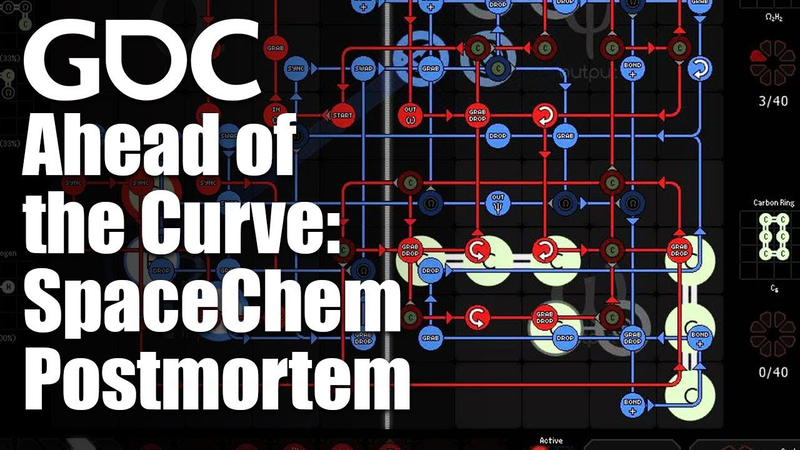
Ahead of the Curve: The SpaceChem Postmortem
The 2013 GDC session on the development of SpaceChem explores the design philosophy behind "design-based puzzle games," a genre characterized by open-ended problem solving rather than a single, fixed solution.
- SpaceChem generated approximately $700,000 in revenue, with Steam serving as the primary driver for its commercial success.
- The game pioneered 'design-based puzzle' mechanics, which prioritize open-ended problem solving and emergent tools over fixed, singular solutions to foster player ownership.
- Implementing performance histograms instead of traditional leaderboards allowed for egalitarian player comparison and optimization without fostering community toxicity.

College E-Sports - Road to Glory? - Extra Credits
The emergence of collegiate esports scholarships represents a significant shift in the gaming landscape, offering potential benefits alongside substantial structural risks.
- Collegiate esports programs often demand over 40 hours of training per week, creating a significant risk that competitive commitments will compromise academic performance and educational outcomes.
- Many institutions are utilizing esports programs primarily as marketing tools to drive enrollment, frequently diverting funding from core academic departments like computer science and game design.
- The rapid obsolescence of specific game titles creates a structural risk where a student's four-year training regimen may become irrelevant if the game loses its competitive status before graduation.
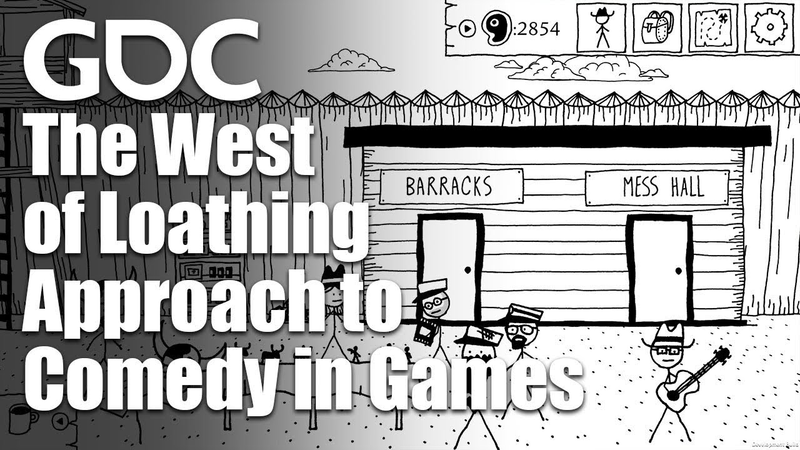
There's Goofs in Them Thar Hills: The West of Loathing Approach to Comedy in Games
The primary objective of game design in the context of comedic titles is to prioritize the integration of humor into every facet of the player experience, transforming the medium into a vehicle for consistent, high-volume wit.
- Prioritize humor as the primary design objective by embedding jokes into every element, including menus, item descriptions, and environmental interactions.
- Simplify gameplay mechanics like combat and puzzles to ensure they remain accessible and do not obstruct the delivery of the writing.
- Utilize a consistent, conversational narrator voice that breaks the fourth wall to guide the player and address design limitations through self-deprecation.
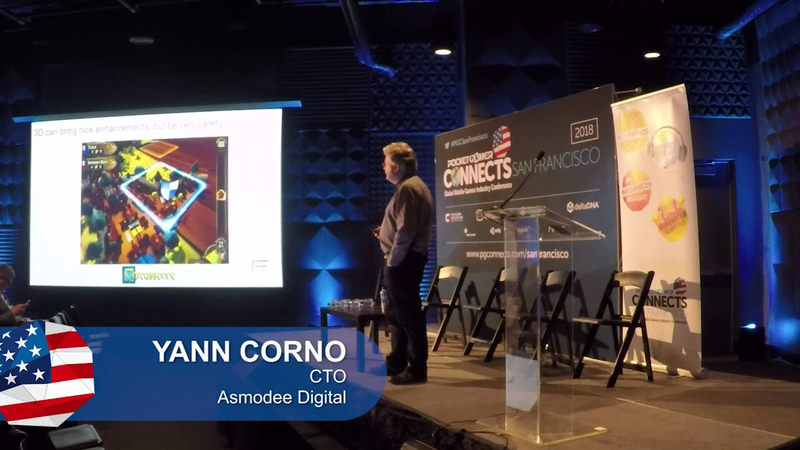
How to successfully adapt board games to digital
The digital adaptation of board games represents a specialized sector within the broader gaming industry, characterized by a symbiotic relationship between physical and digital products.
- Digital board game adaptations act as a growth engine for physical sales, with data showing a 40% increase in physical product revenue following the launch of a corresponding digital title.
- Digital versions should be managed as part of a multi-channel ecosystem rather than as standalone products or competitors to the physical game.
- Successful development requires prioritizing high-fidelity adherence to the original design and technical execution, specifically robust AI and UI optimization, rather than traditional video game content production.

UI Polishing - Have you ever noticed Blizzard games do this?
Effective user interface (UI) design serves as a critical component of the overall player experience, functioning as a primary touchpoint that shapes initial perceptions of a game.
- Blizzard Entertainment enhances UI immersion by treating menus as navigable, 3D-like environments rather than static overlays.
- Designers utilize spatial separation by shifting camera positions and backgrounds between menu sections, acting as visual cues that mimic moving between rooms in a house.
- Context-specific backgrounds are employed to prevent navigation errors and help players intuitively understand complex menu hierarchies.
PlayJob Podcast #1: Jay Armstrong
The independent game development landscape demands a rigorous balance between creative ambition and operational discipline.
- Market saturation requires a highly polished initial product launch, as post-launch updates are no longer sufficient to guarantee visibility or consumer trust.
- Commercial success in the indie sector is not guaranteed by critical acclaim or influencer coverage, necessitating a focus on sustainable development cadences and robust professional support networks.
- Strategic multi-platform execution across PC, consoles, and mobile is essential for maximizing reach and operational efficiency in the current distribution landscape.
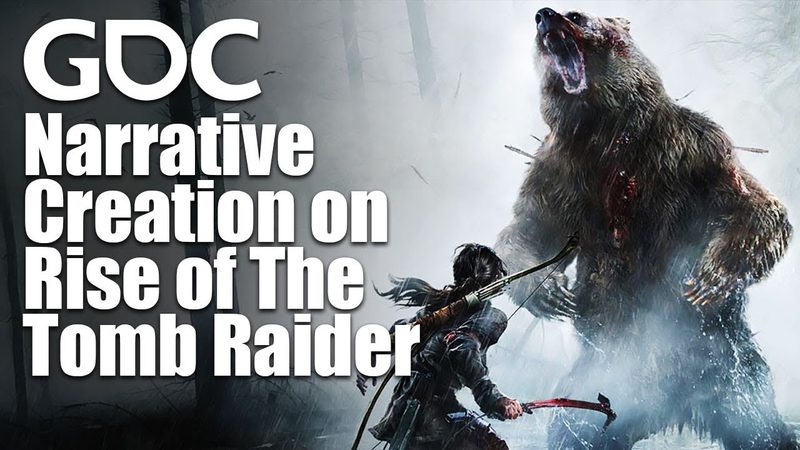
Raid on Rise: Narrative Creation on Rise of The Tomb Raider
The narrative development of Rise of the Tomb Raider centers on a collaborative, cross-disciplinary framework that rejects isolated creative silos in favor of studio-wide world-building.
- Crystal Dynamics utilizes a 'story pillar' framework for narrative development, centered on a three-act structure where the protagonist's character arc serves as the primary backbone of the entire experience.
- The narrative team employs a holistic tracking system using digital boards and hashtags to map out all character arcs and plot threads, allowing them to proactively manage emotional pacing and identify potential narrative logjams.
- To ensure internal consistency and world-building veracity, the team conducts deep research into historical and archaeological subjects, aiming for 'plausible Google-ability' so players can verify game elements against real-world facts.