PC reports and market data
Documents
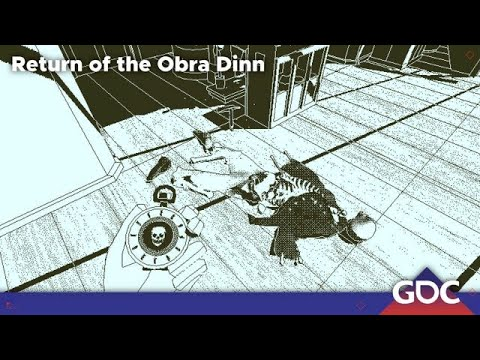
GDC Live Q&A: Lucas Pope and Return of the Obra Dinn
Return of the Obra Dinn represents a deliberate departure from conventional market-driven development, favoring a niche, art-first philosophy that prioritizes mechanical integrity over broad appeal.
- Return of the Obra Dinn was developed over a four-and-a-half-year period as an independent project that prioritized mechanical integrity and a niche, art-first philosophy over broad market appeal.
- The game features a complex logic puzzle requiring the identification of 60 distinct characters, supported by a 1-bit Macintosh-inspired aesthetic.
- The developer utilized custom dithering techniques to manage the high-contrast visual style, using these technical constraints as a catalyst for defining rigid, purposeful gameplay mechanics.

Will You Snail? - DEMO is OUT! (Devlog)
Will You Snail represents a shift in focus for an independent developer transitioning from a confusing, less commercially viable project toward a high-potential, AI-driven platformer.
- Will You Snail is a precision platformer featuring an AI antagonist that predicts player movement to dynamically place obstacles.
- The developer pivoted to full-time independent production on October 1st, choosing to leave formal game design education to focus on this project.
- Development utilizes iterative visual design techniques, including custom scripts for randomized color palettes and Photoshop-based refinement of post-processing effects like bloom and contrast.

Teaching an AI to Beat You At Your Own Game!
This project explores the practical application of machine learning in game development by training an artificial intelligence to compete in a physics-based platformer.
- Evolutionary algorithms can successfully train AI agents to master specific meta-game strategies, such as height maintenance and energy management, within a physics-based platformer.
- The AI failed to achieve superhuman performance, showing significant vulnerability to unconventional or simple, non-standard strategies that deviated from its training simulations.
- Training required approximately 50 hours of iterative trial and error, where the agent competed against previous versions of itself to refine its neural network connection weights.
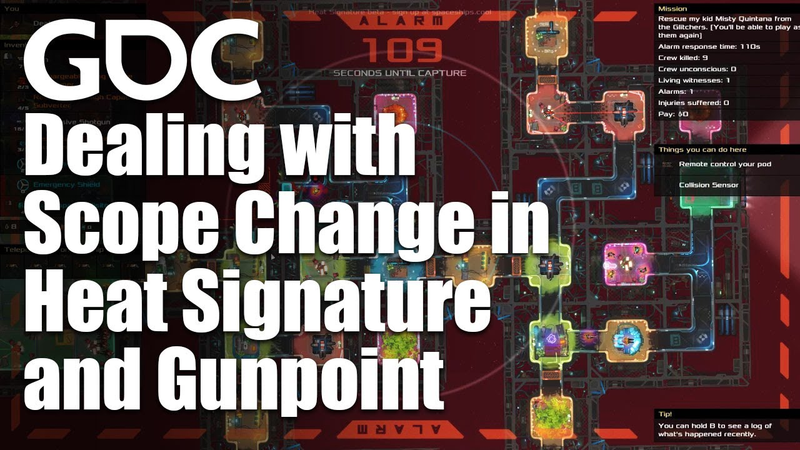
Dealing with Scope Change in Heat Signature and Gunpoint
Development delays in independent game production often stem from a fundamental misunderstanding of scope management, specifically the tendency to underestimate the time required to transform a prototype into a cohesive product.
- Define the minimum viable version of a concept early in development to isolate non-negotiable gameplay elements and prevent unnecessary feature creep.
- Prioritize the core mechanics that define the player experience while strictly ignoring secondary features or external suggestions that fall outside the central vision.
- Use rapid prototyping to validate a game concept before committing to a full production schedule, as this is the most reliable method to avoid perpetual scope expansion.

Games You Might Not Have Tried - ep 16 - Spooky Scary Game Recommendations - Extra Credits
This collection of game recommendations serves as a curated guide for players seeking unique, atmospheric, and unsettling experiences during the Halloween season.
- Effective horror design often relies on subverting player expectations and leveraging the player's own imagination rather than relying solely on jump scares.
- Environmental storytelling and ambient audio are critical tools for building tension, as demonstrated by the tactical shooter F.E.A.R.
- Horror can be successfully integrated into diverse genres, ranging from the tactile puzzle mechanics of The Room to the samurai combat of Onimusha Warlords.
How to make your game 2X as fun! - (In No Time.)
Enhancing the player experience in game development does not require massive overhauls; rather, it relies on optimizing micro-decisions and refining visual feedback.
- Enhance gameplay depth by introducing meaningful trade-offs to frequent player actions, such as applying movement penalties to specific weapon types to force strategic combat decisions.
- Increase player engagement by integrating secondary objectives, like item collection, which force players to prioritize actions and accept tangible consequences for their choices.
- Improve the perceived polish of a prototype by implementing professional color palettes and utilizing directional, reactive particle effects.
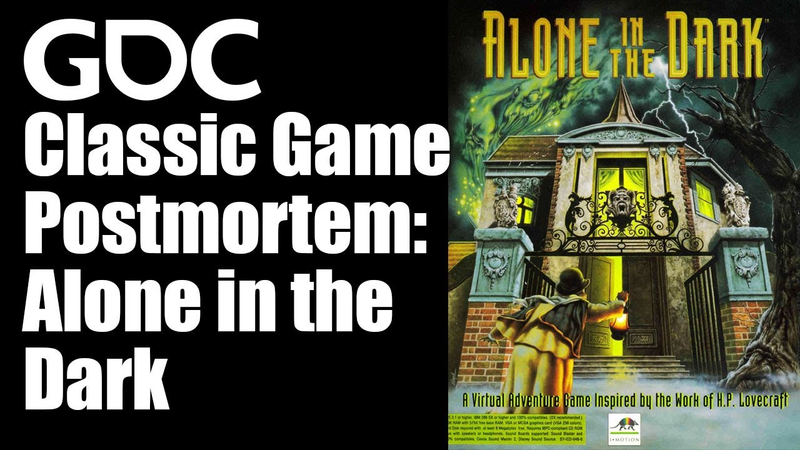
Classic Game Postmortem: Alone in the Dark
Alone in the Dark serves as a foundational milestone in the survival horror genre, emerging from an effort to blend 1970s horror cinema aesthetics with pioneering 3D character modeling.
- Alone in the Dark established the survival horror genre by blending 1970s horror aesthetics with 3D character modeling, prioritizing atmosphere over traditional interface-heavy design.
- The development team overcame early 1990s hardware constraints by layering 3D polygonal characters over static, pre-rendered backgrounds to ensure consistent performance.
- A core team of fewer than ten people completed the entire project in under eight months, utilizing a critical three-day planning session to define the narrative framework.
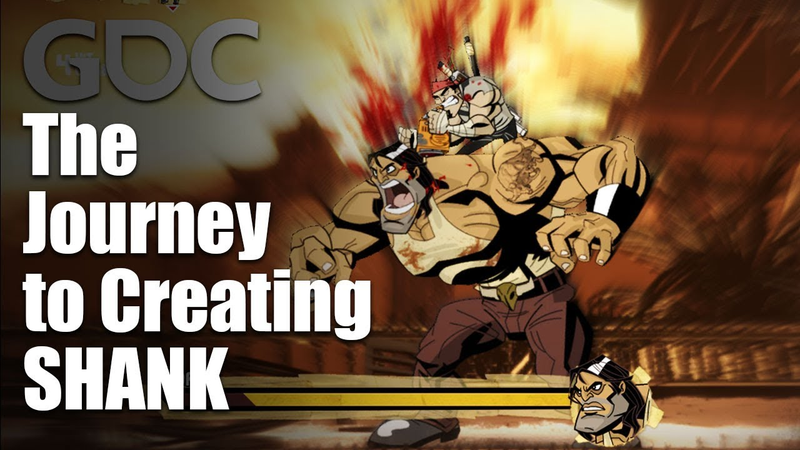
The Journey to Creating SHANK
The development of the action game Shank by Klei Entertainment serves as a case study in independent game production, navigating publisher relationships, and the transition to multi-platform releases.
- Klei Entertainment maintained creative control over Shank by self-funding the initial development, allowing them to present a nearly finished prototype to EA that was visually and mechanically identical to the final product.
- The studio rejected a previous publishing deal to maintain independence and protect the industry's ethical standards, opting instead for a more equitable partnership with EA.
- Development efficiency was high, with the core game concept prototyped in two months and the team working only three weekends throughout the nine-month production cycle due to robust internal tool development.

Making a Game In 10 Minutes! - (Brackeys Challenge)
Developing a functional game within a ten-minute time constraint serves as a high-pressure exercise in rapid prototyping and efficient workflow management.
- Rapid prototyping under extreme time constraints, such as a 10-minute window, requires a disciplined prioritization of scene architecture over feature complexity.
- Iterative testing is essential during high-pressure development, as coding without immediate verification frequently results in critical bugs and logic errors.
- Successful rapid development relies on balancing environment setup—including lighting, camera positioning, and object prefabs—with the implementation of core mechanics like movement.
Community-based games development
Community-based game development leverages the power of internet tribalism to foster collaborative, high-engagement projects.
- Community-based development leverages existing niche lore, such as the SCP Foundation, to secure a built-in audience and reduce reliance on traditional marketing.
- Projects utilizing community collaboration can achieve significant scale, evidenced by an SCP-based game reaching over 10 million downloads without traditional advertising.
- Open-development models can drive high engagement even in early stages, as seen with a submarine simulation game on Europa that garnered 100,000 downloads while still in open alpha.
What's next in line for PC games?
Cross-platform development has transitioned from a technical hurdle to an industry standard, driven by a growing consumer expectation for seamless, platform-agnostic gaming experiences.
- Cross-platform development is now an industry standard, shifting the primary challenge from technical implementation to creating platform-specific designs that respect unique control schemes and UI constraints.
- Independent developer visibility is increasingly dependent on organic community engagement and direct player relationships rather than platform exclusivity or large upfront marketing expenditures.
- Long-term sustainability for independent studios requires securing capital that covers both initial launch costs and the extended operational requirements of post-launch support.
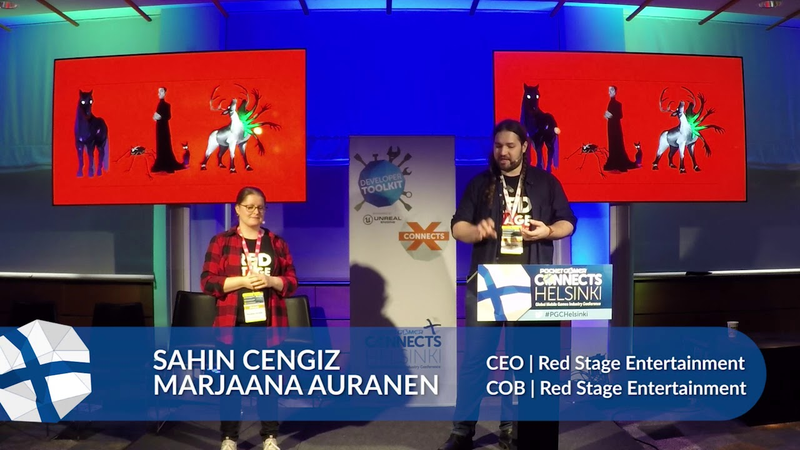
Skabma - The challenges of bringing in Sami mythology into the video game format
Red Stage Entertainment’s development of the video game Skabma: Polar Night serves as a case study in the challenges of adapting indigenous Sami mythology into an interactive digital format.
- Red Stage Entertainment developed 'Skabma: Polar Night' to revitalize Sami cultural narratives by integrating indigenous mythology into an interactive video game format.
- The development team navigated a lack of centralized written records and conflicting folklore by establishing a continuous feedback loop with the Sami community.
- To address regional variations in mythology, such as the shifting depictions of the giant Stalo, developers synthesized disparate accounts into a cohesive original narrative framework.