1 free read left. Create a free account for unlimited reading + AI research.
Create free account
Skabma - The challenges of bringing in Sami mythology into the video game format
Key insights
6 takeaways- 01Red Stage Entertainment developed 'Skabma: Polar Night' to revitalize Sami cultural narratives by integrating indigenous mythology into an interactive video game format.
- 02The project prioritized cultural accuracy by consulting community members to ensure visual elements, including traditional clothing patterns, correctly represented specific family and regional identities.
- 03To address regional variations in mythology, such as the shifting depictions of the giant Stalo, developers synthesized disparate accounts into a cohesive original narrative framework.
- 04The development team navigated a lack of centralized written records and conflicting folklore by establishing a continuous feedback loop with the Sami community.
- 05The development process serves as a model for avoiding cultural appropriation when adapting under-documented indigenous stories for modern digital expression.
- 06The game mechanics utilize a shamanic drum as a central tool for both navigation and combat, framing the digital experience as a living extension of oral tradition rather than a static historical record.
Ask AI about this video
Transcript
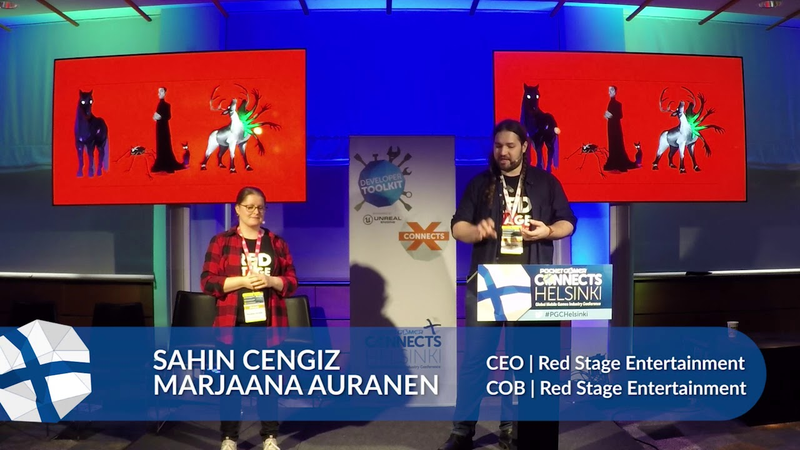
[Music] so hello everyone how are you doing awkward silence nice good way to start this I'm sorry saying it's this is Mariana Renan and we are from red stage entertainment and now I have to see how this works which is the okay so we are a gaming company from Tampa we specialise in creative storytelling and video games there's three of us who founded this company although all lies at the moment in Tampere she's the chief financial officer but I am the chief executive officer and she is the chairman of the board and we are at the moment developing our actually it's at this button yes it's this button it is about it is a button yeah we are developing our first video game which is called
Scott ma polar night and it's the first video game addressing the indigenous Sami mythologies and in case of some of you don't know who Sami are they are the only indigenous people inside in a European Union far far north up there and if you thought up there go higher they are there somewhere about 100,000 of us living in four states Russia Finland Sweden and Norway and estimated ly nine different languages and all endangered for else reindeers and we are here to talk about the challenges of converting some a mythology into a video game first of course we have to simply ask ourselves what do we know about this subject Mariana is Mariana is some
yourself so we kind of have a an insider in in this so does that mean we know everything already sadly no we are not walking and talking Wikipedia's of our cultures so I don't know much of my culture let's face it I don't know the language for example and when we started making this game we first did the drafts of our main character and sadly because I'm not a handicraft person I'm just making my first dress sama trous so I didn't know all the patterns and all the meanings of the patterns there's something important we really wanted to not stumble upon which of course is cultural stereotypes and this is something we've in a way actually thought maybe it's a good thing to use because the stereotypes are not inherently a bad thing but is it the right course of action for us for this
game for this completely unknown culture for many people here you can see the first build of our game and what is sadly and badly wrong in this image is that this character is wearing a woman's hat but men's clothing that that is a big no-no in the Sami culture at the moment we don't know in the future maybe it's okay hopefully but at the moment no and the next one is our development of our character eylem there so on the left you can see the man woman I loom and then then we the second one was still a very stereotypical image we saw me have the Sami dress it is called cactii and to us it is like a second skin and it contains so much information it conveys the information where are we from what
family we are from are we married are we not and all these details and every family have they own and if you accidentally take up these patterns you are stealing from them and they get really angry and that is what we don't want to do so slowly we our character evolved it became own something we can be proud of as well as the style of the game the art style or the from left to right you'll see like what has happened since the beginning of development but thinking about clothing and the patterns the decorations that is pretty much just the beginning of the challenges of this subject so yes the sad thing about Sami culture is that there isn't so much books about Sami mythology and the knowledge is fading by the day so the
interesting thing is that the first book written by Sami person about Sami culture was just a hundred years ago everything before that was Outsiders explorers like French poets and patronizing priests every information about the Sami culture so they'd be reading writing about the Sami culture from above from the outside so we have to really consider that when we are writing this game and these characters and the culture is full of interesting characters stories everything but all of this information is very very varied let's say let's take this big guy here who is called stalo with a man-eating giant and this character is sometimes told to transform into a bear but in other regions it's described as a pile of moving dirt and sticks we also found like this very Santa Claus
like version of stalo who were all red and you know takes nori children and twins coca-cola and something like well ok not the last one but it's really it is really like distracting because you find all these different versions of literally every single character every single story here this effects not just the characters also the small folktales we find for example yeah let's take the the end of the world story it is called celestial hunt in Sami mythology and celestial hunt goes that this novice white reindeer here travels across the skies and if it is killed then the world will die and in other parts of Samuel and service is not a reindeer it is a moose and sometimes the way how the world ends is the sky falling sometimes it's a firestorm so we are making a video game like we have to
have a clear image what what are we like actually modeling what are we doing we can just go through all this and there's the big question we kind of had like you know what how how how should this be put together how can we pick and we really had a simple solution in a way which is we started creating a new world a new world of our own storyline of our own where we started seeing like how does this version of this story or this character fit into our story this is a creative tool you know it's a it's a way of thinking about this and trying to see what fits together and we have to think about this also with all the game mechanics thank you for stealing my lines yes yes we are constantly asking this question for ourselves how how this how can this mythology can be transferred into a game
mechanics so how this version of a character can be used in a boss battle like star Lou has this invisible dog so how cool is that in a boss battle have an invisible dog different from the one with dirt and sticks you know and of course you are going to wonder what you what tool you are going to use to battle against Arlo and lucky in Sami mythology there is a shaman drama that's the best thing ever and the shamanism it is a different story it is also a little bit tricky one but in this case we saw the shamanism as a part of the game mechanic so important firstly it is because the shamanism was almost wiped out in the 18th century the second one the drum was the to the shaman used to travel between spirits
world battle against enemies heal people and all these cool stuff that can be obvious obvious choice for us in a way will it turn out to be obvious for us to use a drum as a weapon and for everything else to but this is simply just the beginning like any creative work you are making decisions there's always endless options but for us it's just the beginning because it's not enough to just choose we actually have to kind of go through a feedback loop loop here one summer person cannot know everything so we have to constantly ask the sámi community and other Swami's how do they see things because other families have other stories and my family have this story and they are colliding and we have to make this find a solution and prepare to explain everything some sometimes like you know we we could be doing something else for our first game especially because this is a really long and hard journey to go through this kind of a undertaking as
indigenous teams we could be little taking app like Viking mythology that's more know Greek mythology or make a battle royale mobile game you know it's something but we realized something we actually we kind of realized something during these challenges that we were finding these new ways of telling these stories which is the core of the some storytelling tradition and it happened almost accidentally yeah this Ami's so storytelling tradition is that you gather around the campfire with your family during the dark winter times there's nothing else to do really and then you hear these stories untold men again time and again and difference with who is talking the story who is speaking the story or where the story is told so the story is varied a very a lot so of
course they are conflicting because it is always your grandmother who battled against Allah yes mine so they we changed the stories a little bit of course it's a it's a so kind of happened time is running out okay we kind of had this moment of course we because this was such a challenging subject that why are we doing this and it what was interesting was finding the solution inside the culture finding the way of telling the stories inside the culture from from within it was something we believe that any indigenous theme should be if it's made into a game or a film or whatever this should be taken into account and the answers comes from the culture and why are we making this it's it's not about us really it's about the Sami culture and like I told the stories are failing it is like the last moments
to get these stories into a form that younger generation understands and respects okay Sami culture Sami people they're not in a museum yet so it is actually okay to keep on evolving the stories it is how we should do it because like clearly clearly you can see so many people are not dead yet yeah so we'd love to end this speak for the quote that we found it is from declaration of Indian a cinema freedom by also cinema and darling Johnson and it summarizes the reason why it is so important to use these themes and not to be afraid of using indigenous themes so through screen storytelling heal our wounds through modern screen expression carry our stories to those not yet born
that is why we are doing this and this is where we thank you for listening thanks we do have time for questions so guys fire away a great presentation guys do you have a release date what release date well no it's still a bit on the way so we will see other thing I would like to show here is a trailer but we first it just couldn't finish a new trailer now although you can go to our website see every information we have already public so red states dot fight okay thank you hi guys it was a really beautiful thing that you
were chosen this kind of genre do you know already how was this received in terms of the trailer with the summer people do you have any feedback yes we have had and they are super excited especially the youngest generation they were like oh my god you are youth you are doing an AAA game about sabe and we were okay but yes it has been of course there are questions many questions because we have chosen this topic and because it is so sensitive and there is a risk of cultural appropriation so yeah many questions but every time we answer they are like okay that's cool yeah it's been a really lovely lovely journey I'd say because there we have gotten great feedback so far there was another one yes all right thank you this was really nice
I was wondering if this theme feels limiting in any way that there's something you feel you can't explore since you are carrying the heavy burden of creating the first game about some people yes there are restrictions of course because in in Sami culture there are taboos you cannot put in inside a game and of you can but you don't want to get the feedback from the community it is also brings a challenge that makes you think outside the box how we are going to use if we cannot do this way how can we go around that but if it's all about respecting the culture and the rules that are inside the culture so yes we are trying to make it as respectfully as we can but also creating something
new because it is balancing with old and new how do you reserve preserve the culture but at the same time you evolve the culture nice presentation and all you did piqued my interest enough to ask what the game plays about since you know it's a game I'd like to know I'm just hoping it's not a walking simulator that's that would be an interesting the drum creates is let's say a rhythmic way of playing the game and there are puzzles it's an adventure game if we just comprised it something and this puzzle and there's there's both belters enemies and hopefully in just some time
now you will actually see and I will not explain too much at the moment because we are working on at first actually we have one trailer but you saw the image there where we had the evolution everything kind of on our website at the moment is about the middle part and it has evolved since then but puzzles in combat and one last question Thanks yeah that was a fantastic presentation and really really pleased to see another culture a younger generation talking about their culture and using storytelling and about the storytelling what did you what did you find you learnt about Sami storytelling as a game developer well we've been learning a lot of things actually I think finding you know every story kind of like all around the world they have similarities of course but I really
believe that there are some unique stories there something that really deserves to be put in a game format because well for us video games are probably the most versatile way of telling a story so that's why we want to do this not as a film but that's a something else but as a video game what else have we learned nothing put it in press it's being see here the bean YouTube of the worst [Music]
Summary
Red Stage Entertainment’s development of the video game Skabma: Polar Night serves as a case study in the challenges of adapting indigenous Sami mythology into an interactive digital format. The project aims to preserve and revitalize fading Sami cultural narratives for younger generations by leveraging the versatility of video games. The primary thesis posits that while indigenous storytelling is inherently fluid and subject to regional variation, developers can successfully synthesize these disparate accounts by creating a cohesive, original narrative framework that respects cultural taboos and community feedback.
The development process faced significant hurdles, including a lack of centralized written records and the prevalence of historical accounts authored by outsiders. Researchers encountered conflicting versions of folklore, such as the character Stalo—a giant depicted variously as a man-eater, a bear, or a pile of earth—and differing accounts of the celestial hunt. To navigate these inconsistencies, the team adopted a methodology rooted in constant consultation with the Sami community. This feedback loop was essential to avoid cultural appropriation and ensure that visual elements, such as traditional clothing patterns, were represented accurately to signify specific family and regional identities.
The game integrates cultural elements directly into its mechanics, most notably through the use of a shamanic drum, which serves as both a tool for navigation and a weapon for combat. By treating the game as a living extension of the oral tradition rather than a static museum piece, the developers argue that indigenous cultures can evolve their storytelling methods to remain relevant. Ultimately, the project demonstrates that while the burden of representing an under-documented culture is heavy, the process of internalizing these stories allows for a respectful, innovative approach to modern digital expression.