PC reports and market data
Documents
Dead Cells post-mortem
The core thesis of the Dead Cells post-mortem is that a game’s success is fundamentally rooted in the quality of its core loops—the basic, repetitive actions a player performs from the beginning to the end of the experience.
- A game's commercial success is primarily driven by the quality of its core loops—the fundamental, repetitive actions performed by the player from start to finish.
- Developers should prioritize the 'feel' of basic mechanics like movement and combat over complex systems or unique selling points to ensure the experience is inherently satisfying.
- Adding more content cannot compensate for flaws in primary interactions; enjoyment must be established at the foundational level of gameplay.
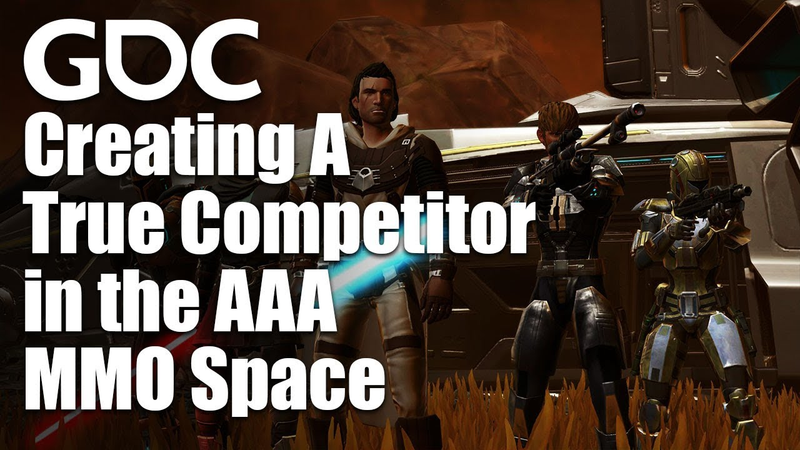
Star Wars: The Old Republic - Creating A True Competitor in the AAA MMO Space
The development of Star Wars: The Old Republic was driven by the ambition to challenge the established AAA MMORPG market through a strategy of product differentiation and massive scale.
- To manage the massive scale of Star Wars: The Old Republic, BioWare employed a workforce of 30 producers, 75 designers, and 120 engineers, with 40 of those engineers dedicated solely to platform management and infrastructure.
- The project set a Guinness World Record for the largest voiceover project ever completed, featuring six times the dialogue of Dragon Age and nine times that of Mass Effect.
- BioWare transitioned from a discipline-based organization to a matrix structure to prevent knowledge silos, using 'strike teams' to manage up to 40 concurrent development groups.

How to make Your First Game TODAY! - (Unity 3D)
Unity 3D serves as a robust entry point for aspiring developers, offering a comprehensive suite of tools for rapid prototyping and game creation.
- Master the Unity interface by utilizing the hierarchy, inspector, and project windows to organize assets and establish 3D environments.
- Implement movement by manipulating the Rigidbody component via user input, using the FixedUpdate method to ensure consistent physics behavior across different hardware.
- Use the SerializeField attribute to expose variables, allowing for real-time adjustments and faster iteration directly within the Unity editor.
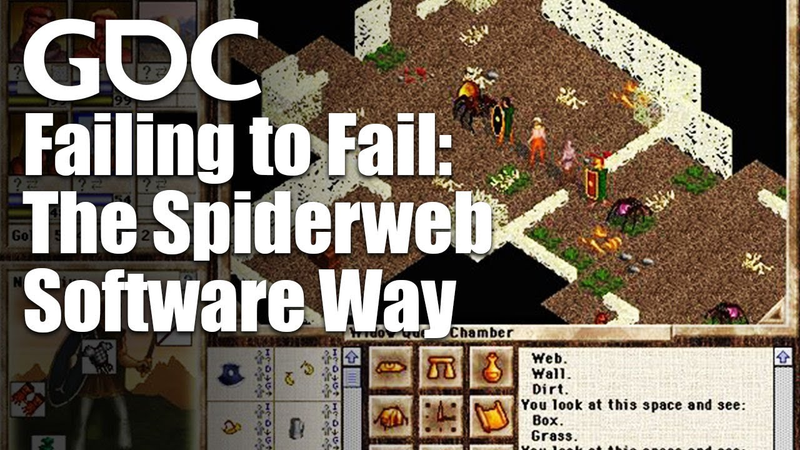
Failing to Fail: The Spiderweb Software Way
The game industry is characterized by extreme volatility and unpredictability, rendering traditional notions of success—such as chasing viral hits or scaling into large organizations—largely unsustainable for independent developers.
- Long-term viability for independent developers is best achieved by cultivating a niche, story-heavy fantasy RPG identity that prioritizes creative autonomy over chasing viral market trends.
- Operational stability relies on a disciplined 18-month development cycle that balances innovation with manageable production costs.
- Developers should adopt lean production methods, including the strategic reuse of assets and the maintenance of a robust back catalog, to ensure consistent output without burnout.

Indie Game Developers and Canada
Canada has emerged as a premier global hub for independent game development, driven by a combination of favorable government policy, a robust professional ecosystem, and high quality of life.
- Canadian provincial governments provide aggressive financial incentives for game studios, including tax credits that can reimburse up to 50 percent of employee salaries.
- Vancouver serves as the primary hub for Canadian independent game development, hosting a high density of mobile developers and indie studios.
- The Canadian ecosystem has successfully fostered high-profile titles such as Celeste and supported the growth of established studios like Klei Entertainment and Hothead Games.
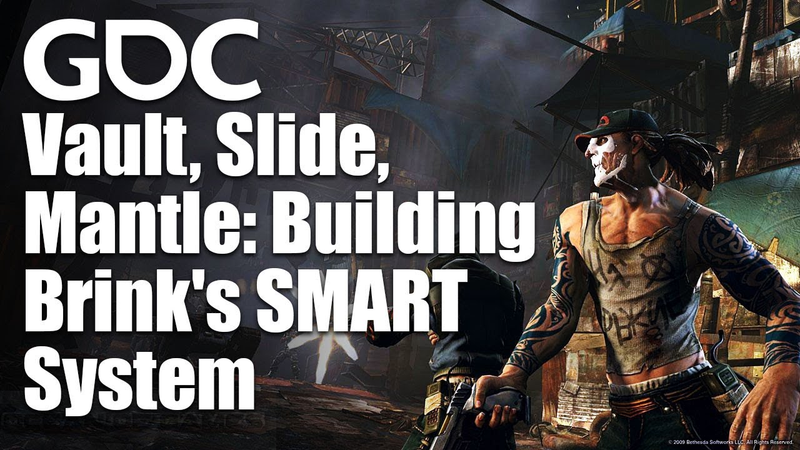
Vault, Slide, Mantle: Building Brink's SMART System
The development of the SMART (Smooth Movement Across Random Terrain) system for the multiplayer first-person shooter Brink aimed to solve the common issue of player characters snagging on environmental geometry.
- Splash Damage developed the 'SMART' movement system for Brink to provide consistent, accessible traversal across diverse maps without requiring manual level-design work for every ledge or obstacle.
- The system utilizes the game's navigation mesh (navmesh) to pre-calculate reachability between areas, storing specific flags for vaulting, mantling, and low-ceiling traversal to assist both AI pathfinding and player movement.
- To optimize performance, the system moved away from the prototype's runtime collision traces—which could reach 8 traces per player per frame—to a BSP tree-based query system that searches for pre-defined reachability segments within a bounding box of 6x2.5 times the player's dimensions.

AI-driven Dynamic Dialog through Fuzzy Pattern Matching
Dynamic dialogue systems in modern gaming rely on fuzzy pattern matching to create reactive, context-aware character interactions without the burden of extensive custom programming.
- Dynamic dialogue systems utilize fuzzy pattern matching to enable reactive, context-aware character interactions without requiring extensive custom programming.
- The architecture represents the game world as a flat database of key-value pairs, allowing writers to create complex narratives that respond to procedural gameplay through a rule-based framework.
- System relevance is maintained by selecting the most specific match—defined by the highest number of matching criteria—when multiple potential responses exist.
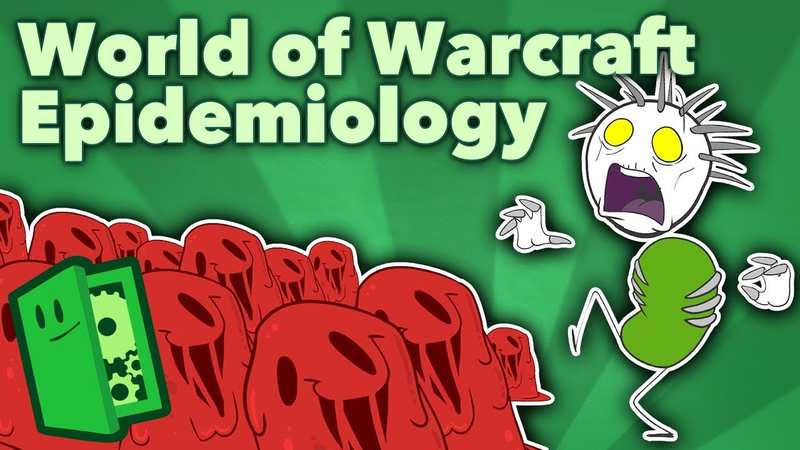
World of Warcraft Epidemiology - The Corrupted Blood Plague (And Why It Matters) - Extra Credits
The 2005 Corrupted Blood incident in the massively multiplayer online game World of Warcraft serves as a significant case study in epidemiology and human behavior during a pandemic.
- The 2005 World of Warcraft 'Corrupted Blood' incident serves as a critical case study for epidemiologists because it provided rare, observable data on human social behavior during a large-scale contagion.
- The outbreak was triggered by a programming oversight in the Zul'Gurub raid zone, allowing a lethal contagion to escape containment via player pets and spread into major virtual population hubs.
- The simulation revealed a spectrum of human responses to pandemics, ranging from altruistic efforts like establishing healing stations and informal quarantines to malicious intentional spreading of the disease.

Once Upon A Coma Documentary
Once Upon a Coma serves as a creative evolution for independent developer Thomas Brush, following the success of his 2016 title, Pinstripe.
- Thomas Brush transitioned from solo development to a collaborative model with developer Eric Coburn to scale the ambition of his latest project, Once Upon a Coma.
- The 18-month development cycle for this title marks a significant increase in scope compared to Brush’s previous 2016 release, Pinstripe.
- The project was born from professional burnout and a crisis of purpose following five years of solo development on Pinstripe, prompting a shift from commercial-metric-driven design to passion-led storytelling.

Game Dev Daily #001 - New Schedule & AI Voice.
This daily development series documents the journey of an independent game developer transitioning to a new content schedule.
- The developer transitioned to a new content schedule featuring a Friday release for long-form content and daily Monday-through-Thursday live streams to balance production with community engagement.
- Development of the game's AI antagonist involved testing seven distinct archetypes, including toxic gamer, bored entity, insecure system, and existential crisis personas.
- The developer identified that moving away from the stereotypical GLaDOS-inspired AI trope toward evolving, emotionally complex character arcs offers higher potential for unique gameplay.
Mastering Crunch Time! - (for Game Developers.)
Sustainable game development during high-pressure crunch periods requires a strategic approach that prioritizes cognitive focus and physical well-being over destructive, long-hour work habits.
- Productivity during crunch is driven by physiological management—specifically maintaining steady blood sugar through fiber-rich nutrition, hydration, and oxygenation—rather than increasing total work hours.
- High-concentration tasks like coding and game design should be scheduled in two-to-three-hour blocks, followed by mandatory 30-to-60-minute breaks to prevent energy crashes.
- Breaks must involve physical movement, such as walking or exercise, to effectively clear the mind and restore cognitive focus for subsequent work intervals.
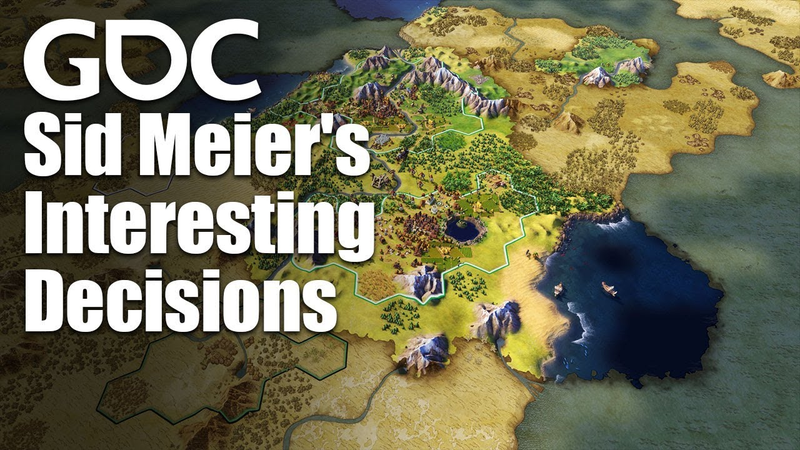
Sid Meier's Interesting Decisions
Game design centers on the creation of interesting decisions, defined as choices that require meaningful trade-offs, reflect individual playstyles, and carry clear consequences.
- Game design must prioritize 'interesting decisions,' which are defined as choices requiring meaningful trade-offs, risk-versus-reward evaluation, and clear consequences.
- Mechanics that do not contribute to the core enjoyment of the experience should be removed regardless of their development stage to preserve the integrity of the gameplay loop.
- Designers should balance short, medium, and long-term goals while limiting the number of simultaneous choices to prevent player fatigue and confusion.