PC reports and market data
Documents

Philophobia - The Fear of Love (Gameplay)
Philophobia: The Fear of Love functions as a challenging, skill-based platformer that draws inspiration from the developer’s personal experiences with heartbreak.
- Philophobia: The Fear of Love is a skill-based platformer centered on a fluid, responsive dash mechanic used for both navigation and puzzle-solving.
- The game’s level design achieves complexity by recombining a limited set of versatile objects, ensuring mechanical variety throughout the experience.
- Boss encounters function as high-stress tests that synthesize specific mechanics introduced throughout each chapter.

51 Game Design Tips! (In 8 Minutes)
Effective game design relies on a combination of technical polish, intuitive mechanics, and creative experimentation.
- Prioritize simple, well-executed mechanics over complex systems, focusing on tight controls and rewarding feedback loops to maximize player engagement.
- Maintain a playable, finished state throughout the entire production process, reserving polish and sound effects for the final stages to reduce development stress.
- Design tutorials that prioritize active learning and experimentation in controlled environments rather than relying on static text instructions.

Mirror's Edge Catalyst: Evolving and Creating a Style
Mirror’s Edge Catalyst establishes a distinct visual identity by balancing minimalist artistic expression with the functional requirements of an open-world traversal system.
- DICE established a '70/30' design rule for Mirror's Edge Catalyst, where 70% of the environment is based on real-world precedents and 30% is stylized to maintain a distinct, futuristic aesthetic.
- The team utilized a 'less is more' philosophy to create an elegant, minimalist world, intentionally removing visual noise, dirt, and clutter to emphasize clean, pristine shapes.
- To ensure visual consistency, the team defined strong keywords and used mood boards to align the entire development team on the game's core tone and aesthetic goals.

Epic Sync: Wrangling the Work of Highly Interdependent Dev Teams at Bungie
To scale the development of Destiny 2, Bungie transitioned from a traditional, discipline-siloed waterfall model to a structure comprising over 40 semi-autonomous, cross-disciplinary agile teams.
- Bungie scaled Destiny 2 development by transitioning from a siloed waterfall model to a structure of over 40 semi-autonomous, cross-disciplinary agile teams.
- The studio manages interdependencies through a quarterly Planning Day that brings approximately 300 developers together to align on 12 weeks of work.
- Physical artifacts, including dependency and risk boards, are used alongside digital tools like JIRA and TFS to visualize bottlenecks and secure formal commitments.

A Day In The Life: Indie Game Development
The life of an independent game developer is characterized by a high degree of autonomy, constant multitasking, and the necessity of balancing creative output with the psychological pressures of entrepreneurship.
- Indie game development requires balancing creative output with the psychological demands of entrepreneurship, necessitating a disciplined routine to manage inherent industry instability.
- Developers must function as multidisciplinary project managers, handling tasks ranging from Unity programming and animation to marketing and community engagement on platforms like Discord.
- Effective production requires the use of task-tracking software to pivot between flexible development phases and the rigid requirements of a launch window.
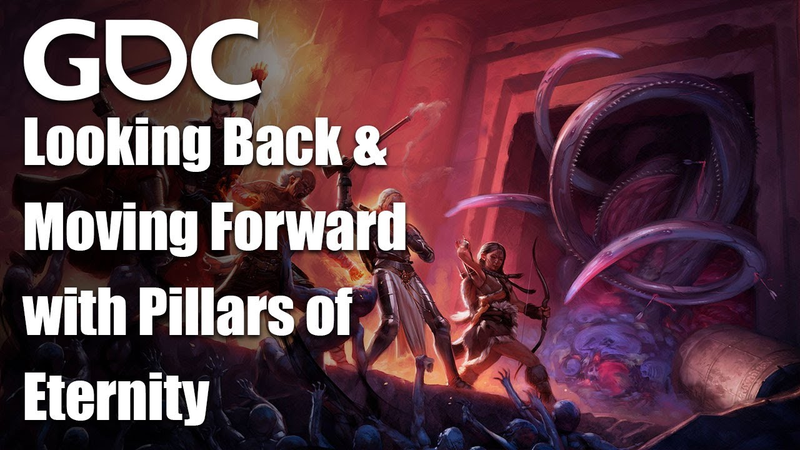
Looking Back and Moving Forward with Pillars of Eternity
Reviving the isometric role-playing game genre requires a delicate balance between honoring the legacy of titles like Baldur’s Gate and integrating modern quality-of-life expectations.
- Reviving isometric RPGs requires balancing classic atmospheric design with modern quality-of-life standards, specifically prioritizing high-fidelity character detail, dynamic environments, and intuitive user interfaces.
- User interface design should prioritize usability and robust modding support over rigid aesthetic adherence, utilizing accessible file formats to foster long-term community engagement.
- Systemic features like stronghold systems fail to resonate unless they are supported by meaningful, quest-driven content rather than just mechanical depth.

Games You Might Not Have Tried - ep 18 - Game Jam Edition! - Extra Credits
Game jams serve as vital incubators for experimental game design, providing a platform for developers to explore niche mechanics and abstract themes within constrained timeframes.
- Game jams function as essential incubators for experimental design by forcing developers to prioritize core mechanics over high-fidelity polish.
- The December game jam featured seven distinct titles—Anybody Home, INNST, Last Minute Delivery, Omnipresent, Retroactive, Grow, and White Elephant—all centered on the theme of 'presence'.
- Short-form development cycles demonstrate that meaningful player engagement can be achieved through singular, well-executed concepts rather than extensive production resources.
State of the Game Industry 2019
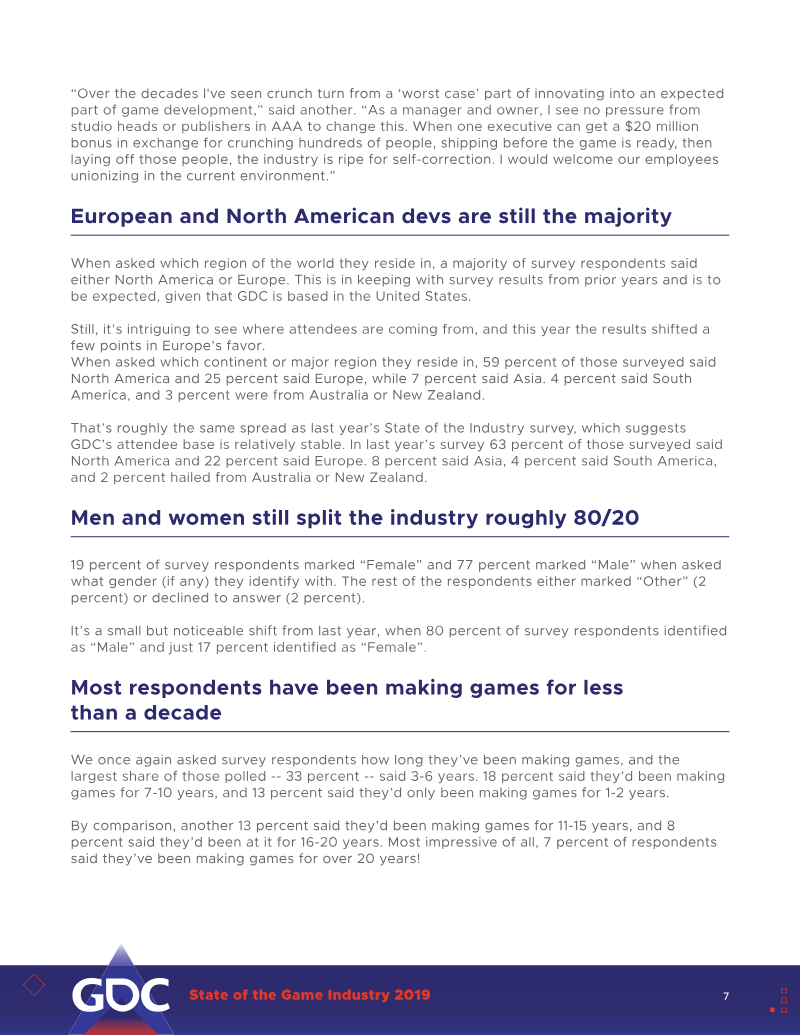
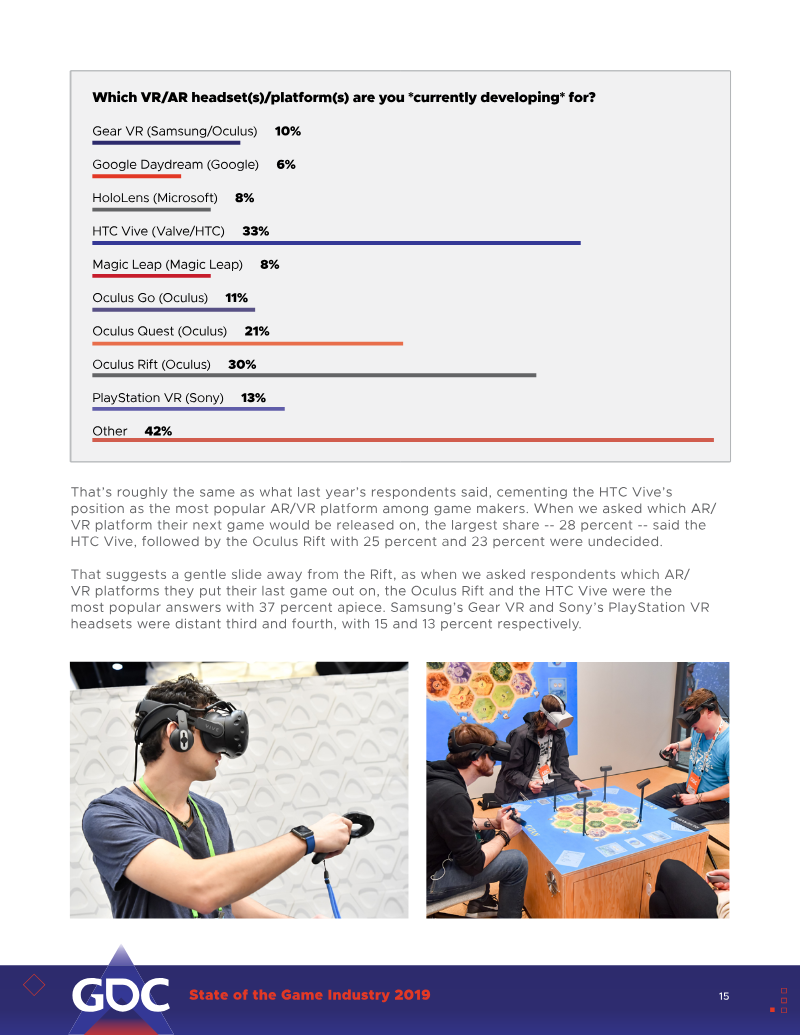
The global game development landscape in 2019 reflects a period of significant structural and cultural transition.
- Developers are increasingly challenging the industry-standard 30 percent revenue share model on Steam, viewing it as an unjustifiable financial burden.
- The industry is shifting toward self-funding and self-publishing models as interest in traditional monetization strategies like loot boxes and crowdfunding declines.
- Labor instability is driving a growing movement toward unionization to address systemic issues, including widespread overtime and a workforce demographic primarily composed of male professionals with under ten years of experience.

Make A Gorgeous Start Menu (Unity UI Tutorial)!
Developing a professional, responsive start menu in Unity requires a structured workflow that begins with high-fidelity design.
- Establish a consistent UI across resolutions by using the Canvas Scaler component set to scale with screen size and utilizing sliced sprite modes to preserve asset integrity.
- Create a high-fidelity visual baseline by designing 4K mock-ups in external software like Photoshop or Illustrator before exporting individual assets as PNGs.
- Implement dynamic visual feedback by using an Animator state machine to manipulate scale and color properties rather than modifying rect-transform dimensions.

How I Got My Mom to Play Through Plants vs. Zombies
Effective game design prioritizes intuitive, seamless onboarding by integrating instructional elements directly into the core gameplay loop.
- Integrate instructional elements directly into the core gameplay loop to replace text-heavy tutorials, which disrupt immersion and feel like work.
- Use staggered pacing to introduce new mechanics only when they are immediately relevant to the player's progress.
- Leverage real-world analogies, such as plants as defensive towers, to reduce cognitive load by allowing players to apply existing knowledge to new mechanics.
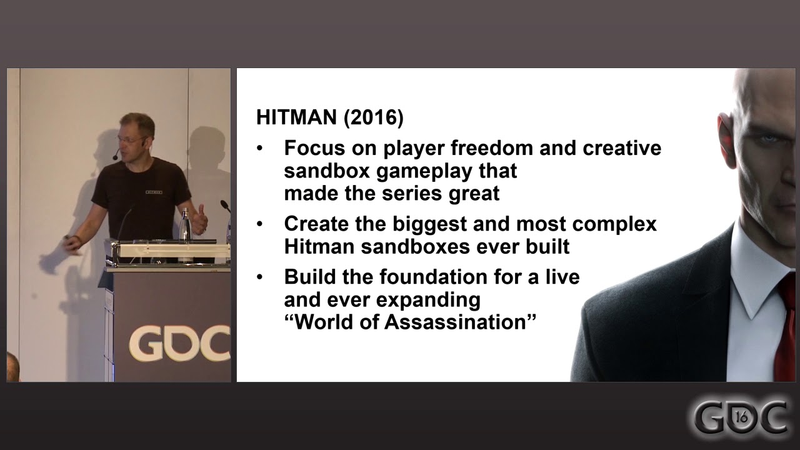
HITMAN Season 1: From Executive Producer to Showrunner
The transition of the Hitman franchise to an episodic, live-service model represents a strategic shift from static, retail-dependent releases toward a continuous World of Assassination.
- Transitioning to an episodic release model allows developers to react to player feedback in real-time, overcoming the long development cycles that previously separated titles like Blood Money and Absolution by six years.
- Data-driven development requires balancing 'hard facts' (in-game telemetry like feature usage and play duration) with 'soft facts' (community sentiment from Reddit, Twitter, and Facebook) to inform production decisions.
- The shift to a live-service model necessitates a 'war room' approach where international publishing and marketing teams meet weekly to align on global territory requirements, pricing, and communication strategies.

How To Finish Long Game Projects!
The primary challenge for indie game developers is the inability to complete long-term projects, which serves as a critical barrier to success.
- Adopt an iterative development strategy by finishing a fully functional, releasable version of your game every three months.
- Limit project scope by condensing long-form concepts into shorter, complete experiences that still contain essential pillars like tutorials, boss fights, and narrative.
- Utilize Parkinson’s Law by setting strict, short-term deadlines to increase productivity and prevent tasks from expanding to fill indefinite timeframes.