PC reports and market data
Documents
THIS IS A WARNING! - Indie Game Devlog
This account of indie game development provides a realistic, unvarnished look at the daily operations of a professional developer.
- Professional game development is defined more by tedious maintenance, bug fixing, and administrative tasks than by creative design work.
- Post-launch success for a title like Islanders requires managing significant technical debt, including verifying save-file compatibility and resolving platform-specific issues on Linux and Mac.
- The daily reality of an indie developer involves substantial bureaucratic burdens, such as legal entity formation and tax documentation, which frequently consume time intended for game production.
All Systems No: Learning from the Doomed Launch of Brigador
The debut of the indie title Brigador serves as a cautionary case study on the disconnect between critical acclaim and commercial viability.
- Marketing must prioritize conveying the subjective player experience over technical feature lists, as traditional trailers often fail to communicate a game's core value proposition.
- Personality-driven outreach and candid discourse on public forums can be highly effective, with such efforts accounting for approximately one-third of total sales for niche titles.
- Indie developers should prioritize intuitive onboarding over complex tutorials, as the majority of players drop off within the first two hours of gameplay.

How To Make A 2D Game (Unity Basics)!
This analysis explores the technical architecture and development workflow of a 2D side-scrolling game, specifically focusing on the Unity engine implementation of a project titled Once Upon a Coma.
- Performance on hardware like the Nintendo Switch is optimized by using screen boxes to deactivate objects outside the player's current view, significantly reducing GPU and CPU load.
- High-resolution Photoshop assets can be reduced to under one megabyte without noticeable quality loss by using Unity’s crunch compression for PNG exports.
- Visual depth in 2D side-scrollers is achieved through an orthographic camera system that calculates parallax movement speeds based on an element's position on the z-axis.
Designing Gambit Mode in Destiny 2: Forsaken
Gambit serves as a hybrid PvE-PvP mode for Destiny 2, designed to offer a fresh, replayable endgame ritual by blending AI-focused combat with competitive tension.
- Gambit was designed as a PvE-focused end-game ritual for Destiny 2: Forsaken, utilizing a core design philosophy of 'Firefight meets Super Puzzle Fighter' where players send 'blocker' AI units to hinder the opposing team.
- The development team implemented a 'ready room' to allow teams to see each other before matches, facilitating social interaction, loadout adjustments, and the introduction of an in-game announcer.
- To balance the risk-reward mechanic of carrying motes, the team reduced the penalty for dying during an invasion from five motes to three, encouraging more players to engage in PvP combat.
2014 vs. 2018: The Shape of Financial Success Before and After the Indiepocalypse
The independent game industry has undergone a fundamental structural shift, moving away from a centralized, press-driven launch model toward a decentralized ecosystem defined by long-term community engagement.
- The independent game industry has shifted from a centralized, press-driven launch model to a decentralized ecosystem reliant on long-term community engagement.
- Market saturation following the transition to open-access storefronts has replaced traditional platform-vetted visibility with discovery driven by YouTube and Twitch.
- Financial success in the post-2018 market is increasingly tied to 'infinite situation generators' that foster ongoing player expression rather than short, consumable experiences.
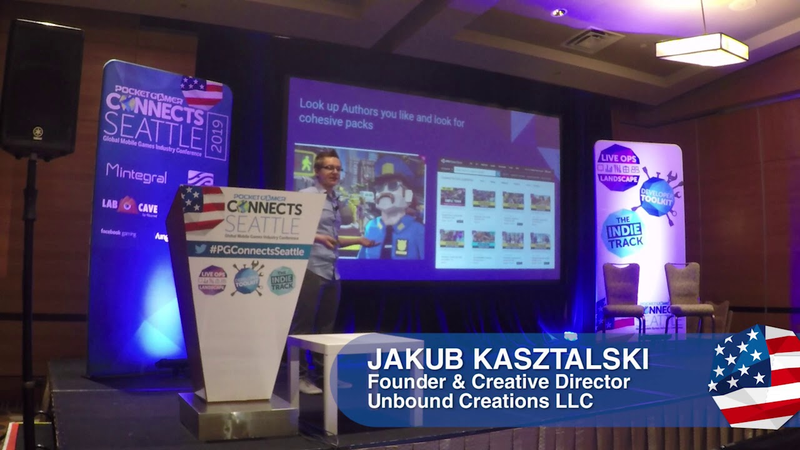
How to mix third-party assets without your game looking cheap
Jakub Kasztalski, founder of Unbound Creations, provides a strategic framework for independent developers to utilize third-party assets without compromising visual cohesion or quality.
- The perception of 'cheap' third-party assets is primarily caused by a lack of artistic direction and visual inconsistency rather than the quality of the assets themselves.
- Developers should establish a clear visual vision during pre-production by creating mood boards, conducting competitor research, and developing a style guide to filter asset selection.
- Disparate assets can be harmonized using post-processing techniques such as adjusting hue, saturation, lighting, and shaders to ensure they align with the game's unified aesthetic.

Watch This Before You Make Your First Game!
The primary purpose of this analysis is to outline the psychological and professional challenges inherent in developing a first video game.
- Completing a project is essential for building professional and mental resilience, regardless of the final commercial success of the game.
- Game development is a long-term exercise in endurance where initial project infatuation inevitably gives way to extended periods of monotony and doubt.
- Developers should anticipate five common psychological hurdles: imposter syndrome, loss of passion, the urge to quit, anxiety, and the social difficulty of explaining the development process to non-industry peers.
9 Takeaways from Duelyst: From Tabletop to Digital Game
The development of Duelyst demonstrates a strategic transition from physical tabletop prototyping to a refined digital tactical experience.
- To ensure high-frequency engagement, prioritize matchmaking quality by using real-time monitoring tools to track performance metrics, aiming for a quality score above 0.5 to identify and resolve balance or algorithm issues early.
- Design for short, high-intensity sessions by setting strict constraints on match duration; the Duelyst team successfully reduced average match times from 15 minutes to under 10 minutes through iterative card tuning.
- Launch digital games on web-based platforms initially to enable rapid deployment of balance updates and patches, which allows for faster iteration cycles without requiring players to download frequent client updates.
I PLAYED YOUR GAMES! | Let's Talk Game Design.
This analysis examines a series of design critiques provided for various indie game projects submitted by a community of developers.
- Prioritize gameplay-critical visual elements over decorative particles in top-down shooters to minimize visual clutter and improve player clarity.
- Design puzzle game levels with compact playing fields to ensure players can immediately grasp the full scope of a challenge.
- Combat mechanics in action titles should incorporate environmental hazards and varied enemy behaviors to prevent repetitive, close-range spamming and encourage strategic depth.
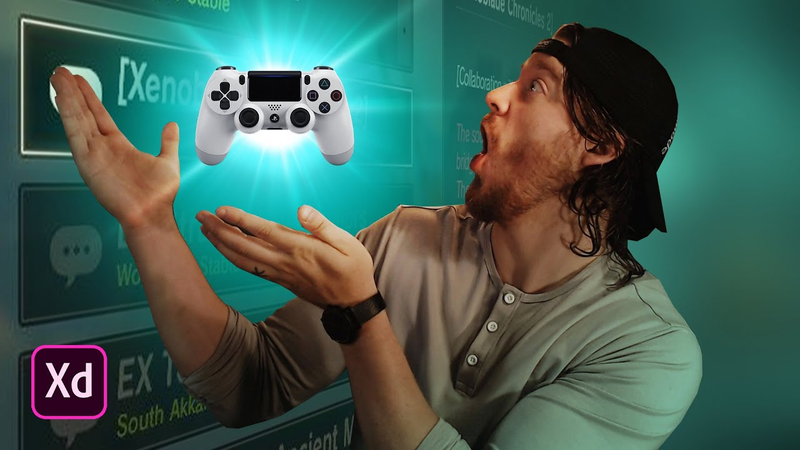
Prototyping Your Game With A Gamepad (Adobe XD Tutorial)!
Effective game development requires seamless collaboration between technical developers and creative designers to prevent miscommunication and wasted production time.
- Adobe XD allows developers to map physical controller inputs, such as D-pad directions and action buttons, directly to menu navigation triggers for real-world UX testing.
- Using 1920x1080 artboards in Adobe XD ensures prototypes align with the standard display resolutions of major gaming platforms, including Steam, Nintendo Switch, PlayStation, and Xbox.
- The software’s auto-animation feature creates fluid transitions by automatically interpolating changes in scaling, opacity, and position between identical object groups on different artboards.
The History of Roguelike Deckbuilders - From Playing Cards to CCGs and Beyond - Extra Credits
The evolution of card-based gaming traces a path from traditional playing cards to the modern roguelike deckbuilder genre.
- Slay the Spire served as the critical inflection point for the roguelike deckbuilder genre, refining procedural dungeon exploration and strategic card progression into a commercially successful and highly accessible format.
- The 2014 title Dream Quest was the first to successfully integrate roguelike procedural generation with deck-building mechanics.
- The 2008 release of Dominion revolutionized card gaming by shifting deck-building from a pre-game meta activity into a core, real-time gameplay loop.
Dead Cells: What the F*n!?
Dead Cells functions as a definitive case study in the successful synthesis of roguelike permadeath and Metroidvania exploration, a hybrid genre the developers term rogue-vania.
- To mitigate the frustration of permadeath, Dead Cells implements a 'cells' currency system where players lose resources upon death but retain permanent progress toward weapon and skill unlocks.
- The game minimizes downtime by keeping the post-death loop to approximately 10 seconds, removing unnecessary stat screens and forcing an immediate return to action.
- To ensure combat and movement feel fair rather than punishing, the developers implemented 'coyote time' mechanics, such as auto-teleporting players to platforms if they are within a few pixels of success.