Monetization reports and market data
Documents

Ad placements & Ad monetization trends in Mobile Games - September 2024
Mobile game monetization is currently defined by a strategic shift toward aggressive ad placement and design loops that prioritize high-volume user acquisition over traditional in-app purchases.
- Mobile game monetization is shifting from in-app purchases toward high-volume ad-driven revenue models, particularly in ultra-casual and puzzle genres.
- Core gameplay mechanics are increasingly being gated behind ad-walls, forcing players to engage with rewarded ads to progress.
- Developers are utilizing high-pressure UI patterns, such as delayed exit buttons and deceptive sliders, to drive conversions toward ad-removal subscriptions.

Turning Metrics Into Mobile Wins with Safia Dawood
The mobile gaming industry has transitioned from a period of rapid expansion to a more challenging landscape defined by declining download volumes.
- Top-performing games are defying the industry-wide decline in downloads by prioritizing high player retention and repeat purchase rates rather than relying on broad, one-size-fits-all acquisition strategies.
- Successful mobile games are increasingly shifting toward hybrid monetization models that integrate both In-App Purchases (IAP) and ad-based revenue to maximize lifetime value.
- Market leaders differentiate themselves by focusing on small, incremental gains across the entire user journey—from tutorial completion to monetization—rather than seeking singular, large-scale breakthroughs.

What Are Rewarded Ads? A Complete Guide for Mobile Game Developers
Rewarded advertising serves as a critical monetization and retention strategy for mobile game developers, functioning by offering players tangible in-game incentives in exchange for engagement.
- Strategic implementation of rewarded ads, such as those used by Homa Games, can improve key performance indicators by up to 130 percent within a single month.
- Campaign management requires a minimum testing cycle of 14 days to ensure statistical significance, supported by a baseline of 150 to 200 daily installs.
- Developers should direct 70 percent of traffic toward Tier 1 markets to maintain industry-standard performance levels.

Indie Publishing and Growth Strategies with Sebastian Forsström, Head of Paradox ARC
Paradox ARC functions as a specialized publishing division designed to recapture the agility of early-stage game development by supporting high-potential indie projects that fall outside the scope of larger, franchise-driven titles.
- Paradox ARC prioritizes 'endlessly replayable' titles based on the ALICE pillars: emergent narrative, living worlds, inviting gameplay, cerebral challenges, and long-term engagement.
- The publishing model utilizes two tracks: a prototype track where the publisher retains IP ownership, and a co-publishing track based on revenue sharing and minimum guarantees.
- Success is measured by qualitative metrics such as community growth and responsiveness to iterative updates rather than rigid milestone schedules or short-term sales spikes.
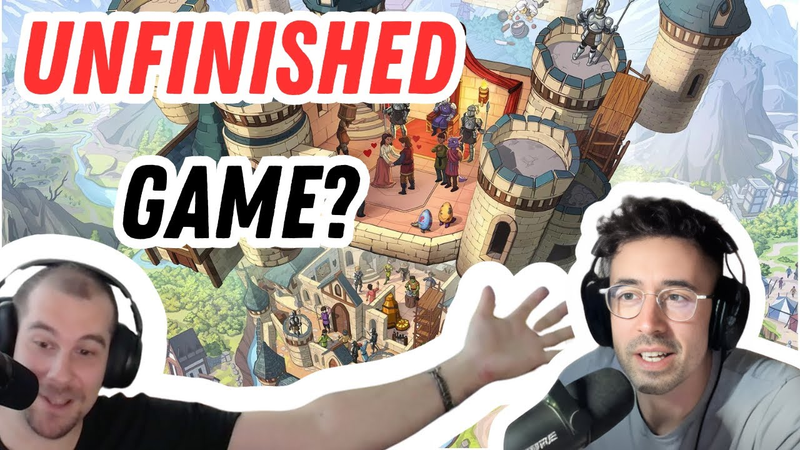
Elder Scrolls Castles: Flop with the most successful iteration of this core gameplay
Elder Scrolls: Castles represents a derivative entry in the mobile management genre, struggling to maintain momentum despite leveraging the high-profile Elder Scrolls intellectual property.
- Elder Scrolls: Castles experienced a sharp decline in player interest, with daily downloads dropping from an initial 230,000 to 40,000.
- The game struggles to generate significant revenue, with recent estimates placing daily ad income between only $9,000 and $12,000.
- The core gameplay loop, which combines mechanics from Fallout Shelter and Hustle Castle, is hindered by restrictive health-based gating and a punishing resource management cycle that creates player death spirals.
What is LTV in Mobile Apps World? What You Need to Know
Sustainable success in the mobile application industry requires shifting focus from vanity metrics like total download counts to the more critical analysis of user monetization and lifetime value.
- Lifetime Value (LTV) is the primary metric for measuring total revenue generated by a user throughout their entire engagement with an application.
- Developers must prioritize LTV and user monetization over vanity metrics like total download counts to ensure long-term financial sustainability.
- LTV should be calculated using cohort-based tracking, which groups users by their specific installation date to isolate the performance of distinct segments.

Unicorns, Camels, and Hogs: How Smart Ad Monetisation Saves Your App from Getting Eaten Alive
Mobile game studios frequently struggle due to a creative-first bias that prioritizes gameplay design while neglecting the financial potential of the 95% of users who never make in-app purchases.
- Developers must monetize the 95% of users who never make in-app purchases by treating ad revenue as a core pillar of product architecture rather than an afterthought.
- Ad monetization should be integrated into the initial design phase to ensure long-term viability and prevent the common creative-first bias that neglects financial potential.
- Rewarded ad experiences allow studios to monetize non-paying players without negatively impacting user retention or the overall player experience.

Using AI to decide if it's worth showing ads in your app
The primary objective of this analysis is to demonstrate how developers and user acquisition managers can leverage generative AI to perform complex data analysis without requiring advanced SQL expertise or a dedicated data science team.
- Developers can use generative AI to analyze the correlation between in-app purchase lifetime value and ad revenue to determine if ads will cannibalize high-value user spending.
- By uploading a database schema to an AI tool, non-technical teams can generate complex SQL queries to perform statistical analysis without needing dedicated data scientists.
- A weak or positive correlation coefficient between ad revenue and in-app purchases serves as a data-driven justification for testing ad monetization strategies.

How To Make Money As A Game Dev — Full Time Game Dev Podcast Ep. 019
Achieving financial sustainability as an independent game developer requires shifting away from the high-risk, single-project model toward a high-frequency release strategy.
- Shift from a high-risk, single-project model to a high-frequency release strategy to mitigate the dangers of market oversaturation and individual project failure.
- Optimize revenue for smaller, niche titles by pricing them between $2.99 and $9.99, with a specific sweet spot identified at $4.99 to $5.99.
- Prioritize console development over Steam to leverage higher natural discoverability and avoid the burnout associated with the massive marketing efforts required to succeed on the Steam marketplace.
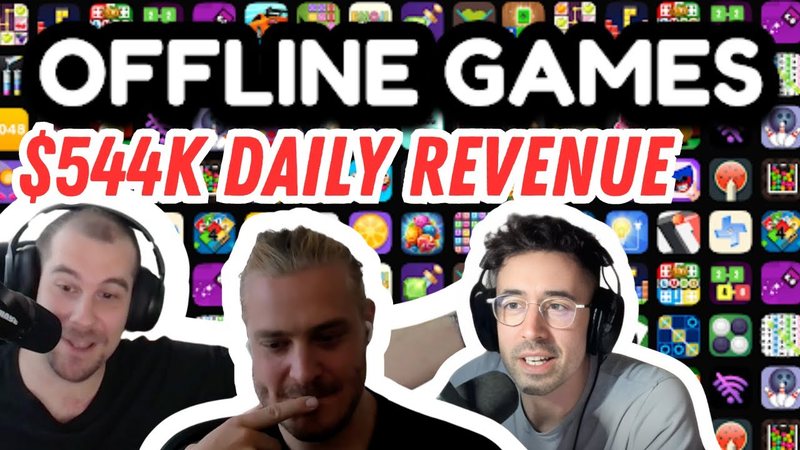
Offline games - No WIFI games: The most profitable game in the world
The collection of titles marketed under the Offline Games and No Wi-Fi Games banner represents a highly successful model of organic growth in the mobile gaming sector.
- The 'Offline Games' portfolio achieves massive scale with 1.5 million daily downloads and 7 to 8 million daily active users, primarily driven by demand in emerging markets like India and Brazil.
- The platform generates significant daily revenue ranging from $200,000 to $600,000, relying almost exclusively on rewarded video advertising rather than in-app purchases.
- Growth is fueled by organic discovery and aggressive cross-promotion across an interconnected suite of titles, eliminating the need for traditional paid user acquisition.

WeChat Mini-Games: Exploring the World of Mini-Games with Lemon!
The Chinese mini-game market has emerged as a high-growth sector, characterized by a 48% increase in market size during 2023 and a projected reach of 400 million monthly active users by 2024.
- The Chinese mini-game market grew by 48% in 2023 and is projected to reach 400 million monthly active users by 2024.
- Successful mini-games are now complex, fully featured experiences developed by lean teams of 5 to 30 people within accelerated two-to-three-month production cycles.
- Loot Box RPGs dominate the market, accounting for approximately one-third of total revenue through addictive progression loops and meta-systems.

Impulse Brain Training games: A hyper scaling app masquerading as a brain training
Impulse Brain Training operates as a high-scale mobile product that utilizes the guise of cognitive improvement to deploy hyper-casual gaming mechanics.
- Impulse Brain Training generates $5 million to $6 million in monthly revenue with approximately 90,000 daily downloads by positioning hyper-casual gaming as a wellness and cognitive improvement tool.
- The app targets women aged 35 and older through Facebook advertisements that utilize emotional health assessments, such as ADHD or anxiety screenings, to drive user acquisition.
- Monetization relies on a friction-heavy model that increases ad frequency over time, incentivizing users to purchase subscriptions to remove advertisements.