Monetization reports and market data
Documents
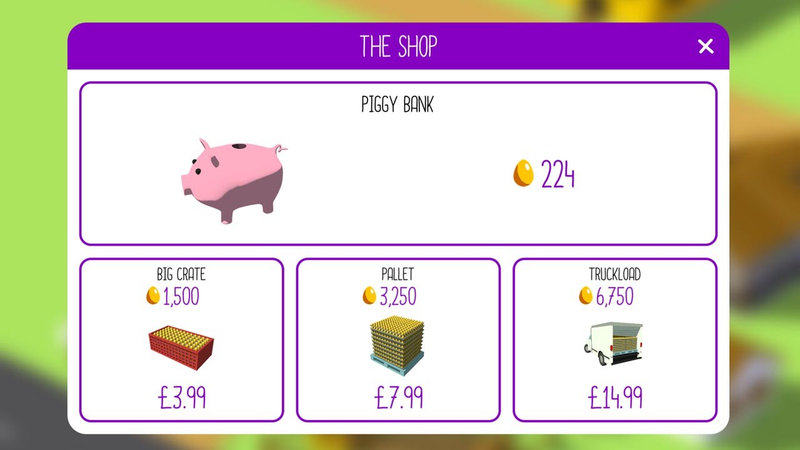
Egg Inc.'s neat self-pricing Piggy Bank IAP
The idle game Egg Inc. utilizes a creative monetization strategy centered on a self-pricing Piggy Bank in-app purchase (IAP) system.
- Egg Inc. utilizes a 'Piggy Bank' system where players accumulate premium currency through routine gameplay actions like researching upgrades and purchasing items.
- The Piggy Bank features a fixed monetary cost to unlock, but the amount of currency received scales based on the player's time and engagement levels.
- This model allows players to determine their own price-to-value ratio by choosing to 'crack' the vault only when the accumulated currency exceeds the value of standard store offerings.
Optimize your F2P monetization using these Asian techniques
The primary thesis of this analysis is that Western mobile game developers can significantly enhance their monetization and lifetime value (LTV) by adopting established free-to-play (F2P) methodologies pioneered in Asian markets.
- Western developers can increase revenue and lifetime value (LTV) by integrating proven F2P monetization methodologies pioneered in Asian PC and mobile markets.
- Successful F2P monetization relies on the principle of arbitrage, where developers must ensure user LTV consistently exceeds the cost of acquisition.
- To maximize revenue, developers should implement advanced systems including aggressive PvP competition, complex progression loops, and calibrated gacha mechanics.

Monetizer: Rival Fire
Rival Fire, a mobile shooter developed by Glu Mobile, represents a significant evolution in the company’s monetization strategy by integrating complex, RPG-inspired mechanics into a traditional arcade-style shooter framework.
- Glu Mobile’s Rival Fire marks a strategic shift for Western developers by adopting Asian-market monetization models, specifically through a partnership with Tencent.
- The game replaces high-cost, singular purchases with a granular, component-based upgrade system for weapons, armor, and squad gear to drive recurring spending.
- Monetization is sustained through a cycle of micro-rewards and RPG-inspired mechanics, including VIP status systems, daily tasks, and gacha-style loot crates with guaranteed high-tier drops.

How Glu evolved Frontline Commando from guns to girls and gacha
The evolution of Glu Mobile’s Frontline Commando franchise between 2011 and 2016 illustrates a broader industry shift from simple, linear mobile shooters toward complex, meta-heavy experiences influenced by Asian market design trends.
- Between 2011 and 2016, Glu Mobile shifted the Frontline Commando franchise from simple linear shooters to complex, meta-heavy experiences modeled after Asian mobile gaming trends.
- The 2016 title Rival Fire marked a definitive pivot toward high-frequency reward structures, replacing basic gear purchases with granular progression systems for individual weapon components and character stats.
- Glu Mobile expanded the franchise's social ecosystem in 2016 by integrating guilds, global chat, and friend-based assistance to drive long-term player retention.

What's the deal with Game of War's terrible playable ads
The mobile gaming industry faces a growing disconnect between promotional content and actual gameplay, exemplified by the aggressive advertising strategies employed by Machine Zone for titles like Game of War and Mobile Strike.
- Machine Zone utilizes deceptive playable ads for titles like Game of War and Mobile Strike that feature mechanics, such as tower defense or dungeon runners, which are entirely absent from the actual core gameplay.
- The industry-wide practice of prioritizing high-volume user acquisition through misleading ads creates a disconnect that frequently leads to immediate player frustration and uninstalls.
- Aggressive, non-representative advertising strategies risk long-term brand degradation and damage the retention metrics of both the advertised product and the host application.

How Blackjack Free improved its retention
MobilityWare’s Blackjack Free, originally released in 2008, serves as a case study for the evolution of mobile game monetization and player retention.
- MobilityWare increased daily retention by 300% and IAP revenue by 400% by transitioning Blackjack Free from a static product to a live-operated service.
- The implementation of a tiered table system allowed players to progress from beginner levels to high-stakes environments, providing long-term goals beyond the core gameplay loop.
- An achievement system was introduced to reward specific milestones, such as winning a set number of chips or playing a specific quantity of hands, to foster a sense of accomplishment.

FTUE: Iron Maiden: Legacy of the Beast
Iron Maiden: Legacy of the Beast is a mobile role-playing game (RPG) developed by Roadhouse Interactive that leverages the intellectual property of the British heavy metal band Iron Maiden.
- Roadhouse Interactive developed Iron Maiden: Legacy of the Beast as a mobile RPG that centers on collecting and upgrading various iterations of the band's mascot, Eddie.
- The game utilizes a turn-based combat system featuring elemental advantages, skill-based attack timing, and a 'fury' ultimate ability.
- Progression is driven by a gacha-style summoning mechanic for characters, supported by a resource management loop involving talismans, shards, and energy systems.

Next Games - 비디오 광고 수익 극대화를 위한 Top Tip!
The integration of video advertisements into mobile games serves as a powerful tool for both monetization and player engagement, provided the implementation is strategic and user-centric.
- Strategic video ad integration can boost key financial metrics, as evidenced by Compass Pointe West, which saw a 20% increase in repeat purchases, a 15% higher conversion rate, and a 50% increase in average revenue per paying user.
- Well-executed ad strategies do not cannibalize in-app purchases; instead, they act as a gateway to the premium economy by allowing non-paying users to experience premium items.
- High-performing ad implementations can achieve a 75% daily active user engagement rate, generating an average of six cents per player daily.

How Build Away! integrates rewarded video ads
The idle mobile game Build Away, developed by Helsinki-based studio Futureplay, serves as a case study for the integration of rewarded video advertising as a primary monetization strategy.
- Futureplay’s Build Away! utilizes rewarded video ads as its primary monetization strategy rather than relying on traditional direct in-app purchases.
- The game’s core loop incentivizes ad consumption by offering players tangible benefits, such as doubling offline earnings, accelerating production timers, and extending resource delivery windows.
- The design prioritizes a low-friction, minimalist experience to achieve the massive user scale necessary to make an ad-supported revenue model lucrative.

Rewarded video ads in Pele Soccer Legend
Pele Soccer Legend utilizes rewarded video advertisements as a primary monetization strategy within its free-to-play mobile framework.
- Pele Soccer Legend monetizes its free-to-play model by integrating rewarded video ads into both macro-level energy management and micro-level mission mechanics.
- The game uses a heart-based energy system that allows players to replenish depleted energy by watching rewarded videos, providing a non-monetary alternative to waiting or spending currency.
- Rewarded ads are embedded directly into core gameplay, offering players additional kicks or level restarts after a failure to reduce friction and maintain session length.
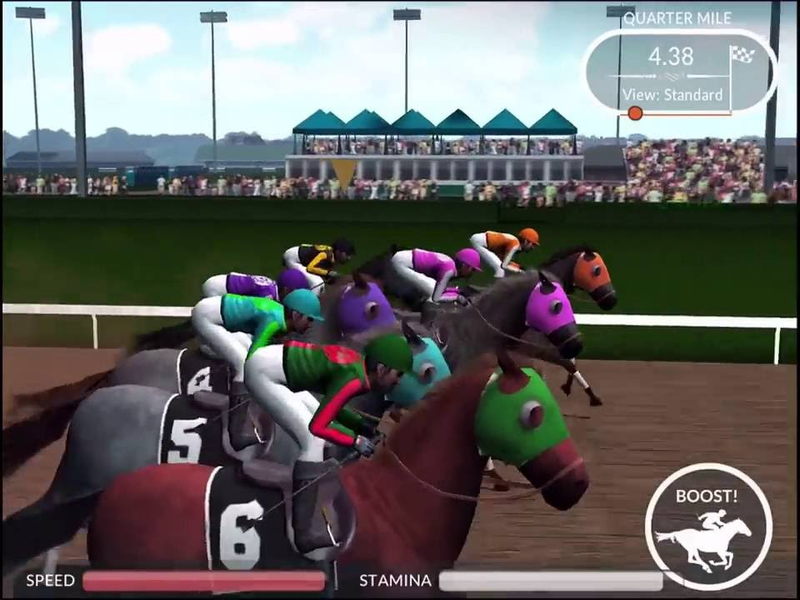
Monetizer: Photo Finish Horse Racing
Photo Finish Horse Racing serves as a case study for the efficacy of post-launch publishing partnerships in the mobile gaming industry.
- A publishing partnership with Tilting Point enabled Photo Finish Horse Racing to achieve a 32-fold increase in total revenue and a 1,000 percent growth in downloads.
- Strategic alignment of user acquisition campaigns with the real-world US horse racing season was a primary driver for the game's commercial revitalization.
- Post-launch implementation of advanced analytics and refined monetization systems resulted in a nearly 2,000 percent increase in daily player retention.

FTUE: Sky Force Reloaded
The mobile shoot-em-up genre has historically functioned as a staple of arcade-style gaming, but recent market trends show a shift toward integrating these classic mechanics into free-to-play (F2P) frameworks.
- Sky Force Reloaded successfully integrates traditional skill-based arcade gameplay with modern free-to-play meta-progression systems.
- The game utilizes a cyclical resource-collection loop, requiring players to gather stars to upgrade ship components like health and main cannons.
- Progression is managed through a gating strategy that mandates repeated mission play, which serves to balance the game's difficulty curve.