Monetization reports and market data
Documents
The Chinese Mobile Market in 2019
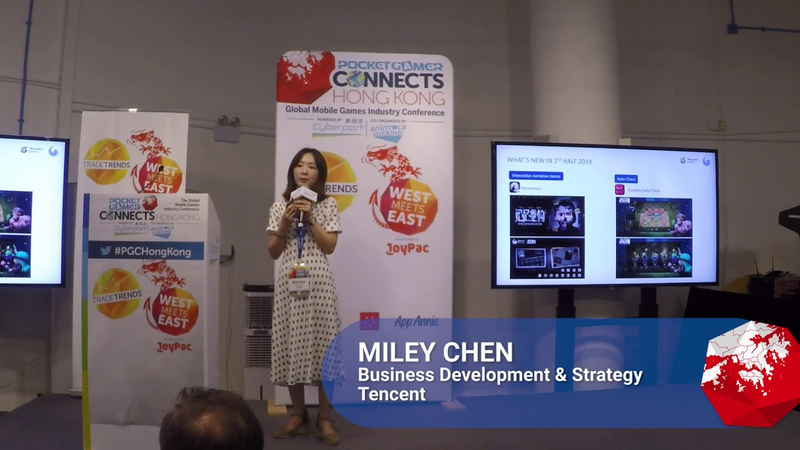
The Chinese mobile gaming market in 2019 is characterized by extreme consolidation, high barriers to entry, and a shift toward sophisticated, hardcore gameplay experiences.
- Tencent dominates the Chinese mobile market with a 52.25% share, followed by NetEase at 14.96% and 37Games at 6.48%.
- The Chinese mobile market has become highly consolidated and growth has stabilized due to government regulation, the end of the 'geographic dividend' of new users, and the dominance of top-grossing titles.
- Android devices account for 55% of mobile game revenue in China, and the top 10 Android app stores control over 87% of the market, making them essential for successful distribution.

31Billion $ by 2020, Growing Your Games in China
The Chinese mobile gaming market represents a significant growth opportunity for international developers, characterized by its massive scale and unique operational requirements.
- China represents the world's largest mobile gaming market, accounting for 25% of global game spending in 2018.
- Mobile gaming's share of the Chinese market has grown from 12% in 2012 and is projected to reach 75% by 2020.
- Successful entry into the Chinese market requires replacing Western login and payment systems (such as Facebook, Google, and PayPal) with local alternatives like WeChat, QQ, Weibo, Alipay, and UnionPay.
Deconstruction of Chinese Mobile Game Monetization
The monetization strategy of the Chinese mobile game market is exemplified by the performance of Contra Returns, which has generated an average of $40 million monthly in China since its 2017 launch.
- Contra Returns has maintained an average monthly revenue of $40 million in the Chinese market since its launch in 2017.
- Top-tier Chinese mobile games prioritize meta-game depth, aggressive social integration, and multi-layered monetization frameworks over traditional Western focuses like graphics and gameplay fluidity.
- The monetization model utilizes a tiered resource system where paying users receive resource yields at a three-to-one ratio compared to non-paying players.
The Importance of Data-Driven Design in F2P
Data-driven design serves as the foundational roadmap for successful free-to-play (F2P) game development, particularly during the post-launch phase of live operations.
- Players who engage for seven consecutive days are significantly less likely to churn and exhibit double the daily spend of players who engage for only six days.
- Prioritizing retention mechanisms that foster daily habits is more effective for long-term success than relying exclusively on new content releases.
- Teams should identify a 'North Star' metric, such as retention or LTV, and break it into constituent parts to inform feature design and optimize specific game modes.

Future of Apple Arcade? | Expert Analysis
Apple Arcade currently occupies a precarious position within the global gaming market, functioning primarily as a strategic brand-building tool rather than a primary revenue driver.
- Apple Arcade generates approximately $540 million in annual revenue, relying on a 1% market penetration rate and auto-renewal mechanics rather than broad consumer adoption.
- The platform currently functions as a brand-building tool and a work-for-hire financial lifeline for indie developers, rather than a primary revenue driver for Apple.
- Apple Arcade struggles to compete with the mass-market dominance of free-to-play titles like Roblox and PUBG, largely due to its high-volume curation strategy that fails to justify long-term subscriptions.
GameClub overview
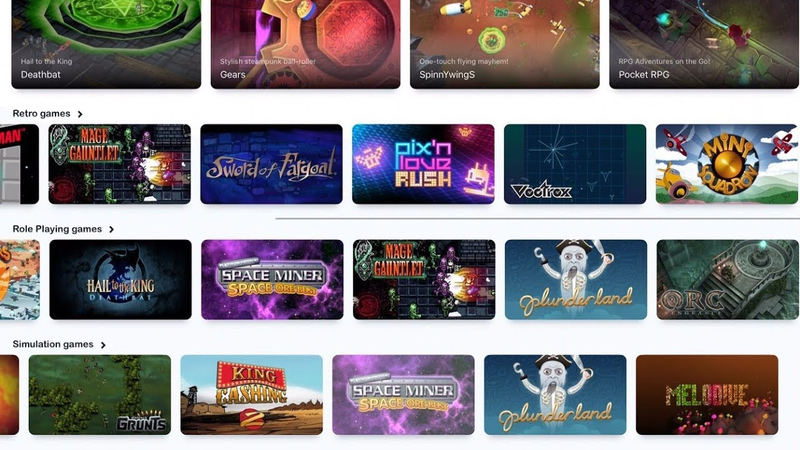
GameClub operates as a subscription-based service dedicated to the preservation and distribution of classic mobile games, specifically targeting the early iPhone era.
- GameClub is a subscription service focused on preserving and updating mobile games from the 2010–2012 era that were abandoned due to 64-bit architecture and display resolution requirements.
- The service operates as an app-within-an-app, offering a library of over 100 titles with weekly additions for a monthly subscription fee of $5.
- To maintain consumer goodwill, the platform allows users who originally purchased these legacy titles to access them for free using their existing account credentials.

Gondola Acquisition by Tilting Point | With CEO Niklas Herriger
The acquisition of Gondola by mobile publisher Tilting Point marks a strategic shift toward integrating advanced machine learning infrastructure into the broader mobile gaming ecosystem.
- Tilting Point acquired Gondola to integrate automated machine learning infrastructure into its mobile publishing ecosystem, shifting focus from aggressive user acquisition to maximizing player lifetime value and retention.
- The merger aims to replace manual, static A/B testing with dynamic, automated systems to overcome industry-wide SDK fatigue and streamline product management workflows.
- Gondola, originally founded in 2013 as an indie studio, transitioned into a B2B provider before the acquisition, highlighting the difficulty of scaling independent B2B infrastructure due to long sales cycles and constant product validation requirements.
One Year of Sokpop Games Subscription on Patreon
The Sokpop Collective has established a sustainable independent development model by leveraging a Patreon-based subscription service that delivers a new, polished game every two weeks for a monthly fee of three dollars.
- The Sokpop Collective generates approximately $4,000 in recurring monthly revenue by maintaining a base of 1,000 Patreon subscribers who pay $3 per month.
- The studio sustains its output through a strict four-week development cycle, releasing a new, polished game every two weeks.
- Financial stability is achieved by combining the subscription model with freelance work and occasional full-scale commercial releases, ensuring creative autonomy.
How does RUSH WARS retain, engage and monetize?
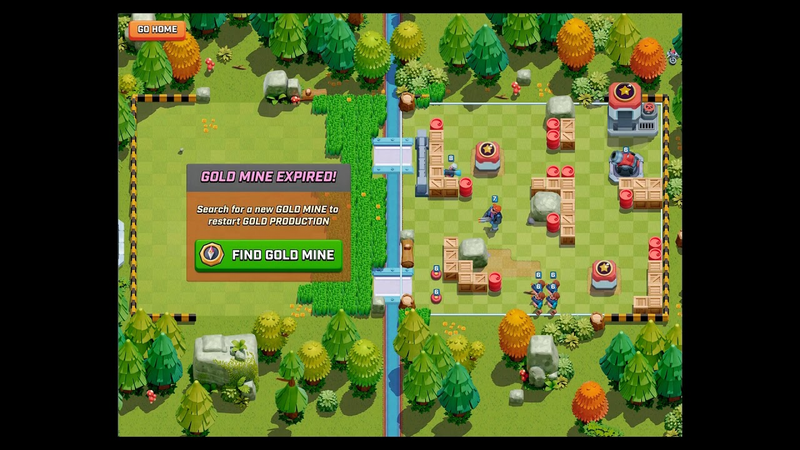
Rush Wars, a mobile strategy title developed by Supercell, utilizes a streamlined, loop-driven design focused on quick-play engagement rather than the deep, long-term base building characteristic of the developer’s other flagship titles.
- Supercell designed Rush Wars as a lighter, casual alternative to Clash of Clans and Clash Royale to avoid cannibalizing its existing flagship portfolio.
- The core gameplay loop centers on rapid, accessible sessions involving attacking player defenses and managing a base to generate soft currency.
- Retention is driven by timed reward mechanics that incentivize players to return every few hours to collect loot boxes containing essential unit and defensive upgrade cards.
F2P Sales & Merchandising | Best Practices for Mobile Games
Modern free-to-play mobile gaming success increasingly hinges on sophisticated sales and merchandising infrastructure rather than relying solely on user acquisition.
- Success in modern free-to-play mobile gaming is increasingly driven by sophisticated merchandising and maximizing the lifetime value of existing players rather than relying exclusively on user acquisition.
- The TTO framework—targeting, timing, and offer structures—serves as the core strategy for creating personalized, high-converting monetization environments.
- Effective player segmentation requires moving beyond demographics to utilize behavioral and psychographic analysis, including RFM analysis, k-means clustering, and machine learning models.
F2P Monetization with Jeff Witt
Modern free-to-play monetization relies on a sophisticated ecosystem of mechanics, including Gacha systems, energy gates, subscriptions, and battle passes.
- Successful F2P monetization requires integrating mechanics like Gacha, battle passes, and subscriptions in tandem rather than relying on isolated systems.
- Developers should move away from generic imitations and instead customize monetization mechanics to align specifically with their game’s unique economy, progression scales, and player incentives.
- Battle passes are the primary tool for driving long-term retention and conversion, provided they are tightly integrated into the core gameplay loop.

Farmville 3 by Zynga | Soft Launch Review
FarmVille 3 represents a strategic effort by Zynga to revitalize its presence within the competitive farming simulation genre.
- Zynga is leveraging the FarmVille brand equity to compete against established market leaders like Township and Hay Day in the farming simulation genre.
- The game features high-quality visual fidelity and refined system balancing but relies on traditional mechanics like animal gacha and farm-hand management rather than gameplay innovation.
- The title currently faces challenges with long-term retention due to a fragmented progression architecture and a lack of cohesive, story-driven monetization.