1 free read left. Create a free account for unlimited reading + AI research.
Create free account
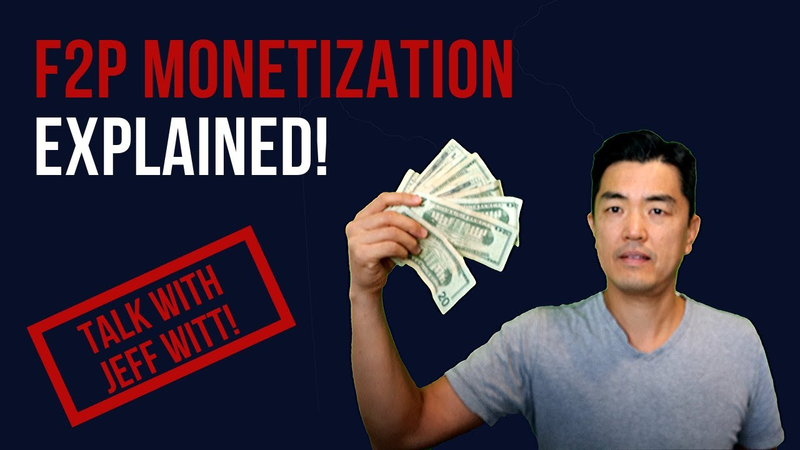
F2P Monetization with Jeff Witt
Key insights
7 takeaways- 01Successful F2P monetization requires integrating mechanics like Gacha, battle passes, and subscriptions in tandem rather than relying on isolated systems.
- 02Battle passes are the primary tool for driving long-term retention and conversion, provided they are tightly integrated into the core gameplay loop.
- 03Scaling Gacha systems should be implemented to ensure that rewards remain relevant and valuable throughout the entire player lifecycle.
- 04Developers should move away from generic imitations and instead customize monetization mechanics to align specifically with their game’s unique economy, progression scales, and player incentives.
- 05Monetization should be tied directly to event structures by capturing value from both the action-based inputs of the gameplay and the associated store bundles.
- 06To maximize revenue, studios should utilize unpredictable sales cadences to prevent players from anticipating discounts and delaying their purchases.
- 07Future industry growth relies on maintaining accessible endgame content for all player tiers while shifting toward models that prioritize engagement over aggressive, non-spender monetization.
Ask AI about this video
Transcript
hey everybody jeff Witt is one of the smartest guys in terms of free-to-play monetization I've ever met I've learned so much from Jeff about free-to-play monetization Jeff was one of the founders of fuzzy oh he was one of the lead game designers on modern war he designed world domination which you know quadrupled the monetization of that game and he's just a really really smart guy and in today's conversation with Jeff we talked about a lot of very interesting topics with respect to free-to-play monetization including an overview in terms of the key types of monetization ad monetization what are the most successful types of free-to-play monetization the latest monetization trends the success of bowell pass and challenges with implementing battle paths in free-to-play game designs the evolution of gotcha some of the biggest free-to-play monetization mistakes you can make sales and events and basically the feature of free-to-play monetization so it's it's a
really really good discussion I think it's absolutely gonna be worth your time this was one of the earliest videos that I shot so the audio quality is actually not so great but I hope you bear with me through the audio problems because the conversation with Jeff is really really fantastic and with that I take you to Jeff we're talking about free-to-play monetization right now everybody I am here today with Jeff wits and today we are gonna be talking about free-to-play monetization and just starting with the first question Jeff he talked to us about like the high level categories of like free-to-play monetization yeah so there's a couple different things obviously there's gotcha which is has been around in the free-to-play industry almost since day one just the random chance of getting something prolongs how
much players have to or increases how much players have to pay to get what they want so it's a pretty staple thing more recently you have more direct sales and bundles and packs which increases the perceived value of what players are spending for on the activity side you have energy so games that try to monetize more on players doing stuff Energy's a good source you have on the cosmetic side like vanity items Reese kins those are usually um those be sold in in Gacha or bundles or just a direct sale in the store for currency subscriptions I think have become bigger in the last few years paying once on a weekly or monthly cadence to get stuff every day or in its more recent
iteration the battle pass from fortnight which is technically a subscription but not so much for receiving stuff more for unlocking content so a lot of things for games to work with city building for city building games having the initial cost of starting a construction than paying to speeded up that's also a staple in a lot of game genres so there's a lot of things for games to use to monetize and one of the other areas we were talking about a little bit is for a lot of casual or hyper casual games that monetization can you talk a little bit about your thoughts on ad monetization I like ad monetization because for for the players who don't spend it's away for a game to make some money from them the trick though is you need to be able to have the ad provide clear value for the player but not undermine your other
resources and monetization so how you implement ads and what you reward is really important some ways you can do that are one time one time or two time like it ads where you get maybe 10 hard currency a lot of players will get it if hard currency is hard to come by and they'll watch the ad or the two ads but you could factor in the you know 20 hard currency per day that players will get from that in your economy and make sure it's not undermining other things but players will still watch it because you know they're getting 50 cents worth of hard currency just for watching a 30-second ad but the key to them making that successful is you have to limit the amount of times that you do it and it still has to be something about you ten heart currency versus one heart currency which may not seem worth it the player
so I'm a big believer in ads you just have to really think about the design of how they watch the ad and how much value they're getting from it not in terms of some of the specific categories or types of free-to-play monetization that you talked about what do you think are the most prevalent or the most successful in terms of how much they're generating in terms of revenue that's that's art so like I feel with bundles and packs it kind of requires a Gacha system an energy system to really like be valuable so if if I'm playing a game and like gotchas the main source of getting characters getting more powerful but I'm as a spender really do not like the RNG component having a bundle come
along and say hey here's this character for $4.99 or $9.99 or however much you're charging suddenly that looks like such a great value because of how random Gacha is but that bundle may not be as valuable if Gacha was not there in the first place like you kind of have to players have to kind of be frustrated by Gacha in order to make the sale or the the bundle more enticing similarly with like energy for example like energy could be a great monetize Iran games that have players do a lot of actions but spending for hard currency on energy may be a negative experience doing it over and over again but if that is a negative experience for players then here comes a bundle with 300 energy instead of 50 for hard currency again
looks like a greater deal but the bundle would not look like a great deal if it wasn't for high cost of buying energy so a lot of the systems you have to kind of work together to make the bundle more enticing with Gacha though that you know that with different types of sale gotcha it's the same thing right like box Gacha which is a variant of Gacha only works as well as it does because of how frustrating normal gaucho is if you don't know what box watch is it's a it's a gotcha with a finite amount of cards that you kind of know what they are beforehand and every time you buy it you get something from that so eventually you know as a spender if you spend enough you will get the card that you want there's a definite high price to it with some randomness but you know you're not going to keep spending and not get what you want which is the risk with regular kosh's like box gotcha would not be as
successful if there is no regular gotcha to sort of anchor players expectations so a lot of these monetization systems have to work well together in order for a studio to leverage them and develop enticing sales what about the latest trends what are you seeing in terms of what's becoming more popular or what's kind of changing in terms of free-to-play monetization so you know I've been in this industry for 10 years now and it has been a lot more friendly to free put players and lighter spenders when I first started there's a clear hard pay gate that if you weren't a spender you just gonna do stuff now we see that free players and lighter spenders could pretty much do almost everything that heavy spenders can but they're still an advantage to spending so like gotcha like used to be if you
didn't buy gotcha for hard currency then you weren't getting that but if you take a game like flash rail and suddenly you're getting gotchas for just playing you have to wait to open them but it's still a lot more friendly to the free player than it could have been so same with a lot of more modern RPGs you know exactly how to grind for things and you know you can just spend your energy and go for the upgrades that you want but if you spend money you're gonna be able to get a lot more stuff and with progressive pricing that we see like even a lot of like the energy purchases for example in these are key he's the first energy purchase is pretty cheap but then subsequent ones get more and more expensive so even like free players you earn some hard currency each
day they're trained to start spending hard times because of the artificially low prices but then as progressive pricing increases the cost of these things they're either their progression stops for the day and they have to wait till next day when all the pressures off reset or they have to spend and make more progress that day and on that note I think that's why subscriptions have become bigger in the last year too because it is a way for a player who's afraid of spending to spend once and know they're getting these gonna get these benefits this more progression for a week or a month however long this is subscription lasts that is less or that is more appealing to someone who's afraid of spending then taking a random chance buying a gasser or what not so it's a great time to be a player of a free-to-play game if you're
not willing to spend as much but at the same time when you get really into a game don't be surprised if you are pushed to spend with endgame LiveOps events and other things talking about one of the more popular trends in terms of battle path which you mentioned you know sort of fortnight came on and it seemed to be a very successful model can you talk about why do you think that'll pass he's been able to be so successful yeah I you know I was really impressed with battle paths you know for fortnight the battle royale sort of combat system it became a hit with players but by itself there really is no direction for players like they're not told how often they should
be playing how well they should be doing in those matches of the cosmetics like what they should be striving to get and to me battle pass just answers 90% of the questions players have players see that oh they pay once for 10 weeks and they get access to all these challenges that later direct their playing experience so to me battle pass is more of an engagement retention feature than monetization it happens to monetize as well which is great but as any studio knows like retention and engagement are also critical to monetization because it keeps players in the game long enough to monetize on other things and in the case of four-night that is you know cosmetic items and future battle passes I think it works really well for them and I
think for games where a studio is trying to struggle with the motivation for players playing their gameplay it is something to definitely consider and see if it works for for that studio we're now seeing a lot of companies trying to emulate or copy battle pass and stick battle paths and other Titan types of gameplay and so far it seems like they have not been super successful can you talk about you know so what are the challenges of implementing a battle path system why isn't it not working for some other types of games so with any viral hit there is the danger that their priorities are not gonna be your priorities when you have a game that has millions of da you that are active that are engaged and are spending a fair
amount your number one concern is retention and engagement right you're already making a good amount of money yes you could squeeze in more for sure but you're not that's not your primary concern my worry is that Studios with games with a much smaller da you will do the battle pass and will only offer cosmetic goods just because port and I can get away with only offering cosmetic Goods does not mean a game of a couple hundred thousand da you or smaller will be able to do that and have a sustainable monetization especially if your game relies on stats at any point you may need to offer stats as part of your rewards for the battle pass um it still won't break the dynamic I feel like because one of the beauties of battle
pass is that if a player's engaged enough they could probably get to the end if they just play the game long enough which is still leaps ahead of other free to play games where to get to win an event you usually have to spend so I do feel that there is room for stats as rewards as part of the battle pass and games that have a stat component and a much smaller D you may need to consider that to help drive players versus fortnight's implementation of it which for tonight there's not really a stat component in the game so they just offer pure vanity items so and similarly with the challenges like fortnight is very creative with what they challenged players to do it's not just about their core gameplay but you have to use specific characters or use specific weapons or do seemingly arbitrary things
and the importance of that is that it keeps the challenges varied it keeps the game from getting too monotonous and to certain extent extent it extends your content a lot like if if you're say say you're doing another shooter you will want challenges to require use of specific weapons otherwise you risk having players just use one or two weapons and not monetize on the rest and those are perfectly valid challenges like we've seen fortnight you know use the same thing but it works for them and it works for you in the sense that you're getting players to do stuff in the game that they want to do normally so if you're gonna do battle pass you have to really think about what you want to accomplish it with it and how you
want to use the motivate players and if you just blindly copy both fortnight's structure and what they're rewarding you're probably going to miss the mark when you implement it let's go back to gotcha like you know God just still makes up you know a massive amount of monetization free-to-play how has that been evolving in overtime and what are sort of the latest innovations in terms of gotcha I mean you mentioned box gotcha but is there anything else kind of happening in gotcha yeah so there's you're starting to see gotcha with not just not just character shards in the RPG for example but you're seeing other stuff in it that can get players can get you're starting to see gotcha being used more as an item where it's still there players are still opening it but you know you could see a
bundle that gives you five gotcha plus all this other stuff so a little more itemized version of it you see gotcha with progressive pricing so the first you know the first gotcha box is you know low price and the price gets higher and then you have gotcha that scales with the player and this is really important I think that has only recently been addressed gotchas has always been great for the early to mid-game especially in like an RPG where players feel the best in socks with stuff they get from gosh no matter what you get it's usually best in slot one of the biggest weaknesses of gotcha is when you get hit the elder game it's hard not to get anything from gotcha that's not water and that's not a good experience when you get something in oh you're just gonna feed it into another hero there I've seen two games that kind
of try to scale the value of gotcha with where players are at again clash rail is a good example when you hit a new arena tier the gotcha gives more cards out and there's more different stuff in the gotchas so even though you're technically getting a similar quality chest that just is just better than what it was when you first started playing and then heroes charges another example where the the gotchu you're getting is not scaling but there's a valuable use for what you're getting throughout the lifetime of the game which is feeling so here's charge like the contents of the hero scrolls are not here oh sorry I'm idle here's the content of what you see on the hero scroll doesn't change from when you're level 1 so when you're level 40 at least as far as I can tell but even if it's a hero even if you're
getting it here that you're not using you will need to use that hero to upgrade the heroes that you are using 2 6 7 8 9 10 stars so effectively every time you use a hero scroll and idol heroes you will need to keep what you get so you'll know you'll need to use it later to upgrade the stars of the heroes that you like which maintains its value to the lifetime of the game I think more games that use gotcha they will need to use some sort of interesting stuff like that to maintain the value otherwise monetization on gotcha will just plummet once a player progresses past the middle of the game let's talk about mistakes like as a free-to-play game designer designing you know sort of monetization for different kinds of games what are some of the big mistakes that you're seeing that people make so so Martin's like free to play games operate under the same sort of
rules of economic rules as everything else does in life so if some if a feature works or monetizes in the game there's some incentive reason why it's doing so players are incentivized to engage in that feature and often times I do feel like developers aren't asking themselves why is this feature working this game and how would that same thing work in our game like do we have the same incentives do they our players motivated by the same things in our game as that game that has this feature that is seemingly making lots of money and in some cases yes they would but a lot of times they either don't work the same or they kind of work but not all the elements are there I'll give an example so back in my time in Fonzie
oh you know we did a guild vs. guild event that did really well and a lot of people looked at that and said well the only reason it's doing well is like the social pressure of guild vs. guild which is definitely a big component but wasn't the only component like our RPGs if you think of our units as a card like our deck size was 3,000 and and each guild vs. guild wars we were giving the top players like 50 of the best units in the game which is super valuable but because our deck size is 3,000 we could absorb a lot of that inflation if a five deck size party tried to implement one-to-one that feature it would fail utterly because you cannot either you cannot reward stuff as that
it will thereby not motivate players as much or if you did your the the content would quickly run out and your economy would kind of be in Chambal so like yes you know a studio would look at that be sure and say they believe that they practice unless you also had a deep deck size and unless your reward to be equally valuable it would not be as successful as it was in our games and I think that applies for any feature that developer trot is thinking about adopting if you're not getting all the elements that make that work it's not going to work the same for you and if doesn't mean you shouldn't adopt it but you may need to tweak it so that it fits with what you're trying to do so it kind of sounds like one of the big mistakes is just understanding the specific context for your game and then to some
degrees some laziness on the part of designers where it's just like okay I'm just gonna cut and paste this this this model into our game yes you really need to kind of understand what is working for your game right now and whether player behavior is going to fit with what your friends adopt in them and if not then change stuff like I feel developers are afraid to also change stuff that works in other games an example is for Idol games is prestige or ascension whatever we call like the earliest variants of the idle games prestiging was just so arbitrary like there was no rhyme or reason when to do it like you could tell when you were slow enough that was about time but the
game wasn't really telling you and starting over seemed pointless like you weren't really except for getting more efficient you weren't improving where you feel like you weren't accomplishing much I think a good designer or developer could make prestiging more meaningful either story wise or a sense of achieving something and a lot of them don't mainly because no one else has done it so why should they but just because someone like there's a game out there that succeeds doesn't mean that they're doing everything right and going back to supercell for example um you know I know supercell has the perception that they're doing everything right but in when clash Royale was in the soft
launch I remember that they still there was a time when they still had a small gold cost for initiating a match which makes made sense in clash of clans when you had passive income from buildings bang clash real when you have no base and no passive income and made absolutely no sense to have a small gold cost to initiate a match and they quickly realized that that was a mistake and removed it but it was an example of them just taking it from clash of clans to their work there so you know it's definitely you know you should take a lot of inspiration from other designs and feel free to port it over but just make sure that it works for your game and if something about the future doesn't work change it to that fits maybe we could talk a little bit about sales and events as well I know sales and bench is a big part of like live offs and monetization longer-term in a game you know you've been a big
proponent of bundled sales for example but what are other things that free-to-play designers and product managers should be thinking about with respect to like you know different mechanics or different things with respect to sales and that so events are good way to one the best way to monetize from events I guess it's twofold one is the event itself and you know we've talked about how things have changed since the beginning one of the changes that has happened I think is for the worse for monetization has been that a lot of developers are no longer trying to monetize on the event itself meaning no inputs for actions and stuff like that and I feel like that's how a lot of games monetize well half a decade ago and he still sees some games monetize
like that now just not as many like in the RPG space legendary they do a really good job at monetizing on the event itself as all splash is another example with their tournaments but a lot of games like it's more about stat checks and like qualities of your characters at least for RPGs and not so much about number of actions or different inputs in order to do an event so that's so monetizing on the event itself is one way events monetize the other is sales associated with the event so in RPGs it's obviously the heroes that will do X times better in the events special event chacha special event bundles so events are great not only gives you a chance to mana back on the event itself but you're also able to just run sales that connect
the player with the event I like you know we talked about battle paths in fortnight and another thing that goes along with battle passes this idea of seasons which i think is a very exciting concept that Collymore games should explore the idea that what whatever's going on now it's only going on for this amount of time and then it's an interesting concept because I'm up in a certain way it's like a soft reset every 10 weeks or three months and we already see PvP doing that a lot of games they'll have PvP seasons both in free-to-play and out of free to play but to like structure content around each season means that with each new season of content you could bring with it new
forms of monetization or new sales or new organize your content a little differently and that's what makes for great sales like the hardest thing to monetizing game is player expectation expectation the value about what something is worth and if is game is going to successfully monetize they had to try and prevent players from forming expectations about what something is worth or how often something will be for sale or or available and I think a concept of a season helps file a expectation for observant players from having expectations because each season is different but with like with other games like if you're gonna have sales make sure that they're not predictable don't have the same sale every Friday that's what that means is that players
will anticipate it and if they're deciding when to spin they may just hold out on spending till Friday versus if they don't know when they're gonna see the sale again they don't know if they could afford to not spend right now versus the next time whenever that sale is going to come up so so yeah I think the biggest thing with sales with gotcha with events is just not having not letting players settle expectations for those things so that they will be more willing to spend or their their incentives for spend won't be undermined by their expectation of what's coming up what do I need things like that I guess that's my
answer to that question last question so just generally are there any other thoughts in terms of the teacher of free-to-play monetization I I think definitely battlepacks slash subscription is going to be more important I feel like you're gonna create a whole tier of spenders that are just subscription just battle paths which is great because if you can get that percent high enough that I think it would be great for all developers and if it keeps them in the game long enough to try and monetize them through Elder game live ops even better and to do that I do think while our industry has done a great job of of making games more suitable to free players or lighter
spenders I think there's still more work to do on that room the second thing that I think is necessary in the future is to always maintain value of your monetization for Elder game players I think all too often when it gets the LG game things just gets way too expensive and by keeping costs down but just having more content games we'll be able to monetize their heavy spenders or medium spenders and they're lighter spenders from whole lifetime the game versus shutting some of those spender groups out so it will be I think the next few years will be a good time to be a free player and wide spender but also if if games are doing things right if you're a heavy spender you'll still be seeing a lot of value for your expense great well there you
have it here with Jeff went on free-to-play monetization thank you very much Jeff for your time my pleasure [Music] [Applause] [Music] [Music]
Summary
Modern free-to-play monetization relies on a sophisticated ecosystem of mechanics, including Gacha systems, energy gates, subscriptions, and battle passes. These tools are most effective when integrated in tandem to create perceived value, often leveraging the inherent frustration of standard Gacha mechanics to drive engagement with bundles and box-style systems. While ad monetization remains a viable revenue stream for non-spenders, the industry is shifting toward more player-friendly models where progression is accessible to all. This transition emphasizes conversion through engagement-focused features, such as battle passes, which serve as powerful instruments for retention when aligned with a game’s core design.
Long-term sustainability in this sector requires developers to move beyond the superficial imitation of successful titles. Effective monetization demands that designers adapt mechanics to fit their specific game economy, player incentives, and progression scales. Strategies for success include implementing scaling Gacha systems where rewards remain relevant throughout the player lifecycle, as well as customizing event structures to ensure that monetization is tied directly to the gameplay loop. By monetizing both the action-based inputs of an event and the associated sales, developers can create a more cohesive and profitable experience.
To maximize revenue, studios should adopt seasonal content structures and unpredictable sales cadences, which prevent players from anticipating discounts and delaying their purchases. Future growth in the free-to-play market will depend on the continued adoption of battle passes and subscription models, provided that developers maintain accessible endgame content for all tiers of spenders. Ultimately, the most successful monetization strategies are those that prioritize contextual adaptation over generic implementation, ensuring that every revenue-generating feature serves the unique needs of the game and its community.