Monetization reports and market data
Documents
Games as a Service is Dead
The Games as a Service model is increasingly unsustainable for the majority of mobile developers, as the industry has shifted away from the organic virality that once defined early social gaming.
- Success in the current mobile market is determined by front-loaded store performance and initial install velocity rather than long-term iterative retention strategies.
- Developers must maximize conversion metrics during the first 30 days of a global launch, as organic visibility inevitably declines after this window.
- The pre-launch open beta phase is the most critical period for optimizing store conversion rates through constant A/B testing of icons, preview videos, and feature graphics.

Dead by Daylight: When Creative and Business Minds Are Cooking with GAAS
Dead by Daylight serves as a definitive case study for the successful implementation of Games-as-a-Service models, demonstrating that long-term profitability is best achieved by aligning creative vision with player-centric monetization.
- Monetization in Games-as-a-Service (GaaS) should be additive to the player experience rather than subtractive; by focusing on optional cosmetic items, developers can generate revenue while enhancing player engagement and character customization.
- Behaviour Interactive rejected loot boxes in favor of an 'a la carte' store model to maintain player trust, opting for lower immediate revenue in exchange for long-term brand health and player respect.
- Generosity in GaaS, such as allowing players to unlock 60-70% of store content and all original characters using a grindable 'soft currency,' directly correlates with increased average session duration and player retention.
The Future of Monetisation - PocketGamer.biz RoundTable
The mobile gaming industry is undergoing a fundamental transition toward a diversified, three-pillar monetization model that balances in-app purchases, advertising, and subscription services.
- The mobile industry is shifting toward a three-pillar monetization model that balances in-app purchases, advertising, and subscription services to replace the traditional reliance on gacha mechanics.
- Battle passes have emerged as the standard tool for driving long-term player retention, though they must be carefully calibrated to avoid destabilizing core game economies.
- Developers are increasingly treating non-paying users as essential assets, leveraging their social engagement and ecosystem depth to drive the scale necessary for long-term title health.
A Brief View of Chinese & Global Mobile Game Markets | PGC Digital #1
The global mobile gaming market experienced significant growth in 2019, with combined revenue from the App Store and Google Play reaching approximately $61.7 billion, a 14.8% increase over the previous year.
- The global mobile gaming market grew by 14.8% in 2019 to reach $61.7 billion, with projections estimating a rise to $100 billion in 2020.
- Hyper-casual games are a dominant market force, representing over 70% of top trending releases and offering strong return on investment.
- The Chinese mobile market generated $23 billion in 2019, but requires navigating a fragmented ecosystem of third-party Android stores due to the absence of Google Play.
Connect MORE Demand, Make LESS Money | PGC Digital #1
The programmatic advertising landscape within the mobile app industry is characterized by significant inefficiencies that often result in publishers undervaluing their inventory.
- Static price floors in traditional mediation waterfalls frequently cause publishers to undervalue inventory, with data showing potential revenue increases of 50% to 120% when market-driven pricing is applied.
- The global in-app advertising market is projected to reach $120 billion by 2022, with programmatic spend currently accounting for $47 billion of that total.
- Inefficient supply chains and redundant, overlapping auction paths obscure true market value, preventing developers from capturing the maximum price bidders are willing to pay.

Understanding the Publishing Funnel | PGC Digital #1
The hyper-casual gaming sector is undergoing a strategic evolution, shifting away from the pursuit of fleeting trends toward a model defined by long-term engagement and sustainable innovation.
- The hyper-casual sector is shifting from short-lived trends to a model focused on long-term engagement and sustainable innovation to combat razor-thin profit margins.
- Hyper-casual titles that rely on replicating fleeting fads typically lose market relevance within a three-month window.
- Publishers are moving away from prioritizing simple download volume, as high acquisition numbers often fail to offset the costs of thin profit margins.

First Quarter Trends in Mobile Gaming in the Light of the Recent Global Changes | PGC Digital #1
The mobile gaming industry underwent a transformative shift during the first quarter of 2020, characterized by a record-breaking surge in user acquisition triggered by global lockdowns.
- Mobile game downloads surged by 50% during the final week of March 2020 as global lockdowns drove a massive influx of new users.
- The initial surge in activity favored casual and hyper-casual titles, necessitating a focus on App Store Optimization to capture visibility among the expanded audience.
- Immediate revenue growth lagged behind download volume because new users primarily engaged with ad-supported titles rather than those reliant on in-app purchases.
Wash Away Your COVID-19 Worries with Soap (Cutting) | PGC Digital #1
The development and successful launch of the hyper-casual game Soap Cutting serves as a case study for transforming viral ASMR trends into high-performing mobile entertainment.
- CrazyLabs and a Mumbai-based studio developed and launched the hyper-casual game Soap Cutting in less than two months, reaching the top of the charts by December 24, 2019.
- The United States is the primary market for the title, accounting for approximately 80% of total revenue.
- The game’s monetization strategy relies heavily on an ad-based model, with interstitial ads generating roughly 60% of total revenue, supplemented by rewarded videos and minor in-app purchases.

Six Steps Your Competitors are Taking to Grow Their Games | PGC Digital #1
This presentation outlines six strategic steps for mobile game developers to optimize growth through monetization and user acquisition.
- Calculate true user lifetime value (LTV) by integrating ad revenue data with in-app purchase data to enable more accurate bidding per source.
- Transition to in-app bidding to improve performance and reduce manual labor, while maintaining a hybrid model that combines bidding with manual waterfall management.
- Balance system-initiated ads, which drive revenue, with user-initiated ads to optimize the trade-off between monetization and player retention.

User Acquisition Under Crisis | UA Coffee Talk
Effective user acquisition during periods of economic volatility and environmental crisis requires a fundamental shift from long-term historical modeling toward a conservative, short-term focus on immediate performance metrics.
- Shift user acquisition strategy from long-term historical modeling to a conservative, short-term focus on immediate performance metrics like day-three or day-seven return on ad spend (ROAS).
- Avoid reactive, across-the-board budget cuts by segmenting performance data by geography, platform, and specific game design to identify pockets of sustainable growth.
- Maintain a proactive, competitive spending mentality during economic volatility to capture market share while competitors retreat, rather than defaulting to purely defensive budget reductions.
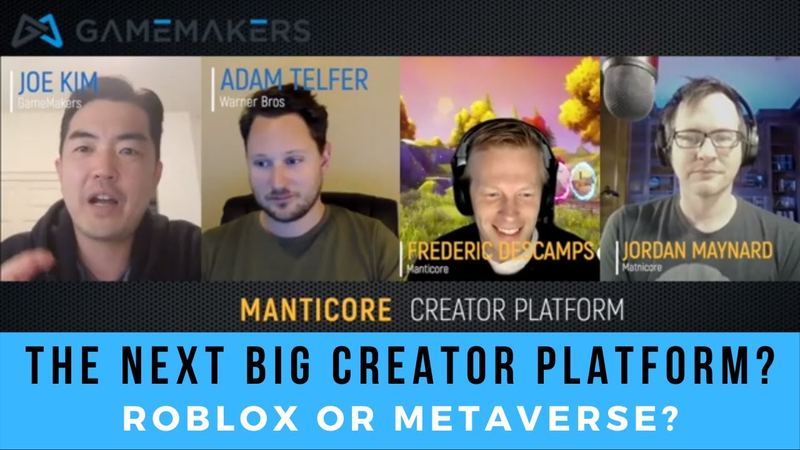
Manticore: The Next Big Game Creator Platform?
Core functions as a comprehensive, two-sided marketplace designed to democratize game development by abstracting the technical complexities of multiplayer infrastructure, live operations, and server management.
- Manticore functions as a two-sided marketplace built on the Unreal Engine 4 runtime that abstracts multiplayer infrastructure, live operations, and server management to democratize game development.
- The platform utilizes a drag-and-drop interface, pre-built assets, and Lua scripting to allow creators to build and publish real-time multiplayer games without traditional, labor-intensive development pipelines.
- A proprietary, cloud-agnostic infrastructure facilitates automatic server deployment and enables seamless, web-like navigation between different game experiences within the ecosystem.
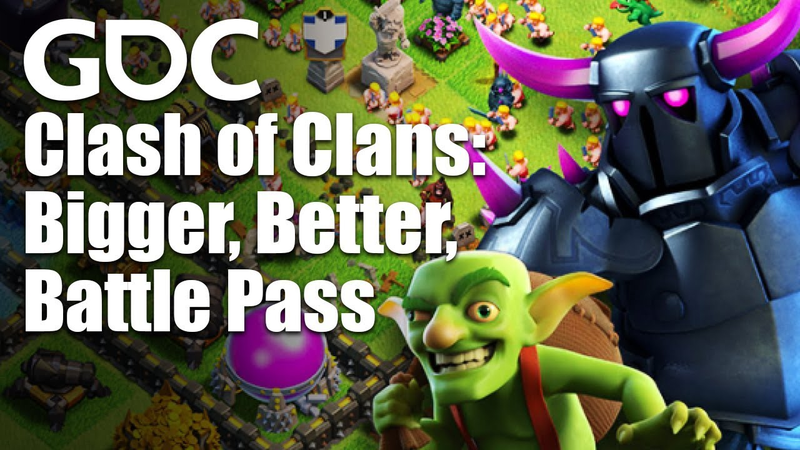
Clash of Clans: Bigger, Better, Battle Pass
Clash of Clans achieved a significant resurgence by systematically addressing long-standing progression bottlenecks and economic stagnation that had hindered player retention.
- The introduction of a five-dollar monthly Gold Pass served as the primary catalyst for a 30 percent year-over-year revenue increase and quadrupled the unique payer base.
- The Gold Pass model achieved high sustainability, maintaining a 70 percent monthly retention rate among its subscribers.
- Developers revitalized the game by spending two years refining foundational systems, specifically reducing upgrade costs and times while introducing magic items to eliminate progression bottlenecks.