Monetization reports and market data
Documents

Superstar Session: Seize the Moment-Seasonal Changes in the Asian Market -The Best Times to Monetise
The Asian mobile gaming market operates on a distinct seasonal rhythm, where revenue and user acquisition are heavily influenced by cultural festivals, regional shopping events, and academic calendars.
- Align live-ops and advertising spend with peak regional windows, specifically Chinese New Year, Japan’s Golden Week, Korea’s monthly pay cycles, Ramadan, and Songkran.
- Avoid launching new titles during intensive academic periods, as these times consistently correlate with reduced player engagement.
- During high-traffic e-commerce periods when advertising inventory costs spike, shift focus from user acquisition bidding wars to retention and in-game content to capture spillover traffic.

Fireside Chat: Exploring the Potential of InGamePlay Brand Ads
In-game native advertising represents a strategic shift toward non-intrusive monetization, prioritizing player immersion over the disruptive nature of traditional interstitial ads.
- Approximately 68% of players prefer seamless, non-clickable in-game ads over traditional interstitial formats because they maintain immersion.
- Native in-game advertising is a resilient alternative to tracking-based models, as it relies on contextual relevance rather than invasive user data like the deprecated Apple IDFA.
- Integrating branded content into 3D environments, such as digital billboards, enhances atmospheric realism and supports higher player retention rates.
Panel: Choosing the Best Ad Format for Your Game
Mobile game monetization strategies currently center on balancing cost-effective ad formats with sophisticated user segmentation to navigate a shifting landscape of privacy regulations and user tracking limitations.
- Monetization strategy must shift from blanket approaches to granular A/B testing and data-driven user segmentation to compensate for the decline of traditional tracking and privacy-focused regulations.
- Video ads remain the industry standard for cost-efficiency and accessibility, while playable ads are largely reserved for established titles due to their high production costs.
- Developers are increasingly adopting contextual targeting and non-intrusive formats like offer walls to maintain revenue from non-paying users in a privacy-restricted environment.
Monetisation Optimisation in Apple's New Normal
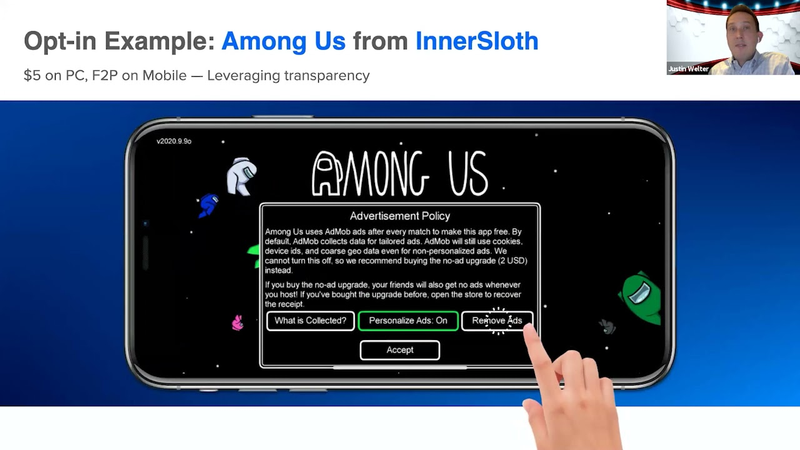
The mobile gaming industry faces a significant shift in monetization and user acquisition strategies due to Apple’s implementation of iOS 14 privacy changes, specifically the transition to an opt-in model for the Identifier for Advertisers (IDFA).
- The transition to an opt-in model for the Identifier for Advertisers (IDFA) under iOS 14 requires publishers to shift from traditional tracking to privacy-compliant frameworks like Apple’s SKAdNetwork.
- Publishers should implement header bidding or advanced bidding to allow real-time competition among ad networks, which stabilizes eCPM rates and offsets the loss of granular targeting.
- Rewarded video ads are the most effective format for maintaining engagement, as they consistently demonstrate higher completion rates and user preference compared to non-skippable formats.

How to Optimise Game Success & Monetisation With the Right Brand Partners
The gaming industry is undergoing a fundamental transition toward G-commerce, a model that integrates brand partnerships, e-commerce, and digital assets directly into the gaming experience.
- The G-commerce model integrates e-commerce and brand partnerships directly into game lobbies to monetize the entire player base, including non-paying users, without relying on disruptive advertisements.
- By rewarding players with in-game currency or exclusive items for completing external retail purchases, developers can increase player lifetime value and retention.
- Plug-and-play software development kits now enable developers to integrate complex e-commerce and marketplace features into their games in as little as one hour.

TWIG 130 | EA Battlefield Game, Epic vs. Apple by WSJ, Blizzard Overwatch Leadership
The gaming industry is currently undergoing a structural shift as traditional developers struggle to reconcile legacy quality-focused cultures with the relentless demands of live-service and mobile-first business models.
- The gaming industry is undergoing a structural shift as traditional developers struggle to reconcile legacy quality-focused cultures with the operational demands of live-service and mobile-first business models.
- Epic Games is pursuing a long-term legal strategy against Apple aimed at dismantling platform gatekeeping, signaling a broader industry trend where major players prioritize store ownership and platform control over individual software development.
- Blizzard is experiencing internal instability and operational friction as it attempts to transition premium intellectual properties into free-to-play formats, highlighting the difficulty of adapting traditional development workflows to iterative live operations.

Loot Boxes: Legal Pitfalls and Loopholes
Global game monetization faces a fragmented regulatory landscape, necessitating a strategic approach to design and compliance.
- In the United States, there is no specific federal loot box regulation, but Apple requires games on the iOS App Store to disclose the odds of receiving items by category prior to purchase.
- China maintains the most stringent regulatory environment, requiring developers to disclose the specific odds for every individual item in a loot box and prohibiting 'compulsion loops' that encourage excessive spending.
- European regulations are currently fragmented by country, with Belgium and the Netherlands being the primary nations that have implemented specific restrictions on randomized, purchasable items.

TWIG 129: Applovin Falls 19%, Playstation IP to Mobile, Square Enix Acquisition Rumors, JK Retiring
The gaming industry currently faces significant valuation challenges and strategic pivots as major players attempt to reconcile traditional console strengths with the demands of the mobile market.
- AppLovin shares declined 19% as investors reacted to the company's reliance on its own game portfolio rather than its marketed software-as-a-service business model.
- Sony is attempting to expand its console-based intellectual property into the mobile market, though it currently lacks the institutional expertise required for high-retention, live-service models.
- Analysts suggest that Sony should pursue licensing or strategic partnerships with established mobile developers rather than relying on internal development to mitigate operational risks.
TWIG 128 | Epic Will Lose $300M on Game Store, Epic Raises $1B at $30B, Apple/Google Kill F2P?
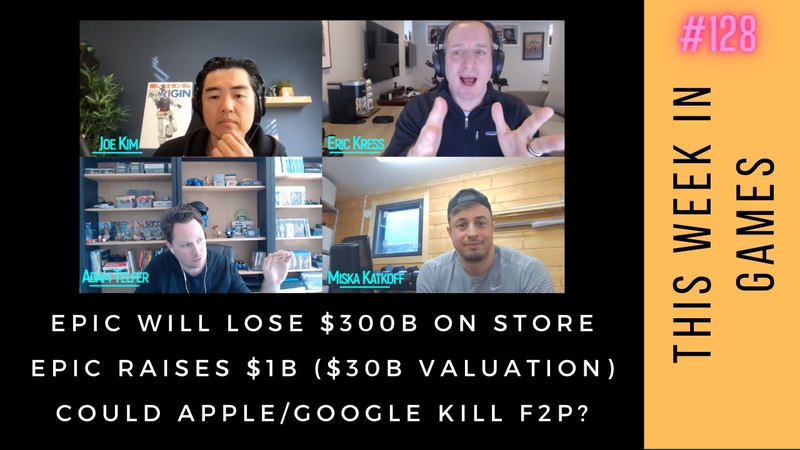
The gaming industry is currently navigating a period of significant financial and structural transition, characterized by aggressive platform expansion, shifting monetization models, and evolving regulatory landscapes.
- Epic Games secured $1 billion in new funding at a $30 billion valuation to support its metaverse development, despite the Epic Games Store projecting $600 million in losses by the end of 2021.
- The Epic Games Store struggles with long-term profitability due to a lack of social features and platform stickiness compared to competitors like Steam.
- Mobile gaming faces significant headwinds from Apple’s App Tracking Transparency and the limitations of subscription services like Apple Arcade, which currently fail to incentivize long-term content development.
Ad Strategy in the Age of Consolidation #ELEVATEYOURGAME - PG.Biz Fireside Chat
Modern mobile gaming success relies on a sophisticated, data-driven approach to ad monetization that treats internal studios as collaborative partners rather than mere subordinates.
- Maximize ARPDAU by aligning ad supply and demand through a structured funnel focusing on eligibility, surfacing, and engagement.
- Utilize a diversified portfolio of titles to leverage cross-promotion and first-party data, treating internal studios as collaborative partners rather than subordinates.
- Implement a phased ad integration strategy starting with low-friction rewarded video before introducing interstitial formats to non-converting users.
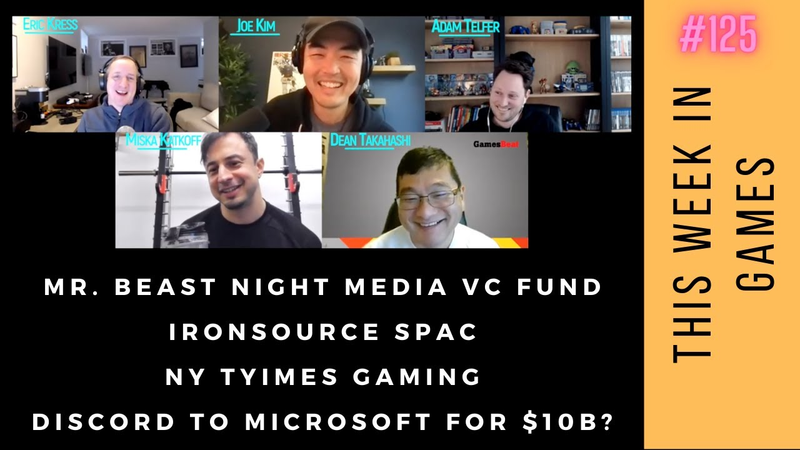
TWIG 125: Mr. Beast Night Media VC Fund, Ironsource SPAC, NY Times Gaming, Discord for $10B?
The gaming industry is currently defined by a rapid acceleration of consolidation, strategic shifts toward the creator economy, and a complex interplay between privacy regulations and valuation models.
- Tech giants are aggressively pursuing platform and IP consolidation, exemplified by ByteDance’s acquisition of Moonton and Microsoft’s potential $10 billion purchase of Discord.
- Discord faces significant investor skepticism regarding its long-term viability due to high burn rates and the absence of a clear, sustainable monetization strategy.
- Ad-tech firms like ironSource and AppLovin are rebranding as high-margin software platforms to maintain aggressive valuation multiples following the deprecation of IDFA and the implementation of App Tracking Transparency.
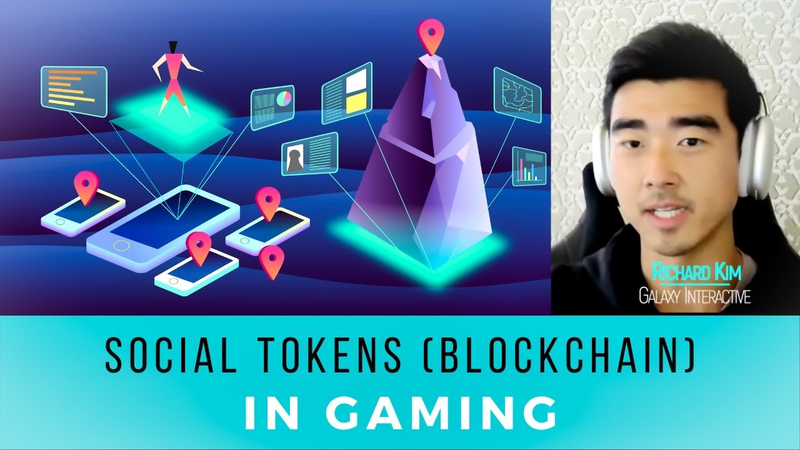
Social Tokens (Blockchain) in Gaming | Richard Kim, Galaxy Interactive
Blockchain technology is fundamentally reshaping the relationship between game developers and their audiences by transitioning from extractive monetization models toward community-owned, user-governed economies.
- Blockchain technology shifts gaming monetization from extractive models toward community-owned economies where players act as active stakeholders rather than passive consumers.
- Social tokens and NFTs enable creators to bypass traditional intermediaries, transforming digital assets into both social identity markers and sustainable economic instruments.
- The current industry standard involves a phased approach where developers place only cosmetic items on the blockchain to leverage secondary markets while keeping core game balance and internal economies centralized.