Monetization reports and market data
Documents
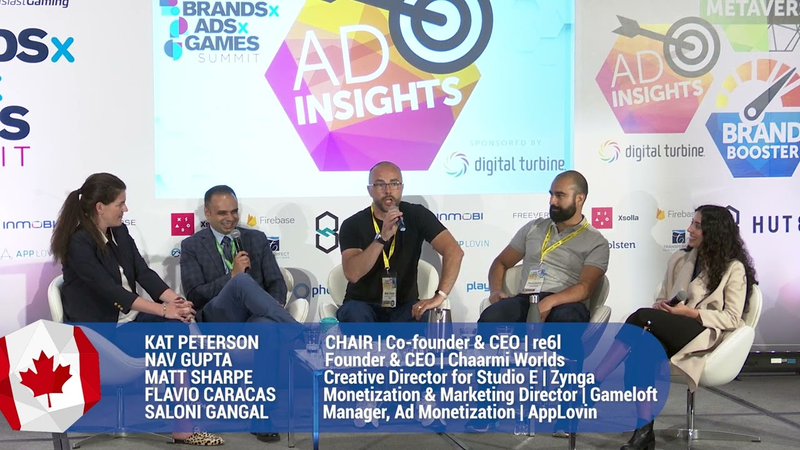
Panel: Why Creating Seamless Ads in Game Is Essential to User Retention
The modern mobile gaming landscape necessitates a fundamental shift from disruptive, intrusive advertising toward seamless, value-driven experiences.
- Mobile game developers must shift from disruptive, push-based advertising to pull-based models like rewarded videos to maintain long-term user retention.
- Advertising should function as a utility for game progression, ensuring that monetization strategies enhance rather than interrupt the player experience.
- To combat user desensitization, developers must prioritize high-quality, immersive ad formats such as playable ads and native brand partnerships that integrate organically into the game world.

Panel: Two Years On From Major IDFA Updates, Have We Recovered?
The mobile advertising landscape has undergone a fundamental transformation following Apple’s IDFA updates, shifting away from granular, data-driven tracking toward more sustainable, privacy-centric engagement models.
- The mobile advertising industry has shifted from granular, user-level tracking to privacy-centric models, effectively avoiding the catastrophic revenue collapse initially predicted following Apple’s IDFA updates.
- Performance marketing strategies have been replaced by a holistic approach that prioritizes contextual signals, cohort-based analysis, and the strategic optimization of creative quality.
- Publishers are mitigating reduced targeting precision and rising acquisition costs by integrating monetization and growth teams to foster trust-based user relationships.

Fireside Chat: The Future of Mediation: Created & Run by Publishers
The future of mobile ad mediation is increasingly defined by a shift toward publisher-centric models, as developers seek greater transparency, control, and independence from the traditional black-box solutions that have dominated the market.
- Mobile publishers are shifting away from opaque, black-box mediation toward publisher-centric models that prioritize transparency, control, and data integrity.
- While large studios are building proprietary in-house mediation layers, the broader market is demanding third-party platforms that offer better yield optimization without compromising user retention.
- Mediation platforms are increasingly expected to move beyond simple ad-fill optimization to provide specialized solutions tailored to specific game genres, streaming platforms, and emerging formats like in-game audio.
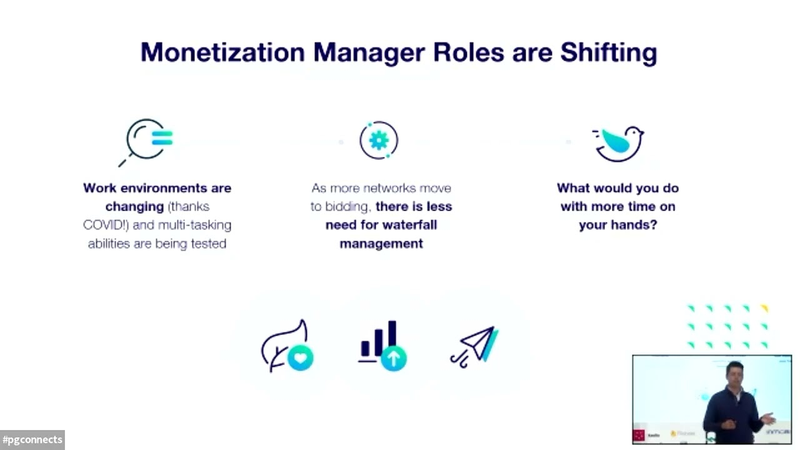
Superstar Session: Practically Personalized – Building Experiences Beyond Ad Monetization
The mobile app monetization landscape is undergoing a significant transition, moving away from manual waterfall management toward automated bidding and personalized user experiences.
- The mobile monetization landscape is shifting from manual waterfall management to automated bidding, requiring growth managers to focus on strategic audience segmentation rather than operational tasks.
- The deprecation of Apple’s Identifier for Advertisers (IDFA) has made the collection of first-party data the primary requirement for maintaining effective ad targeting and user personalization.
- Developers are increasingly using gamification tactics, such as offering in-game currency or ad-free periods, to incentivize users to share the first-party data necessary for segmentation.

The Rapid Evolution of In-App Ad Monetization & What It Means for Publishers
In-app advertising monetization has historically been characterized by opaque, inefficient practices that limit publisher revenue.
- Transitioning to a unified auction model—integrating direct sales, open bidding, and header bidding—can increase publisher revenue by up to 200%.
- Modern monetization strategies are replacing manual ad waterfalls and fragmented mediation with server-side integrations and unified auctions to eliminate revenue leakage and improve transparency.
- Publishers are increasingly prioritizing first-party login data and contextual advertising to maintain high CPMs as third-party cookies decline and privacy regulations tighten.

two & a half gamers session #26 - Unpacking Google ads "disaster", ASA Today's new ad, Google & MAX
Google’s recent implementation of stricter guidelines regarding full-screen interstitial ads marks a pivotal shift for the mobile gaming industry, particularly within the hyper-casual sector.
- The integration of Google AdMob bidding with AppLovin MAX removes the previous three-ad-placement limit, which is expected to increase fill rates and overall ad revenue for publishers.
- Google’s new, stricter guidelines on full-screen interstitial ads are forcing a shift in the hyper-casual sector toward rewarded ad formats to maintain monetization viability.
- Apple’s expansion of advertising into the App Store’s 'Today' tab is viewed with skepticism, as historical data indicates search-based placements often fail to scale complex gaming titles effectively.
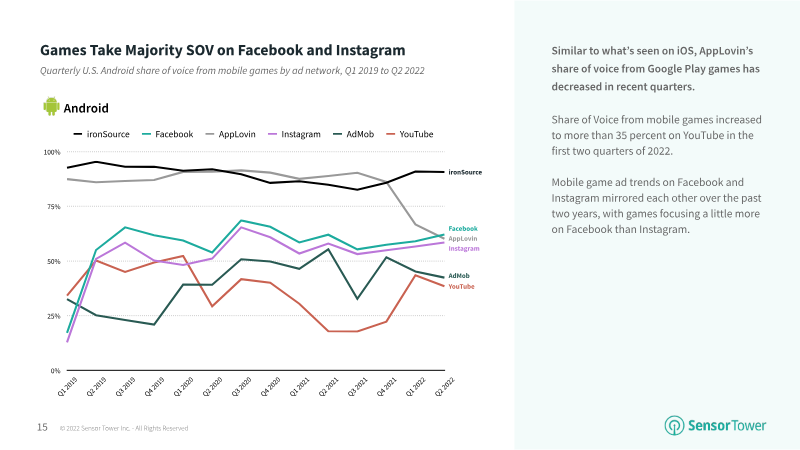


Market Outlook 2022: An Overview & Analysis of Industry Trends
The global mobile gaming market is currently undergoing a period of stabilization following unprecedented pandemic-era growth, characterized by a slight 6% year-over-year revenue decline to $21.2 billion in early 2022.
- The global mobile gaming market is projected to reach $117 billion in annual revenue by 2026, despite a 6% year-over-year revenue decline to $21.2 billion in early 2022.
- Mid-core genres, specifically RPG and strategy, drive 60% of total player spending, while casual titles account for 78% of total downloads.
- Asian markets contribute 80% of total RPG and MMORPG revenue, though Western appetite for these complex titles is growing, evidenced by Diablo Immortal earning $28 million in the U.S. during its first six weeks.

Drawing the Ethical Line for Misleading UA Ads - The Metacast by Naavik
The gaming industry currently faces a critical juncture regarding the balance between aggressive commercial tactics and consumer protection.
- The gaming industry is prioritizing self-regulation regarding loot boxes and in-game spending—including transparent odds disclosure and parental controls—to preempt restrictive government legislation.
- Developers are facing a critical tension between using misleading user acquisition ads to lower acquisition costs and the resulting erosion of long-term player trust.
- Industry consensus favors platform-enforced standards for ad accuracy as a preferred alternative to broad, government-mandated advertising regulations.
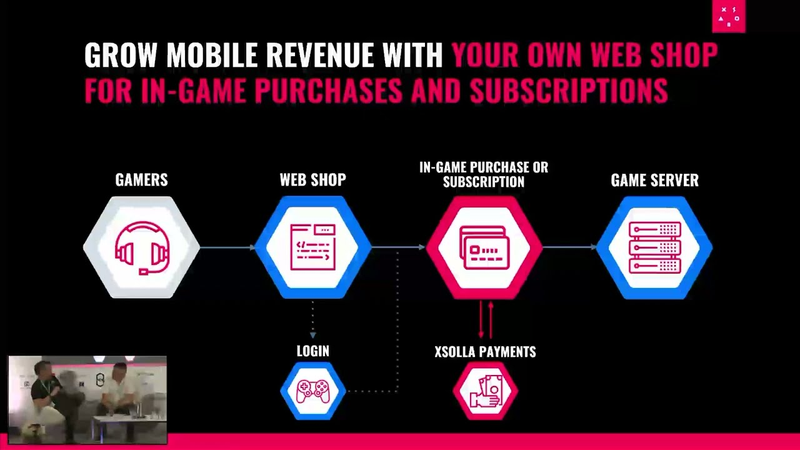
Game Commerce: The Elephant in the Room Devs Are Not Always Thinking About.
The presentation, delivered at Pocket Gamer Connects Toronto 2022, addresses the critical role of game commerce as a frequently overlooked component of long-term studio success.
- Relying exclusively on Apple and Google app stores limits revenue potential due to platform fees that can reach 30% of total earnings.
- Implementing independent web-based stores and direct-to-consumer funnels allows developers to retain a larger share of revenue, which can be reinvested directly into user acquisition.
- Integrating independent payment solutions enables access to unbanked populations and global markets by supporting hundreds of payment methods not available through standard app stores.
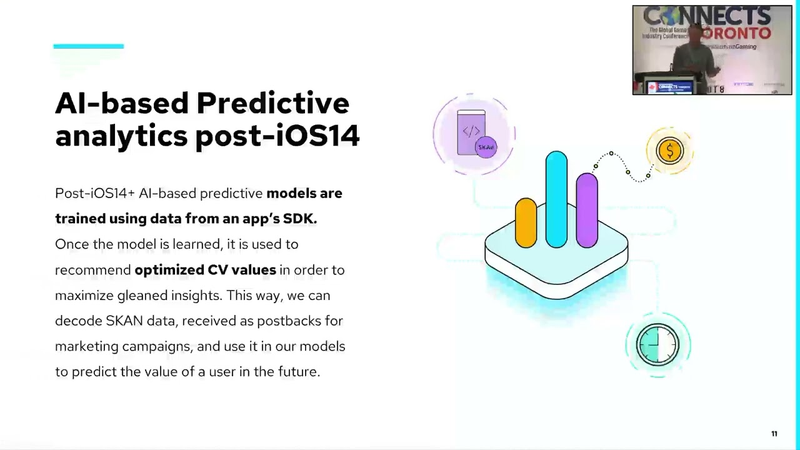
Superstar Session: Calculating LTV Post IDFA: A Need for Predictive Analytics
The mobile marketing industry faces significant measurement challenges following Apple’s iOS 14.5 privacy updates, which restricted access to the Identifier for Advertisers (IDFA).
- The loss of granular user-level data following Apple’s iOS 14.5 update has rendered traditional, direct-attribution LTV calculations ineffective for optimizing marketing budgets.
- Predictive LTV (pLTV) models replace static, blanket-coefficient methods by utilizing in-app behavioral signals—such as onboarding patterns and engagement depth—to estimate future user value.
- Marketers can use pLTV models to generate custom conversion value schemas for Apple’s SKAdNetwork, allowing for the categorization of campaigns by projected profitability despite the lack of deterministic data.

Maximizing IAP Revenue With Pricing Optimization
Pricing optimization serves as a critical, often overlooked component of mobile game monetization, capable of increasing in-app purchase (IAP) revenue by 20% to 40%.
- Implementing a two-tiered pricing strategy—combining global macroeconomic adjustments with personalized promotional pricing—can increase in-app purchase (IAP) revenue by 20% to 40%.
- Global pricing should be calibrated using macroeconomic indicators like GDP, household purchasing power, and smartphone penetration rather than relying on simple currency conversion.
- Pricing adjustments for global markets should be implemented cautiously on a monthly basis to avoid destabilizing the game economy, a strategy proven effective in titles like Harry Potter and various casino games.

Living Assets: Evolutive NFTs for Playing Fair in the Metaverse
The current landscape of non-fungible tokens (NFTs) in gaming is heavily defined by speculative scarcity and pyramid-style economic models, which often prioritize short-term profit over long-term player retention.
- Living Assets replace static NFTs with evolutive digital items that change properties and market value based on direct player engagement rather than speculative scarcity.
- The model utilizes layer-two blockchain solutions to manage millions of real-time asset updates via API calls, effectively bypassing the scalability and high gas fee constraints of mainnet networks.
- By incorporating mechanics like performance degradation, developers can incentivize consistent player retention and mitigate the dominance of 'whale' investors who hoard static assets.