1 free read left. Create a free account for unlimited reading + AI research.
Create free account
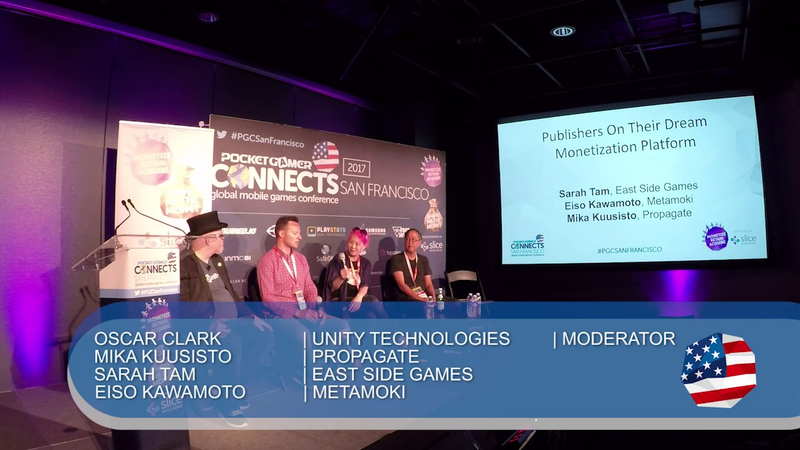
Fireside Chat: The Future of Mediation: Created & Run by Publishers
Key insights
6 takeaways- 01Mobile publishers are shifting away from opaque, black-box mediation toward publisher-centric models that prioritize transparency, control, and data integrity.
- 02While large studios are building proprietary in-house mediation layers, the broader market is demanding third-party platforms that offer better yield optimization without compromising user retention.
- 03Despite market consolidation reducing the number of available providers, publishers are actively seeking value-driven alternatives to incumbents to avoid one-size-fits-all solutions.
- 04Future mediation layers are expected to integrate with content creation, influencer marketing, and interactive streaming to facilitate more complex, brand-focused engagements.
- 05Mediation platforms are increasingly expected to move beyond simple ad-fill optimization to provide specialized solutions tailored to specific game genres, streaming platforms, and emerging formats like in-game audio.
- 06The industry is pivoting from purely performance-based monetization toward long-term brand value and privacy-conscious advertising strategies.
Ask AI about this video
Transcript
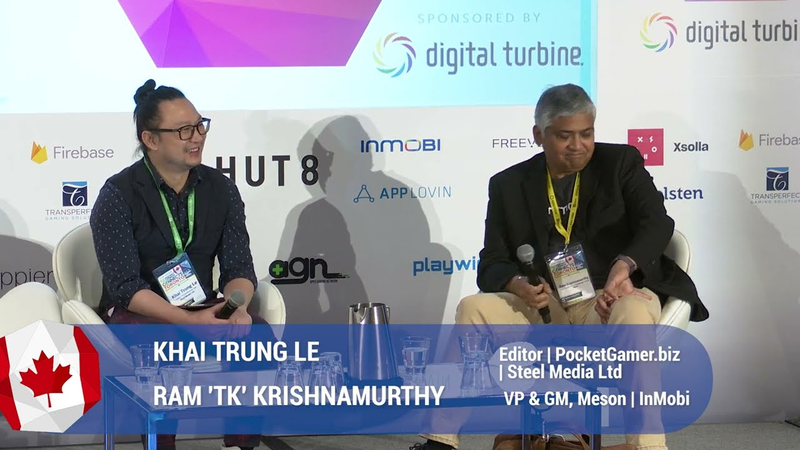
[Music] ladies and gentlemen and everyone between and beyond it's wonderful having you here but more importantly i'm very glad to be joined by ram tk krishna murphy um vp and gm of mediation and strategy at imobi um but before we start i want to take a quick hand poll of our esteemed audience who here loves mediation loves mediation that's a good question okay who here thinks fondly of mediation then
wow the more i moderate this question the less impact it's going to have well i feel like i feel like that's a good litmus test as far as what kind of approach um people are currently taking towards um mediation so let's begin by asking what are publishers main concerns with regarding a move to in-house mediation first of all maybe just set the stage for what mediation is right i mean it's kind of the first line of defense and the last frontier for checks and balances for any publisher trying to monetize using ads more and more publishers are wanting to take mediation in-house purely because the existing solutions have become black boxes and with consolidation in marketplace publishers are craving for control and transparency and unless you are a very big studio with enough money to throw around or you're a mediation player
you are not going to want to build a mediation right so one of the bigger concern is expertise skill set and the overhead for your direct monetization business uh that mediation uh can bring about which is where there are alternatives to using a sas based model and things like that with that in mind what are the factors that uh they should be considering when choosing a mediation platform so the primary function of mediation right is to make more money right it's yield optimization what has happened in the last one year is that the guard rails um that that's guiding this monetization is changing right people are more worried about the data so people are looking for what is happening to my data what is happening to my user experiences uh what kind of control do i have uh and and those have become kind of somewhat of a guiding factor
that we are hearing publishers say in the marketplace it's okay if i make less money as long as i'm able to provide a great experience and retain my users so publisher needs to be worried about the aspects of transparency control and independence when they're looking at mediation well this is very much a conversation about the future of mediation so what kind of uh shifts are you seeing in the mediation market um great question i think somebody asked the previous conversation about whether banners are here to stay right there they are here to stay for sure so what kind of ad experiences um is a platform able to provide what vested interest does the platform have in terms of its own mediation what is the scalability of the platform what kind of transparency whether the publisher can dictate who they work with who they want to connect with in terms of their monetization strategy or is the
platform going to define that right so those are some of the things that i would look to um final publish and that's what i hear from the publishers as well what do you think is uh currently working with regards to mediation and what what really needs to change i think the consistency that some of the existing monetization mediation players are providing is definitely working so there are there are some good players out there and and we are partnered with them on our exchange side of the business that said uh lack of user control is probably one of the biggest things that uh that is not working today for publishers so uh publishers wanting to uh the challenge has been always how do you make the best money for their app so to speak so they can the app can continue to deliver the value and yet maintain user experience retain those users and
be able to grow those users so that's the that's the challenge that publishers are trying to solve we've heard lots uh today already about the mediation black box the uh the lack of information that publishers have access to um how can we build transparency in this process i think the best way to at least in my opinion to provide transparency is make everything you do on the mediation publisher-centric right whether whether a publisher is going to want to connect to a demand partner whether the publisher is going to want to share user data a specific user experience so everything that happens on the platform from from the beginning to the end is about publisher-centric and it's about the users that the publisher want to uh interact with once you make the platform around
the publisher and its users then you're you're building a platform that works for them what's the best relationship approach between a monetization platform and ad exchanges right um we have an exchange and a mediation so this is a question that i guess asked a lot of times again it comes down to not bundling anything right a mediations to be able to stand by its own merit it needs to be able to deliver value to the publisher in terms of its monetization if it can do it and do it consistently and in a scaled manner i think that's a relationship that a publisher will value and want to work with such a exchange partner on a mediation layer you spoke earlier about um publishers kind of exploring bringing mediation in-house what are the uh what are the opportunities and the barriers and challenges they may face in
building their own homegrown solution i mean the driving factor behind publishers wanting to do that in the first place it's not that they're experts in in building mediation right you have to be a technology platform or you have to have like i said uh be able to um acquire the right technology to be able to do that so the driving factor is wanting control right the challenge for publisher is what is their core business right at the end of the day a publisher wants to develop apps deliver value to that user using those apps and they want to retain and grow their users right that's what they want to do with their app so given that core value the challenge is how do you then build a mediation platform right so if you look in the marketplace some of the bigger studios um whether it be zynga or some of the bigger gaming studios in europe they either build their own mediation layer or they go acquire the technology
but how do you make every single publisher out there feel like they're working with a mediation platform that they feel it's their own the only way to do it is delivering the right value so the challenge is everybody cannot build one right it's you just it's just impossible for every publisher to be able to build one but if there is a mediation platform that publish can publishers can make it their own by way of the value it derives then i think that's where the opportunity is is this an issue with say the the scale or size of the company or a lack of access to expertise um i think it's a bit of both i think uh some of the bigger companies obviously have the ability both financially as well as in expertise being able to build that kind of a platform but some of the indie publishers or the smaller publishers or mid-tail publishers um they won't
they have the same need but they don't have the expertise or the bandwidth right so it's a bit of both um is what i would say well uh as mentioned earlier this is very much a chat about the future of mediation so what are your predictions uh moving into 2023 i think um you know changing a mediation layer used to be somewhat quote-unquote tough right but with consolidation in the marketplace and the dwindling choices definitely more and more publishers are exploring right in the since the middle of last year we have we have definitely seen a shift in the tone that the publishers adopt while it still is a heavy lifting for publishers to change the mediation they are open to it they are willing to explore so clearly what i see at least as we move into 2023 and
beyond is value driven mediation choices are going to pop up and publishers are going to notice them they're not going to just simply stick with incumbents maybe that's a temporary stay with incumbents but those that are coming out when and being able to make this mediation layer centered around publishers and more importantly their users are the ones that are going to succeed in the long term excellent well that was a a whistle-stop tour in our discussion about the future of mediation but we're quite keen to open up questions to our more informed audience than i so does anyone have any questions anyone have any questions there's a question right here you get to ask that question though uh hey so i guess given you know there are some large-scale incumbents who would advocate the benefits of you know being a scale player but you got no smaller
guys or newer guys coming in um what do you think is the quote-unquote right number of mediation platforms in the industry like this is a situation where there's like 20 100 players is there's two players yeah i i think um it's somewhere in between right i think uh about uh you know i was i was building at marvel in 2010 2011 and uh we were the first mobile mediation platform there are too many mediation platforms at one time right then part of why you see consolidation is the value that is being understood i think the choices there isn't a specific number clearly 100 is one too many because that creates fragmentation um in the marketplace and what we have now and based on publisher behavior that them wanting to explore new mediation is a clear enough signal it's one two less
uh where there isn't enough choices so i think the va it's a tough question to answer because um like many things in life it's about balance right the balance is going to be the right number of mediation platforms that can consistently deliver publisher value that's going to be the right number what the number is i think that's going to be a market driven number with that um larger number of mediation partners and all that kind of stuff out there in mind i'm wondering if what you're implying is that how that will break down is either by people going away or by specializing if we take kind of classical kind of market models i mean you'll see some level of specialization albeit you know from for different screens for example ctv versus display versus mobile versus mobile web so you'll see some level of specialization come into play but i think eventually no matter which uh screen you take on
it's going to be about the value that the publisher is going to pursue but i was wondering if it might be other angles potential i mean i'm just being if we're talking about the future it's all about weight one you know i i can imagine someone being disruptive by focusing i mean we'll already see super awesome focusing on ads for kids are we are we going to see mediation department partners that are going to focus on you know finding those publishers those ads that work really well in that ecosystem equally could you go even further and say we're going to find people who are interested in action-based content or are we going to find mediation that deals with um you know a cohort that is a high adopter in technology and and i'm kind of i'm mixing all my metabolism no no i think i think i think uh you're abstracting the specialization rather nicely i would say i mean i could extend your thought process and say is that a mediation platform for just streaming games right absolutely there is there is but ultimately it's less about the specialization but
more about the value you can deliver to that vertical if that value is going to come about by means of segregating a special execution yeah i think i think that that might happen right if i think about it right two years back netflix said no to ads right given where their subscription model is they are very actively uh talking to uh mediation players about how value can be brought on uh in their marketplace and the people they are not they're talking to they're not talking to mediation players with specific to streaming no they're not right but then you could say the same thing about pc gaming at the moment absolutely i think there's a massive gap in that space i mean particularly because steam says no but is that actually holding back the pc gaming space arguably no i think i do think specialization will you know if ctf ctv has shown us that right um
you know i you know my own company we kind of walked away from it because we didn't quite get it yeah so definitely there is a a place for specialization what that specialization uh means tbd uh if you and i can predict that we wouldn't be doing what we're doing now uh but uh definitely uh within gaming there are so many different genres i can see a place for different genres you know being able to extract abstract a certain value and having a specialized mediation play yeah i mean i i i'm as one of my many other things i'm an advisor for audio mob the um uh audio based advertising company right that's an area where i can see a distinct uh delivery of a distinct type of interaction but equally there's no necessary kind of i mean yes we have to have formats those formats we have to be able to implement
doesn't necessarily mean that the actual act the dsp the ssp kind of like stuff that we have to do in the back end of making sure we can track and measure and deliver isn't this i always i always think that a format will start out by itself until it reaches a certain scale and a specific value where somebody will figure out technologically being able to provide it as part of a mainstream yeah right it's just as a matter of time from a format perspective and on that no i mean i think that's what's happened specifically in the in-game ad space exactly because then they're now just taking real ads from other website sources rather than having to create artificial pizza boxes which no one's ever going to replace because you know i don't know if you're aware that splinter cell back in the day had a um i think it was papa john's pizza book someone will correct me i may be right it might be domino's i can't remember they also had uh monster drinks machines in the game and they were all set up with massive to be able to be replaced
yet no one replaced them why well because everyone's mentally associating that that drinks machine that pizza box with those brands already why would you change it it's just not worth it so that's the that's the issue of the previous approach but the modern approach of taking natural ad spaces and using natural ads in appropriate ways i know it's not quite mediation but i think it just hints at some of the the technological changes but also the business process changes the efficiency changes that are the evolution of this whole spaces in general definitely for sure so i i'm talking away does anyone else want to ask a question while i'm at it oh i'll just keep going because it's always fun chatting about this stuff and so um do you think there might be other innovations in this area as well so i'm thinking particularly about things like um we're i mean you kind of hinted at when you mentioned streaming specialization but i feel like increasingly we're getting this kind of balancing act between the promotion of our games whatever platform is increasingly going to rely on
you know content creators in some form and it i wonder whether the the pathway between player content creator game provider platform whether there's an avenue in mediation that is about connecting those dots more effectively absolutely absolutely so i mean i think one of the ways to think about mediation is um you know if you are a publisher you want to treat your um high value users uh rather differently right the vips right now high value users could mean different to different games and in the world where high value users are influencers you could potentially think of mmorpg game coming via mediation play being connected to a surface that is streaming where you now want to promote your high value users your influencers on the
streaming service right now imagine a place where you now have um anonymous participant on the streaming service being able to um encourage and improve the engagement of the influencer playing a game think of shooting game you and i are watching a shooting game on a streaming service and we are able to sponsor gold coins to that influencer to increase the life of the player and all of a sudden the the app is monetizing the user via a mediation player the influencer is gaining popularity you are now grabbing additional users who are otherwise not part of the game so that is kind of the image i mean of a streaming service in a game center and a mediation player with a role-play
game and potentially even branding you know there's so many different elements and i think this is where we are in a really interesting place in the in the use of ads in general which is that we are we are no longer getting the overly dominant performance ad model which which we've been very lucky to date to have in in mobile and games in particular we're having to deal with brand we're having to deal with privacy issues and actually we need to be more innovative and leverage long-term brand values as well as the acquisition of users and i think that's to me one of the key driving forces behind where mediation sits because game devs can't do that on their own they need providers that can help coordinate and collaborate with absolutely i think and that's where the challenge is right like i was mentioning unless you have a lot of money to throw around to buy a technology platform or you have enough uh market power to build your own team you don't want to build a mediation right it's not it's not it's not your core expertise that's
like i wouldn't be developing a game because that's not mixed buddies yeah well i mean we used to literally we used to just like build like um choose your own adventure um sdk so you could switch which mediation partner you had into a game so you could experiment i'm too old for that now i'm i'm bored let's let's let's just get let's just find partners we can work with to make them work so in the last 30 seconds i haven't used the word meta burst yet so i'm going to have to use it do you think this push we're seeing through metabolism changes anything for mediation at all or is it just business as usual for your point of view so i didn't hear the question from you i was just saying with the rise of this push towards meta verses do you think that changes ads and mediation at all or is it just business as usual for us um i don't think it's business as usual they're definitely going to be some level of disruption because the interaction is different we have metaverse games today that are
monetizing through typical mediation but that could be uh due to lack of diversity in terms of available solutions so but i do think it will change some of the execution experiences that we'll come to see on that note thank you very much thank you so much you
Summary
The future of mobile ad mediation is increasingly defined by a shift toward publisher-centric models, as developers seek greater transparency, control, and independence from the traditional black-box solutions that have dominated the market. While large-scale studios often possess the capital and technical expertise to build proprietary, in-house mediation layers, most publishers lack the bandwidth to manage such complex infrastructure. Consequently, the industry is moving toward a model where mediation platforms must prove their value by prioritizing publisher needs, user experience, and data integrity rather than relying on bundled, opaque services.
Key findings indicate that while consolidation has reduced the number of available mediation providers, the market remains in a state of flux. Publishers are increasingly willing to explore new, value-driven alternatives to incumbents, signaling a demand for platforms that offer better yield optimization without sacrificing user retention. The primary challenge for these platforms is to balance the need for consistent, scalable monetization with the growing necessity for specialized ad experiences. As the industry evolves, specialization—such as tailoring mediation for specific genres, streaming platforms, or emerging formats like in-game audio—is expected to become a significant differentiator.
Looking toward 2023 and beyond, the role of mediation is expanding beyond simple ad-fill optimization. Innovations are likely to emerge at the intersection of content creation, influencer marketing, and interactive streaming, where mediation layers could facilitate more complex, brand-focused engagements. As the digital landscape shifts away from purely performance-based models toward long-term brand value and privacy-conscious advertising, mediation platforms will need to act as collaborative partners that help developers navigate these technological and business complexities, ultimately moving away from a one-size-fits-all approach toward more integrated, publisher-aligned ecosystems.



















Comments