Mobile reports and market data
Documents

Carnival Tycoon’s Playbook: From Idle to Social Casino?
Carnival Tycoon functions as a strategic hybrid, utilizing an idle game aesthetic as a Trojan horse to deliver the high-frequency monetization mechanics characteristic of the social casino genre.
- Carnival Tycoon generates approximately $5 million in monthly revenue, positioning it as the fifth-largest social casino game despite marketing itself as an idle game.
- The game functions as a 'Trojan Horse' by using idle-game mechanics and approachable onboarding to mask a core loop that is fundamentally a social casino slot machine.
- Approximately 70% of the game's net revenue is derived from iOS, suggesting that rewarded ad placements are likely restricted to high-end Android devices or specific user segments.

Panel: D2C for Mobile – THE Do’s and Don’ts and Everything in Between.
Direct-to-consumer strategies have emerged as a vital evolution for mobile publishers seeking to improve profit margins and gain granular control over user data.
- Direct-to-consumer (D2C) web shops allow mobile publishers to bypass standard platform commission structures, improving profit margins while gaining granular control over user data.
- Top-performing D2C implementations that integrate loyalty programs and live operations can achieve conversion rates as high as 80 percent.
- The industry is shifting toward a hybrid model where web-based commerce complements app stores, which remain essential for mass-market discovery.
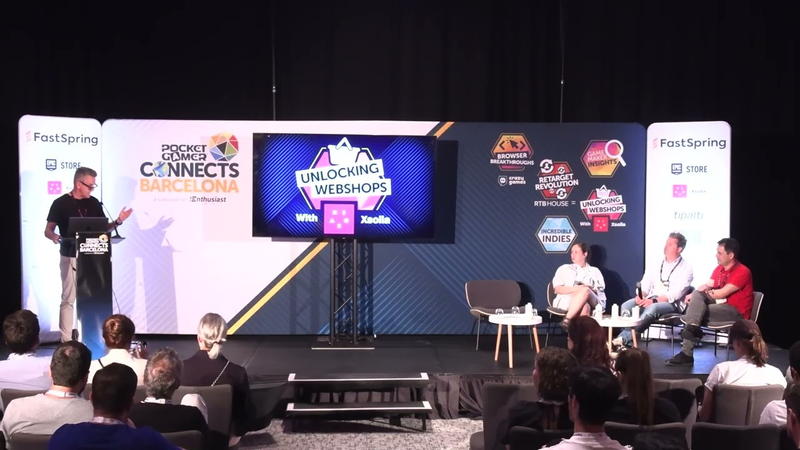
Panel: Fact vs Fiction – Mobile Games
The mobile gaming industry is undergoing a fundamental shift toward direct-to-consumer monetization through the implementation of web shops.
- Over 60 percent of top-grossing mobile titles have implemented web shops to bypass traditional app store transaction fees and improve profit margins.
- Web shops enable publishers to collect critical first-party data, which is essential for informing long-term product development and player retention strategies.
- Transitioning players to web-based environments requires offering exclusive incentives such as loyalty programs, community rewards, and flexible pricing structures to overcome the perceived security of platform-native payment systems.

Panel: How To Create Your Own Retargeting Strategy.
This panel discussion explores the strategic implementation of retargeting in the mobile gaming industry, emphasizing its role as a vital complement to user acquisition (UA).
- Retargeting should be considered as soon as a game launches to capture churned users, as waiting too long results in missed opportunities to recover acquisition investment.
- A recommended budget allocation for retargeting is 5% to 10% of total spend; exceeding 10% is considered risky because many churned users are permanently disengaged.
- The 7-day inactivity window is the standard starting point for initiating retargeting campaigns, as users inactive for longer periods are significantly harder to re-engage.
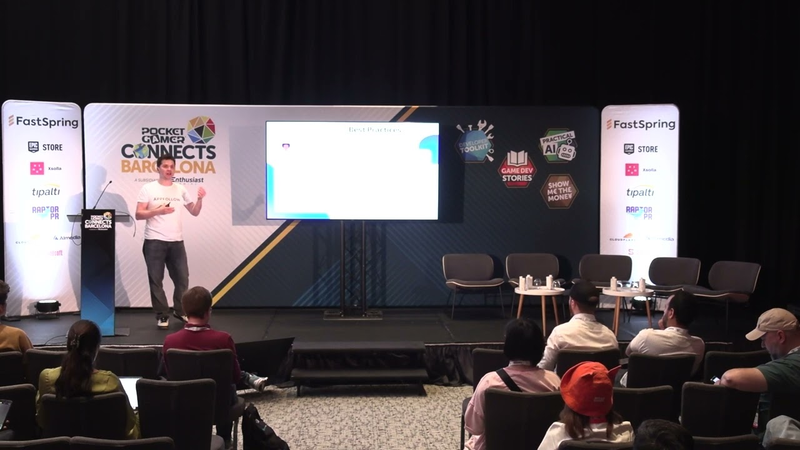
Session: AI Powered Community Relations In App Management - Anatoly Sharifulin, AppFollow.
Artificial intelligence and automation are transforming community relations and reputation management within the mobile gaming industry.
- Gaming companies currently maintain an average review reply rate of only 20%, despite the fact that responding to reviews can increase average ratings by 20% to 30% when users update their original feedback.
- A hybrid support model is the industry best practice, where AI handles high-volume, routine inquiries while human agents manage complex cases, featured reviews, and instances where ratings are trending downward.
- Automated anomaly detection allows developers to identify sudden shifts in player sentiment—such as a 20% spike in dissatisfaction following a pricing or monetization change—within one week, rather than waiting for quarterly reports.

Week in Mobile Games E57 - The solitaire gold rush and Finland's new immigration rules bite
The mobile solitaire genre has undergone a period of rapid expansion, with global player spending climbing to $470.2 million in 2023, nearly double the figures recorded in 2019.
- The SAG-AFTRA strike in the games industry has ended with a deal that includes a 15.17% pay increase, guaranteed minimums for digital replica use, and protections regarding AI-generated voice and performance work.
- Mobile solitaire games generated $470.2 million in gross player spending in 2024, a figure that has roughly doubled since 2019 despite a slight decline from the 2023 peak of $564.7 million.
- Disney Solitaire has significantly outperformed Candy Crush Solitaire in revenue, generating $25 million compared to $8 million despite both titles sharing a similar download volume of approximately 7.7 million.
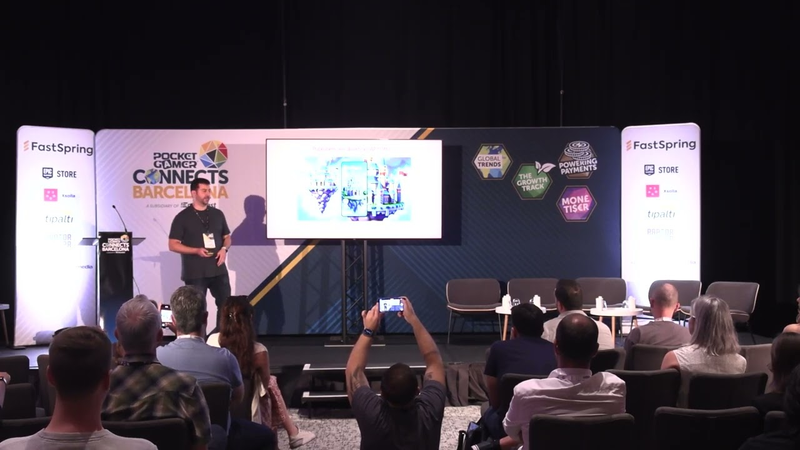
Session: Web Stores Are So 2023: The Next Generation Of DTC Is Already Here - Broader, Richer.......
The mobile gaming industry is undergoing a seismic shift in direct-to-consumer (DTC) monetization, moving beyond basic web stores toward a more fragmented and sophisticated ecosystem.
- Developers are shifting from basic web stores to integrating payment links directly into native apps, allowing them to bypass standard 30% platform commissions.
- The monetization landscape is evolving toward a hybrid model where developers segment players to apply different transactional methods based on individual loyalty and spending behavior.
- New regulatory environments in the US and EU now permit developers to redirect transactions to cost-effective payment vendors, moving beyond the initial web-store-only strategy.

Session: Webshops: You Don't Need To Be Big To Start, But You Need To Start To Get Big.
The emergence of web shops in the gaming industry represents a fundamental shift in how developers manage revenue and player relationships, moving away from the traditional 30% commission model imposed by major app store monopolies.
- Web shops are now a necessary component of a sustainable business strategy, serving as a critical alternative to the 30% commission model imposed by major app store monopolies.
- The primary long-term value of a web shop is not just cost savings, but the acquisition of direct data ownership and the ability to build personalized relationships with players.
- Developers should launch with a simple Minimum Viable Product (MVP) to test the market, focusing on learning from early transactions and identifying high-value segments rather than immediate high-volume sales.

Session: The State of Gaming 2025: Mobile Trends, Transmedia Impact & Global Shifts by Josh Skinner
The state of the global gaming industry in early 2025 reflects a period of stabilization and strategic evolution, characterized by a shift in revenue models and the increasing importance of cross-platform engagement.
- Strategy games have overtaken RPGs in quarterly consumer spend for the first time, while action games saw a 53% year-over-year growth in Q1 2025.
- Global mobile gaming revenue growth is currently driven exclusively by iOS, as Android gaming revenue experienced a decline in Q1 2025.
- While total worldwide mobile game downloads are down year-over-year, in-app purchase revenue has seen slight growth, indicating a shift toward higher monetization per user.

TWIG #336 Candy Crush Veterans Return as Marathon Runs Out of Steam
The global gaming industry is currently navigating a period of significant structural correction characterized by stagnant revenue growth, the collapse of over-leveraged studios, and a shift in consumer attention toward non-gaming entertainment.
- The mobile gaming sector has plateaued with a 4% year-over-year revenue increase, shifting the competitive focus from innovation to sophisticated monetization strategies.
- The traditional AAA development model is under severe pressure, as high-budget, single-title projects frequently fail to achieve market fit, leading to widespread studio closures and restructuring.
- Industry success is increasingly driven by a publishing-led model that mitigates risk through multiple product bets rather than the high-risk, single-title focus of the previous decade.

Puzzle & Dragons: Five Billion $$$ Made, Zero Influence in the West
Puzzle & Dragons stands as a monumental achievement in mobile gaming history, having generated over $5 billion in lifetime revenue through its pioneering integration of elemental dungeon progression and gacha mechanics.
- Puzzle & Dragons has generated over $5 billion in lifetime revenue, establishing it as a foundational mobile RPG that pioneered the integration of elemental dungeon progression and gacha mechanics.
- Despite its massive financial success, the game remains a localized phenomenon in Japan, failing to achieve significant commercial or cultural traction in Western markets.
- The title currently generates approximately $13 million in monthly revenue, demonstrating the viability of prioritizing a deeply engaged, hardcore domestic audience over broad global expansion.


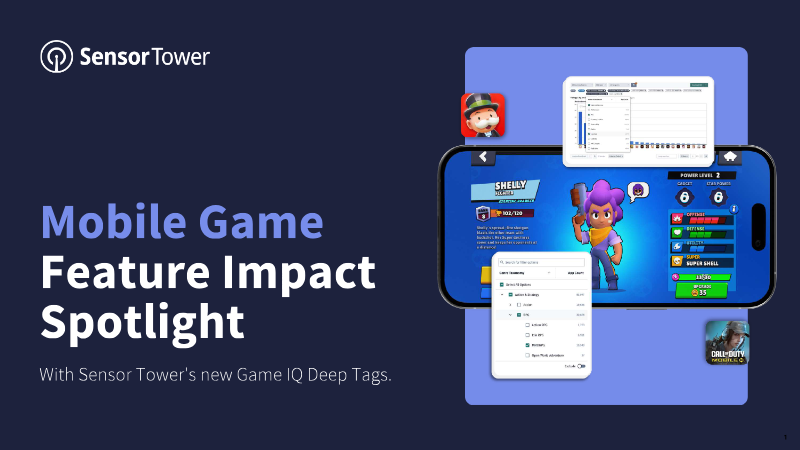
Mobile Game Feature Impact Spotlight
Sensor Tower introduces Game IQ Deep Tags, a set of 70 new feature-level tags grouped into four categories (Gameplay, Monetization, Engagement, and Socials), designed to help developers benchmark competitors' feature sets, gauge feature adoption within a niche, and compare performance of games with and without a given feature.
- Strategic feature selection, rather than exhaustive feature adoption, is the primary driver of commercial success across the top 1,000 mobile games globally.
- In the hybridcasual segment, implementing in-app purchase (IAP) bundles correlates with a $1.77 increase in lifetime revenue per download.
- Casual puzzle leaders like Royal Match and Candy Crush Saga maintain market dominance with lower feature density, proving that core gameplay often outweighs the addition of luxury elements like cinematic cutscenes.